• Alguna is one of the best AI billing software solutions for mid-market and enterprise companies that want true AI capabilities.
• Tabs is strong for finance teams automating contract-to-cash and collections. Limited AI features.
• Solvimon suits high-volume, global metering at mid-market and enterprise scale. Limited AI features.
• Monk is an AI-native accounts receivable platform focused on autonomous collections and dispute resolution.
• Chargebee fits subscription-first SaaS adding usage or hybrid pricing. Limited AI features.
• Zuora is the enterprise standard for complex, multi-entity monetization. Limited AI features.
• Lago is the open-source pick for engineering teams that want to own and inspect their billing stack. Limited AI features.
The right choice depends on your pricing model, your event volume, and how much of the revenue motion you want in one system.
For years, billing automation meant one thing: you wrote the rules, and the software followed them. Invoices went out on schedule. Dunning emails fired on day 3, 7, and 14. Reports ran when you told them to.
Yes, it was useful, but it was a (very) expensive way to do exactly what you'd already decided to do.
AI billing software is a different animal.
It doesn't just run the invoicing, metering, and dunning you set up, it makes decisions. Using accounts receivable AI agents, it predicts which invoices won't get paid before they're late, fixes the retry timing on its own, forecasts your cash and DSO weeks out, and runs AR agents that chase down payments while your team sleeps.
For finance teams, that's the difference between reacting and getting ahead of it.
In this guide, we cover AI billing software solutions that were built from the ground up for the AI era, like Alguna and Monk, along with incumbents that are adding AI layers to their existing rule-based architecture, like Chargebee and Zuora.
Alternatively, head to this guide where we list the top 6 billing software for AI companies.
What is AI billing software?
AI billing software embeds machine learning into the billing lifecycle. Instead of executing static workflows, it predicts which invoices are at risk, optimizes payment retries, forecasts cash flow and DSO, and runs autonomous AR agents that chase payments and reconcile cash on their own.
The key distinction: AI-native platforms are built around intelligence from the ground up, while legacy tools bolt AI onto rules-based architecture as an add-on.
Key features of AI billing software
When you evaluate the features of AI billing software, a handful of capabilities separate platforms that can run an AI business from those that merely track subscriptions.
| AI capability | What the AI does | Why it matters |
|---|---|---|
| Real-time AI usage metering | Counts billable AI events such as tokens, API calls, and agent runs as they happen, deduplicating and handling late events | Keeps the invoice aligned with consumption and stops revenue leakage at the source |
| AI contract ingestion | Reads signed contracts and builds billing schedules and revenue recognition rules automatically | Removes manual re-keying and the billing errors that come with it |
| Autonomous accounts receivable AI agent | Runs context-aware collections, captures promises to pay, detects disputes, and reconciles incoming cash, rather than just sending fixed reminders | Cuts days sales outstanding without adding headcount |
| AI pricing simulation | Models a new usage or hybrid pricing strategy and its impact on revenue and margins before launch | Lets you test pricing changes without risking live revenue |
| Anomaly and leakage detection | Flags unusual usage, margin-eroding discounts, and stalled renewals in real time | Surfaces missed renewals and leakage before month-end rather than after |
| Natural-language agents | Lets finance query revenue data and trigger billing workflows in plain language | Makes the platform usable without engineering or analyst support |
| Controllable autonomy and guardrails | Sets how far each agent can act on its own, from monitor-only to acting within set thresholds, with hard limits on risky actions | Keeps AI accountable when it touches customers and revenue |
7 best AI billing software solutions at a glance
Here is how the five platforms compare across the criteria that matter most when you are choosing top billing software for AI platforms.
| Platform | Best for | Strengths | Limitations | Pricing |
|---|---|---|---|---|
| Alguna | AI, SaaS, and fintech teams that want one no-code system from quote to revenue | Built modularly. No-code CPQ, billing, usage metering, AI collections, and automated rev rec. Built for scale, fast go-live | Younger platform than the legacy incumbents, not ideal for very early stage startups unless they just want collections. | Free tier available; flat monthly pricing from $699; no revenue cut |
| Tabs | Finance teams automating contract-to-cash and collections | AI contract ingestion; strong AR and collections automation; ASC 606 rev rec; quick rollout | Limited self-serve customer portal; reporting is relatively basic; higher entry price | Launch plan from $1,500 per month |
| Solvimon | Mid-market and enterprise teams with high event volume and global billing flows | Enterprise-grade metering; full hybrid pricing primitives; built by ex-Adyen billing leaders | Smaller team and seed-stage company; confirm integration depth and e-signature directly | Starting at $2500/month |
| Chargebee | Subscription-first SaaS adding usage or hybrid pricing | Mature subscription engine; schemaless usage ingestion; broad integrations; deep reporting | Modular pricing stacks up; rarely the first pick for pure real-time usage billing | Starter from $0 then 0.75% overage; Performance $599 per month plus overage |
| Zuora | Large enterprises with complex, multi-entity monetization | End-to-end quote-to-cash at scale; new AI Monetization Suite; strong rev rec and compliance | Heavy implementations; often consultant-led; high total cost of ownership | Custom enterprise pricing, commonly from $50,000 per year |
| Monk | Finance and AR teams that want autonomous collections and dispute resolution | AI agents for collections and disputes; strong DSO reduction; fast deployment; real-time ERP sync | Focused on AR, not a full billing, CPQ, or metering platform; young company; pricing not public | Custom; scales with volume, no revenue share |
| Lago | Engineering-led teams that want to own and inspect their billing infrastructure | Open-source and self-hostable; strong event-based metering; payment-agnostic; no vendor lock-in | Operational overhead to self-host; no native CPQ or AR agent; some features gated to paid cloud | Free, open-source self-hosted edition; managed cloud is quote-only |
1. Alguna
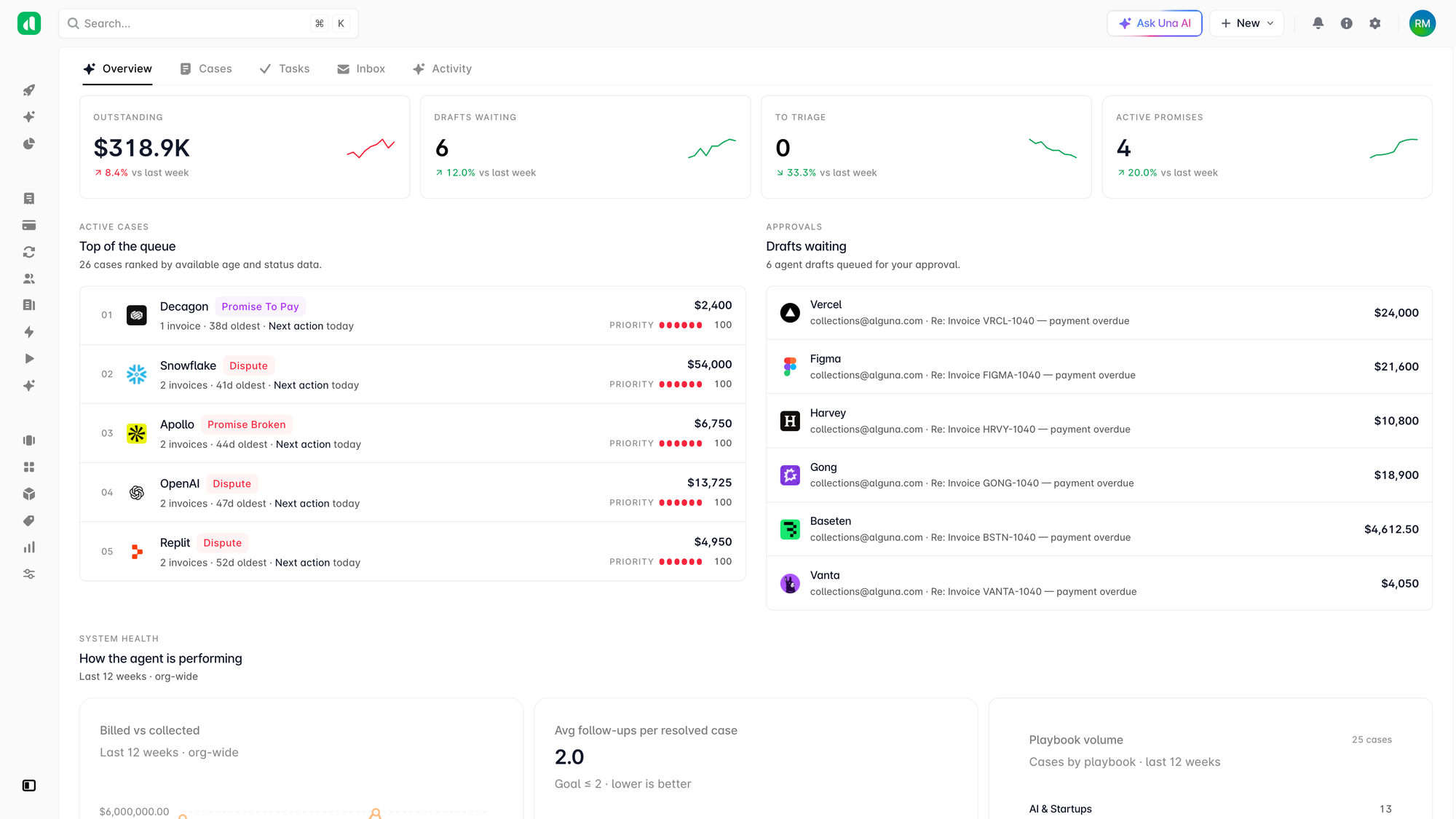
Alguna is one of the best AI billing software solutions on the market today. Designed by seasoned fintech operators, the billing engine was built from the ground up for AI, SaaS, and fintech companies that need speed and accuracy across the entire revenue cycle.
Backed by Y Combinator, the platform is modular and offers pricing, CPQ, billing, usage metering, and revenue recognition in an AI-native system, so sales, RevOps, finance, and product teams stop and start looking at the same numbers.
The platform is designed around no-code configuration. Teams can launch a new pricing model, spin up a usage metric, or change packaging without filing an engineering ticket, then send a quote that flows straight into billing with no re-keying.
Customers tend to point to the same thing: a single source of truth for revenue.
"Alguna ticked every box I needed. Most importantly, it gave me a clear overview of revenue movements, something Stripe just couldn't provide."
- Adam Liska, Co-founder at CEO at Airspeed
For teams whose pricing is genuinely complex, Shane Curran, CEO at Evervault, framed the core value plainly in a case study: "Alguna enables complex usage-based billing for us in a way that other products can't."
Key features
- No-code pricing and packaging. Build subscriptions, usage-based, tiered, credit, and hybrid models in one catalog, and change them without engineering. This lets teams run pricing experiments and ship new plans in days rather than quarters.
- Contracts AI: Upload an executed contract (PDF, Docx, etc.) and automatically extract key data points such as pricing, terms, products, start dates in seconds.
- AI pricing simulator. Model your pricing strategy and simulate its impact on billing, revenue, and margins before rolling it out to customers.
- No-code CPQ with embedded e-signature. Reps combine per-seat, tiered, and usage pricing in a single quote, send it for signature, and the approved terms create the subscription and usage schedule automatically.
- Real-time usage metering. Meter any custom metric, from API calls to tokens to feature usage, and turn those events into accurate invoices on recurring or metered schedules. This keeps billing aligned with consumption as it scales after the deal is signed.
- Always-on accounts receivable AI agent. Alguna's AR agent works overdue invoices end to end from a single workspace called the Control Tower, sending context-aware follow-ups, reading and classifying every inbound reply, capturing promises to pay, pausing the chase when it detects a dispute, and auto-reconciling payments to your ledger.
- Real-time revenue insights. A live source of truth surfaces stalled renewals, margin-eroding discounts, and upsell signals so revenue teams can act early rather than discover problems at close.
- Native integrations and global compliance. Connect to your CRM (Salesforce, HubSpot) and ERP systems (NetSuite, Quickbooks). SOC 2 Type II compliance, GDPR compliant.
Pros
- Genuinely end to end, so you replace a fragmented stack with one platform
- No-code setup means non-technical teams can own pricing while developers keep API access
- Flat, predictable pricing with no cut of your revenue
- Fast go-live with white-glove onboarding, typically in 2 to 4 weeks
Cons
- A newer platform than the legacy incumbents, so the brand is less established
- Very large enterprises with unusual edge cases should pressure-test them in a POC
Best for
- AI and SaaS companies that want a unified quote-to-revenue engine
- Teams experimenting with hybrid or usage-based pricing without engineering drag
- Staregic finance teams that don't want to spend time on busywork
- Multi-entity, multi-currency businesses replacing a patchwork of point tools
Pricing
Alguna offers a free tier for smaller teams and flat, predictable monthly pricing from $699 for scaling companies, with custom plans for enterprises. Pricing scales by feature set rather than by transaction volume or a percentage of your revenue, which keeps costs predictable as you grow.
Book a demo and we'll walk you through Alguna's AI billing features live, showing you exactly how it would fit into your existing stack and processes.
Book your personalized demo
2. Tabs
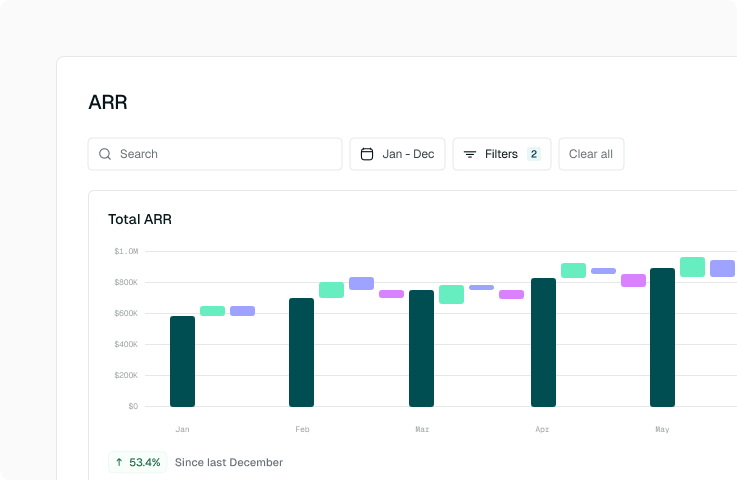
Tabs is an AI-based billing software solution aimed at finance teams that want to automate the contract-to-cash process. Its signature capability is AI contract ingestion: the platform reads complex B2B agreements, including MSAs, order forms, and amendments, then builds billing schedules and revenue recognition rules automatically.
Where Alguna spans the full quote-to-revenue motion, Tabs sits downstream of your CRM and CPQ and focuses on operationalizing signed contracts into invoices, collections, and recognized revenue.
If you want a closer look at how the two differ across pricing, automation, and rev rec, we break it down in our Alguna vs Tabs deep dive.
Key features
- AI contract ingestion. Trained models parse signed contracts and structure billing schedules and rev rec rules automatically, removing manual re-keying. This is the core reason finance teams adopt the platform.
- Collections and cash application. Automated dunning, embedded payment links, and AI-assisted cash application reduce days sales outstanding and free AR teams from inbox triage.
- Revenue recognition and reporting. ASC 606 compliant rev rec runs off contract and billing data, with dashboards for ARR, MRR, and cash flow across customers and entities.
- Broad finance integrations. Native connections to QuickBooks, NetSuite, Sage Intacct, Stripe, and Slack keep the finance stack in sync.
Pros
- Strong fit for sales-led organizations where contracts drive billing
- Genuinely useful AI agents for billing, collections, and reconciliation
- Quick implementation, with most teams live in about a month
Cons
- No self-serve customer portal for subscription management
- Reporting is relatively basic compared with dedicated analytics tools
- Higher entry price than most platforms on this list
Best for
- Finance teams scaling AR and collections without adding headcount
- Sales-led B2B companies with heavy, varied contract structures
Pricing
Tabs starts at a flat-rate Launch plan of $1,500 per month, which includes billing and collections, CRM integrations, contract ingestion, rev rec and reporting, and tax integrations. Higher tiers are quoted directly.
3. Solvimon
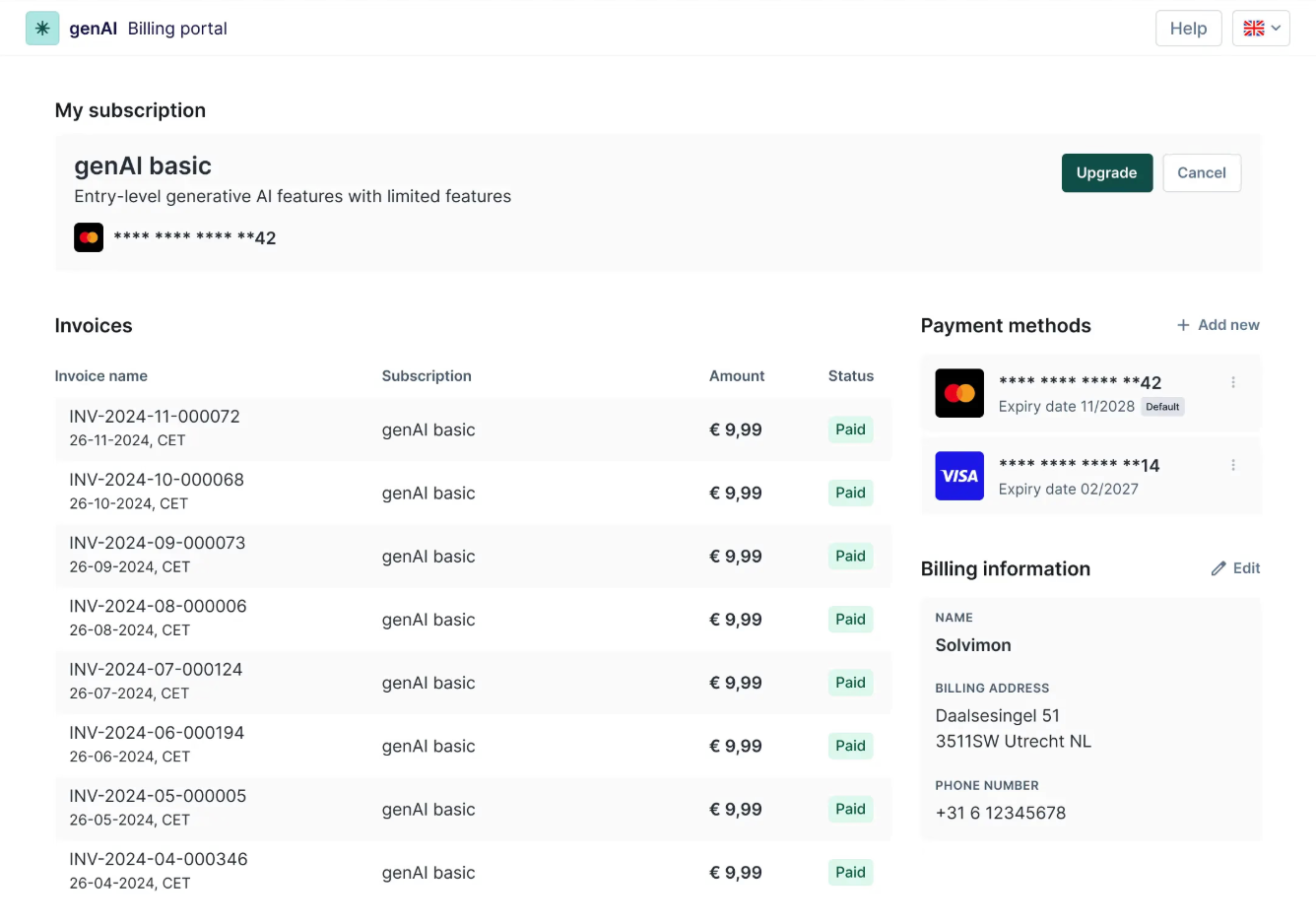
Solvimon is a usage-based billing platform that unifies CPQ, billing, payments, and revenue operations for companies selling hybrid pricing. The European company was founded in 2022 in Utrecht and is aimed at businesses that have outgrown Stripe or a home-built billing system and need to handle complex edge cases at scale.
It is a credible option for mid-market and enterprise teams, though it is a smaller, earlier-stage company than the incumbents, so it pays to confirm specifics directly.
Key features
- Enterprise-grade metering. A unified ledger handles subscription, usage, credits and wallets, hybrid plans, and enterprise commits, with throughput designed for high event volumes. This is the platform's clear center of gravity.
- Quote-to-cash in one system. Metering, CPQ, billing, and payments live together with no manual handoffs, so teams can quote hybrid contracts and bill them without gluing tools together.
- Flexible pricing primitives. Catalog, metering, wallets, and subscriptions compose into fixed, usage-based, tiered, and hybrid models for sophisticated pricing.
- System integrations. Connects to CRM, finance, and ERP systems including HubSpot, Salesforce, Xero, NetSuite, and Snowflake.
Pros
- Deep billing expertise from a team that ran billing at very large scale
- Strong fit for high-volume, global, multi-entity usage models
- Handles complex hybrid pricing without custom code
Cons
- Smaller, seed-stage company with a leaner team
- Integration depth and e-signature support should be confirmed directly
- Pricing is not publicly listed
Best for
- Mid-market and enterprise teams with high metered-event volume
- Companies with global billing flows and complex edge cases
Pricing
Solvimon does not publish standard pricing. Plans are quoted based on scale and requirements, so you will need to contact the vendor for a figure.
4. Chargebee
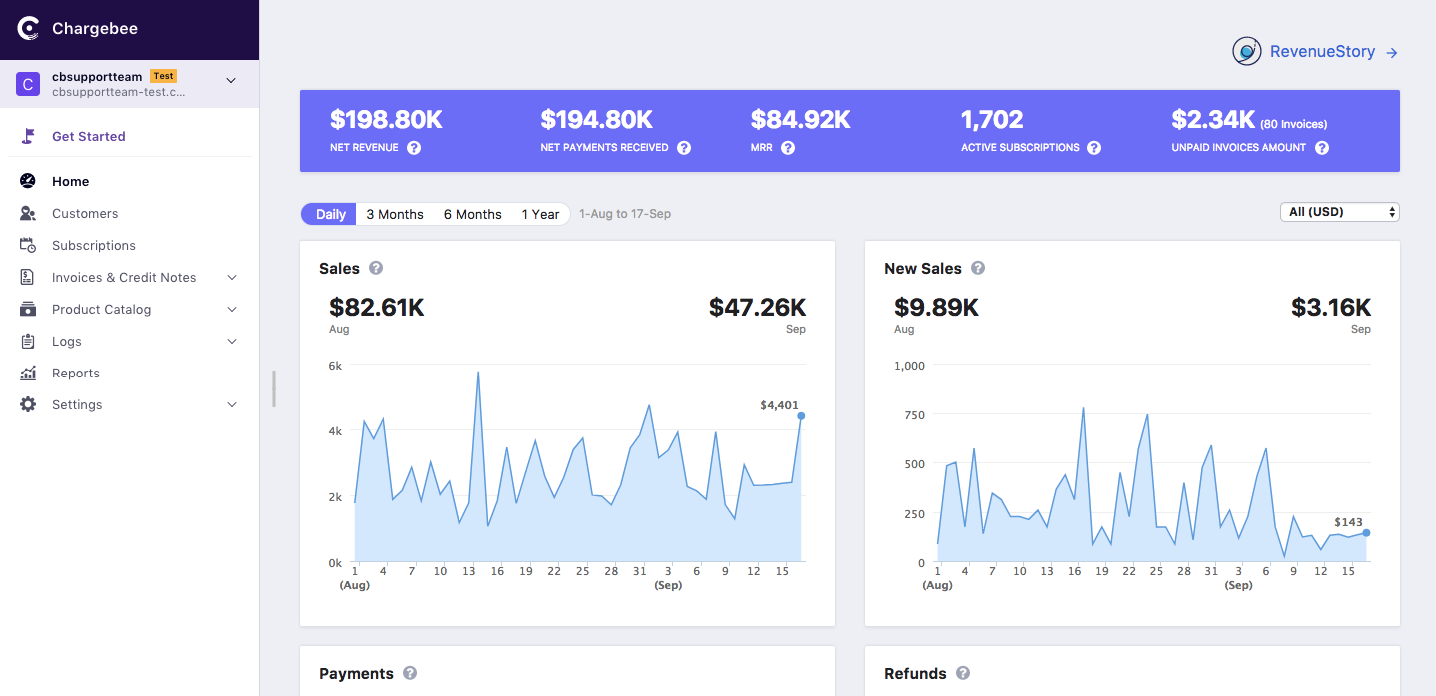
Chargebee is a mature subscription billing and revenue management platform SaaS companies worldwide. Over the past year it has invested heavily in AI monetization, but remain a favorite for straightforward subscription billing.
Just like Alguna, Chargebee ships as a modular suite covering billing, CPQ, receivables, retention, rev rec, and payments, with a large catalog of native integrations and payment gateways.
It is strongest for subscription-first companies layering usage on top of an existing recurring model. For products that need pricing to move in real time against raw event streams, it is rarely the first choice, and it is worth testing the usage engine against your own workload during evaluation.
Key features
- Subscription lifecycle management. Tiered, volume, and stairstep models, grandfathering, trials, coupons, and automatic proration on upgrades and downgrades. This is the core product every customer starts with.
- Schemaless usage ingestion. Add new usage metrics without reworking pipelines, with aggregation running in near real time on very high event volumes. This is the heart of its recent push into AI billing.
- Entitlements and feature provisioning. Map each entitlement to a billable unit, gate features by plan, and manage mid-cycle upgrades when customers hit limits.
- Deep reporting and rev rec. A large library of pre-built metrics plus ASC 606 and IFRS 15 revenue recognition through a dedicated module.
Pros
- Battle-tested subscription engine with broad global coverage
- Extensive integrations and payment gateway support
- Rich analytics and reporting out of the box
Cons
- Modular pricing means costs stack as you add CPQ, rev rec, and retention
- Percentage-of-billing overage fees scale with your volume
- Less suited to pure real-time usage billing against event streams
Best for
- Subscription-first SaaS adding usage or hybrid pricing
- Companies that want a proven, widely adopted billing standard
Pricing
Chargebee's Starter plan begins at $0 until $250,000 of cumulative lifetime billing, after which a 0.75 percent fee applies to billing. The Performance plan is $599 per month plus a 0.75 percent overage, and the Enterprise tier is quoted directly. Each additional module, such as CPQ or rev rec, carries its own cost.
5. Zuora
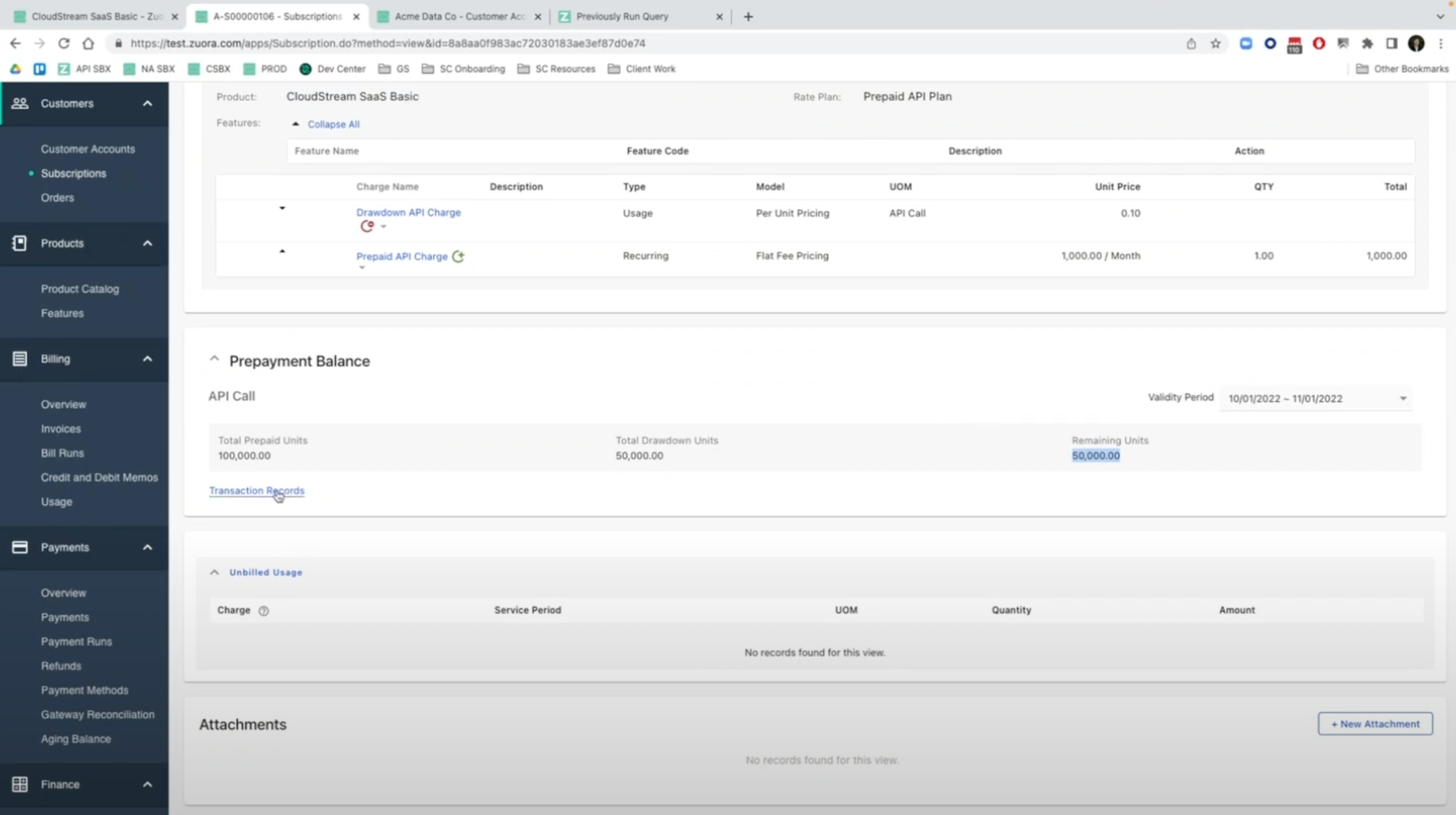
Zuora is the enterprise standard for quote-to-cash and a system of record for monetization at scale. The platform is modular, spanning billing, revenue, collections, payments, and CPQ, and it supports subscription, usage, hybrid, and AI-driven pricing.
Its depth is real, but so is its weight: implementations are typically lengthy and often consultant-led, and total cost of ownership runs high. Zuora makes the most sense when enterprise compliance and scale genuinely outweigh the cost and speed advantages of a lighter, AI-native platform.
Key features
- AI Monetization Suite. Metered entitlements, flexible commitments, and tooling to convert raw AI usage events into billable metrics, invoices, and recognized revenue without disconnected side ledgers.
- Zuora AI agents. Read-only by default, with role-based permissions and audit traces, agents support catalog, CPQ, revenue operations, and workflow automation through natural language.
- Enterprise rev rec and compliance. Robust ASC 606 and IFRS 15 support, multi-entity consolidation, and the auditability large finance teams require.
Pros
- Proven at the largest enterprise scale and complexity
- Deep revenue recognition and compliance capabilities
- A serious, recently expanded AI monetization roadmap
Cons
- Long, often consultant-led implementations
- High total cost of ownership across modules and services
- Heavier than growth-stage teams typically need
Best for
- Large enterprises with complex, multi-entity monetization
- Heavily regulated industries with strict audit requirements
Pricing
Zuora uses custom enterprise pricing driven by transaction volume and module selection, commonly starting around $50,000 per year for mid-market deployments and rising from there. Implementation and professional services are typically a significant additional cost.
6. Monk
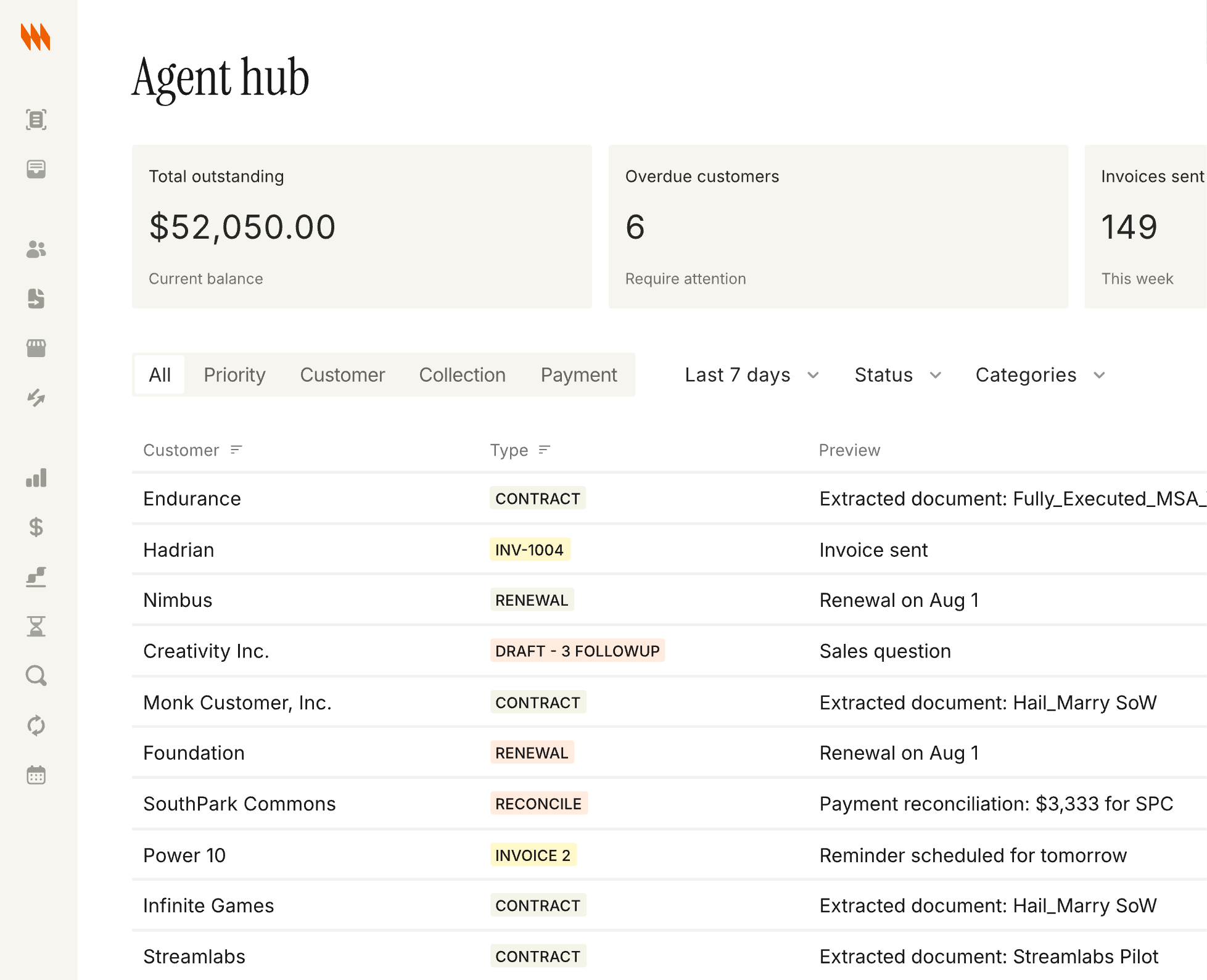
Monk is an AI-native accounts receivable platform that automates the full contract-to-cash lifecycle for B2B companies, from invoicing and intelligent collections through cash application and dispute resolution.
Monk sits downstream of your CRM and billing system and focuses on getting cash in the door rather than configuring pricing or metering usage. Its differentiator is the hard part of AR that most tools skip: the edge cases such as portal uploads, purchase order mismatches, and disputes that stall payments for weeks.
Monk wraps every model call in deterministic code, which is how a small team reports managing over $1 billion in receivables, and customers cite a 40 percent reduction in days sales outstanding alongside a 24 percent higher collections response rate.
Key features
- Agentic collections. AI agents run multi-threaded, human-like follow-ups by email or voice, and work to resolve the blocker behind a stalled payment rather than just sending reminders. This is the platform's core wedge.
- Contract-to-cash automation. Monk processes commercial contracts with reported 90 percent plus accuracy, then generates invoices, applies incoming cash, and works disputes end to end.
- Edge-case handling. The platform is built for the exceptions that break manual AR, including portal uploads, PO mismatches, and W9 requests, which is where a lot of cash flow gets stuck.
- Audit logs and ERP sync. Human and AI actions are unified in audit trails for finance compliance, with real-time syncing to Salesforce, QuickBooks, NetSuite, and Stripe.
Pros
- Strong, measurable AR outcomes on days sales outstanding and collections response
- Handles the messy edge cases that most collections tools ignore
- Very fast deployment, often live within a week
Cons
- Focused on accounts receivable, so it is not a full billing, CPQ, or usage-metering platform
- A young, recently funded company with a small team
- Pricing is not publicly listed
Best for
- Finance and AR teams that want autonomous collections and dispute resolution
- Sales-led B2B and AI-native companies with complex contracts and stalled payments
Pricing
Monk does not publish standard pricing. It scales with business volume and does not take a revenue share, so you will need to book a demo for a quote.
7. Lago
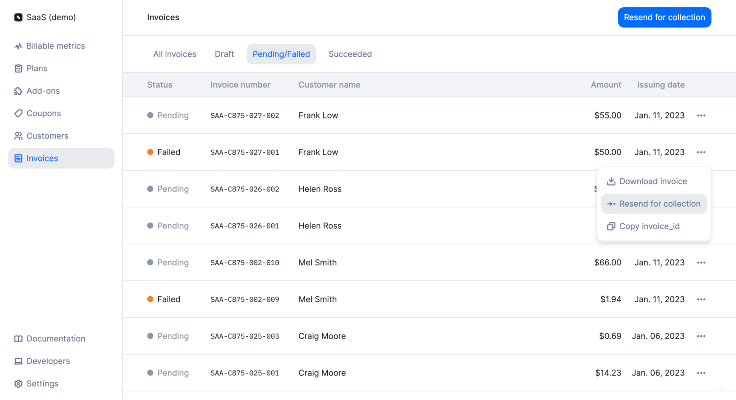
Lago is an open-source metering and usage-based billing platform built for developer-first companies that want full control over their billing stack. You can self-host the free Community edition under an AGPLv3 license or run the managed Lago Cloud.
Lago is the build-versus-buy middle ground. Instead of handing your billing data to a closed platform, you run an event-based metering engine you can inspect, extend, and host yourself, with no revenue share and no vendor lock-in on the self-hosted version.
The tradeoff is operational: you own the deployment, scaling, and maintenance, and the platform focuses on metering and billing rather than the full quote-to-revenue motion.
Key features
- Event-based usage metering. Ingest up to 15,000 billing events per second and aggregate them into billable metrics using count, sum, max, unique count, or weighted sum. This is the platform's core strength.
- Flexible pricing models. Combine flat-rate subscriptions with pay-as-you-go, tiered, volume, and package pricing, plus coupons, add-ons, and prepaid credits, all via API or a visual interface.
- Open-source and payment-agnostic. Self-host under AGPLv3 for full data control, and connect any payment processor such as Stripe, Adyen, or GoCardless rather than being locked to one.
- API-first architecture. Every feature is available via REST API, which suits engineering teams embedding billing directly into their own product.
Pros
- Full control and transparency, with no vendor lock-in on the self-hosted edition
- No revenue share or per-transaction fee when you self-host
- Strong, scalable metering engine with an active open-source community
Cons
- Self-hosting carries real operational overhead for deployment, scaling, and maintenance
- Focused on metering and billing, with no native CPQ or accounts receivable agent
- Some capabilities, such as the customer portal and finer access controls, sit behind the paid cloud tier
Best for
- Engineering-led teams that want to own and inspect their billing infrastructure
- Companies with data-residency or compliance needs that favor self-hosting
Pricing
The self-hosted Community edition is free and open source under AGPLv3, so you pay only your own hosting costs. The managed Lago Cloud is quote-only, with no public pricing, so contact the vendor for a figure.
How to evaluate AI billing software
The best AI billing software solution for your needs depends less on a feature checklist and more on your pricing model, your event volume, and where your business will be in two years.
Migrating billing systems is painful, so choose for the company you are becoming, not just the one you are today.
Here is what to weigh:
- Is your pricing hybrid? If you run seats plus usage plus credits plus commits, you need a platform that handles full hybrid models, not one that bolts usage onto a subscription core.
- What is your event volume trajectory? Estimate where your metered events will be in two to three years, then ask each vendor about throughput, deduplication, and how corrections and backfills are handled.
- How much do you need beyond metering? If you also need CPQ, contracts, collections, and rev rec, an end-to-end platform avoids the cost and risk of stitching point solutions together.
- Does the quote flow into the bill? Confirm that approved quotes create the billing schedule automatically, with no re-keying. This single handoff is where a lot of revenue leakage and dispute risk lives.
- What is the true cost at scale? Watch for percentage-of-revenue or percentage-of-billing models that compound as you grow, and model the total cost at your three-year revenue, not today's.
- How fast can you go live and iterate? No-code configuration and a short implementation let business teams change pricing without an engineering queue, which compounds in value over time.
| If this matters most | Choose | Why |
|---|---|---|
| One no-code system from quote to revenue | Alguna | Unifies CPQ, usage metering, billing, rev rec, and an accounts receivable agent without engineering |
| Flat, predictable pricing with no revenue cut | Alguna | Pricing scales by feature set rather than a percentage of your billing |
| Automating AR, collections, and disputes | Alguna or Monk | Purpose-built collections agents that cut days sales outstanding |
| Owning and self-hosting your billing stack | Lago | Open-source metering with full data control and no vendor lock-in |
| Subscription-first, now adding usage | Chargebee | Mature recurring engine with schemaless usage ingestion |
| High-volume metering at mid-market or enterprise scale | Alguna or Solvimon | Engineered for high event throughput and global billing flows |
| Enterprise scale, multi-entity, and compliance | Alguna or Zuora | Deep revenue recognition and governance proven at the largest scale |
If quoting complexity is your bottleneck, our guide to configure price quote software for usage-based billing walks through the criteria in more depth.
Frequently asked questions about AI billing software
What are the key features of AI usage billing software?
The core features are real-time usage metering, flexible hybrid pricing logic, quoting that flows directly into billing, ASC 606 revenue recognition, and AI agents that automate contract ingestion, dunning, and cash application. The best platforms connect all of these so the invoice always reflects what was quoted and consumed.
Is there AI billing software free of charge?
Some platforms offer a free entry point. Alguna has a free tier for smaller teams, and Chargebee's Starter plan begins at $0 until you reach a cumulative billing threshold. Open-source options also exist if you are willing to self-host and operate the infrastructure yourself. For most scaling AI companies, though, the relevant question is total cost at your future revenue rather than whether a free tier exists today.
Who's got the best billing software for AI startups?
The "best" billing software for AI startups depends on your pricing model and stage, but the underlying needs are consistent. Most AI startups bill on consumption, whether that is tokens, API calls, agent runs, or credits, so the first requirement is real-time usage metering that stays accurate at high event volume. The second is pricing flexibility, because early-stage pricing changes constantly and you want to launch new plans or hybrid models without an engineering ticket. The third is cost predictability: AI products carry real compute costs, so a percentage-of-revenue or percentage-of-billing fee quietly eats into already thin margins as you scale.
On those criteria, Alguna is our top pick for most AI startups, since it combines no-code usage metering, hybrid pricing, CPQ, and an accounts receivable agent in one system with flat, predictable pricing and no revenue cut. If your team is engineering-heavy and wants to own the stack, Lago's open-source metering is a strong early-stage option. Once revenue and collections become the bottleneck, Alguna, Tabs and Monk all add serious AR and collections automation.
How do AI billing software pricing structures in 2025 actually work?There are three common models. Flat, feature-based pricing charges a predictable monthly fee regardless of how much you bill, which is what Alguna uses. Percentage-of-billing models, such as Chargebee's overage fee, scale with your volume. Custom enterprise pricing, used by Zuora and Solvimon, is quoted on transaction volume and modules. Run the math at your projected three-year revenue, because percentage models compound.
Can AI-based accounting and billing software handle A/R?
Yes. Modern platforms automate accounts receivable by generating invoices from contracts, sending automated dunning reminders, applying incoming payments to open invoices, and recognizing revenue, all without spreadsheets. Tabs is built heavily around AR and collections automation, while Alguna handles AR as part of its unified quote-to-revenue platform.
How effective is AI-driven billing software at catching missed renewals?
Effective, when the platform gives you real-time revenue visibility rather than month-end reports. Tools that surface stalled renewals, upcoming contract expirations, and usage anomalies as they happen let revenue teams act before a renewal slips. Alguna's real-time revenue insights are designed to flag exactly these signals early.
Pick the platform that fits your pricing, not the other way around
Every month on the wrong system has a price: revenue that leaks, deals that stall, and a finance team buried in reconciliation. Get it right and you get the opposite, a single source of truth where what sales sells is exactly what finance bills. The teams that move first will spend that time growing while everyone else is still closing the books.
There is no single winner for every company, but the pattern is clear. Zuora and Chargebee are the proven incumbents for enterprises and subscription-first SaaS.
Tabs and Solvimon are sharp at specific jobs, but have limited AI capabilities. For fast moving SaaS and AI native companies, Alguna is the strongest all-around choice for the best AI billing software.

Discover an AI billing software solution that works
Book your personalized demo to see Alguna's pricing simulator, AI contract ingestion, and AR agent in action. Join the finance teams that have saved countless of hours on chasing payments.