A practical, buyer-focused comparison of the strongest Recurly alternatives, what each one is best at, and where they fall short.
Best for mid-market subscription billing: Chargebee. A deep, mature feature set with a finance-friendly admin interface, though costs climb as you scale.
Best if you already use Stripe: Stripe Billing. The lowest-friction way to add subscriptions and usage billing on top of Stripe payments.
Best for large, complex enterprises: Zuora. Handles millions of subscribers and intricate billing, at enterprise cost and implementation time.
Best for audit-ready financials and SaaS metrics: Maxio. Strong ASC 606 revenue recognition and reporting for B2B SaaS preparing for an audit or raise.
Best affordable, ecosystem-first option: Zoho Billing. Low flat pricing and tight Zoho Books and CRM integration for SMBs and mid-market teams.
Rule of thumb: match the tool to how you sell. If you only bill consumer subscriptions, a focused billing engine works. If you sell B2B on contracts or usage and care about collecting what you're owed, choose a full quote-to-cash platform like Alguna.
Recurly has been a popular choice for automating subscription billing and recovering failed payments. But it isn't the right fit for everyone.
Some teams find it leans toward high-volume direct-to-consumer use cases. Others want more than recurring charge processing. They want quoting, revenue recognition, and automated collections that actually chase overdue invoices, all in one place. If that sounds familiar, you're in the right post.
Below, we walk through 6 of the best Recurly alternatives in 2026. We cover what each platform does well, where it struggles, who it suits, and what it costs, so you can shortlist the right one for your business.
Why teams look for Recurly alternatives
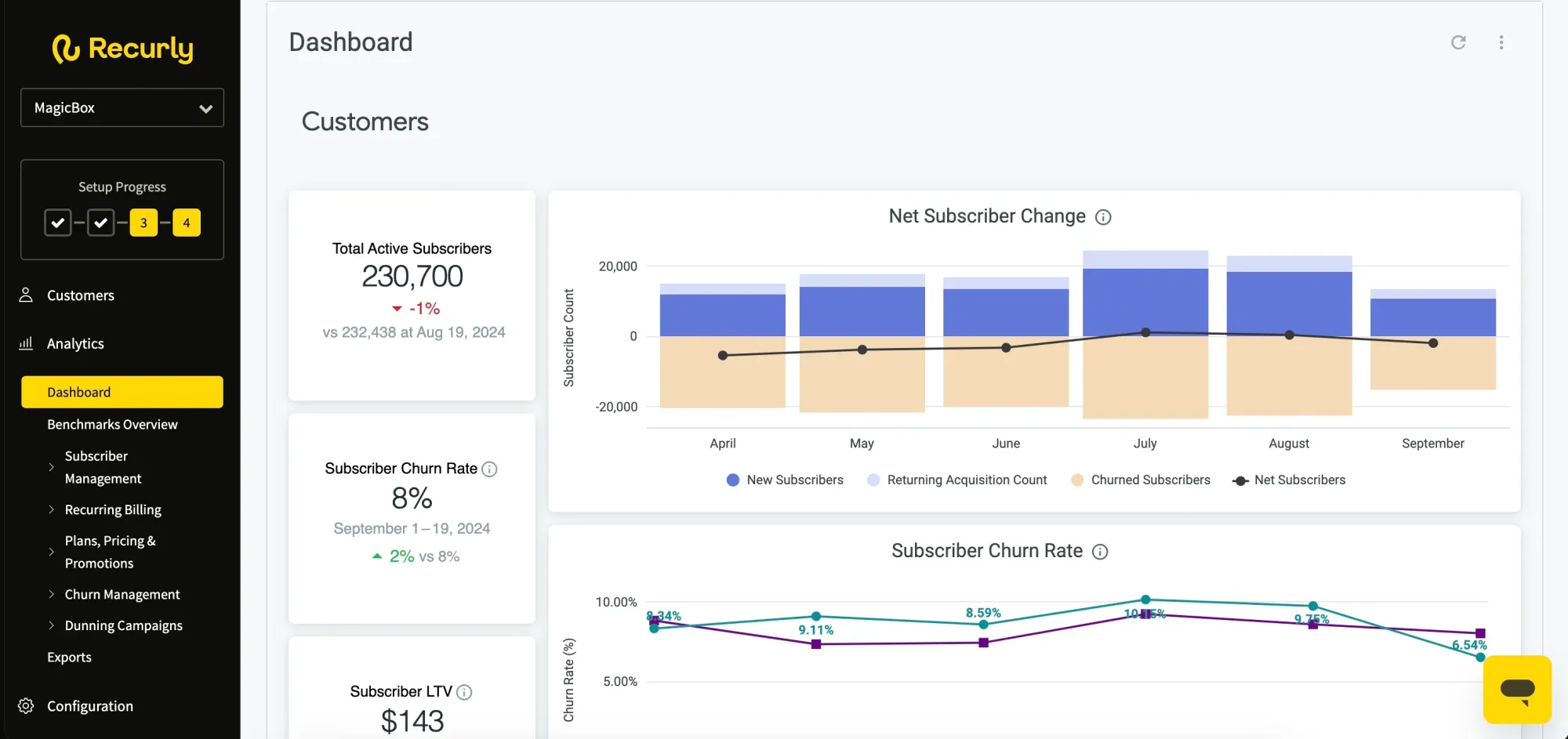
Recurly is a subscription management and recurring billing platform. It handles plan and pricing creation, automated invoicing, dunning, and revenue recovery, and it supports more than 20 payment gateways. For high-velocity subscription businesses, its failed-payment recovery tooling is a genuine strength.
That matters because involuntary churn is one of the largest revenue leaks in the subscription economy. Failed subscription payments are estimated to have cost businesses around 129 billion dollars in 2025, and roughly half of all subscription churn traces back to a card that simply didn't go through. Recovering that revenue is exactly the kind of problem modern billing platforms are built to solve.
So why do teams move on? A few reasons come up again and again:
- Pricing transparency. Some buyers report that important commercial terms weren't clear up front, which made the real cost higher than expected.
- B2C bias. Recurly shines for high-volume consumer subscriptions. B2B sellers with negotiated contracts, custom quotes, and net terms often need more.
- Billing is only half the job. Recurly bills, but it doesn't run your accounts receivable. Chasing overdue invoices, capturing promises to pay, and resolving disputes still lands on your finance team.
- Fragmented stack. Quoting, billing, revenue recognition, and collections often live in separate tools, which creates reconciliation work and reporting gaps.
If any of those resonate, the alternatives below are worth a look. A good place to start is deciding whether you need a pure billing engine or a full quote-to-cash platform that also collects what you're owed.
6 best Recurly alternatives for modern teams
Here's a side-by-side view of the 6 platforms we cover, so you can compare best fit, strengths, limitations, and pricing before reading the deep dives.
| Platform | Best for | Strengths | Limitations | Pricing* |
|---|---|---|---|---|
| Alguna | B2B SaaS teams that want quoting, billing, rev rec, and AI-driven collections in one platform | End-to-end quote-to-cash, agentic AR agent, promise-to-pay capture, dispute detection, ASC 606 rev rec, SOC 2 | Newer platform, less suited to high-volume B2C subscription billing | Paid plans start from $700 per month. |
| Chargebee | Mid-market subscription businesses with a finance-team buyer | Deep billing feature set, broad gateway support, CPQ and rev rec modules | Costs climb past 1M dollars in billing, layered UI, overage fees | Free under 250K, Performance from 599 dollars per month, Enterprise custom |
| Stripe Billing | Companies already on Stripe that want developer-led recurring billing | Tight Stripe integration, strong APIs, usage-based and hybrid pricing | Locked to Stripe payments, complex logic needs engineering, fees stack internationally | 0.5 to 0.8 percent of billing volume on top of payment fees |
| Zuora | Large enterprises with complex, high-volume subscription models | Enterprise-grade billing, deep rev rec, handles millions of subscribers | Long implementations, high cost, custom pricing only | Custom, often 50K dollars per year and up |
| Maxio | B2B SaaS preparing for audit or fundraising that need rev rec and SaaS metrics | GAAP and ASC 606 rev rec, SaaS metrics, financial reporting | Less focus on collections and contract-to-cash, percentage fees at scale | Build sandbox free, Grow from 599 dollars per month, Scale custom |
| Zoho Billing | SMBs and mid-market teams that want affordable billing inside the Zoho ecosystem | Flat per-org pricing, quotes and CPQ, metered billing, dunning, tight Zoho Books and CRM integration | Subscription billing sits on higher tiers, 1M dollar revenue cap before Enterprise, best value inside Zoho stack | Standard from 39 dollars per month, Premium from 79 dollars per month, Enterprise custom |
*Pricing reflects publicly available information at the time of writing and is subject to change. Always confirm current pricing with each vendor.
1. Alguna
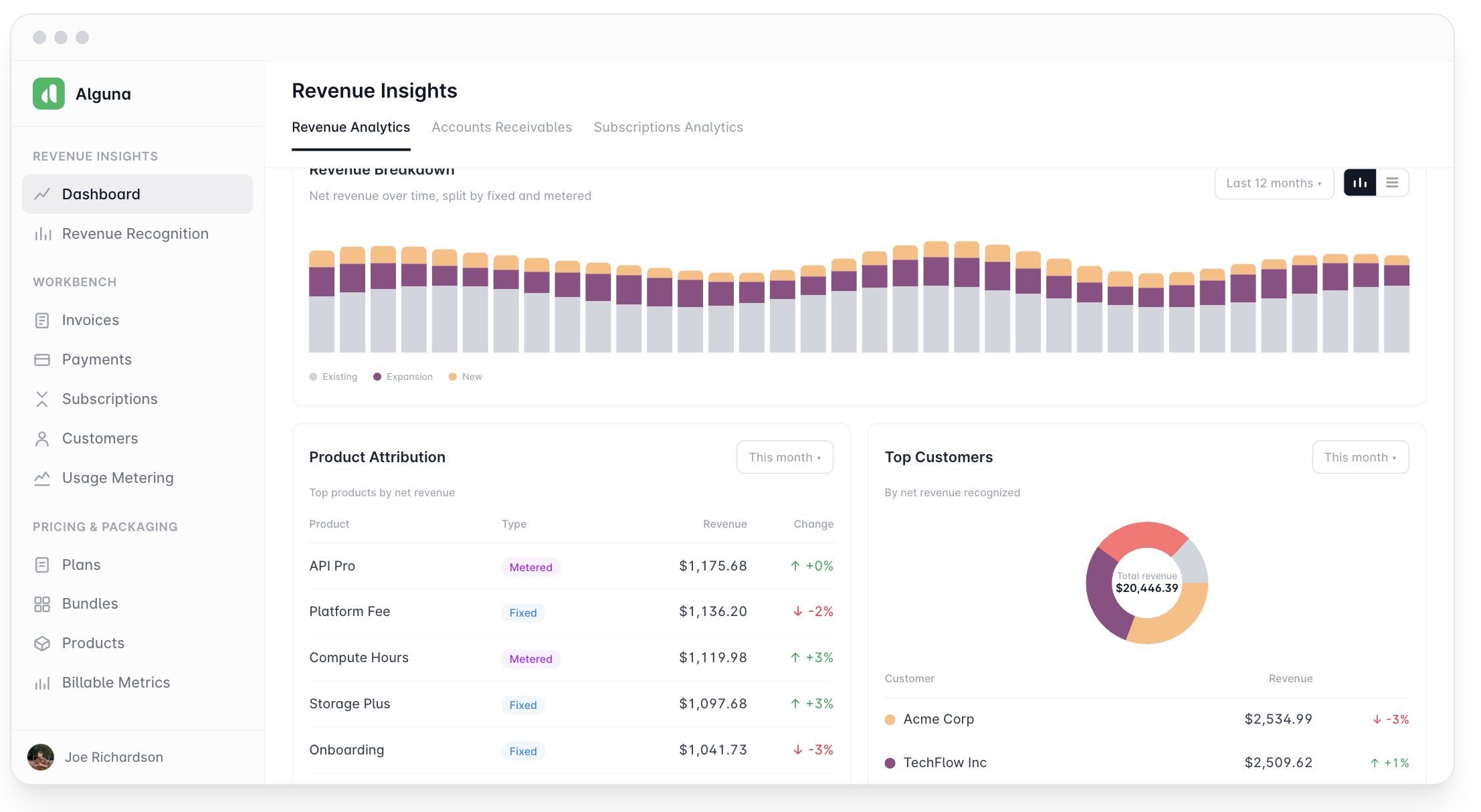
Alguna is an AI native revenue management platform built for the full quote-to-cash journey, not just billing. Where most tools on this list stop at generating an invoice, Alguna keeps going. Its AI accounts receivable agent works your open invoices the way a member of your finance team would, chasing payments, capturing promises to pay, flagging disputes, and keeping cash moving without manual follow-up.
That makes Alguna a strong fit for B2B sellers who quote custom deals, bill on contracts or usage, and live or die by their days sales outstanding (DSO). You get CPQ, billing, ASC 606 revenue recognition, and collections in one system, which removes the reconciliation gaps that appear when each step lives in a different tool.
Key features
- AI AR agent that monitors receivables, drafts and sends outreach, captures promise-to-pay commitments, and detects disputes before they become write-offs, all from a single workspace.
- Control Tower workspace with Overview, Cases, Tasks, Inbox, and Activity views, so your team can see every account, action, and conversation in one place.
- An autonomy ladder that lets you choose how much the agent does on its own. Start in Monitor, move to Suggest, and graduate to Act as you build trust, all governed by hard-coded guardrails and configurable personas.
- Quote-to-cash coverage including CPQ for sales-led deals, flexible billing for subscription and usage models, and ASC 606 revenue recognition for clean, audit-ready financials.
- Cadences and playbooks that standardize how you collect, plus dispute detection that routes problems to the right owner automatically.
- SOC 2 compliance and enterprise-grade controls, so finance and security teams can sign off with confidence.
Pros
- Combines quoting, billing, revenue recognition, and collections, which most billing tools leave to separate systems.
- The AI AR agent reduces manual chasing and helps bring down DSO.
- The autonomy ladder lets you adopt automation at your own pace with guardrails in place.
- Built for B2B contract and usage billing, not just consumer subscriptions.
Cons
- As a newer platform, it has a smaller public footprint than long-established incumbents.
- It's purpose-built for B2B revenue operations, so it's less suited to very high-volume, low-touch B2C subscription billing.
Best for
- B2B SaaS and fintech companies with contract or usage-based revenue.
- Finance teams that want to automate accounts receivable and lower DSO.
- Teams replacing a patchwork of quoting, billing, and collections tools with one platform.
Pricing
Alguna offers custom pricing based on your billing volume and the modules you need. Book a demo for a tailored quote.
"Alguna enables complex usage-based billing for us in a way that other products can't."
- Shane Curran, CEO at Evervault
"Alguna ticked every box I needed. Most importantly, it gave me a clear overview of revenue movements, something Stripe just couldn't provide."
- Adam Liska, Co-founder and CEO at Airspeed
"Once I sign up a customer and we get them deployed, everything's on autopilot. I don't have to think about it anymore."
- Juan Burgos, Co-founder and CEO at Haven AI
2. Chargebee
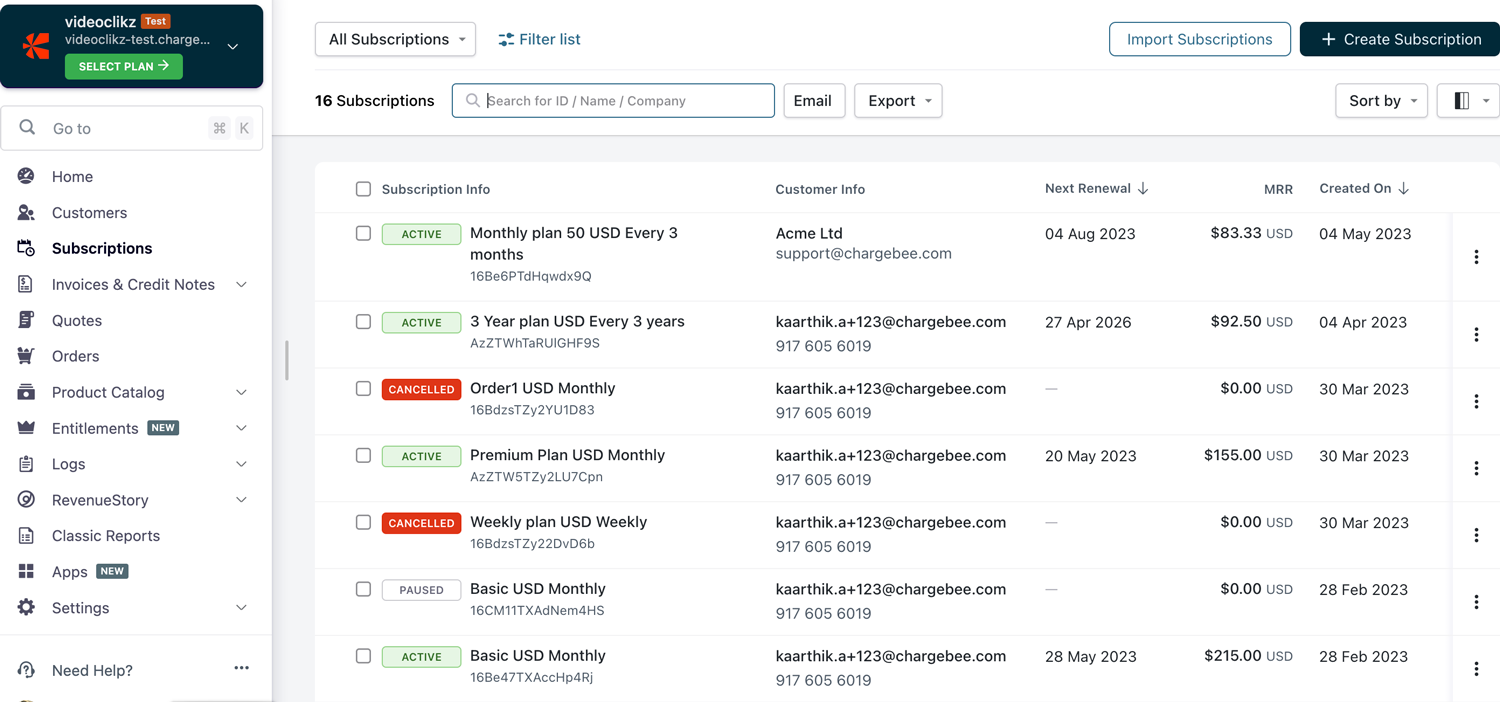
Chargebee is a mature subscription billing and revenue management platform that has been refined over more than a decade. It sits comfortably between Stripe Billing's simplicity and Zuora's enterprise machinery, and it gives finance and operations teams a real admin interface to manage pricing, coupons, and reports without filing engineering tickets.
It ships as a modular suite covering billing, CPQ, receivables, retention, and revenue recognition, with broad payment gateway support. That breadth is its appeal and, for some, its drawback, since the more capable modules carry their own costs.
Key features
- Handles flat-rate, per-seat, tiered, volume, and usage-based models out of the box, including hybrid pricing that combines a base fee with usage charges.
- Modular suite spanning billing, CPQ, revenue recognition, retention, and receivables, with more than 30 payment gateways and multi-currency support.
- Self-service customer portal, automated dunning with payment retries, and tax and compliance reporting.
Pros
- Deep, battle-tested feature set for complex subscription models.
- Finance teams can manage pricing and reports without developer involvement.
- Generous free tier for early-stage companies.
Cons
- Costs rise quickly once you pass 1 million dollars in billing volume.
- The most valuable features sit behind separate plans and add-ons.
- The interface has layers of complexity that take time to learn.
Best for
- Mid-market SaaS companies with complex subscription pricing.
- Finance teams that want self-serve control over billing logic.
Pricing
A free Starter plan covers up to 250,000 dollars in cumulative billing. The Performance plan is 599 dollars per month, and Enterprise is custom. Overage fees of 0.75 percent apply above plan thresholds.
Some features we need, especially for country-specific compliance requirements, are not available yet. It would be great to see more flexibility and native support for these use case."
- Review by verified user on G2
3. Stripe Billing
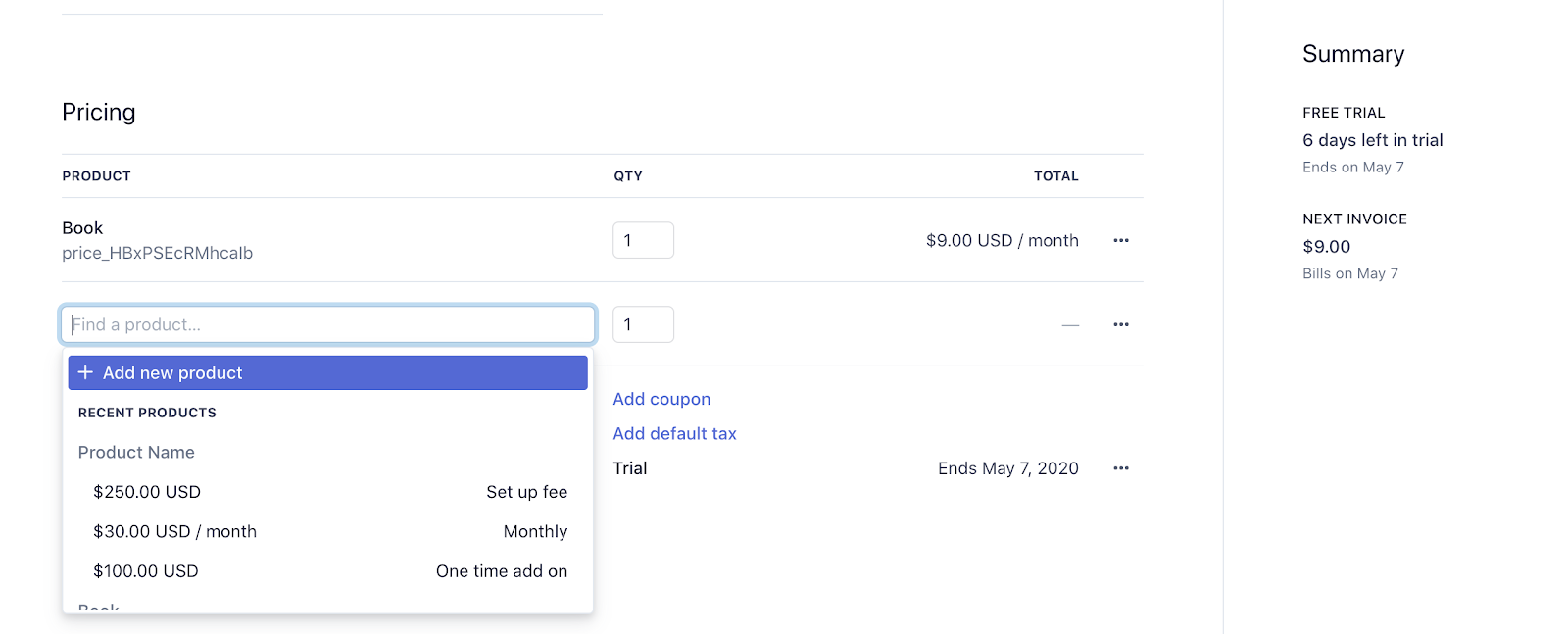
Stripe Billing is the subscription and recurring billing layer built directly on top of Stripe's payment infrastructure. If you already run payments through Stripe, it's the path of least resistance for adding subscriptions, invoices, and usage-based pricing, with the clean APIs and documentation Stripe is known for.
The trade-off is that Stripe Billing is tied to Stripe as your payment processor, and more sophisticated billing logic tends to require engineering time to set up and maintain.
Key features
- Recurring billing, invoicing, and usage-based and hybrid pricing, with Smart Retries and automated dunning for failed payments.
- Developer-first APIs, prebuilt checkout, and multi-phase subscription schedules.
- Revenue recognition, quotes, and revenue recovery tools on the higher Scale tier.
Pros
- Seamless if you already use Stripe for payments.
- Excellent developer experience and documentation.
- Supports complex usage-based and hybrid models.
Cons
- Requires Stripe as your payment processor, with no multi-gateway support.
- Complex pricing logic needs developer involvement.
- Fees stack quickly for high-volume or international businesses.
Best for
- Product-led companies already running on Stripe.
- Engineering teams comfortable building billing logic in code.
Pricing
Stripe Billing charges roughly 0.5 percent of billing volume on the Starter tier and 0.8 percent on Scale, on top of standard Stripe payment processing fees of 2.9 percent plus 0.30 dollars per transaction.
The pricing is the main pain point. Stripe Billing is expensive, especially for a startup like ours. The per-transaction fees and the additional percentage on top for billing features add up quickly as you scale."
- Review by verified user on G2
4. Zuora
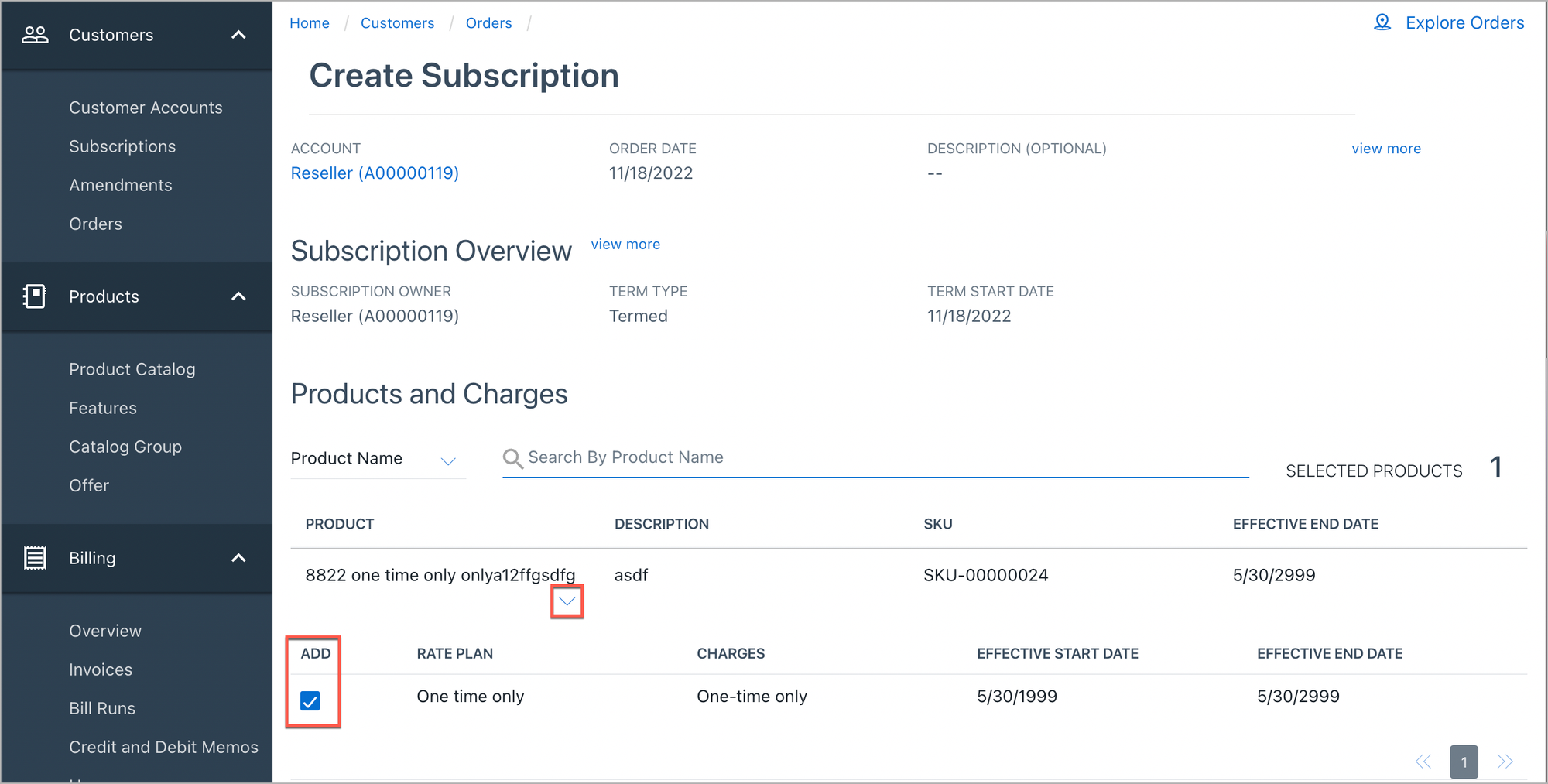
Zuora is the enterprise heavyweight of subscription billing. It's built for companies that bill millions of subscribers across multiple products, currencies, and contract terms, with deep revenue recognition and the ability to unify the entire order-to-cash process at scale.
That power comes with weight. Implementations can run for months, pricing is enterprise-custom with no public rates, and the platform is best justified when genuine complexity demands it.
Key features
- Enterprise subscription management and billing for usage-based, tiered, and hybrid models at high volume.
- Automated revenue recognition for ASC 606 and IFRS 15 compliance, plus sophisticated collections workflows.
- API-first design with CRM and ERP integration, commonly paired with Salesforce CPQ for quote-to-cash.
Pros
- Handles extreme scale and complexity that most platforms can't.
- Comprehensive revenue recognition and financial compliance.
- Mature, enterprise-grade ecosystem.
Cons
- Long, costly implementations measured in months.
- Custom pricing only, with high total cost of ownership.
- Overkill for product-led or self-service businesses.
Best for
- Large enterprises and public companies with dedicated implementation teams.
- Telecom, media, and IoT businesses with intricate billing.
Pricing
Zuora uses custom, enterprise-only pricing with no public rate card. Reported deployments commonly start around 50,000 dollars per year and rise with volume, modules, and users.
One of the main drawbacks of Zuora is its complexity. The platform is very powerful, but it often requires significant setup, configuration, and ongoing maintenance, which can be resource-intensive for teams without dedicated billing or RevOps expertise."
- Review by verified user on G2
5. Maxio
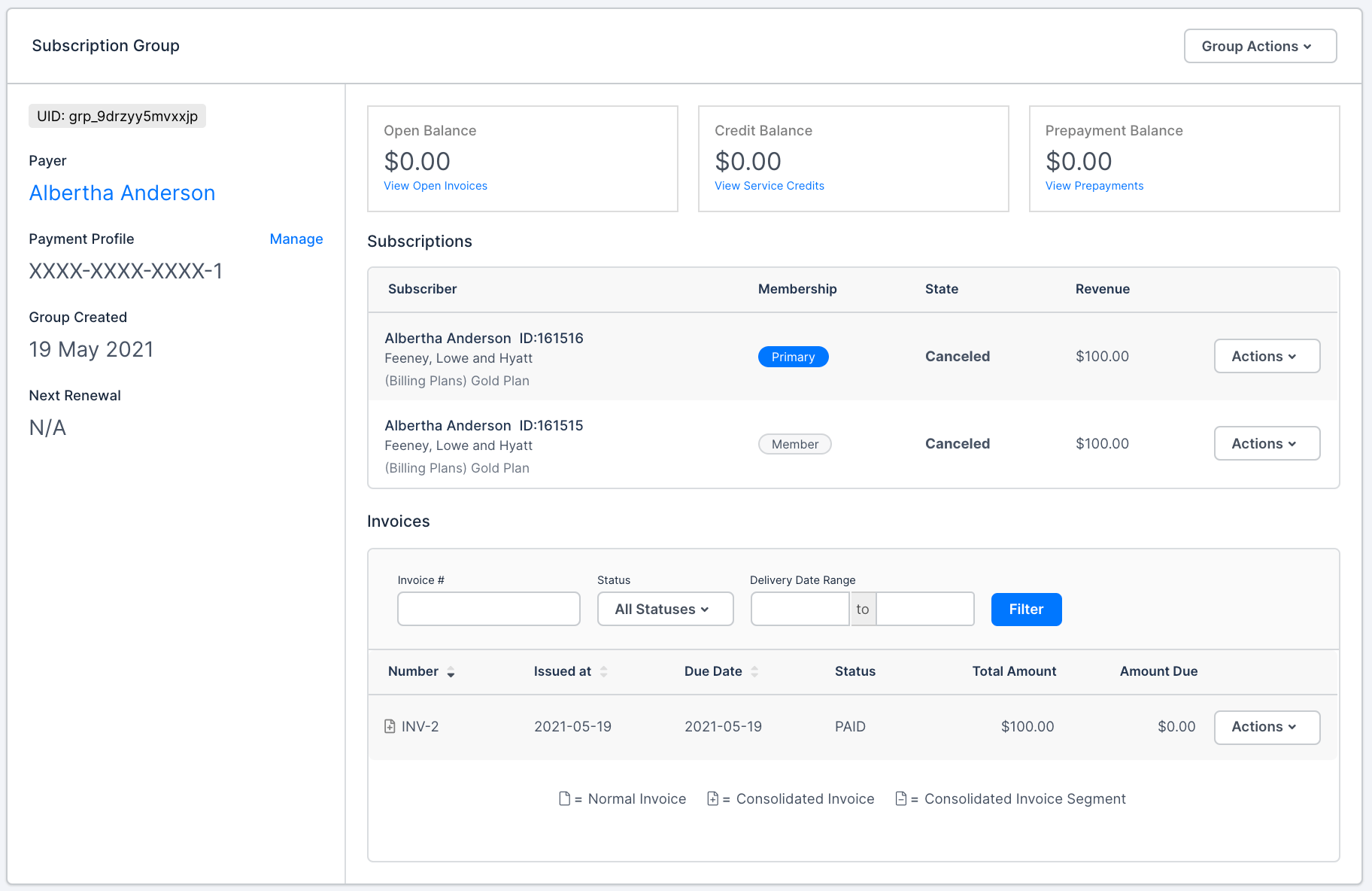
Maxio is the result of a merger between Chargify and SaaSOptics, which combined subscription billing with revenue recognition and SaaS metrics. The result is a financial operations platform aimed squarely at B2B SaaS companies that need clean, audit-ready financials and reporting alongside their billing.
Its sweet spot is the gap between billing and accounting. If your top priority is ASC 606 compliance or getting financials in shape for due diligence, Maxio's reporting is a strength. It is less focused on full contract-to-cash and collections automation.
Key features
- Recurring and usage-based billing, subscription management, and automated invoicing for B2B SaaS.
- GAAP and ASC 606 compliant revenue and expense recognition.
- SaaS metrics and reporting for ARR, MRR, churn, renewals, cohorts, and revenue waterfalls.
Pros
- Strong revenue recognition and financial reporting for B2B SaaS.
- Built-in SaaS metrics reduce spreadsheet work.
- Well regarded for responsive customer support.
Cons
- Lighter on collections automation and full contract-to-cash workflows.
- Percentage-based fees can climb as billing volume grows.
- Some users report pricing flexibility is limited.
Best for
- Late-stage B2B SaaS startups preparing for audits or acquisition.
- Finance teams that need rev rec and SaaS metrics in one place.
Pricing
Maxio offers a free Build sandbox, a Grow plan from 599 dollars per month for billing up to 100,000 dollars, and a custom Scale plan for higher volumes.
I think the amount of bolt on and add ons that you need to use all of the functions is frustrating. Right now, we have to bring in Maxio advanced billing and pull from multiple different accounts to get into the system. The ability to use one system would be great."
- Review by verified user on G2
6. Zoho Billing
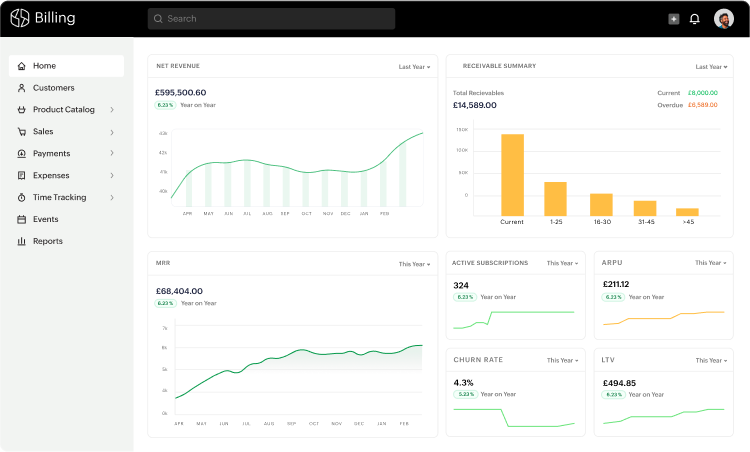
Zoho Billing, formerly Zoho Subscriptions, is the billing and subscription-management product in Zoho's wider finance suite. It covers quotes, invoicing, recurring and usage-based billing, dunning, and reporting, and it connects natively to Zoho Books, Zoho CRM, and the rest of Zoho's 40-plus apps. For teams already running on Zoho, it's the natural way to add billing without bolting on a separate vendor.
Its biggest draw is value. Pricing is a flat monthly fee per organization rather than a percentage of your revenue, which keeps costs predictable as you grow. The trade-off is that it's built for straightforward billing at SMB and mid-market scale, and the more advanced controls sit in the Premium and Enterprise tiers.
Key features
- Quotes, invoicing, and CPQ for one-time and recurring sales, with multi-currency and localized tax support.
- Recurring and usage-based metered billing, proration, trials, and coupons, plus hosted payment pages on the Premium tier.
- Dunning management and automated payment reminders to recover failed payments and reduce involuntary churn.
- Native integration with Zoho Books, Zoho CRM, and 40-plus Zoho apps, plus subscription metrics like MRR and churn reporting.
Pros
- Affordable flat per-organization pricing rather than a cut of revenue.
- Deep integration for teams already using Zoho Books or Zoho CRM.
- Covers quotes, billing, and dunning in one familiar interface.
Cons
- Subscription billing is gated to the Premium tier and above.
- Standard and Premium cap out at 1 million dollars in annual revenue before you need Enterprise.
- Delivers the most value when you're already in the Zoho ecosystem, less so as a standalone choice.
- Users report a learning curve around taxes, templates, and workflows.
Best for
- SMBs and mid-market businesses that want affordable, predictable billing.
- Teams already standardized on Zoho Books, Zoho CRM, or Zoho One.
Pricing
Zoho Billing offers a Standard plan from 39 dollars per month and a Premium plan from 79 dollars per month, both billed annually, with subscription billing included from Premium up. The Enterprise edition is custom-priced for high volumes, advanced usage-based billing, and configurable revenue recognition. Standard and Premium support up to 100,000 invoices per year with annual revenue up to 1 million dollars.
When you do not have frequent payments the commission from each payment is kind of steep, would appreciate more flexible pricing."
- Review by verified user on G2
How to evaluate Recurly alternatives
The right platform depends on how you sell and what you need to automate. Before you commit, work through these criteria:
- Map your revenue model first. Are you billing consumer subscriptions, B2B contracts, usage, or a hybrid? Consumer-heavy models favor recurring billing engines. Contract and usage models favor quote-to-cash platforms.
- Decide how much of the lifecycle you want covered. Some tools only bill. Others also quote, recognize revenue, and collect. The more you consolidate, the fewer reconciliation gaps you create.
- Weigh collections and DSO. If overdue invoices and manual chasing are eating your team's time, prioritize a platform with automated collections rather than billing alone.
- Check revenue recognition needs. If you're approaching an audit or fundraising, confirm the platform supports ASC 606 and IFRS 15 out of the box.
- Model the true cost. Look past the headline rate. Factor in overage fees, add-on modules, payment processing, and implementation when you compare.
- Test the fit before you sign. Run a real scenario in a trial or demo. The best system is the one your team will actually use without workarounds.
Frequently asked questions about Recurly alternatives
What is the best Recurly alternative?
It depends on your model. For B2B SaaS that wants quoting, billing, revenue recognition, and AI-driven collections in one platform, Alguna is a strong fit. For mid-market subscription billing, Chargebee is popular. For teams already on Stripe, Stripe Billing is the easy path, and large enterprises often land on Zuora.
Why would a company switch away from Recurly?
Common reasons include wanting clearer pricing, needing B2B contract and usage billing rather than consumer subscriptions, and wanting a platform that also handles accounts receivable and collections rather than billing alone.
Are there Recurly alternatives that handle collections, not just billing?Yes. Alguna is built around an AI accounts receivable agent that chases overdue invoices, captures promises to pay, and detects disputes, which goes beyond the recurring billing and dunning that most alternatives focus on. You can read more about how automated AR works if collections is your priority.
Which Recurly alternative is best for enterprises?
Zuora is the established choice for very large, complex, high-volume subscription businesses. Alguna and Chargebee suit growing B2B companies that want enterprise-grade capability without the longest implementations.
Do these platforms support revenue recognition?
Most do. Alguna, Chargebee, Zuora, and Maxio all support ASC 606 revenue recognition, and Zoho Billing offers configurable revenue recognition on its Enterprise edition. Stripe Billing includes it on its Scale tier.
The right billing platform should also get you paid
Recurly does one job well: recurring subscription billing. But for a growing number of B2B teams, billing is only half the battle. The other half is collecting what you're owed, recognizing revenue cleanly, and quoting deals without bolting together three tools to do it.
If you mostly sell consumer subscriptions, a focused billing engine may be all you need. If you sell B2B, bill on contracts or usage, and care about your DSO, look for a platform that covers the whole journey from quote to cash, and that actually collects. That's the gap Alguna was built to close.