If you're evaluating Younium alternatives, you probably need deeper reporting capabilities, greater flexibility around subscription management, and a stronger Salesforce integration.
Younium was built subscription-first for European mid-market B2B, and worth comparing against alternatives built for the AI era, such as Alguna. Alternatively, you may have outgrown Yonium and want move to something like Zuora.
In this guide, we'll cover what Younium does well, why teams look elsewhere, and how six alternatives compare on features, pricing, and fit.
What is Younium?
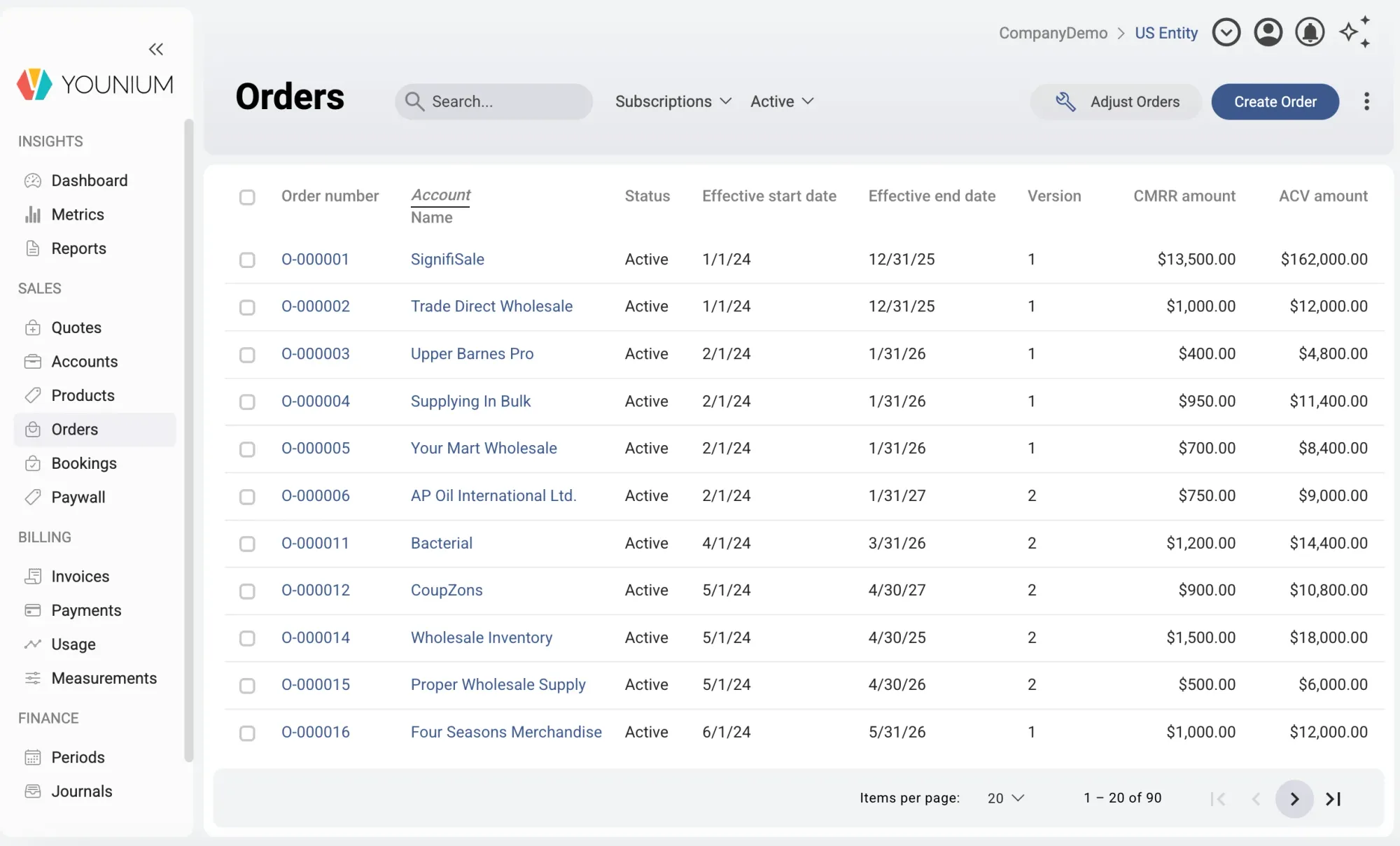
Younium is a B2B subscription management and billing platform founded in 2017 and headquartered in Stockholm. It sits between your CRM and your ERP, turning signed contracts into subscriptions, subscriptions into invoices, and invoices into recognized revenue under ASC 606 and IFRS 15.
The company raised an additional 2.7 million euros in 2024 to expand across Europe, and its customer base skews heavily toward mid-market B2B SaaS companies in the Nordics.
Younium handles messy B2B contract structures well, including ramps, mid-term amendments, proration, and co-terminated subscriptions. It carries native connectors for Nordic and European accounting systems that most American-built platforms don't touch, including Microsoft Dynamics 365 Business Central, Exact Online, and several regional ledgers.
Recently, Younium introduced its own CPQ, so quotes flow into subscription orders without a separate quoting tool.
Why teams look for Younium alternatives
No platform fits everyone, and the reasons buyers keep an eye on the wider market are fairly consistent.
The below trends are based on real user reviews from G2.
- Implementation timeline: The average implementation takes roughly four months, and reviewers describe a structured, guided onboarding. That's fine if you have a RevOps lead to own it, but painful if you don't.
- Reporting customization comes up repeatedly. Reviewers cite difficulty building specialized financial reports, frequent exports into spreadsheets, and, in a smaller set of reviews, trust issues with the accuracy of insights.
- Salesforce integration frustrations. Bugs and sync delays with Salesforce appear often enough in G2 reviews to be worth probing directly in a demo, particularly if Salesforce is your system of record.
- Multi-entity navigation is clunky. Several reviewers describe moving between legal entities and running complex order processes as tedious, which is notable given multi-entity is a core reason people buy the product.
- Consumption-heavy and AI pricing. Younium is built subscription-first. If your model is metered by tokens, API calls, or compute, with credit balances and high event volumes, platforms designed around metering tend to fit better.
"Since it is a very deep system, it takes a while to onboard new users in the system. It can be a bit challenging to set up the payment plan correctly. There are many dates and many fields to keep in mind in order to get the outcome you desire.
It was quite difficult in the beginning because we didn't have a good view of the complexity of the system. When we imported our payment plans for the first time, there were a bit of issues with the dates of the payment plans."
Mattias T., Customer Success Manager
Younium alternatives: Overview
| Platform | Best for | Strengths | Limitations | Pricing |
|---|---|---|---|---|
| Alguna | SaaS, AI, and fintech companies that want CPQ, billing, and revenue recognition on one data model | No-code hybrid pricing, built-in CPQ and e-signature, unlimited event ingestion and seats, published pricing, fast implementation | Newer platform, so the pre-built integration catalog is still growing | Free Starter tier, $699 per month for Growth, custom for Enterprise Scale |
| Younium | Nordic and DACH mid-market B2B SaaS with complex contracts and regional ERP needs | Strong contract handling, native European accounting connectors, built-in CPQ | Quote-based pricing, roughly four-month average implementation, reporting customization gaps | Custom quote, listed from SEK 500 per user per month on Capterra |
| Chargebee | Mid-market SaaS teams that want a mature platform and a large partner ecosystem | Established product, wide integration library, named a Leader in the 2026 Gartner Magic Quadrant for recurring billing | Percentage-of-billing pricing gets expensive at scale, customization limits, modules sold separately | Free tier, then a monthly fee plus roughly 0.75 percent of billing above plan caps |
| Zuora | Large enterprises with multi-product, multi-entity monetization | Very broad pricing model support, deep Salesforce integration, enterprise-grade governance | Steep learning curve, long implementations, needs dedicated RevOps ownership | Custom quote, enterprise-oriented |
| Maxio | B2B SaaS finance teams focused on reporting, AR, and revenue recognition | Strong financial reporting, collections and dunning, unlimited user seats | Dated interface, reporting customization limits, QuickBooks sync delays | $599 per month up to $100,000 in monthly billings, custom above that |
| Stripe Billing | Developer-led teams already running payments on Stripe | Fast to implement, excellent documentation, reliable global payment rails | Advanced usage billing needs a separate product, limited invoice branding, thin B2B contract handling | 0.7 percent of billing volume, or annual plans from $620 per month |
| Frisbii (formerly Billwerk+) | European subscription businesses that want published pricing and local payment coverage | Transparent entry pricing, strong European payment and compliance coverage, bundled payment gateway | Interface complexity, thinner B2B contract depth, percentage fee on all processed billing | From 49 euros per month plus 0.95 percent of processed billing |
| Orb | AI and infrastructure companies with high-volume, complex usage pricing | High-throughput event ingestion, SQL-defined metrics, strong spend controls | No published pricing, no self-serve tier, priced on two axes at once | Custom quote based on billings issued and events ingested |
Pricing reflects publicly listed rates at the time of writing and changes often. Confirm current pricing directly with each vendor.
The 6 best Younium alternatives
1. Alguna
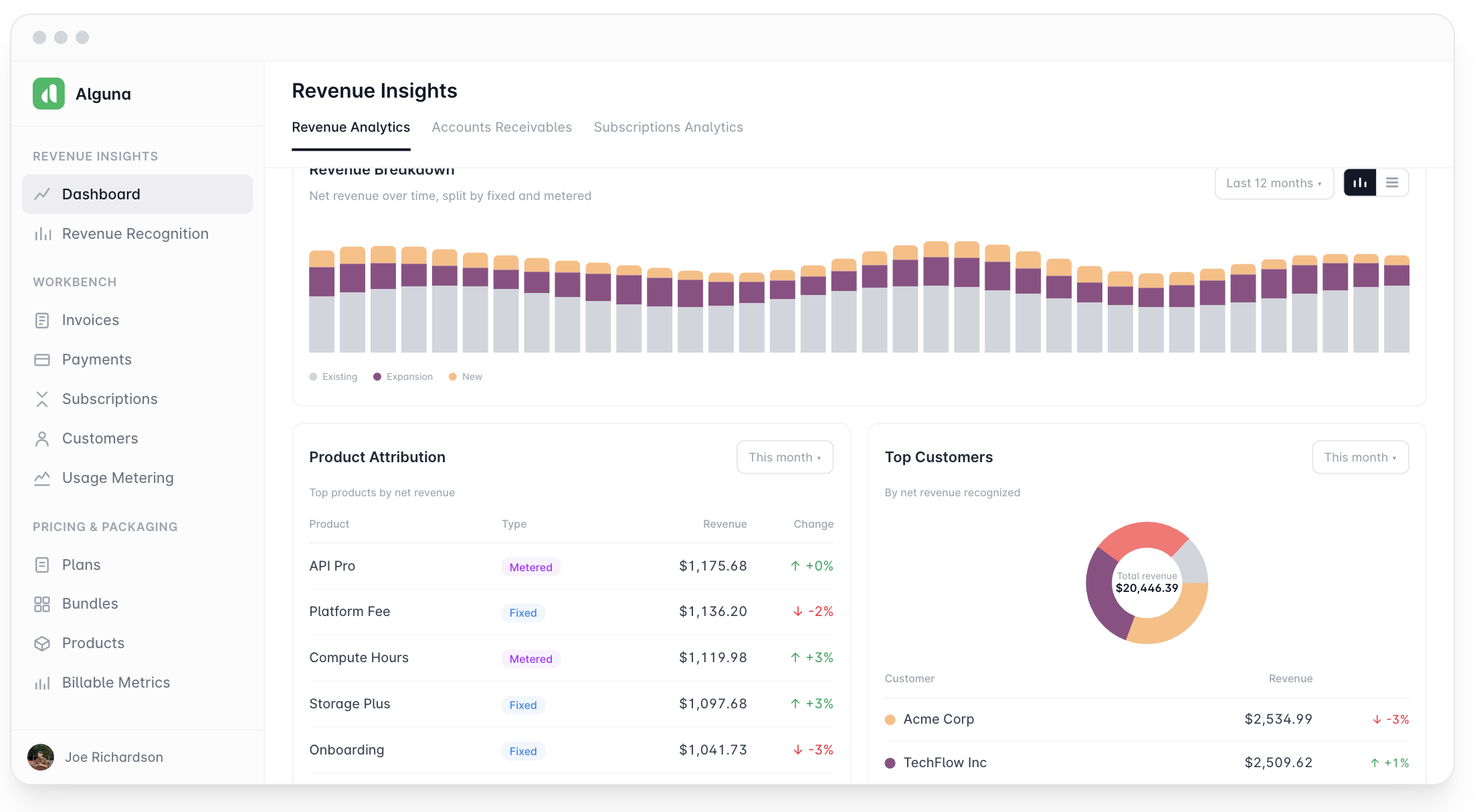
Alguna is an AI-native revenue management and monetization platform. It combines pricing, quoting, and billing in one unified system. The platform is purpose-built for SaaS, AI, and fintech companies whose pricing doesn't sit neatly in a subscription box. Backed by Y Combinator, the platform prides itself on its flexibility and managing complex AI pricing models.
The design principle is simple: the quote your rep sends, the invoice your customer receives, and the revenue your accountant recognizes should all come from the same object. When those live in separate systems, or in the same system stitched together from separate modules, they drift, and reconciling the drift becomes someone's monthly job.
If you're selling a committed platform fee plus consumption plus an AI credit balance, with a ramp in year two and a negotiated overage rate, you need a system where finance can model that without a services engagement.
As Shane Curran, CEO of Evervault, put it: "Alguna enables complex usage-based billing for us in a way that other products can't." Adam Liska, co-founder and CEO of Airspeed, made a point about visibility: "Alguna ticked every box I needed. Most importantly, it gave me a clear overview of revenue movements, something Stripe just couldn't provide."
Key features:
- No-code billing rules over real-time metering. Usage streams in continuously, and finance decides how it prices in the interface rather than in code. Recurring, usage-based, and hybrid plans, tiered overages, minimum commitments, credit balances, and grandfathering rules for legacy customers are all configuration, which is the difference between shipping a pricing change the week it's decided and queuing it behind a sprint.
- CPQ, e-signature, and contract management built in. Sales builds the quote, including ramps, negotiated rates, and custom discounts, sends it for signature, and closes it in one place. Because the quote is assembled from the same catalog that bills it, the signed terms become the billing terms automatically, with no re-keying step where a mismatch can creep in.
- Consolidated or split invoicing across entities. A customer sitting on several plans across several of your legal entities can receive one consolidated invoice or separate invoices per entity, without duplicate customer records. Multi-entity billing is part of the platform rather than a tier-gated add-on.
- Revenue recognition derived from the contract. Performance obligations come from the contract itself, so schedules follow ramps, mid-term changes, and usage true-ups without a parallel spreadsheet. Direct connections to QuickBooks, Xero, and NetSuite push recognized revenue into the books, and the audit trail runs from contract clause to invoice line.
- Unlimited event ingestion and unlimited seats on every tier, including the free one. Metering volume never creates a pricing cliff mid-quarter, and you don't have to ration logins for the people who need to see billing data.
Pros:
- Finance owns pricing changes, so updates ship in hours rather than through an engineering queue
- CPQ, billing, and revenue recognition share one data model, so quotes and invoices can't drift apart
- Published pricing with a free tier, which is unusual in this category
- White-glove migration is included from the Growth tier up, with a documented parallel-run process
- A 30-day trial makes it realistic to test the platform against your real contracts
Cons:
- As a newer entrant, the pre-built integration catalog is smaller than Zuora's or Chargebee's
- Regional accounting connectors for smaller Nordic and DACH ledgers are thinner than Younium's
Best for:
- AI, SaaS, and fintech companies running hybrid, usage-based, or credit-based pricing
- Teams that want CPQ and billing unified instead of integrated
- Multi-entity businesses that need consolidated billing without buying add-on modules
- Finance teams that want to change pricing without filing a ticket
Pricing: Alguna's Growth plan starts from $699 per month. The platform never takes a revenue share.
2. Chargebee
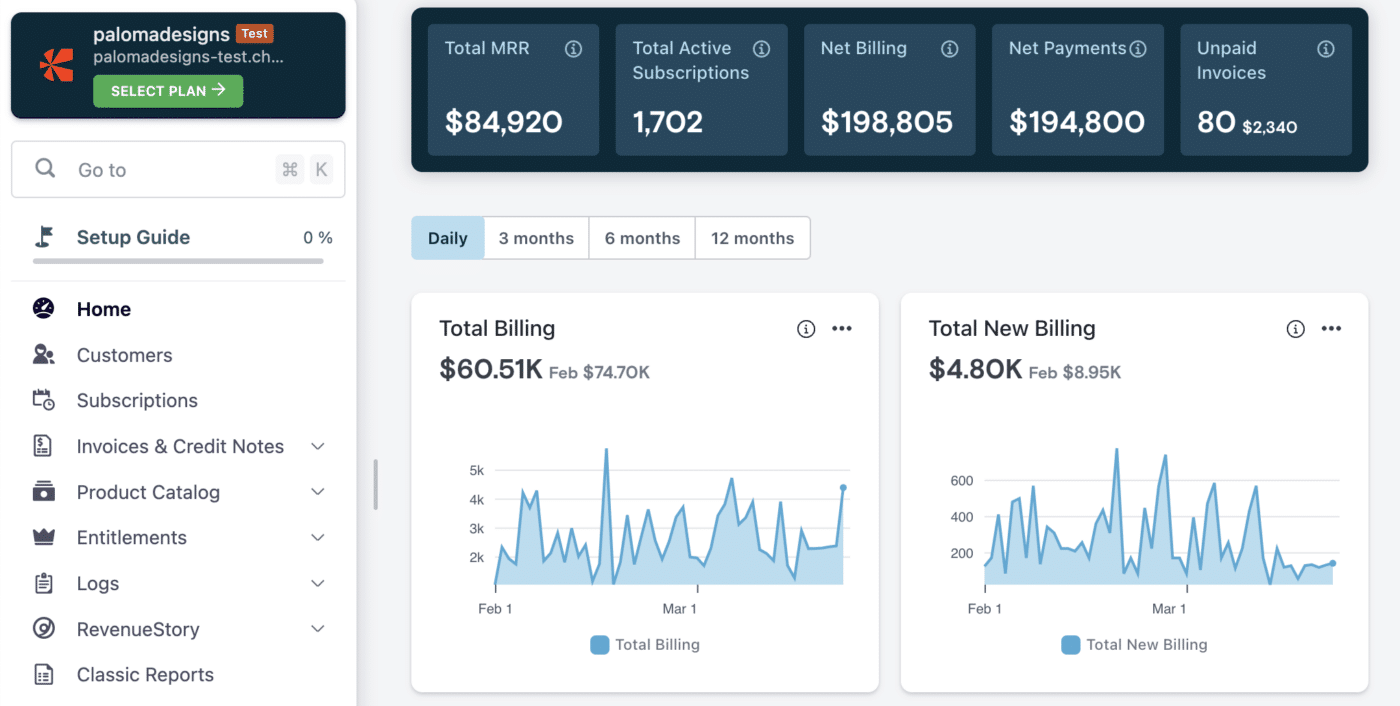
Chargebee is one of the most established names in subscription billing and one of the options that's closest to Younium if you're looking for pure subscription based billing.
Note that billing, CPQ, and revenue recognition are separate products you assemble, rather than one unified system.
For teams leaving Younium because they want a bigger vendor with a deeper bench, Chargebee is the obvious first stop. For teams leaving because they want fewer moving parts, it can reproduce the same problem in a different shape.
Key features:
- Core subscription billing covering price books, invoicing, proration, usage ingestion, real-time usage limits, and pricing tables, with built-in experimentation tools for testing packaging changes
- Enterprise-tier multi-entity management with deep account hierarchies and high monthly usage event ceilings, aimed at companies consolidating several business units
- A separate CPQ product for quoting complex deals, priced and purchased apart from core billing
- RevRec as a paid add-on handling point-in-time and ratable recognition under ASC 606 and IFRS 15
- One of the largest integration libraries in the category, spanning CRMs, tax engines, accounting systems, and payment gateways
Pros:
- Mature, widely adopted platform with strong analyst recognition
- Reviewers consistently praise the interface as approachable for non-technical finance teams
- Large partner network makes implementation help easy to source
Cons:
- Percentage-of-billing pricing gets expensive as volume grows
- Invoice template and checkout customization is more limited than dedicated platforms
- Reviewers report inconsistent behavior with some integrations, including Salesforce and HubSpot
- Full quote-to-cash coverage means buying several products rather than one
Best for:
- Mid-market SaaS companies that want an established vendor with proven scale
- Teams comfortable buying billing, CPQ, and revenue recognition as separate modules
- Companies whose procurement process rewards analyst recognition
Pricing: Chargebee publishes a free starter tier, then paid plans that combine a monthly platform fee with a percentage of billing value, most commonly cited at around 0.75 percent above plan caps, with Enterprise custom-quoted.
3. Zuora
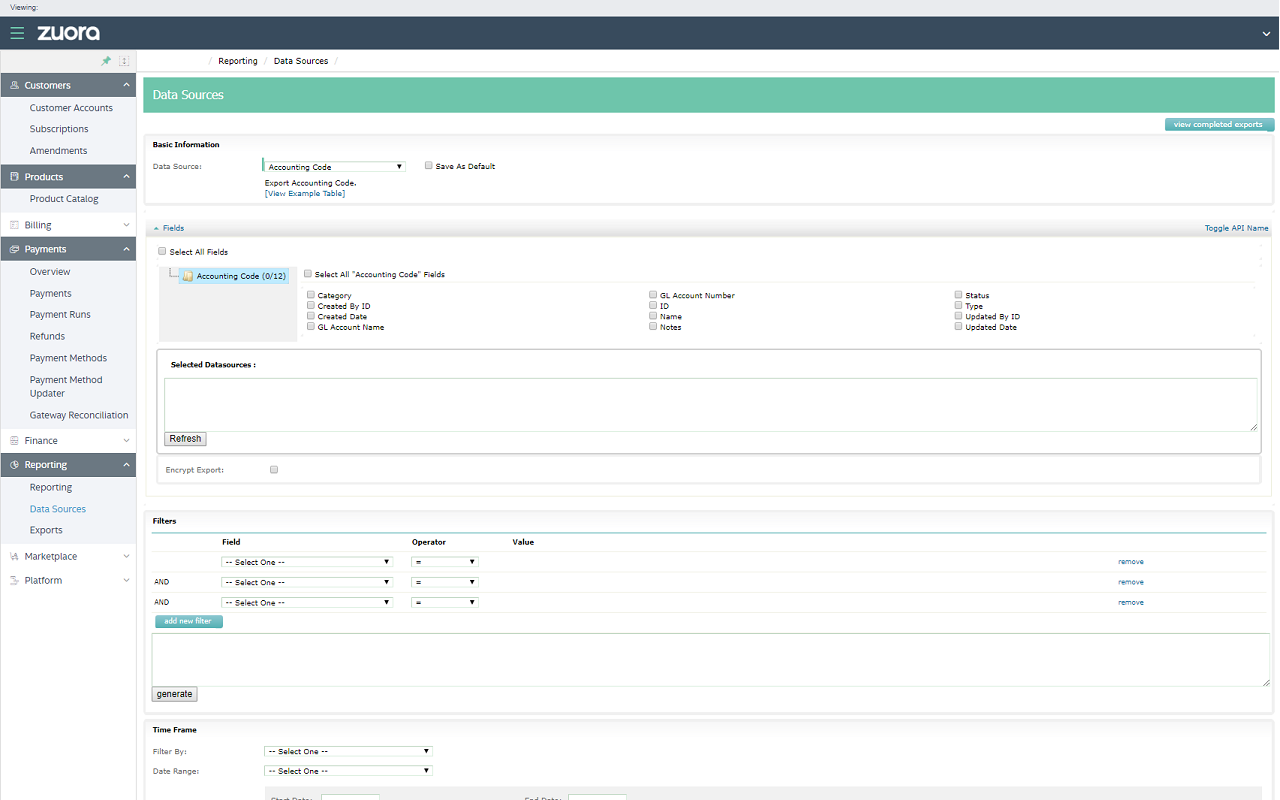
Zuora is the enterprise incumbent, and it behaves like one in both directions. It supports a wide range of pricing models, serves large multi-product businesses, and offers the governance and audit depth enterprise finance teams expect. It's also the platform reviewers most often describe as complex to implement and maintain.
If you're outgrowing Younium because you've become a genuinely large, multi-entity, multi-product enterprise, Zuora belongs on the list. If you're a 60-person company that wants better reporting, it's more platform than you need.
Key features:
- Catalog and pricing management that defines pricing once and deploys it across CPQ, self-service, e-commerce, and partner channels
- Support for flat-fee, tiered, volume, usage-based, and multi-attribute pricing, plus feature-level entitlements and global multi-currency price lists
- Deep Salesforce integration, which reviewers consistently name as a strength for the sales-to-billing handoff
- Revenue recognition embedded in the catalog, compliant with ASC 606 and IFRS 15, with the audit trail enterprise finance teams need
- A large library of pre-built enterprise connectors, including NetSuite, Snowflake, and major tax engines
Pros:
- Handles genuinely complex enterprise monetization that lighter platforms can't model
- Strong governance, approvals, and audit capabilities
- Deep ecosystem of implementation partners and experienced administrators
Cons:
- Reviewers consistently describe a steep learning curve and an unintuitive interface
- Implementations are measured in months and typically need external help
- Ongoing maintenance assumes a dedicated RevOps or billing operations owner
- Cost is high relative to value for companies with straightforward pricing
Best for:
- Large enterprises with multi-entity, multi-product monetization
- Organizations with a dedicated RevOps function to own the platform
- Companies where Salesforce is the undisputed system of record
Pricing: Custom quote, scaled to volume and complexity. G2 rates it 3.9 out of 5 across 311 reviews, with implementation complexity a recurring theme
4. Maxio
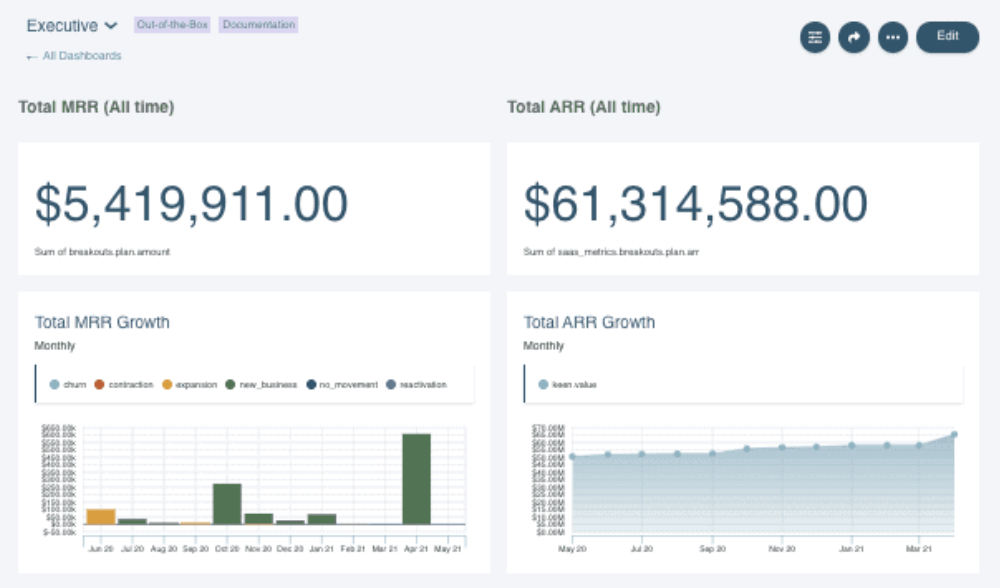
Maxio, formed from SaaSOptics and Chargify, is built for B2B SaaS finance teams who care as much about receivables and revenue reporting as about billing mechanics. If the reason you're leaving Younium is reporting, Maxio deserves a close look, because financial reporting is the thing it was designed around.
It's worth being clear-eyed about the interface. Reviewers frequently describe it as dated, and setup takes real effort. What you get in exchange is finance tooling that assumes an actual controller is using it.
Key features:
- Subscription, recurring, and usage-based billing with automated invoicing across more than 20 payment gateways
- Receivables tooling including collections and dunning workflows, DSO reporting, and aging analysis, which is deeper than most billing platforms offer
- Revenue recognition and expense amortization as core finance modules rather than afterthoughts, with milestone-based project support available
- Multi-entity support and consolidated invoicing for companies operating more than one legal entity, available as an add-on
- Unlimited user seats on every plan, which matters when the whole finance and RevOps team needs access
Pros:
- Automated invoicing measurably reduces manual finance work, according to reviewers
- Strong integrations with CRM and general ledger systems
- Reviewers report responsive support, often within a day
Cons:
- Reporting customization is limited, and teams export to spreadsheets more than they'd like
- Users report QuickBooks Online sync delays and slow report loading
- The interface feels dated compared with newer platforms
- Initial configuration is a real project, and several reviewers describe onboarding as overwhelming
Best for:
- B2B SaaS finance teams that prioritize reporting and accounts receivable visibility
- Companies billing under $100,000 monthly that want predictable flat-fee pricing
- Controllers who want revenue recognition and amortization in the billing system
Pricing: The Grow plan is $599 per month for companies billing up to $100,000 monthly. Scale is custom-priced above that threshold, with multi-entity, event-based billing, and EU hosting available as add-ons.
5. Stripe Billing
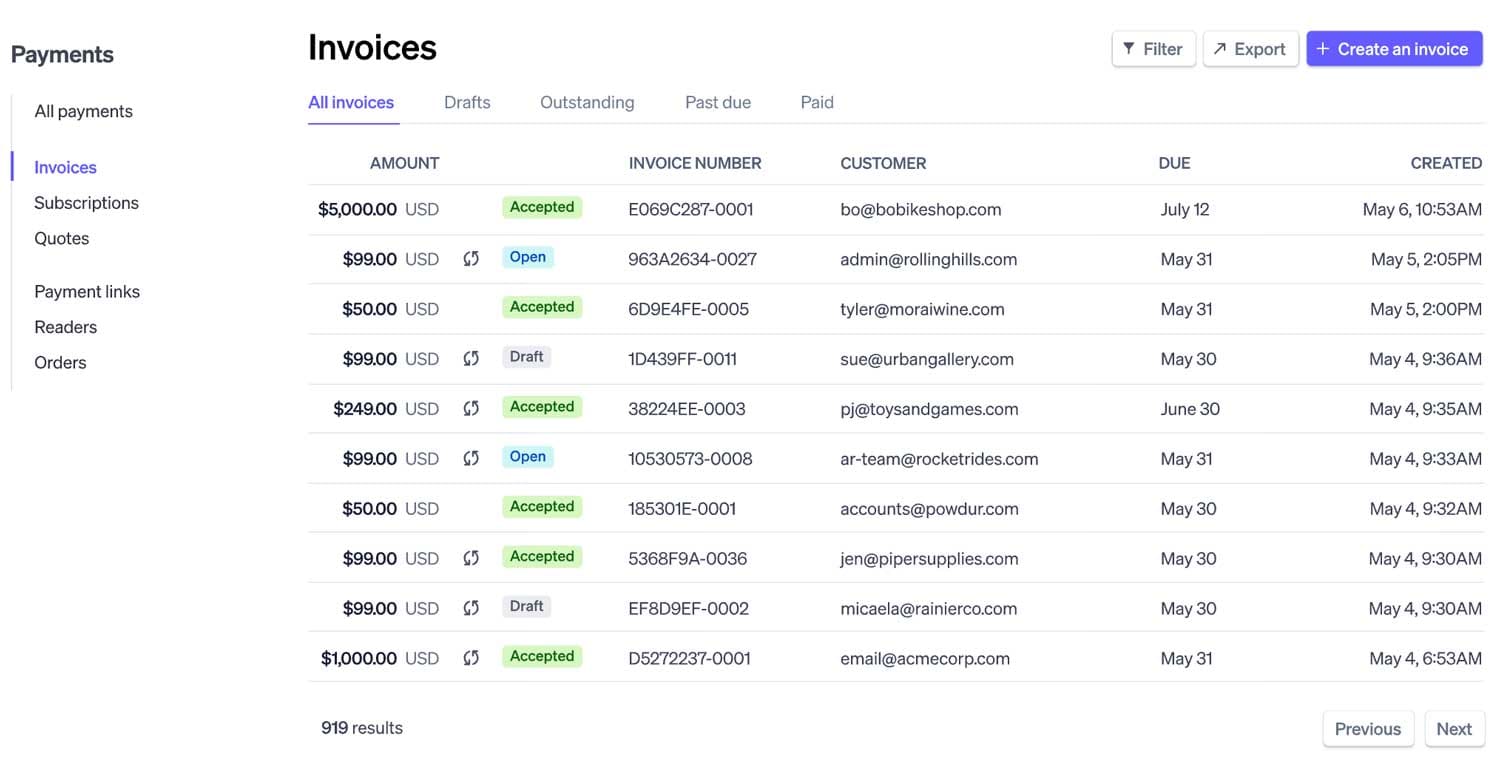
If you already process payments through Stripe, Stripe Billing is the shortest path from where you are to automated billing. Implementation is fast, the documentation is genuinely excellent, and the payment rails underneath are as reliable as anything in the market. Stripe has also been named a Leader in Gartner's recurring billing Magic Quadrant for three consecutive years.
The caveat for anyone leaving Younium is that Stripe Billing is payments-first, not contracts-first. B2B structures like ramps, co-termination, complex amendments, and multi-entity consolidation are thinner here, and advanced usage-based billing routes you to a separate product.
Key features:
- Subscription management through the dashboard, payment links, or a custom integration, with quotes and subscription schedules included
- Smart Retries and recovery automations that use machine learning to time failed payment retries, plus automatic dunning emails
- A hosted customer portal for self-service plan changes, with a custom domain available as a small monthly add-on
- Invoice auto-reconciliation for ACH and wire payments, which removes a meaningful chunk of manual matching
- Basic usage metering through the Meters API, with more advanced consumption billing handled by pairing with a dedicated metering product
Pros:
- Fastest implementation on this list for teams already on Stripe
- API and documentation quality save real engineering time
- Payment infrastructure is reliable at global scale
Cons:
- Fees add up, particularly on international transactions
- Invoice branding and customization are limited compared with dedicated billing platforms
- B2B contract handling, including ramps and amendments, is shallow
- Some users report account restrictions with limited human support to resolve them
Best for:
- Developer-led teams already built on Stripe's payment infrastructure
- Early-stage companies that want billing live quickly without a dedicated finance system
- Self-serve or product-led businesses with simple contract structures
Pricing: 0.7 percent of billing volume on pay-as-you-go, or annual plans starting at $620 per month for up to $100,000 in monthly volume, rising through published tiers to $5,750 per month for up to $1 million, with overages at 0.67 percent.
6. Orb (Aquired by Adyen)
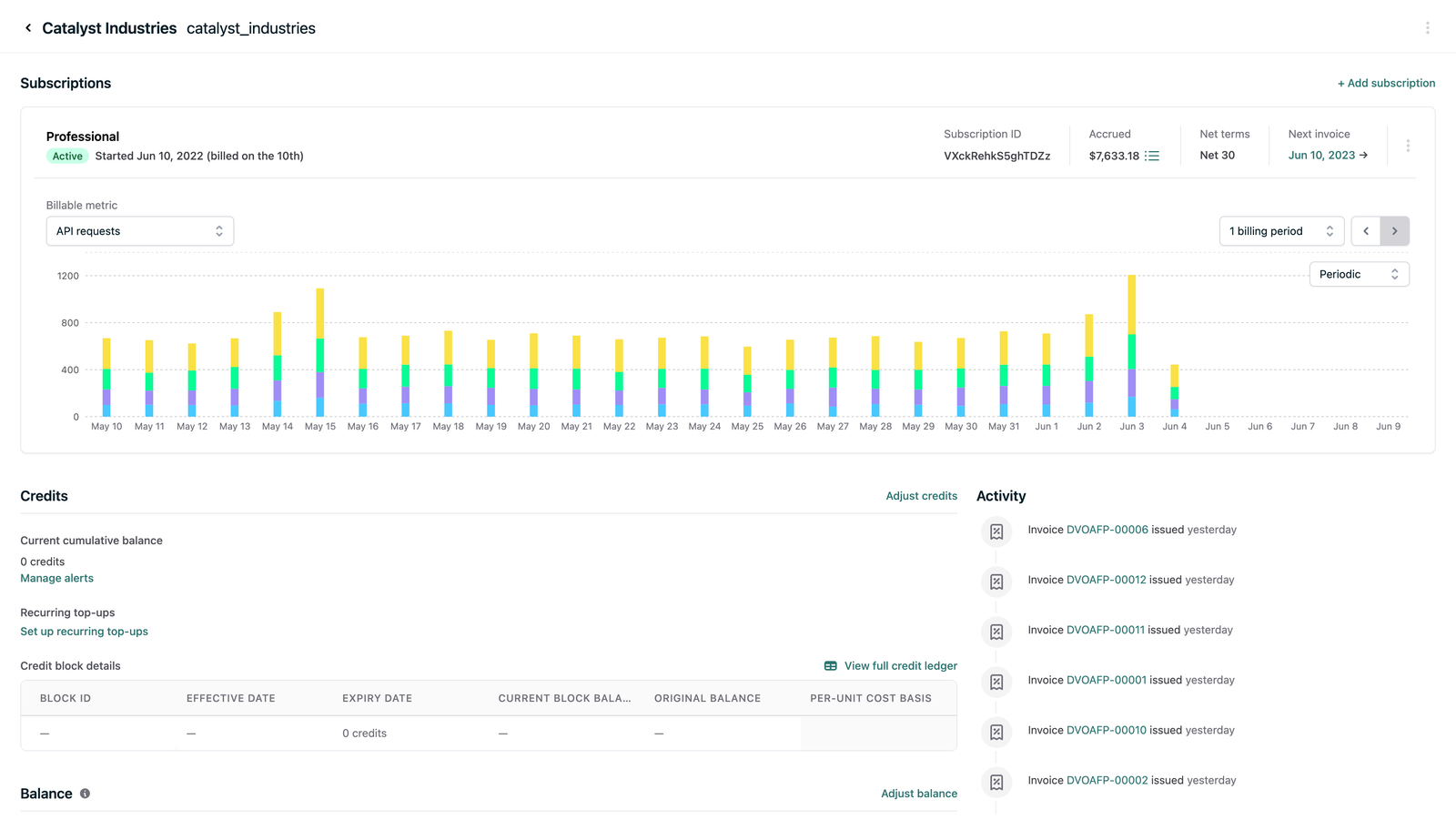
Orb sits at the opposite end of the spectrum from Younium. Where Younium starts from the contract, Orb starts from the event. It's built for companies where usage is the business, including AI and infrastructure companies ingesting enormous volumes of raw usage data and turning it into invoices customers will actually scrutinize.
If you're leaving Younium because your pricing has become metered, credit-based, and high-volume, Orb is a serious candidate. If contracts, entities, and quoting are your problem, it's the wrong tool.
Key features:
- High-throughput real-time event ingestion, engineered for the volumes AI and infrastructure businesses generate
- SQL-defined usage metrics, so you can express exactly how raw events translate into billable quantities without pre-aggregating upstream
- Automated price versioning and hybrid billing combinations, so mid-contract pricing changes don't require rebuilding customer records
- Spend controls and threshold alerting that catch billing anomalies before they reach an invoice
- Data warehouse exports to Snowflake and Redshift, plus Salesforce and NetSuite integrations on higher tiers
Pros:
- Built for high-volume, complex usage pricing at genuine scale
- SQL-level flexibility handles pricing logic other platforms can't express
- Reviewers highlight fast, hands-on support during implementation
- Strong audit trails and enterprise security certifications
Cons:
- No published pricing and no self-serve entry tier
- Charging on both billings and events makes forecasting your own costs harder
- Contract lifecycle management and quoting are lighter than B2B-first platforms
- Smaller public review base, so ask for references in your segment
Best for:
- AI, infrastructure, and developer tools companies with usage-heavy pricing
- Technical teams comfortable defining billing logic in SQL
- Companies where event volume, not contract complexity, is the hard problem
Pricing: Core, Advanced, and Enterprise tiers are all custom-quoted, priced on a combination of billings issued and events ingested, with a platform fee on the higher tiers.
How to evaluate subscription management software
Billing touches sales, product, finance, and every customer relationship at once, which makes it a heavier decision than most software purchases.
A few things separate the platforms faster than any feature comparison.
Start with your pricing roadmap, not today's pricing. The platform that fits your current model is the wrong benchmark, because three in four software companies changed their pricing in the past year. Write down what you expect to sell in 18 months, including any AI credit, outcome-based, or consumption components, and evaluate against that.
Ask who can change a price. This is the single most revealing question. In some systems, adding a hybrid plan with a usage tier and a negotiated overage rate is an afternoon of configuration for a finance lead. In others, it's an engineering ticket or a statement of work. Make each vendor do it live in the demo.
Bring your ugliest account. Feature lists are written for clean cases. Take your most awkward real customer, the parent company paying for some subsidiary charges but not others, the reseller with negotiated rates per region, and ask the vendor to model it in front of you. Count how many objects it takes and how much of it is configuration versus a workaround someone has to remember every month.
Model the true cost at two times and five times your volume. Percentage-of-billing pricing, common with Chargebee, Stripe Billing, and Frisbii, looks cheap in year one and expensive in year three. Per-seat pricing penalizes exactly the visibility you're buying the platform for. Build the model before the negotiation, not after.
Check where revenue recognition lives. If you're audited or planning to raise, ASC 606 and IFRS 15 support shouldn't be a separately priced module you discover in the third call. Ask whether recognition schedules derive from the contract itself or from a parallel configuration someone has to maintain.
Quantify what's leaking today. Before comparing platforms, work out what unbilled usage, missed overages, and late amendments are already costing you. Our guide to revenue leakage walks through how to find it, and the number usually justifies the project on its own.
Plan the migration explicitly. Ask each vendor for their documented process, whether they run parallel billing cycles, who owns data mapping, and what happens if invoices don't match during cutover. Adam Liska of Glyphic AI described what good looks like: "Revenue and invoicing are sensitive areas, so as a founder I wanted to be extra cautious. Alguna's team made me feel completely at ease: they answered every question, laid out a clear migration plan, and kept me in the loop throughout."
Frequently asked questions
What is Younium used for?
Younium is a B2B subscription management and billing platform. It manages contracts, subscriptions, and amendments, generates invoices, handles revenue recognition under ASC 606 and IFRS 15, and connects CRM systems to ERP and accounting platforms. It's aimed mainly at mid-market B2B SaaS companies, with particular strength in the Nordics and DACH region.
Why do companies look for Younium alternatives?
The most common reasons are quote-based pricing that's hard to compare, implementation timelines averaging around four months, limits on reporting customization, reported Salesforce sync issues, and a subscription-first architecture that fits consumption-heavy or AI pricing models less naturally.
Which Younium alternative is best for AI companies?
Alguna and Orb are both built for usage-heavy models. Orb is the stronger fit if raw event throughput is your central problem and you have engineers to own billing logic. Alguna is the stronger fit if you also need CPQ, contracts, and revenue recognition on the same data model as your metering.
What's the best Younium alternative for European companies?
Alguna suits European teams whose complexity sits in pricing and contracts rather than payment method breadth. Whichever you pick, ask specifically about structured e-invoicing readiness ahead of the EU's 2030 deadline.
Is Alguna cheaper than Younium?
Alguna publishes its pricing: a free Starter tier, $699 per month for Growth, and custom pricing for Enterprise Scale, with unlimited seats on every tier. Younium quotes custom pricing and is listed on Capterra from SEK 500 per user per month, so the comparison depends on your team size and volume. Because Younium doesn't publish tiers, get quotes from both.
Can I switch billing platforms without disrupting existing invoices?
Yes, with a proper migration plan. Most established vendors, Alguna included, run parallel billing cycles or a phased cutover so existing subscriptions, invoices, and payment methods move across without gaps. Ask any vendor for their specific process, and for a customer reference who migrated from a comparable system.
What should I look for in billing and revenue management software beyond features?
Look at who owns pricing changes, how recognition is derived, what the platform costs at three times your current volume, and how the vendor handles migration. Those four answers predict your experience far better than a feature checklist does.
Choosing your Younium alternative
Three months after go-live, does your finance team still talk about the billing system? If invoices go out right, revenue recognizes itself, quotes match what gets billed, and pricing changes ship the week they're decided, the platform has done its job by disappearing.
Younium does that well for Nordic and DACH mid-market companies with contract-heavy subscription models and regional ERP requirements. Frisbii does it for European businesses that want published pricing and local payment coverage. Zuora does it for enterprises with the team to run it. Orb does it for companies where event volume is the whole problem.
Alguna does it for companies that want CPQ, billing, and revenue recognition working as one system rather than three, with pricing changes owned by finance instead of engineering, and published rates instead of a quote you can't benchmark.
Bring your most complicated contract, and we'll model it live rather than walk you through a generic script.