Solvimon is a strong, modern billing platform, but it isn't the right fit for everyone. Some teams want a more complete quote-to-cash workflow out of the box. Others want predictable, flat-fee pricing instead of a model tied to revenue. And some simply want a vendor whose roadmap and support match where their business is headed.
If you're looking for Solvimon alternatives, you're almost certainly wrestling with the same problem every scaling software company hits eventually: your pricing has outgrown your billing system.
What is Solvimon?
Solvimon is a usage-based billing and monetization platform built for companies selling hybrid pricing. It unifies CPQ, billing, payments, and revenue operations into one system, from quote to collection, with payments across the US, Europe, and Southeast Asia. It's aimed at companies that have outgrown Stripe or a home-built billing setup.
Solvimon funding
The company raised a roughly €9 million seed round led by Northzone in November 2023, with participation from select angel investors. It's headquartered in Utrecht, in the Netherlands, and remains a relatively small, focused team.
Why teams look for Solvimon alternatives
Solvimon is capable, so the reasons people shop around are usually about fit rather than failure.
Here are the patterns we see most often.
- They want a more complete quote-to-cash flow. Some teams want pricing, CPQ, contracts, billing, invoicing, collections, and revenue recognition to live in one place, with as little glue code as possible between sales and finance.
- They want flat, predictable pricing. Several billing platforms charge a percentage of the revenue they process. As your usage revenue grows, so does the bill. Teams that want costs decoupled from growth look for a flat monthly fee instead.
- They want a self-serve, no-code experience for business teams. If every pricing change still routes through engineering, the billing system becomes the bottleneck. RevOps and finance teams increasingly want to launch and edit pricing themselves.
- They want broader integrations or a larger ecosystem. Newer platforms can have fewer prebuilt connectors than established players, which matters if your stack is opinionated.
- They want a different scale or maturity profile. Some teams want enterprise-grade metering throughput, and others want open-source control or a finance-first reporting tool. No single platform wins on every axis.
The good news is that the market is rich. Whether your priority is end-to-end automation, raw metering scale, or audit-ready financial reporting, there's a strong option below.
Solvimon alternatives compared at a glance
Here's how the top platforms stack up. Alguna is highlighted because it's our top recommendation for end-to-end quote-to-cash, but every option here earns its place for the right team.
| Platform | Best for | Strengths | Limitations | Pricing |
|---|---|---|---|---|
| Alguna | End-to-end quote-to-cash for modern SaaS, AI, and fintech | Unified CPQ, billing, usage, and rev rec; no-code; flat-fee pricing | Newer than legacy suites; not ideal for very early stage teams | Flat monthly fee, no revenue cut; from $399/mo |
| Orb | High-volume, developer-led usage metering and pricing iteration | Raw-event architecture; custom SQL metrics; high event throughput | No native CPQ; setup needs engineering time | Subscription plus usage-based fees; platform fee on higher tiers |
| Metronome (now part of Stripe) | Enterprise, event-driven metering at massive scale | Built for millions of events; commits, draw-downs, ramps | Narrowly metering-focused; roadmap now tied to Stripe | Custom, contract-based |
| Chargebee | Subscription-first SaaS with finance-team buyers | Mature feature set; broad gateways; native rev rec | Usage is secondary; complex UI; overage fees add up | Free under $250K cumulative; from $599/mo plus 0.75% overage |
| Lago | Engineering teams wanting open-source control | Open source; self-host or cloud; transparent, API-first | Self-hosting needs engineering resources; no native CPQ | Free self-hosted; cloud free to $250K, then 0.75% |
| Maxio | Finance-led teams prioritizing reporting and compliance | Strong SaaS metrics; ASC 606 rev rec; audit readiness | Two merged products; dated UI; longer implementation | Custom, revenue-based |
| Stripe Billing | Early-stage teams already on Stripe with simple pricing | Easy to start; wide payment coverage; strong docs | Limited hybrid pricing; no CPQ; revenue-based fees scale up | ~0.7% of billing volume plus payment fees |
The 7 best Solvimon alternatives in 2026
1. Alguna
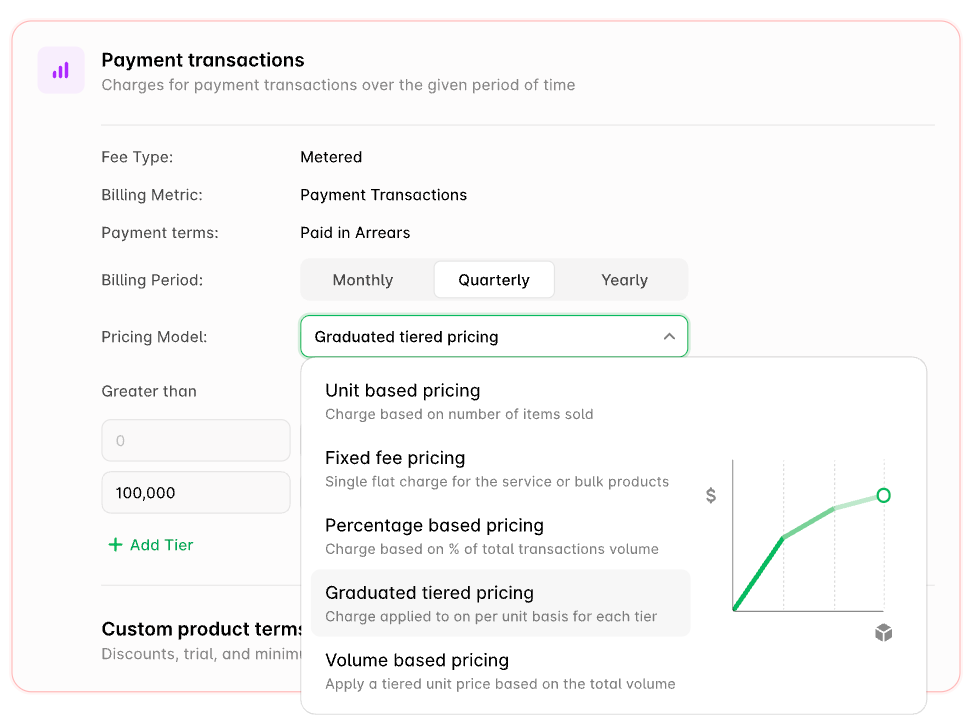
Alguna is an AI-native, end-to-end quote-to-revenue platform built specifically for modern SaaS, AI, and fintech companies. Where many tools solve one slice of the problem, Alguna unifies pricing and packaging, CPQ, usage metering, billing, invoicing, and revenue recognition in a single no-code system. The result is one source of truth for revenue, from the moment a sales quote is created or a self-serve customer signs up, through to billing and reporting.
That breadth is the main reason Alguna lands at number one for teams looking past Solvimon. Instead of stitching a metering engine to a quoting tool to a rev rec spreadsheet, you get the whole quote-to-cash software workflow in one place. As Shane Curran, CEO at Evervault, puts it, "Alguna enables complex usage-based billing for us in a way that other products can't."
Key features
- Flexible pricing and CPQ: Define any SaaS or AI pricing model, including subscriptions, tiered usage, pay-as-you-go, prepaid credits, ramps, and hybrid plans, then turn them into accurate, branded quotes. Alguna's CPQ for usage-based pricing combines per-seat, tiered, and usage charges in a single contract, each with its own billing cadence.
- Usage metering and billing automation: Track usage and billable events in real time, then generate invoices automatically from signed quotes and actual consumption, with support for multi-currency, tax rules, and consolidated billing across multiple contracts.
- Revenue recognition: Auto-generate revenue schedules, recognize deferred revenue under ASC 606 and IFRS 15, and export journal entries to your ERP, so finance closes the books without manual exports.
- No-code for business teams: Sales, RevOps, and finance can configure products, pricing rules, and workflows directly in the UI, without filing engineering tickets or waiting for a deploy.
- Native integrations and AI capabilities: Connect to leading CRMs, ERPs, accounting tools, and payment processors, and lean on AI-native features that reduce manual revenue operations work.
On the finance side, founders consistently call out the clarity Alguna brings. Adam Liska, co-founder and CEO at Glyphic AI, says, "Alguna ticked every box I needed. Most importantly, it gave me a clear overview of revenue movements—something Stripe just couldn't provide." For sales motion, Juan Burgos, co-founder and CEO at Haven AI, adds, "It takes me under five minutes to send someone an agreement. I can hop off a demo, set up the plan, type in the customer info, and it's done."
Pros
- Covers the entire quote-to-cash lifecycle in one platform, so there's no Frankenstack to maintain
- Flat monthly fee with no percentage-of-revenue cut, so costs don't climb as your usage revenue grows
- No-code interface lets business teams own pricing changes without engineering
- Purpose-built for modern usage-based and hybrid pricing rather than retrofitted for it
- White-glove onboarding and migration support to get you off your old system
Cons
- Newer than legacy suites, so it has a shorter track record than decade-old platforms
- Built for pricing complexity, so it can be more than you need if you only sell one flat subscription
Best for
- SaaS, AI, and fintech teams serious about automating quote-to-cash end to end, not just one step of it
- Companies moving toward usage-based or hybrid pricing that want business teams to self-serve changes
- Finance leaders who want a single source of truth for revenue and audit-ready rev rec
Alguna's flexibility and support also resonate with teams that have specific, hard-to-serve requirements. Marc Koskela, Director of Growth Marketing at ComplyAdvantage, describes the partnership this way: "We were looking for a partner who was able to support our quite specific requirements. That's where the relationship with Alguna has always been a really positive one, there's been both flexibility and a can-do attitude. Alguna definitely went the extra mile."
Pricing
Alguna uses a transparent, flat monthly subscription with no percentage of revenue taken. Paid plans start at $699 per month and include full platform access along with white-glove onboarding and migration. Because the fee is flat, the cost advantage grows as your usage revenue scales, unlike revenue-share models that get more expensive the more you bill.
2. Orb
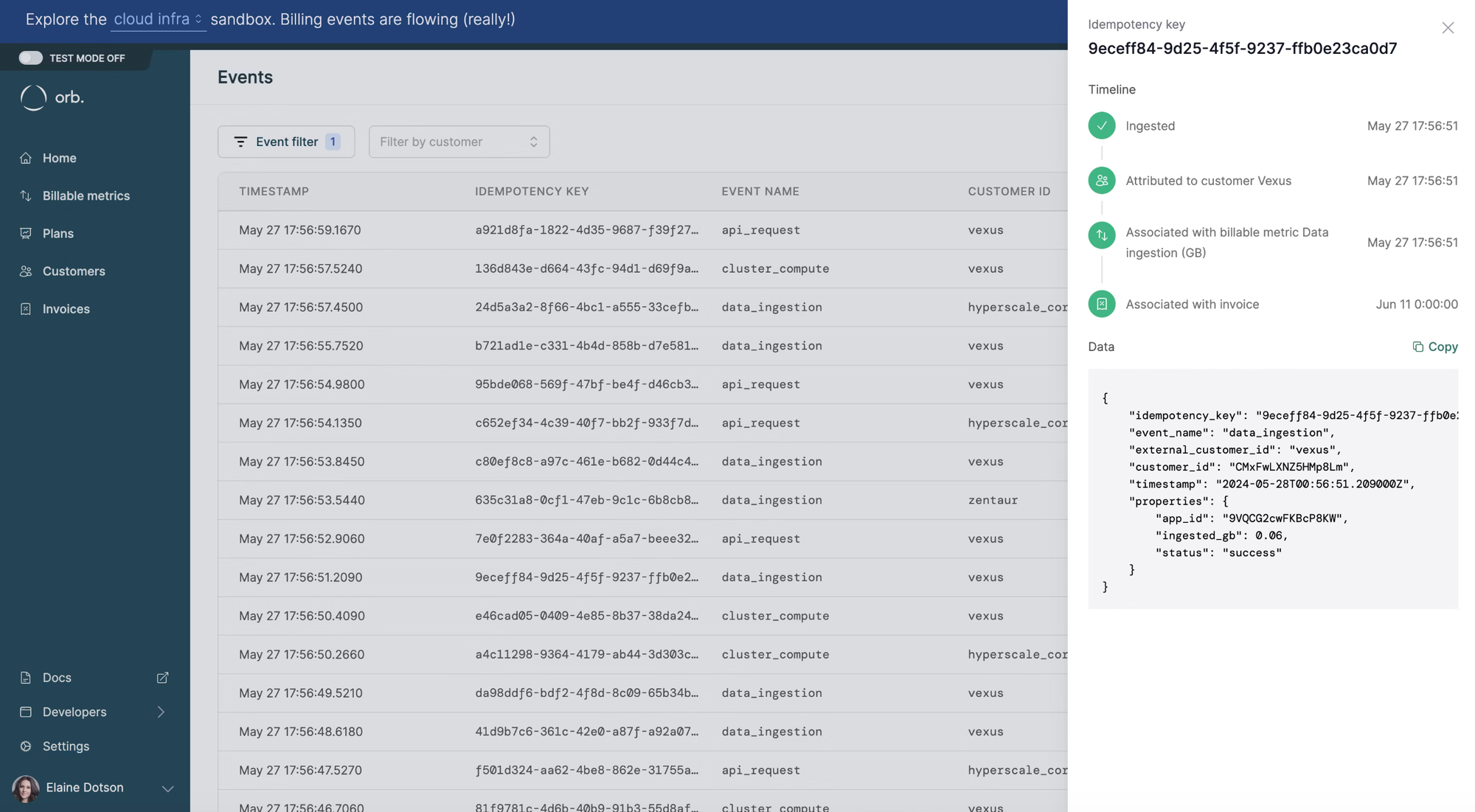
Orb is a developer-first usage-based billing platform built around a raw-event architecture. Rather than ingesting pre-aggregated numbers, Orb stores raw events you can query at any time to define billable metrics, which gives engineering and finance teams a lot of flexibility to iterate on pricing without recreating data pipelines.
It's a popular choice for API-first and infrastructure products with high event volumes, and it puts real emphasis on pricing experimentation, version-controlled price changes, and auditable billing.
Key features
- Raw-event metering: Ingest events via API and cloud storage and define metrics with custom SQL, so you can bill on almost any dimension and backfill or correct data when needed.
- Pricing iteration tools: Mass-migrate subscriptions to new pricing, manage legacy plans, and run pricing experiments against real usage data before going live.
- Hybrid pricing support: Combine usage-based pricing, fixed fees, and per-seat charges in a single plan, with mid-cycle quantity changes.
- Finance workflows: Native invoicing, dunning, revenue reporting, and integrations with tools like Salesforce and NetSuite.
Pros
- Excellent for high-throughput, event-driven products
- Strong pricing experimentation and migration tooling
- Auditable, correction-friendly billing records
Cons
- No native CPQ for sales-led quoting
- Implementation often requires meaningful engineering time
- Best fit skews technical, which can leave business teams dependent on developers
Best for
- Developer-led teams with high event volumes
- Companies that iterate on pricing frequently and want raw-event flexibility
Pricing
Orb prices on a combination of billings and events, with a platform fee on its Advanced and Enterprise tiers. Pricing is largely sales-led, so you'll need to scope a plan with their team.
3. Metronome (now part of Stripe)
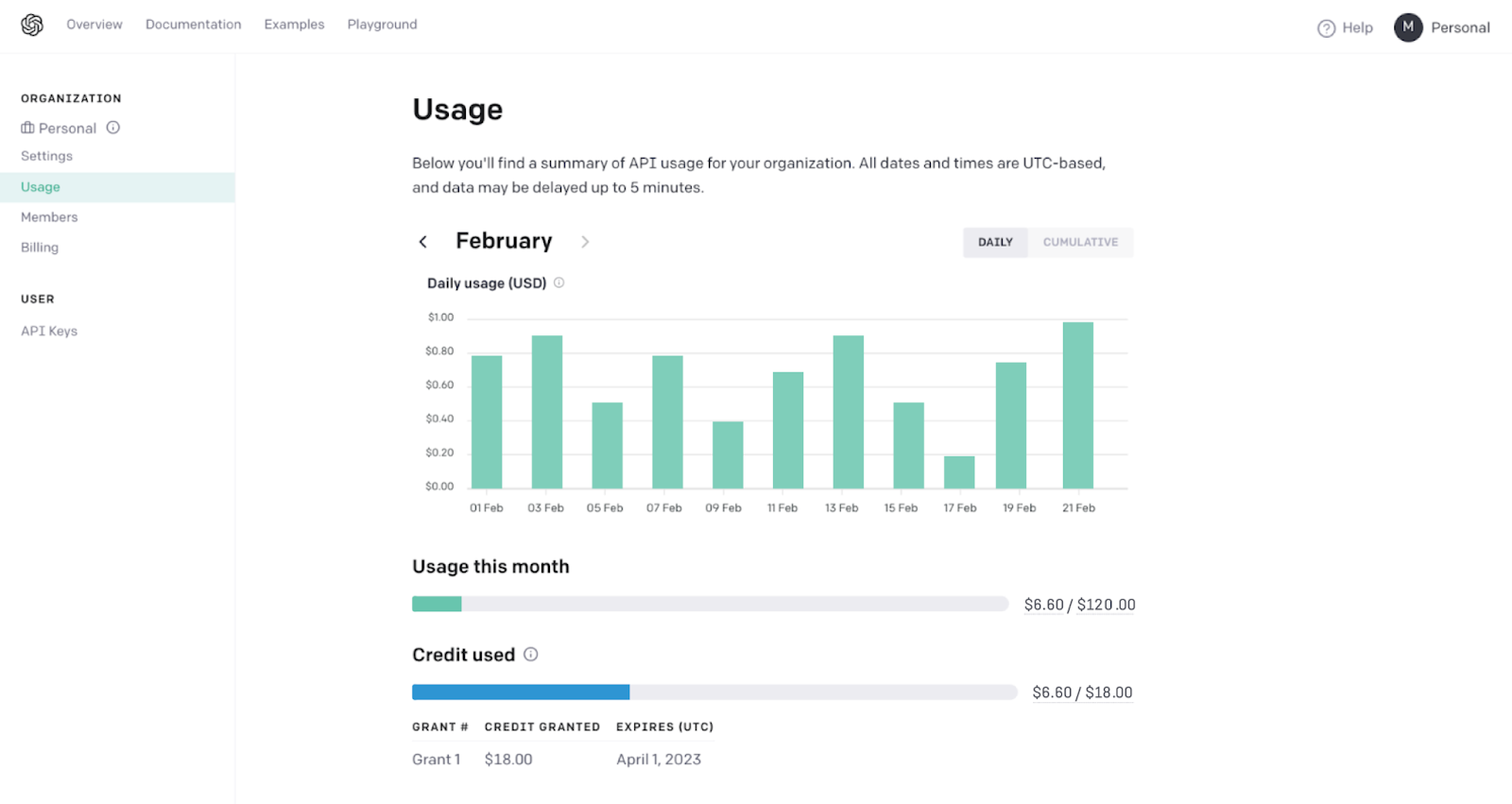
Metronome is an enterprise-grade, usage-based billing platform purpose-built for metering at massive scale. It's known for handling enormous streams of usage events with high fidelity, which is why it's been adopted by some of the largest AI and infrastructure companies. As of January 2026, Metronome is part of Stripe, following Stripe's acquisition announced in late 2025.
If your core challenge is metering billions of events with committed-spend agreements, draw-down balances, and ramp schedules, Metronome is built for exactly that. The tradeoff is scope and independence.
Key features
- High-scale metering: Designed to ingest and aggregate very high event volumes in real time.
- Enterprise contract primitives: Committed spend, draw-down balances, ramp schedules, and custom contract exceptions.
- Real-time billable metrics: Aggregates raw usage into billable metrics with strong accuracy guarantees.
- Stripe integration: Now positioned as a core part of Stripe's billing and monetization suite.
Pros
- Among the strongest options for raw metering scale
- Robust support for complex enterprise commit structures
- Backed by Stripe's resources and infrastructure
Cons
- Narrowly focused on metering, so it isn't a full quote-to-cash tool on its own
- Roadmap and independence are now tied to Stripe's priorities
- Teams using non-Stripe payment processors should weigh consolidation risk
Best for
- Enterprises with very high event volumes and complex usage contracts
- Teams already committed to, or comfortable consolidating on, the Stripe ecosystem
Pricing
Metronome is sold through custom, contract-based pricing. Expect a sales-led process scoped to your volume and requirements.
4. Chargebee
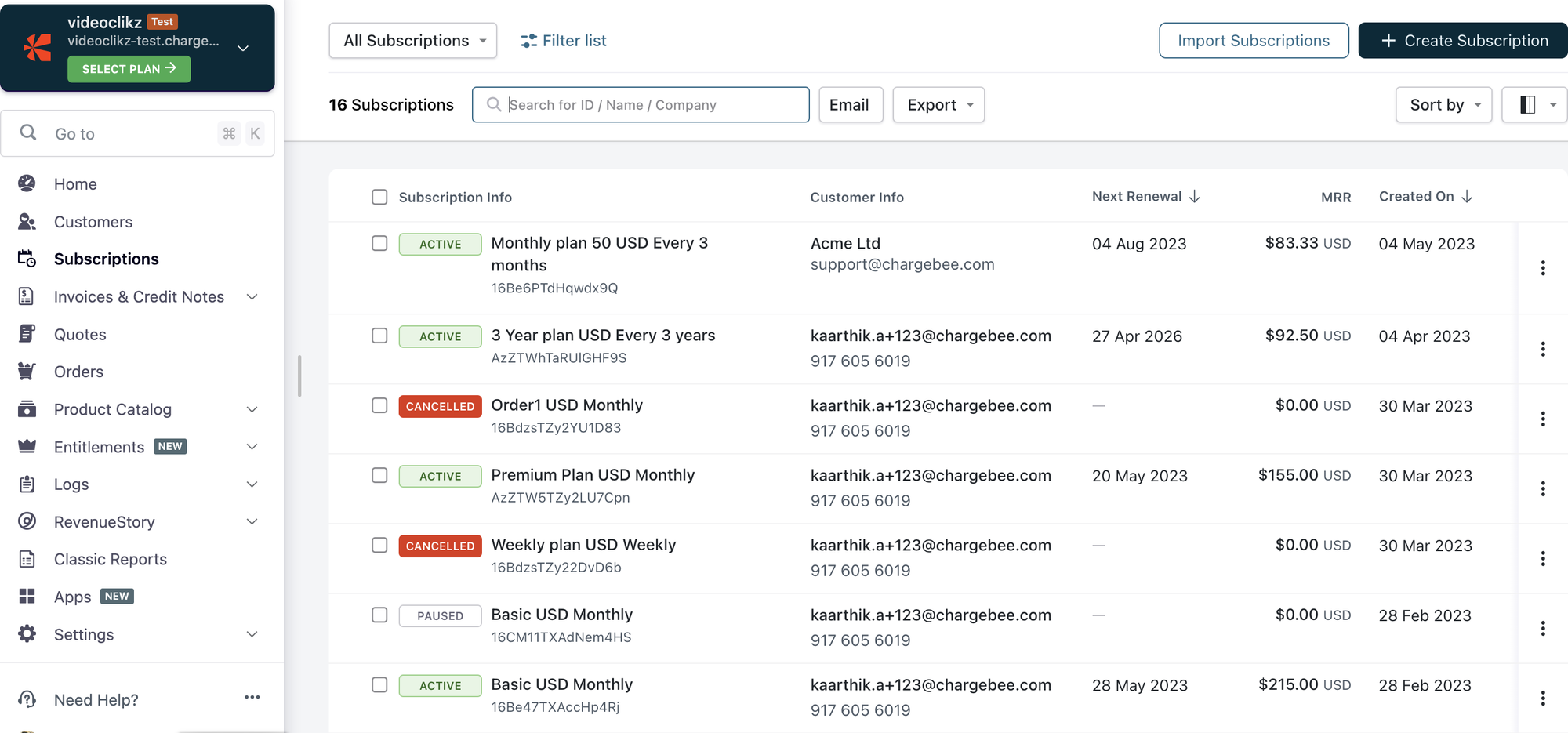
Chargebee is one of the most established subscription billing and revenue management platforms, serving thousands of companies across well over 100 countries. Founded in 2011, it automates the full recurring-revenue loop: signup, plan assignment, payments, invoicing, dunning, and revenue recognition. It's a strong choice when subscriptions are the core motion and a finance team owns billing.
Chargebee has pushed into usage and AI monetization recently, but its data model is still subscription-first, which is the key thing to test if usage is central to your business.
Key features
- Subscription lifecycle management: Create, change, pause, cancel, and reactivate subscriptions, with proration, trials, and coupons handled out of the box.
- Broad payment gateway support: Connects to dozens of gateways beyond Stripe, useful for global processing.
- Native revenue recognition: Handles ASC 606 and IFRS 15 for most SaaS scenarios, including deferred revenue and journal entries.
- Finance-friendly admin: Non-engineers can manage pricing, coupons, tax rules, and reports from the dashboard.
Pros
- Deep, mature feature set built over more than a decade
- Excellent for non-technical finance and ops teams
- Strong reporting on MRR, ARR, churn, and expansion
Cons
- Usage-based billing is layered onto a subscription-centric model rather than native
- The UI can feel complex, with onboarding that takes weeks
- Revenue-based overage fees and add-on modules can add up at scale
Best for
- Subscription-first SaaS companies with established recurring revenue
- Teams that want finance to own billing without engineering involvement
Pricing
Chargebee offers a free Starter plan for companies under $250K in cumulative billing, a Performance plan from $599 per month with a 0.75% overage fee above thresholds, and custom Enterprise pricing. Add-on modules for retention and revenue recognition are priced separately.
5. Lago
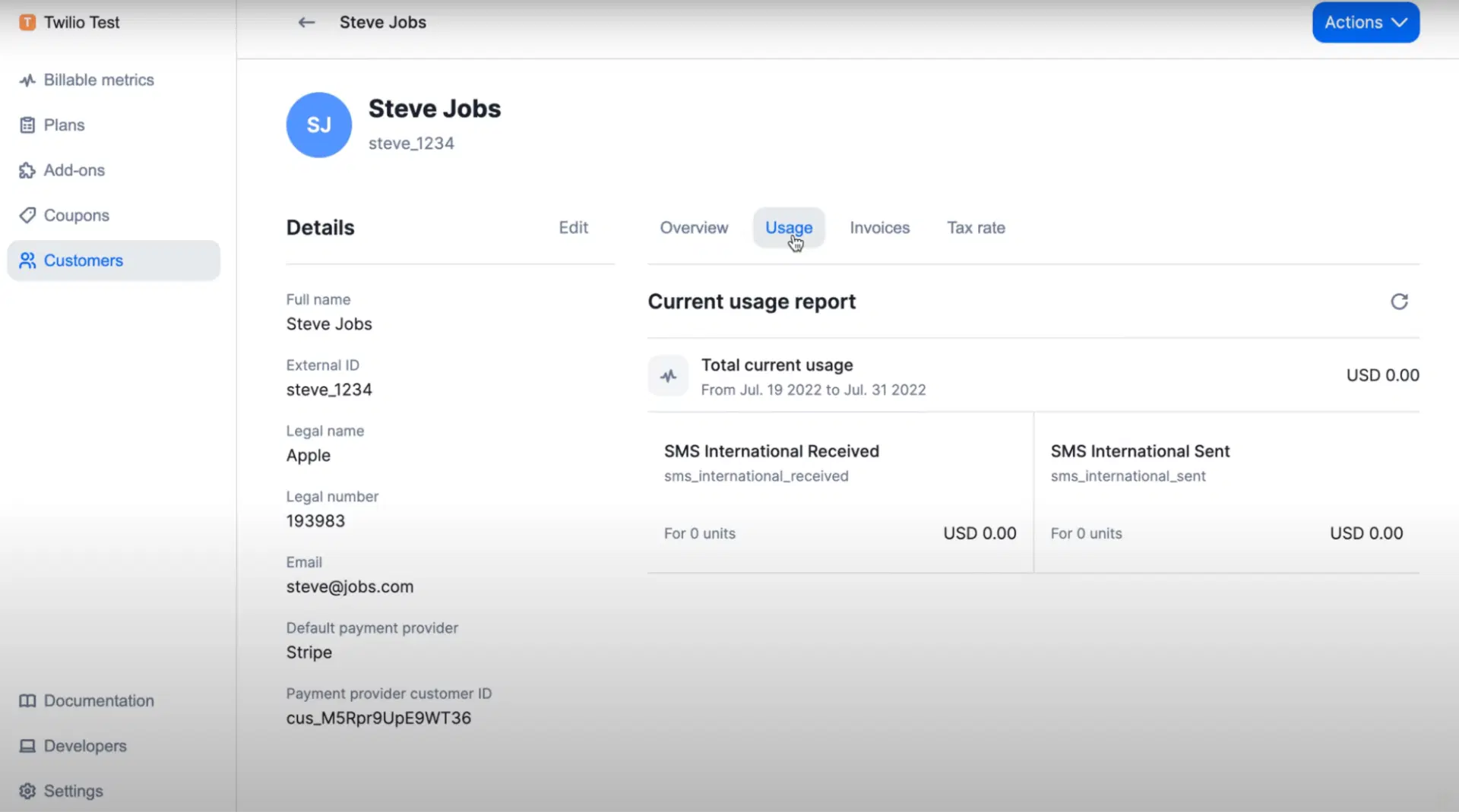
Lago is the leading open-source billing platform for usage-based, subscription, and hybrid models. You can self-host it for full control over your data and billing logic, or use Lago Cloud to get started faster. It's API-first, payment-agnostic, and transparent by design, which appeals to engineering teams that want to avoid vendor lock-in.
The open-source core is the differentiator. For teams with compliance or data-residency requirements, or those who simply want to inspect and own their billing code, Lago is a compelling option.
Key features
- Open-source core: Self-host on your own infrastructure with full access to the codebase, or run on Lago Cloud.
- Event-based metering: Real-time event ingestion and aggregation for any pricing dimension, with duplicate prevention.
- Flexible pricing: Mix flat-rate subscriptions with pay-as-you-go components, tiered pricing, volume discounts, coupons, add-ons, and prepaid credits.
- Payment-agnostic: Works with Stripe, Adyen, GoCardless, or any payment gateway.
Pros
- Open source with no vendor lock-in on the self-hosted version
- Transparent, inspectable billing logic
- Strong fit for data-residency and compliance needs
Cons
- Self-hosting requires real engineering resources to run and maintain
- No native CPQ for sales-led quoting
- Cloud overage fees can add up at higher volumes
Best for
- Developer-first and API-first companies with engineering capacity
- Teams with compliance or data-residency requirements that favor self-hosting
Pricing
The self-hosted version is free with no usage limits. Lago Cloud offers a free Starter tier up to $250K in cumulative invoiced revenue, after which a 0.75% fee applies, plus a higher-tier plan from $599 per month with included billing volume.
6. Maxio
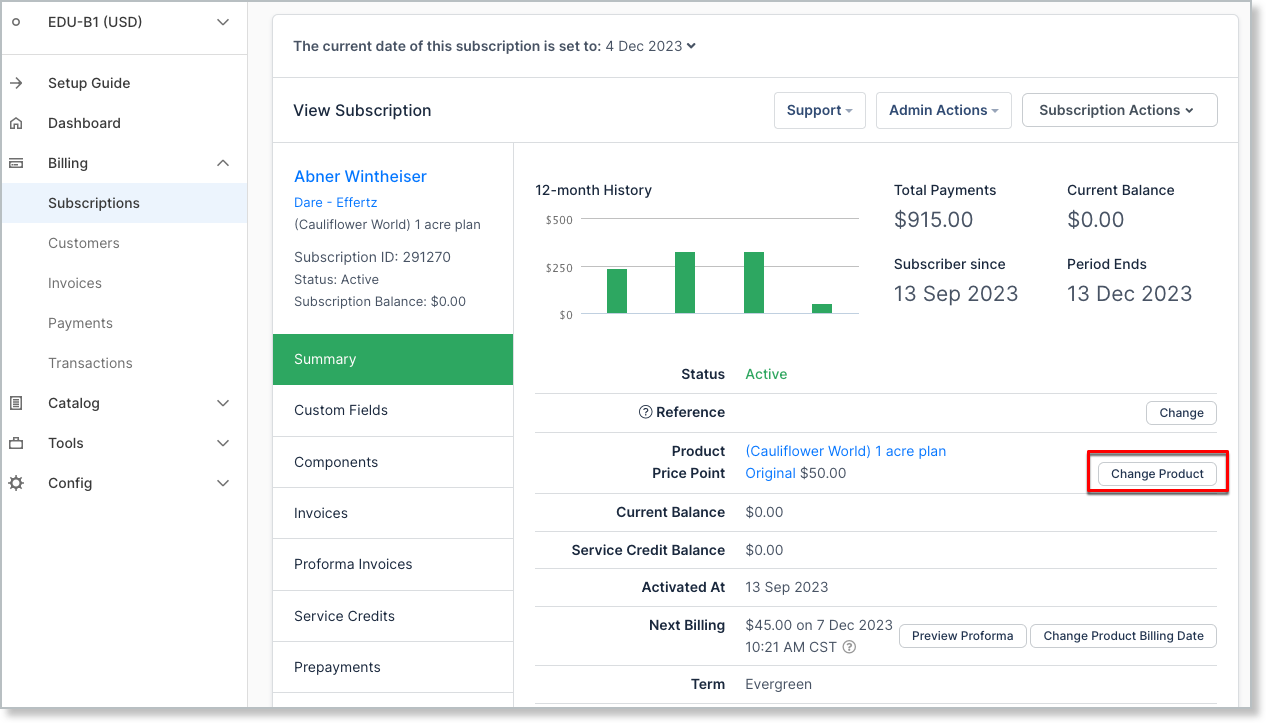
Maxio was formed from the merger of SaaSOptics and Chargify, and it's built primarily for finance teams. Its strength is financial reporting and compliance: MRR, ARR, churn, and expansion metrics alongside ASC 606 and IFRS 15 revenue recognition built into the billing workflow. If financial accuracy for audit, fundraising, or acquisition is your top priority, Maxio earns a look.
The flip side is that it shows its heritage as two merged products, and it's less of a fit when usage-based billing is the central motion.
Key features
- SaaS metrics and reporting: Out-of-the-box MRR, ARR, churn, expansion, and cash-versus-revenue reporting that finance and investors rely on.
- Revenue recognition: Robust ASC 606 and IFRS 15 support with automated revenue schedules.
- Billing and invoicing: Recurring and usage-based billing with finance-grade controls.
- Integrations: Native connections to tools like Salesforce and Stripe to reduce double entry.
Pros
- Excellent financial reporting and audit readiness
- Strong revenue recognition built into billing
- Trusted by finance teams preparing for diligence
Cons
- Interface reflects two merged products and can feel dated
- Implementation can take longer, especially with complex rules
- Less well suited when usage-based billing is the core motion
Best for
- Finance-led B2B SaaS teams where reporting accuracy is the top priority
- Companies preparing for audit, fundraising, or acquisition
Pricing
Maxio uses custom, revenue-based pricing scoped through its sales team.
7. Stripe Billing
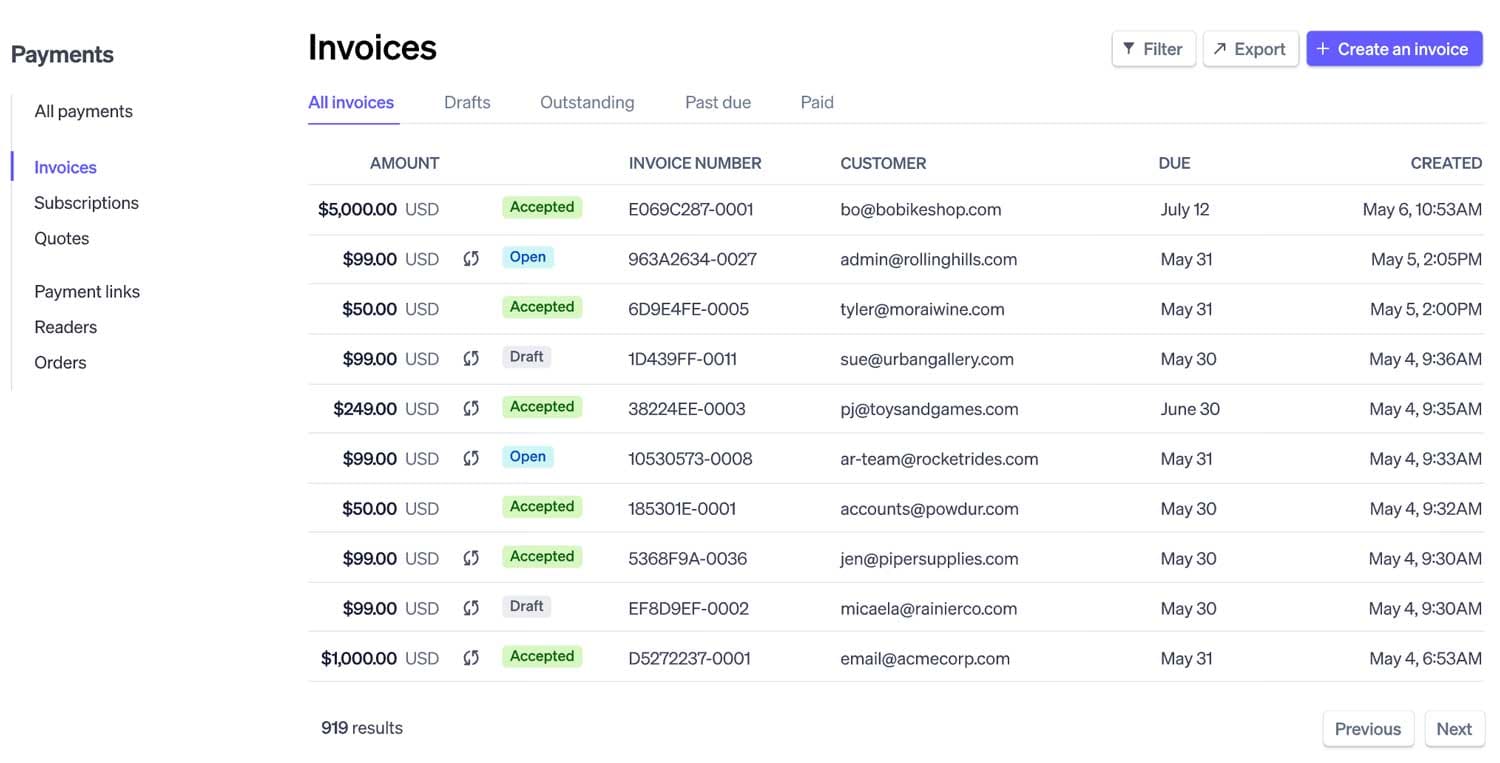
Stripe Billing is the most common starting point for early-stage teams, and often the most common migration source later. It adds recurring and metered billing on top of Stripe's payment processing, which means almost no new vendor onboarding if you already use Stripe. For simple pricing and strong engineering resources, it works well.
With Metronome now part of Stripe, the platform's usage-based capabilities are evolving. Even so, the limits that surface as you scale are worth planning around.
Key features
- Recurring and metered billing: Add subscriptions and basic usage-based pricing on top of Stripe payments.
- Wide payment coverage: Extensive payment methods and a deep developer ecosystem.
- Strong documentation and APIs: Well-known, developer-friendly tooling.
- Tight payment integration: Billing and payments live in one Stripe relationship.
Pros
- Fast to start if you're already on Stripe
- Excellent payment coverage and docs
- Low onboarding friction for simple models
Cons
- Limited support for complex hybrid pricing and account hierarchies
- No native CPQ, and revenue recognition typically needs a separate tool
- Revenue-based fees can become expensive at higher billing volumes
Best for
- Pre-product-market-fit and early-stage teams with simple pricing
- Companies already standardized on Stripe payments
Pricing
Stripe Billing charges roughly 0.7% of billing volume on top of standard payment processing fees. It's cheap at low volumes and can grow costly as you scale.
How to evaluate Solvimon alternatives
The right platform depends on your pricing model, your volume, and where your business will be in two years. Migrating billing systems is painful, so it pays to choose deliberately. Here's a practical framework, including the specific areas buyers most often probe when they evaluate Solvimon and its competitors.
- Match the platform to your pricing model. If you run hybrid pricing with seats, usage, credits, and commits in a single contract, prioritize platforms built for that natively rather than retrofitted. Pure subscription tools will create friction the moment usage becomes central.
- Pressure-test scale. Estimate your event volume trajectory, not just today's numbers. A platform that's comfortable at 1 million events a month may struggle at 100 million. Ask about throughput, idempotency, and how corrections and backfills are handled.
- Decide how much you need beyond metering. Some tools only meter and invoice. If you need CPQ, contracts, collections, and revenue recognition, an end-to-end platform avoids the cost and risk of gluing point solutions together. Our overview of platforms accelerating quote-to-cash cycles goes deeper on this.
- Check CPQ and quoting fit. If sales-led deals matter, look closely at the quoting experience. When you evaluate Solvimon on Salesforce CPQ or HubSpot CPQ scenarios, confirm how quotes flow into billing without re-keying, and review the broader category in our guide to configure price quote software.
- Confirm the integrations you actually need. Map the connectors that matter: CRM, ERP, accounting, and payments. A Solvimon Salesforce integration, a Solvimon Salesforce CPQ integration, or Solvimon integration with accounting ERP systems all warrant a direct conversation, since prebuilt connectors vary by platform and change over time.
- Review SaaS analytics and reporting. When you evaluate Solvimon on SaaS analytics, or any alternative, check whether you get real-time MRR, ARR, churn, and revenue movement reporting natively, or whether you'll need to assemble it from exports.
- Verify tax and compliance. If you sell globally, evaluate each platform on its tax engines and on revenue recognition under ASC 606 and IFRS 15. Tax handling and compliance are easy to overlook until an audit makes them urgent.
- Model total cost honestly. Flat-fee and percentage-of-revenue models diverge sharply as you grow. Project your cost at your two-year revenue, not today's, and factor in add-on modules and overage fees.
Frequently asked questions
What does Solvimon do?
Solvimon is a usage-based billing and monetization platform that unifies CPQ, billing, payments, and revenue operations for companies selling hybrid pricing. It's aimed at businesses that have outgrown Stripe or a home-built billing system.
How much funding has Solvimon raised?
On Solvimon funding, the company raised a roughly €9 million seed round led by Northzone in November 2023, with participation from select angel investors. It was founded in 2022 by former Adyen leaders Kim Verkooij and Etienne Gerts and is based in Utrecht, in the Netherlands.
Does Solvimon integrate with Salesforce and accounting or ERP systems?
Solvimon connects to customers' CRM, finance, and ERP systems. If a Solvimon Salesforce integration, a Solvimon Salesforce CPQ integration, or a Solvimon integration with accounting ERP tool is critical to your workflow, confirm the current connectors and their depth directly with the vendor, since integration coverage evolves.
Does Solvimon have e-signature features?
Buyers researching Solvimon e-signature features should verify this directly, since contract and signature capabilities can differ by platform and change over time. If e-signature inside your quoting flow is a requirement, make it an explicit question in your evaluation of every vendor on this list.
Are there Solvimon business productivity software discounts?
Solvimon's commercial terms are scoped through a sales-led process. If you're comparing Solvimon business productivity software discounts against other vendors, ask each one to model your total cost at your projected two-year revenue so you're comparing like for like.
What's the best Solvimon alternative for end-to-end quote-to-cash?
For most modern SaaS, AI, and fintech teams that want pricing, CPQ, billing, usage, invoicing, and revenue recognition in one system, Alguna is the strongest end-to-end alternative, and it uses a flat monthly fee rather than a percentage of your revenue.
Which alternative is best for raw metering at scale?
For very high event volumes, Orb and Metronome (now part of Stripe) are both built for scale. If you also need CPQ and full quote-to-cash, you'll likely pair a pure metering engine with another system, or choose an end-to-end platform like Alguna instead.
Choosing the right Solvimon alternative
Solvimon is a capable, modern platform built by a team that knows billing deeply. But the best choice isn't about finding the single strongest product, it's about matching the platform to your pricing model, your volume, and where you're headed. If you need raw metering at scale, Orb and Metronome are built for it. If subscriptions are your core motion, Chargebee fits. If you want open-source control, Lago delivers it. If finance reporting is everything, Maxio earns its place.
And if you want to stop stitching point solutions together and run pricing, CPQ, billing, usage, invoicing, and revenue recognition from one no-code platform, with a flat fee that doesn't punish your growth, Alguna is the alternative most modern teams should shortlist first. As Adam Liska of Glyphic AI summed it up, "With Alguna, we're more confident in our operations, onboarding customers much faster, and we've even unlocked the ability to support self-service accounts that used to be too labor-intensive to manage."