Alguna is an AI-native, end-to-end revenue management platform built for scaling companies and enterprises with complex pricing and revenue operations. It unifies CPQ, billing, usage, revenue recognition, and AI-driven collections in one system, priced as a flat monthly fee with no revenue share.
Hyperline is a French startup focused on making billing quick to adopt and priced for European, early-stage and growth SaaS. It's strong on flexible no-code billing, EU compliance, and fast setup, with pricing that combines a base fee plus a percentage of revenue.
💰 The biggest pricing difference:
• Hyperline takes 0.6 to 0.7% of your revenue on top of its base fee, so its cost grows as you do.
• Alguna's flat fee stays predictable at any scale.
⚙️ The biggest product difference:
Hyperline automates collections with configurable rules, while Alguna adds an AI AR agent that monitors receivables, sends outreach within guardrails, and flags disputes. Overall, Alguna has more mature AI products that saves teams countless hours every week.
👉 Bottom line: Choose Hyperline if you're an early European team that wants modern billing live this week. Choose Alguna if you're scaling into the complexity, compliance, and global operations that outgrow a starter billing tool.
If you're comparing Alguna and Hyperline, you're probably weighing two very different bets. Hyperline is built to get an early-stage team set up with billing in an afternoon. Alguna is built to run the entire quote-to-cash engine of a company that's scaling fast and adding complexity by the quarter.
Both are modern quote-to-cash platforms, both are good at what they do, and choosing the wrong one is expensive in ways that don't show up until much later.
So we're going to do something most comparison posts skip. Instead of a single feature checklist, we'll assess each product separately, CPQ, billing, usage metering, revenue recognition, collections, and global compliance, so you can see exactly where each platform pulls ahead.
We build Alguna, so we have a point of view, but we've kept the assessment of Hyperline accurate and fair. By the end you'll know which platform fits where you are today, and more importantly, where you're headed.
Alguna vs Hyperline at a glance
🇺🇸 Founded in 2023, Alguna is an AI-native, end-to-end revenue management platform headquartered in San Francisco, US and London, UK. Backed by Y Combinator, Alguna was purpose-built for the complexity of modern SaaS, AI, and fintech companies that are scaling.
It unifies CPQ, pricing, usage metering, billing, invoicing, collections, and revenue recognition in one unified platform.
Pricing is a flat monthly fee with no revenue cut, which keeps costs predictable as you grow.
🇫🇷 Founded in 2023, Hyperline is a quote-to-cash platform headquartered in France. It covers CPQ, subscriptions, usage-based billing, invoicing, payments, and revenue recognition, with strong native CRM integration and EU-focused compliance.
It's quick to set up, self-serve to start, and priced for teams in the early-growth stage. Its pricing combines a monthly base fee with a percentage of revenue.
| Platform | Best for | Strengths | Limitations | Pricing |
|---|---|---|---|---|
| Alguna | Scaling companies and enterprises solving complex quote-to-cash and revenue operations | Unified CPQ, billing, usage, rev rec, and collections in one system; AI agent layer for AR; no-code configuration of complex pricing; flat-fee pricing with no revenue share; SOC 2 and ASC 606 ready | Newer brand than legacy incumbents; higher entry price than starter billing tools; predictive payment-date forecasting still maturing | Paid plans from $699/month, flat fee, no revenue share. Free tier available |
| Hyperline | European, early-stage and growth SaaS that need modern billing fast | Fast self-serve setup; flexible no-code pricing models; strong native Salesforce and HubSpot sync; EU e-invoicing and tax across 100+ countries; payment orchestration across European providers | Percentage-of-revenue pricing grows with you; rule-based dunning rather than an AI collections agent; depth optimized for growth stage rather than complex enterprise; per-integration add-on fees | Free up to 10 invoices; from $199/month plus 0.6% of revenue; usage plan from $299/month plus 0.7%; custom for over $5M ARR |
Pricing reflects each vendor's public pages at the time of writing and can change. Confirm current figures during your evaluation.
Module-by-module: How Hyperline and Alguna compare
This is the part that matters when you're actually evaluating. A platform can win on quoting and lose on revenue recognition, or handle simple subscriptions beautifully while struggling with complex enterprise contracts.
Here's how Alguna and Hyperline stack up across each product area.
| Product area | Alguna | Hyperline |
|---|---|---|
| CPQ and quoting | No-code CPQ purpose-built for complex SaaS and AI pricing, with approval flows, ramps, and templates for enterprise deals | Clean CPQ with price books, contract editor, approvals, and e-signature, designed to look polished for an early team's first larger deals |
| Billing and invoicing | Invoices generated automatically from signed quotes and actual usage; built for hybrid, ramped, and custom enterprise schedules | Flexible subscriptions and invoicing with multi-currency and branded invoices; strong for standard and growth-stage models |
| Usage metering | Real-time metering built for AI and consumption pricing, with prepaid credits, outcome-based, and hybrid models | Usage-native ingestion via API, database connectors, or CSV, with real-time consumption and prepaid credit management |
| Revenue recognition | ASC 606 and IFRS 15 rev rec native to the platform, audit-ready, with multi-entity and multi-currency support | Built-in revenue recognition included in the base plan, well suited to growth-stage reporting needs |
| Collections and AR | AI AR Agent with a monitor, suggest, and act autonomy ladder, promise-to-pay capture, dispute detection, and guardrails | Automated reminders, dunning, and smart retry logic, configured with rules rather than an autonomous agent |
| Payments and global compliance | Multi-entity, multi-currency, global tax handling, SOC 2 compliant, built for companies operating across regions | Strong EU e-invoicing and tax across 100+ countries, with orchestration across Stripe, Mollie, GoCardless, and Airwallex |
| CRM and integrations | Native Salesforce and HubSpot, plus no-code connectors to finance and engineering tools; quoting happens in context | Native one-click Salesforce and HubSpot sync with an in-CRM component, billed per integration as an add-on |
| AI and automation | AI-native across the workflow, with an agent layer for AR and intelligent revenue operations | AI-assisted smart billing and monitoring layered onto a rules-based engine |
CPQ and quoting
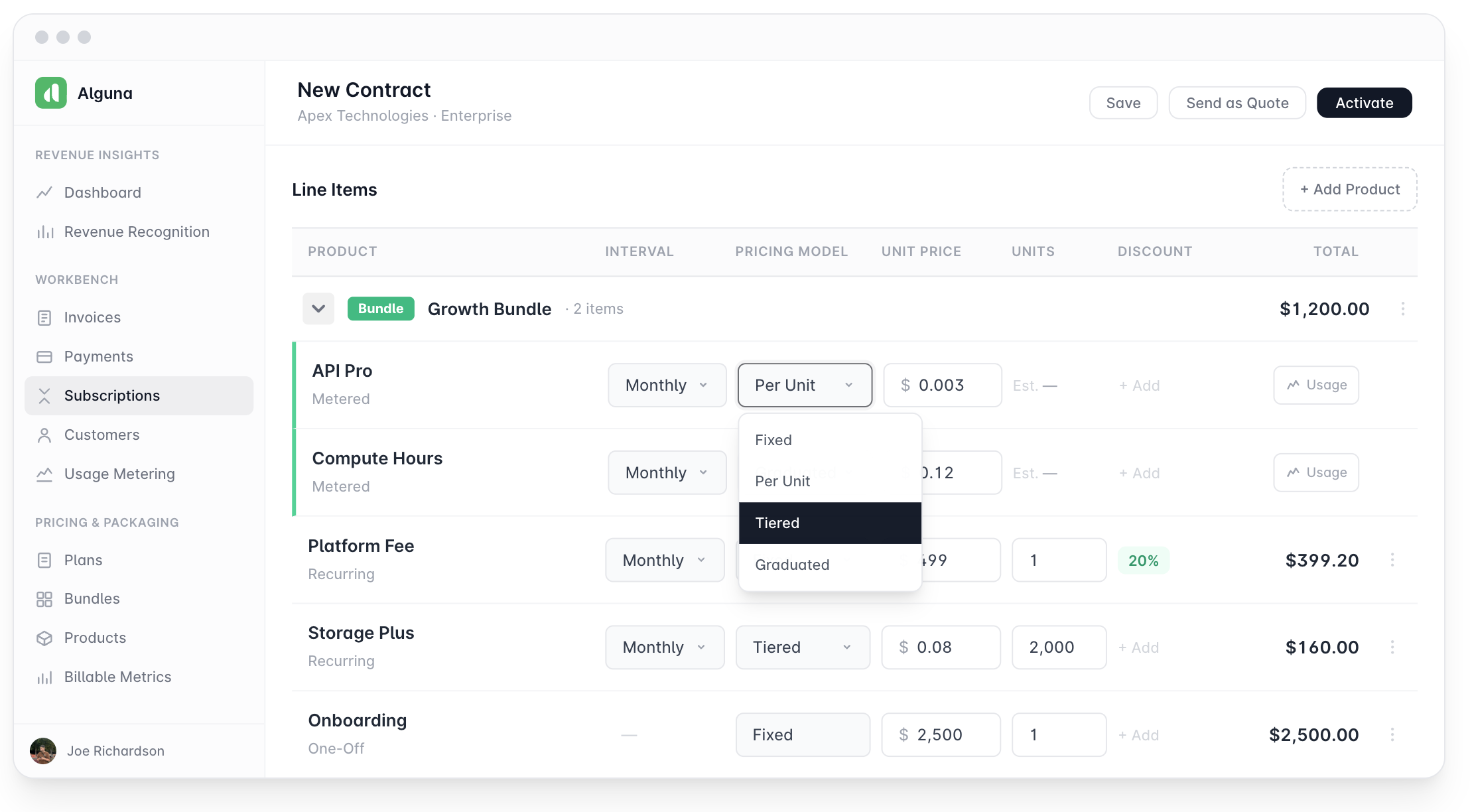
Why it matters: CPQ sets the terms every downstream system depends on, so when CPQ is slow or error-prone, you get delayed deals, mispriced quotes, and discount leakage. When it's fast and accurate, reps close quicker and finance inherits clean data instead of a cleanup job.
Alguna's no-code CPQ helps sales reps get even the most complex quotes set up and sent out in less than 5 minutes. Pre-determined price books, templates, and approval workflows makes sure there are never any surprises.
It's built for the configurations that show up at scale: ramps, prepaid credits, outcome-based and hybrid models, and custom billing schedules, all set up without engineering. Approval logic and discount rules are configurable by finance, and an accepted quote flows straight into billing and revenue recognition with no re-keying.
Juan Burgos at Haven AI, described the speed: "It takes me under five minutes to send someone an agreement. I can hop off a demo, set up the plan, type in the customer info, and it's done."
Hyperline's CPQ works from a flexible product catalog with price books, native localization, and tiered pricing, so a team can build a quote once and reuse it across deals. Sales create proposals with a contract editor, custom clauses, approval rules, and e-signature, then collect a payment method at signature so a subscription starts automatically. It lives natively in the CRM and is designed to look polished when a product-led team's first larger leads arrive.
Billing and invoicing
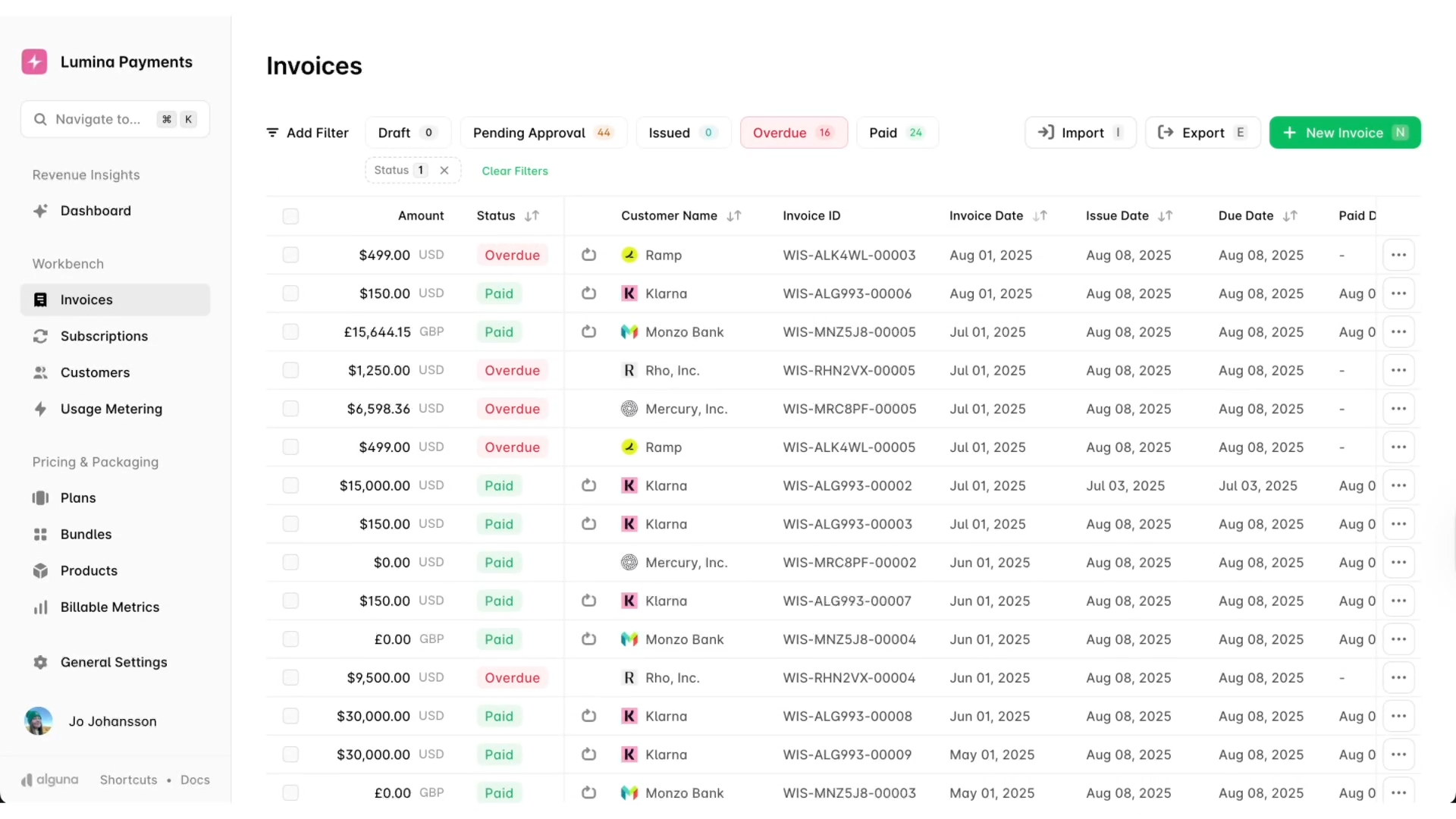
Why it matters: This is the engine that converts contracts into cash, so a small error compounds across every cycle. Manual or rigid billing is one of the most common sources of revenue leakage, billing disputes, and churn, and it tends to break exactly when deals get more complex.
Billing in Alguna is generated directly from the signed quote and from real activity, so what was sold is exactly what gets invoiced. It's built for the harder cases: hybrid contracts, ramped commitments, prepaid credits, and mid-term changes that have to re-rate correctly across multiple entities and currencies. Because billing shares one source of truth with CPQ and rev rec, the reconciliation gaps that cause leakage never open up.
Adam Liska, co-founder and CEO at Airspeed (fomerley Glyphic), put the operational payoff plainly: "With Alguna, we're more confident in our operations, onboarding customers much faster, and we've even unlocked the ability to support self-service accounts that used to be too labor-intensive to manage."
Hyperline runs flexible subscriptions, from standard monthly plans to custom contracts, with subscription phases, discounts, free trials, and pro-rated updates. Invoicing is clean and compliant, with branded invoices, automated taxes, and multi-currency support, and contract renewals are tracked with notifications, grace periods, and auto-renewal. For standard and growth-stage models, it's a strong, well-rounded engine that a finance team can run without much overhead.
Usage metering
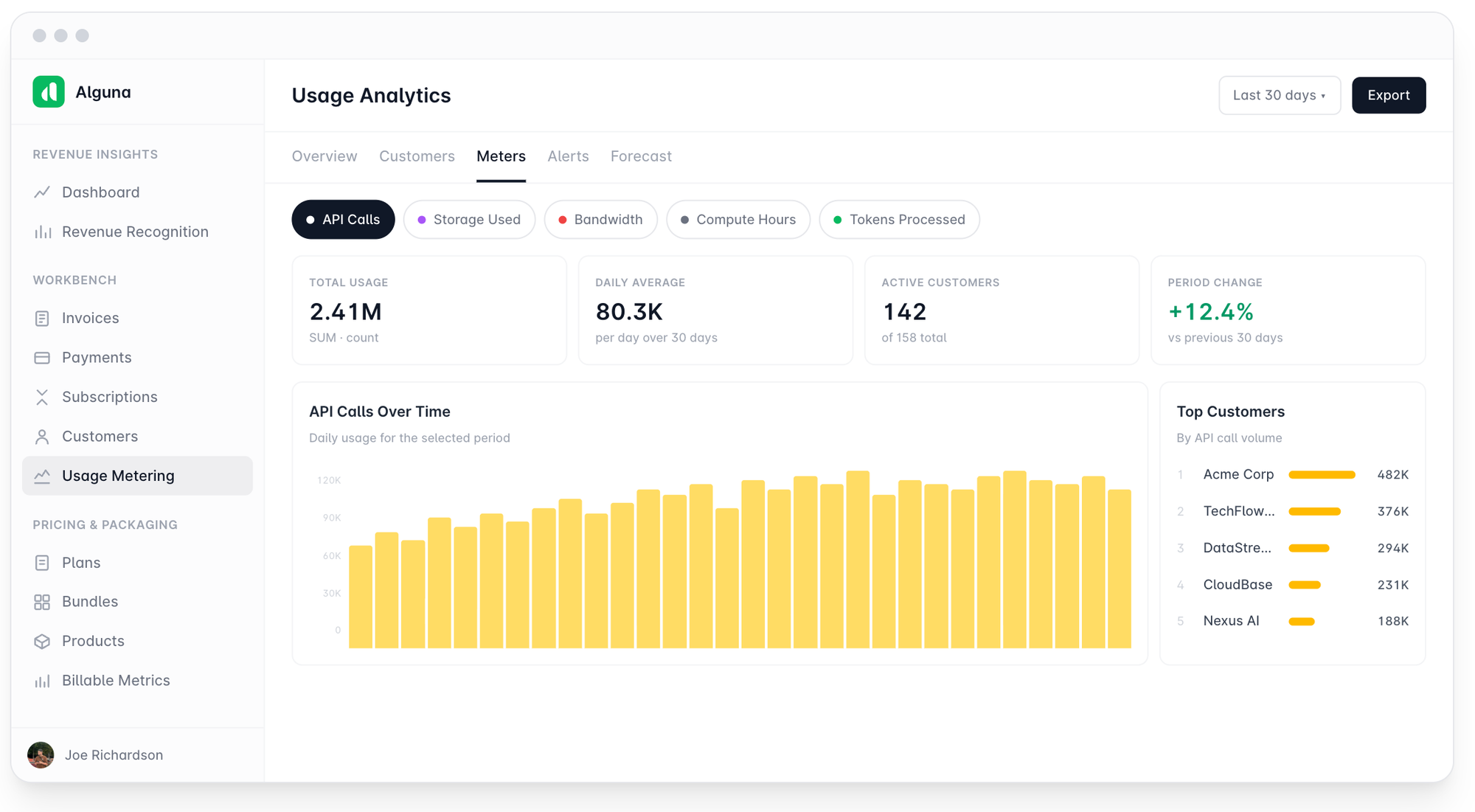
Why it matters: For consumption and AI pricing, the meter is the revenue, so accuracy is non-negotiable. Under-metering silently loses money you've already earned, and reconciling usage to invoices after the fact is one of the most expensive leaks to find and fix.
Alguna is usage-native, ingesting raw usage data through APIs, direct database connectors, or CSV files and running the calculations to find what to invoice. It handles prepaid credits, drawdowns, overages, and the outcome-based and hybrid models that mix a platform fee with consumption, so the metering, the invoice, and the recognized revenue all reconcile automatically.
Shane Curran, CEO at Evervault, summed up the difference: "Alguna enables complex usage-based billing for us in a way that other products can't."
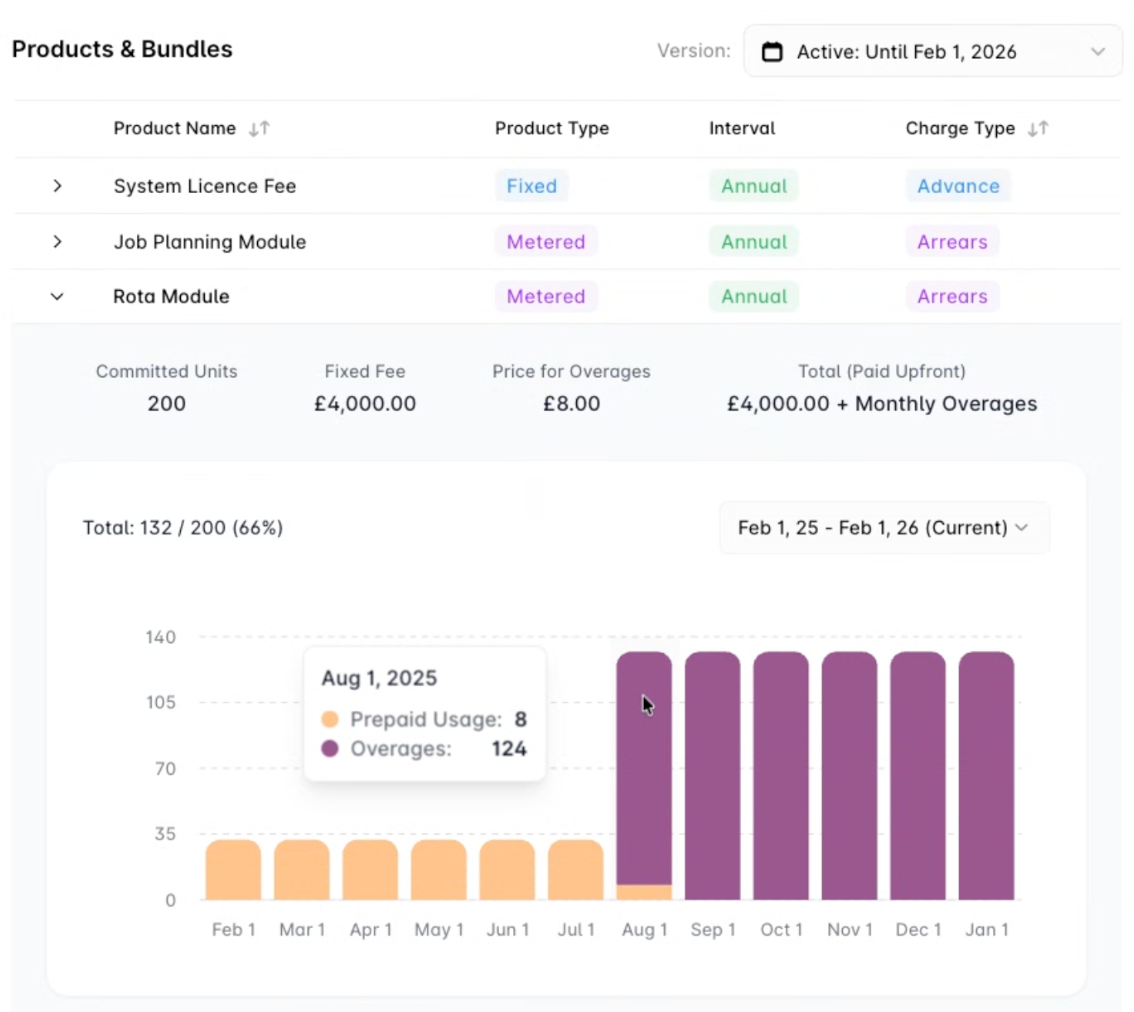
Hyperline lets teams define metered products and pricing rules, preview consumption before it's billed, and manage prepaid credits, with unlimited events on the usage plan. For growth-stage teams adopting consumption pricing, it's quick to stand up without writing code.
Revenue recognition
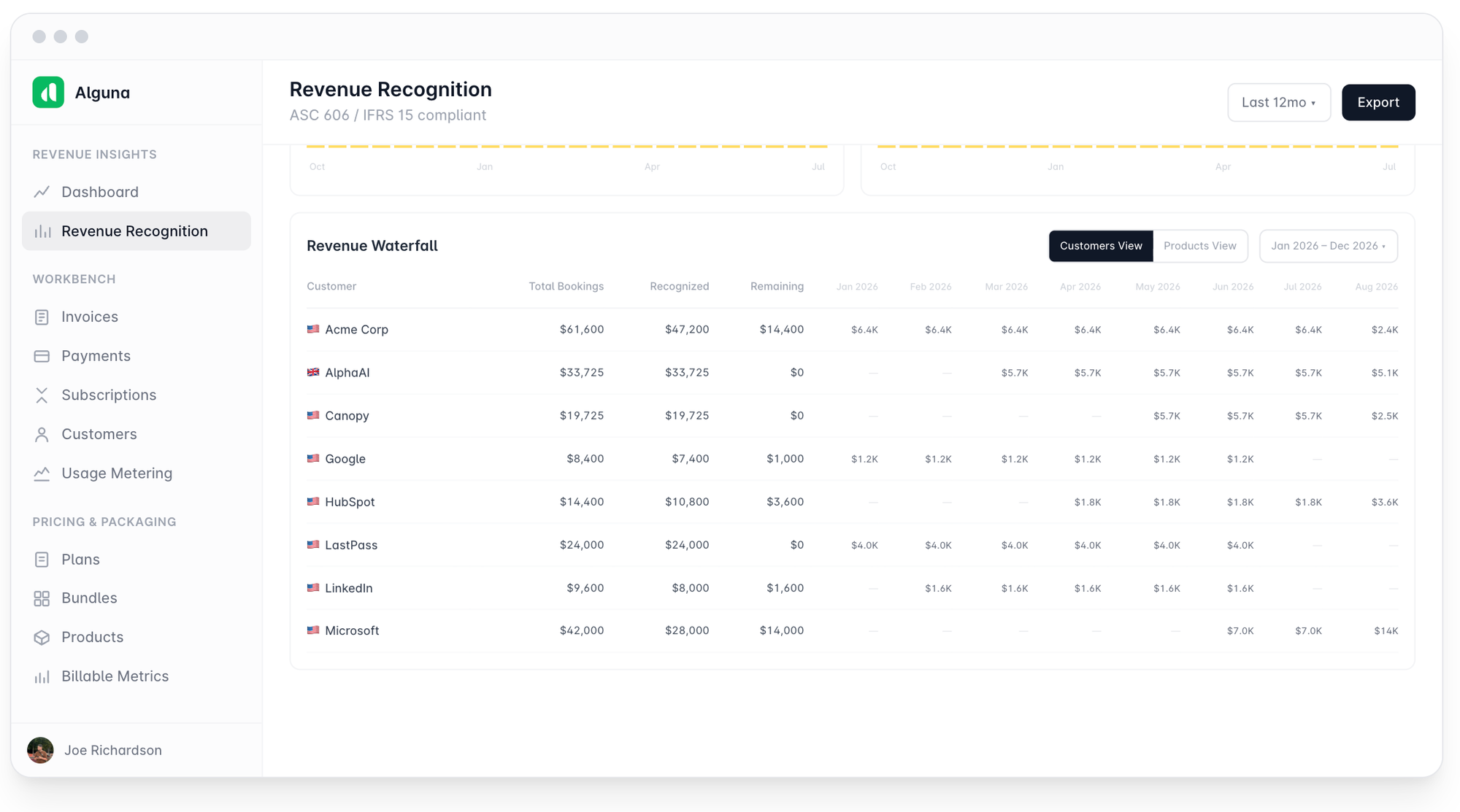
Why it matters: It's what makes your financials audit-ready and trustworthy to investors, boards, and acquirers. Getting it wrong risks material misstatement and failed audits, and the risk grows with usage-based, multi-year, and frequently amended contracts, which are exactly the deals scaling companies sign.
Alguna treats revenue recognition as a first-class, audit-ready module under ASC 606 and IFRS 15, not an export to a spreadsheet. Because rev rec sits on the same data as quoting and billing, schedules update automatically as contracts change, and the multi-entity and multi-currency consolidation that scaling companies need at close is built in. When MGI Research ties uncontrolled leakage directly to ASC 606 risk, that depth stops being optional.
Adam Liska, CEO at Airspeed (formerly Glyphic) valued exactly this visibility: "Alguna ticked every box I needed. Most importantly, it gave me a clear overview of revenue movements, something Stripe just couldn't provide."
Hyperline includes revenue recognition in its base plan rather than charging for it as an add-on, which is a real advantage for a growth-stage finance team that wants compliance without buying another product. It produces the reporting that team needs to close the books and track revenue movements, and it stays in sync with billing so the numbers line up.
Collections and accounts receivable
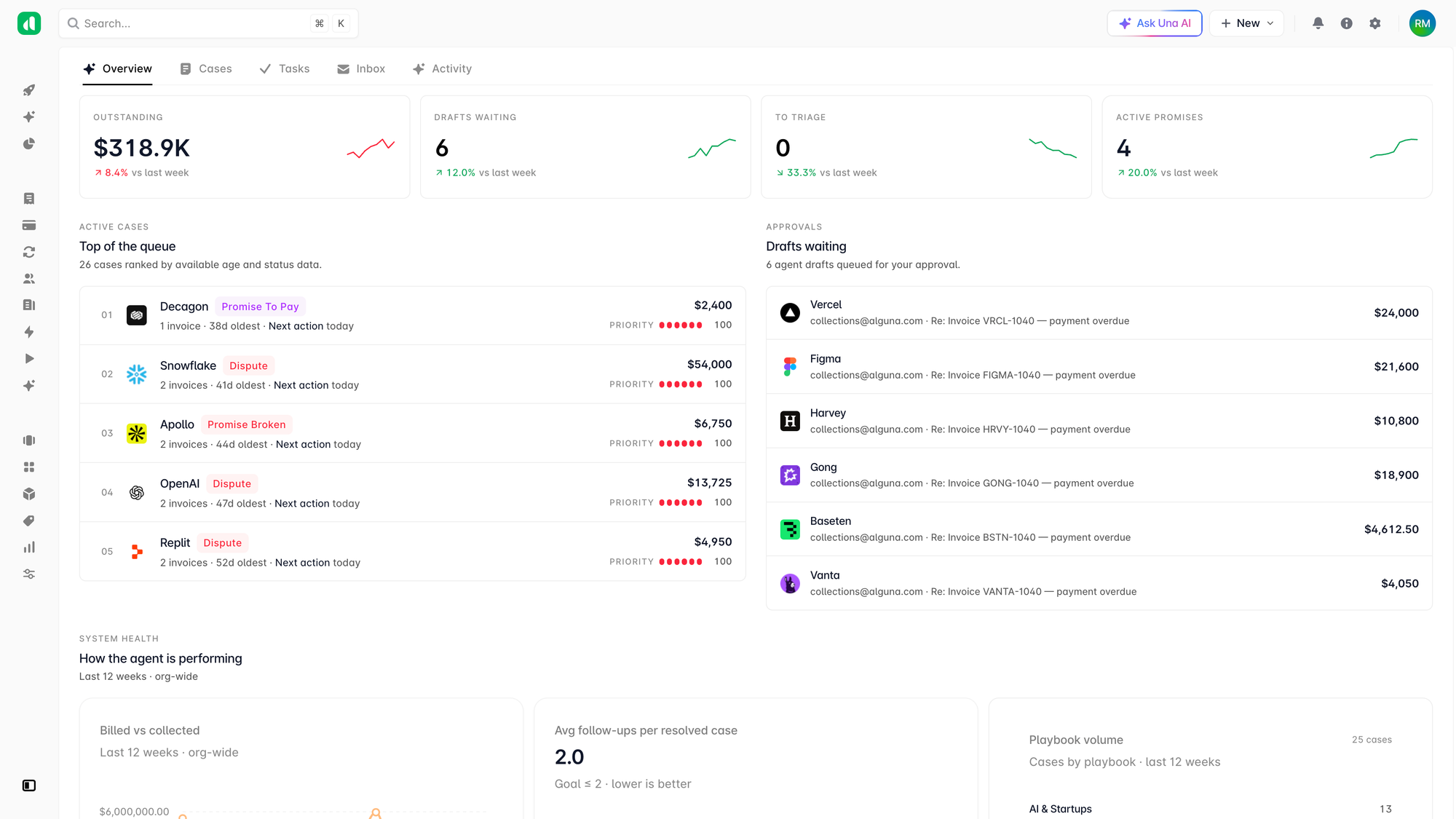
Why it matters: It directly protects cash flow and your days sales outstanding (DSO). Manual chasing eats finance time and lets receivables age, and every week an invoice sits unpaid is working capital you can't deploy, so consistency here shows up straight on the balance sheet.
Alguna runs intelligent collections through an AI-driven AR agent that operates along a monitor, suggest, and act autonomy ladder, so you decide how much it does on its own. It watches receivables, drafts and sends outreach within hard-coded guardrails and approval thresholds, captures promises to pay, classifies inbound replies by intent, and flags disputes for a human, all managed from a Control Tower workspace.
The shift is from doing the chasing to supervising it. Juan Burgos described that feeling at Haven AI: "Once I sign up a customer and we get them deployed, everything's on autopilot, I don't have to think about it anymore."
Hyperline automates the collections basics well, with reminder schedules, dunning management, and smart retry logic for failed payments, all configured through rules you set. It reduces manual chasing for a growth-stage team, though it stays rule-based rather than acting as an autonomous agent that decides and drafts on its own.
Payments and global compliance
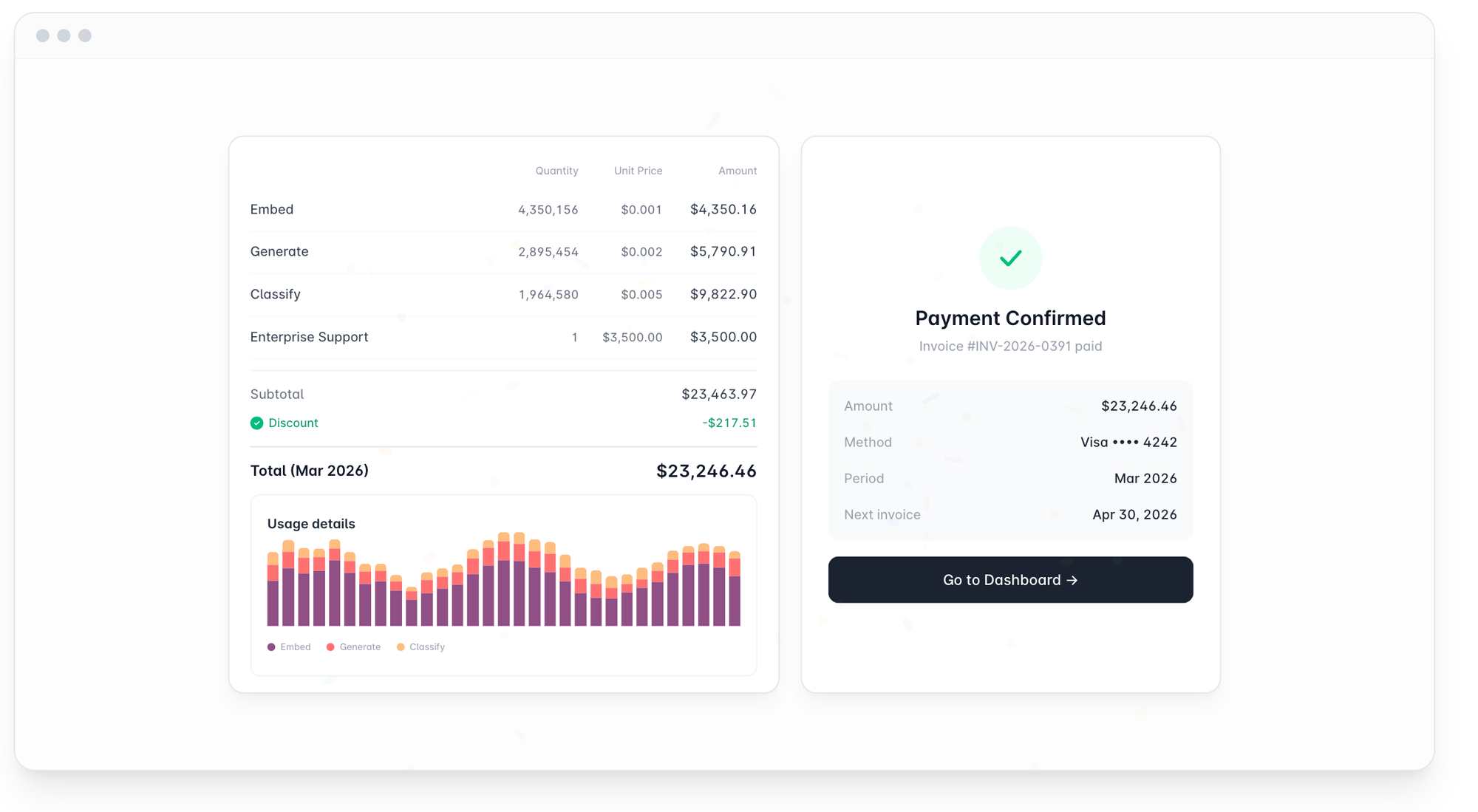
Why it matters: Friction in payment delays cash, and a compliance gap can block a deal outright. As you expand internationally, VAT and tax rules, EU e-invoicing mandates, and security standards like SOC 2 move from nice-to-have to deal-breaker.
Alguna is built for global companies operating across multiple entities and regions, with multi-currency support, global tax handling, and the multi-entity consolidation that complex revenue operations require. It's SOC 2 compliant, which matters for the security reviews enterprise buyers run before they sign, and it complements your existing payment and finance stack rather than locking you into one rail.
Hyperline's European roots show here as a genuine strength. It orchestrates payments across Stripe, Mollie, GoCardless, and Airwallex rather than tying you to one provider, and it handles e-invoicing and tax across more than 100 countries, which matters as EU e-invoicing mandates expand. For a team whose center of gravity is the EU, that coverage is a natural fit out of the box.
In-depth: Alguna - A modern revenue management platform built for scale
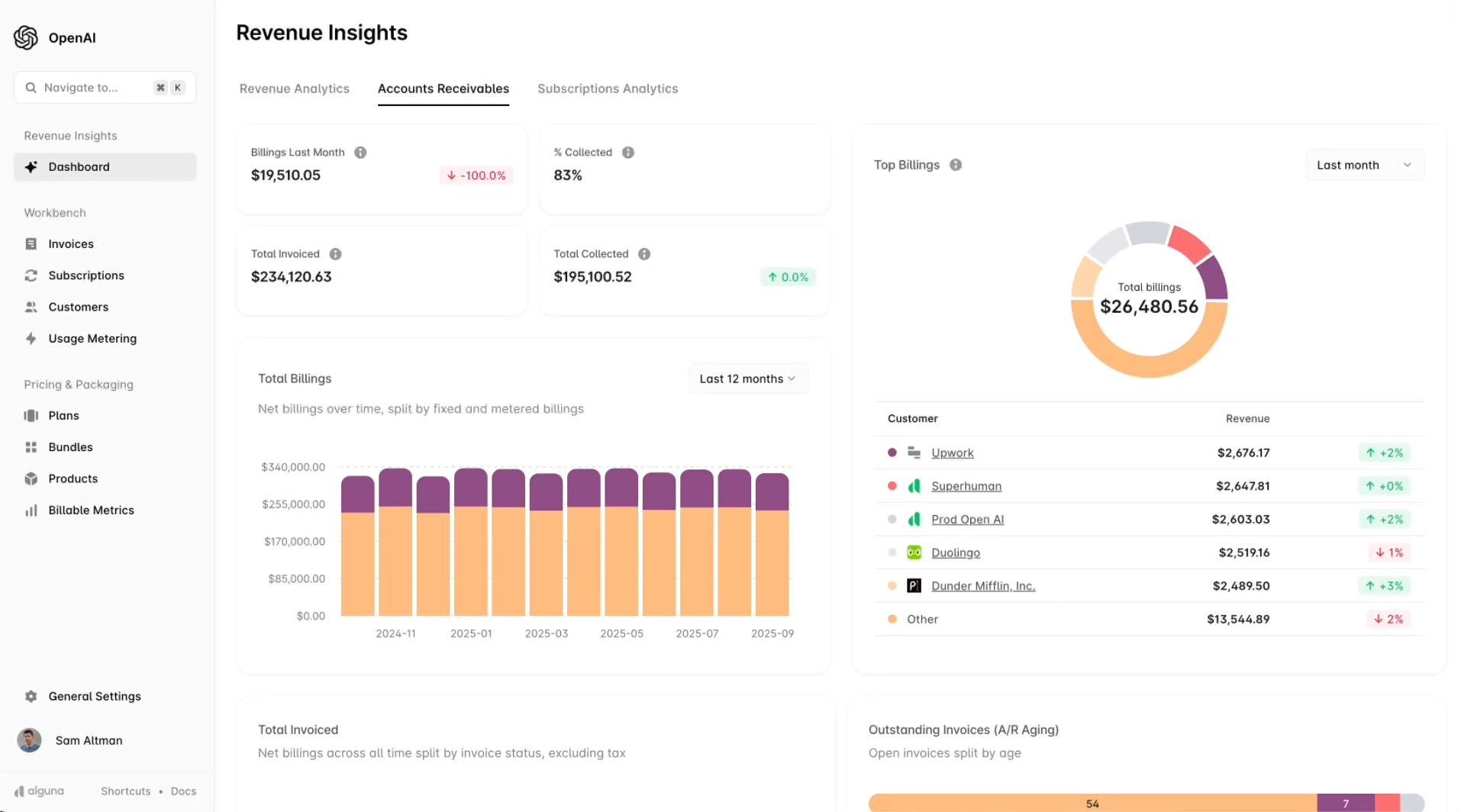
Alguna is an AI-native quote-to-revenue platform that unifies the entire revenue workflow in one system. Rather than connecting a CPQ tool to a billing system to a rev rec product with integrations and manual handoffs, Alguna runs pricing, quoting, usage metering, billing, invoicing, collections, and revenue recognition on a single source of truth. That architecture is the point: what's quoted is what's billed is what's recognized, which is exactly where revenue leakage and forecasting blind spots come from when systems are fragmented.
Alguna's is built modularly. This means you can adopt the CPQ, billing, or revenue recognition on its own or choose to go with the complete platform. It's designed for the complexity that arrives as a company scales: usage-based and outcome-based pricing, hybrid contracts, multi-entity consolidation, and AI agents that take work off the finance team's plate.
Marc Koskela, Director of Growth Marketing at ComplyAdvantage, described what working with the team felt like: "There's been both flexibility and a can-do attitude. Alguna definitely went the extra mile."
Key features
- No-code CPQ purpose-built for SaaS, AI, and fintech, supporting subscription, usage-based, outcome-based, and hybrid pricing, plus ramps, prepaid credits, and custom billing schedules without engineering work
- Automated billing and invoicing that generate directly from signed quotes and real usage, with multi-currency and multi-entity support for global operations
- Native ASC 606 and IFRS 15 revenue recognition that stays audit-ready as contracts change, paired with real-time revenue insights and reporting
- An AI AR Agent with a monitor, suggest, and act autonomy ladder, promise-to-pay capture, dispute detection, configurable personas, playbooks and cadences, inbound intent classification, hard-coded guardrails, and approval thresholds
- Native Salesforce and HubSpot integration with no-code connectors to your finance and engineering tools, plus SOC 2 compliance for enterprise security reviews
Pros
- One unified system removes the handoffs and reconciliation gaps that cause revenue leakage
- Flat-fee pricing with no revenue share keeps costs predictable as you scale
- AI agents automate accounts receivable rather than just sending reminders
- Built for complex, usage-based, and enterprise pricing without custom development
- Fast deployment, with some customers going live in a matter of days
Cons
- A newer brand than the legacy incumbents some procurement teams default to
- Entry price sits above starter billing tools, so it's more than a pre-seed team usually needs
- Predictive payment-date forecasting is still maturing on the roadmap
Best for
- Scaling SaaS, AI, and fintech companies whose quote-to-cash workflow is fragmenting across multiple tools
- Finance and RevOps teams running usage-based, hybrid, or outcome-based pricing
- Companies operating across multiple entities and regions that need audit-ready revenue recognition
- Teams that want AI to take real work off accounts receivable, not just automate emails
Pricing. Paid plans start at $699 per month as a flat fee with no revenue share, and a free tier is available. Because pricing doesn't take a percentage of your revenue, your platform cost stays the same whether you grow 2x, 10x, or 100x.
In-depth: Hyperline - A great billing tool focused on the European market
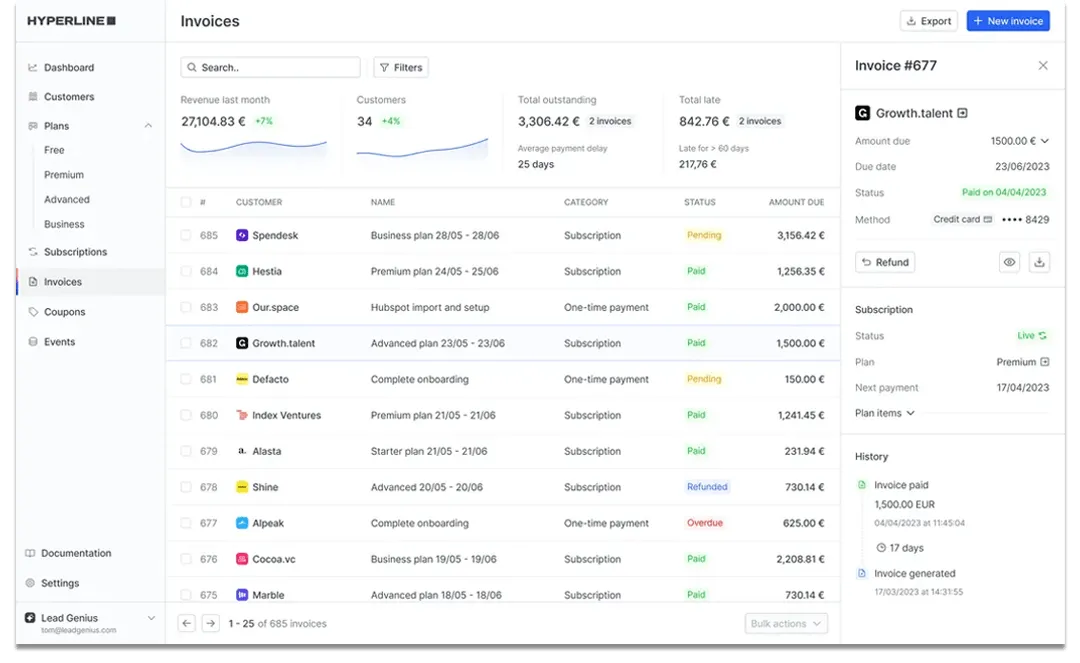
Hyperline is a modern billing and monetization platform built for software companies with recurring revenue. Founded in France in 2023, it covers contracts through payment collection with a strong emphasis on flexibility and speed: you can configure most pricing models without code and start billing quickly, often in hours or days rather than weeks.
Its native CRM integration and EU-focused compliance make it a natural fit for European teams in the early-growth stage.
Key features
- No-code support for flat-fee, per-seat, tiered, packaged, usage-based, and hybrid pricing, with prepaid credits and custom terms
- CPQ with price books, a contract editor, approval rules, custom clauses, and e-signature, all integrated with the CRM
- Compliant invoicing with e-invoicing, tax management, and multi-currency across more than 100 countries, plus multiple invoicing entities
- Payment orchestration across Stripe, Mollie, GoCardless, and Airwallex, with checkout, reconciliation, dunning, and smart retry logic
- Built-in revenue recognition and reporting included in the base plan, with native two-way Salesforce and HubSpot sync
Pros
- Fast, self-serve setup that gets a team billing quickly
- Flexible no-code pricing models without engineering involvement
- Strong EU e-invoicing, tax, and payment-provider coverage
- Revenue recognition included in the base plan, with no add-on fee
- Well-rated support and a polished experience for early teams
Cons
- Pricing takes a percentage of revenue, so your platform cost rises as you grow
- Collections rely on rule-based dunning rather than an autonomous AI agent
- Depth is optimized for growth-stage rather than complex enterprise revenue operations
- Each CRM or accounting integration is a paid monthly add-on
Best for
- European, early-stage and growth-stage SaaS companies
- Product-led teams that need modern billing live quickly
- Finance teams that want compliant EU invoicing without a separate tax tool
- Companies with standard to moderately complex subscription and usage pricing
Pricing. A free tier covers up to 10 invoices. The quote-to-cash plan starts at $199 per month plus 0.6% of revenue, the usage plan at $299 per month plus 0.7%, and companies above $5 million ARR move to a custom quote.
CRM and accounting integrations are an additional $50 per integration per month. The percentage component is worth modeling carefully, because at scale a revenue share compounds into a meaningful number.
How to evaluate quote-to-cash software
Whichever way you're leaning, run the decision through a consistent framework rather than a feature checklist. The right questions surface where a platform will help or hurt 2 years from now, not just next week.
- Lifecycle coverage. Does it handle the full workflow from quote to recognized revenue, or just one stage with integration tax everywhere else
- Pricing-model fit. Can it run your actual pricing today, including usage-based, hybrid, ramps, and prepaid credits, without engineering work
- Cost as you scale. Model the total cost at 2x and 5x your current revenue, paying close attention to any percentage-of-revenue component or per-integration fees
- Compliance depth. Does revenue recognition stay audit-ready under ASC 606 and IFRS 15 as contracts change, and does it support the entities and currencies you operate in
- Automation and AI. Does the platform genuinely reduce manual finance work, or just relabel rule-based automation as intelligence
- Time to value and migration. How fast can you go live, and how much heavy lifting does the vendor handle during migration
Frequently asked questions
What's the main difference between Alguna and Hyperline?
Hyperline is a billing-forward platform that's quick to adopt and priced for European, early-stage and growth SaaS. Alguna is an AI-native, end-to-end quote-to-revenue platform built for scaling companies and enterprises with complex pricing and revenue operations. The short version: Hyperline fits where you are if you're an early EU team, and Alguna is built for where you're going as complexity grows.
Does either platform charge a percentage of revenue?
Hyperline's standard plans combine a monthly base fee with a percentage of revenue, 0.6% on the quote-to-cash plan and 0.7% on the usage plan. Alguna charges a flat monthly fee with no revenue share, which keeps platform costs predictable as you scale.
Which is better for usage-based or AI pricing?
Both support usage-based pricing. Hyperline is usage-native and handles it well for growth-stage teams. Alguna is built for the harder consumption, outcome-based, and hybrid models common in AI companies, with real-time metering feeding billing and revenue recognition in one system.
Which handles collections better?
Hyperline automates reminders, dunning, and payment retries with configurable rules. Alguna offers an AI AR agent that can monitor receivables, draft and send outreach within guardrails, capture promises to pay, and flag disputes, so finance supervises collections rather than running them manually.
How quickly can we go live with each?
Hyperline emphasizes fast self-serve setup, often in hours or days for simpler configurations. Alguna also deploys quickly, with some customers live in days, and handles the migration heavy lifting for more complex stacks.
Is Hyperline only for European companies?
No, but its compliance and payment-provider coverage are EU-strong, and its public ICP skews toward European growth-stage SaaS. Alguna is built for companies operating across multiple entities and regions, including enterprise buyers running global security and compliance reviews. Alguna's customers span across North America, EMEA, and APAC.
Pick the platform that's built for where you're going
If you're an early-stage European team that wants modern billing live this week, Hyperline is a strong, well-built choice, and you'll be in good hands. But billing is the easy part to solve at the start and the expensive part to re-solve later. The teams that outgrow a billing tool usually do it on the parts that don't show up in a starter demo: complex usage and hybrid pricing, audit-ready revenue recognition across entities, collections that scale without adding headcount, and a cost structure that doesn't tax your growth.
That's the gap Alguna is built to close. One AI-native system for the entire quote-to-cash workflow, flat-fee pricing that stays predictable as you scale, and an agent layer that takes real work off your finance team. If you're scaling into complexity, it's worth seeing what that looks like on your own data.