If you're searching for Conga CPQ alternatives, you're probably not alone in feeling like the platform has started to work against you rather than for you. A clunky "old school" interface, a steep implementation curve, pricing opacity, and a Salesforce dependency that limits your options are real pain points that users consistently flag.
If Conga CPQ is seriously slowing your team down or locking you into a single CRM ecosystem, it's worth understanding what else is out there.
In this guide, we cover the best Conga alternatives available today, how they compare, and how to decide which is the right fit for your team.
Conga CPQ: What it does well, and where it falls short
Conga CPQ is a well-established platform, and it earns its reputation in some areas. Its deep Salesforce integration feels native for orgs that are already running on Salesforce, and its configurability allows businesses to build fairly complex pricing rules and product bundles.
But the complaints are just as consistent as the praise. Users frequently flag a clunky, outdated UI, a steep learning curve, and limited customization options that often require expensive workarounds.
Average implementation time, per G2 reviewers, runs to around four months, and some real-world CPQ deployments take closer to six. Reporting is limited, pricing is opaque (contact-sales only), and the platform's heavy Salesforce dependency makes it a poor fit for teams running HubSpot, Dynamics, or anything else.
If any of that sounds familiar, here's a closer look at the alternatives worth considering.
At a glance: 6 Conga CPQ alternatives compared
| Platform | Best for | Strengths | Limitations | Pricing |
|---|---|---|---|---|
| Alguna | B2B SaaS and AI companies with complex usage-based or hybrid pricing models | AI-powered quoting, price books, pricing simulator, fully no-code | Purpose-built for SaaS and the AI era, not a fit for e.g. manufacturing | Starts at $699/month. No revenue cut. |
| Agentforce Revenue Management | Salesforce-native enterprises | Deep CRM integration, AI-powered quoting, full revenue lifecycle | Requires Salesforce, high cost, complex implementation | From ~$75/user/month |
| DealHub CPQ | Mid-market B2B teams | Fast adoption, CRM-agnostic, guided selling | No public pricing, performance issues on complex quotes | Contact for pricing |
| Oracle CPQ | Large enterprises with complex catalogs | Handles thousands of SKUs, deep ERP integration | Heavy implementation, requires certified developers, expensive | ~$240/user/month |
| PandaDoc CPQ | SMBs and content-heavy sales teams | Fast setup, intuitive UX, integrated eSign and payments | Limited configuration logic for complex products | From $19/user/month |
The 5 best Conga CPQ alternatives for modern teams
1. Alguna: Best Conga CPQ alternative for scaling teams
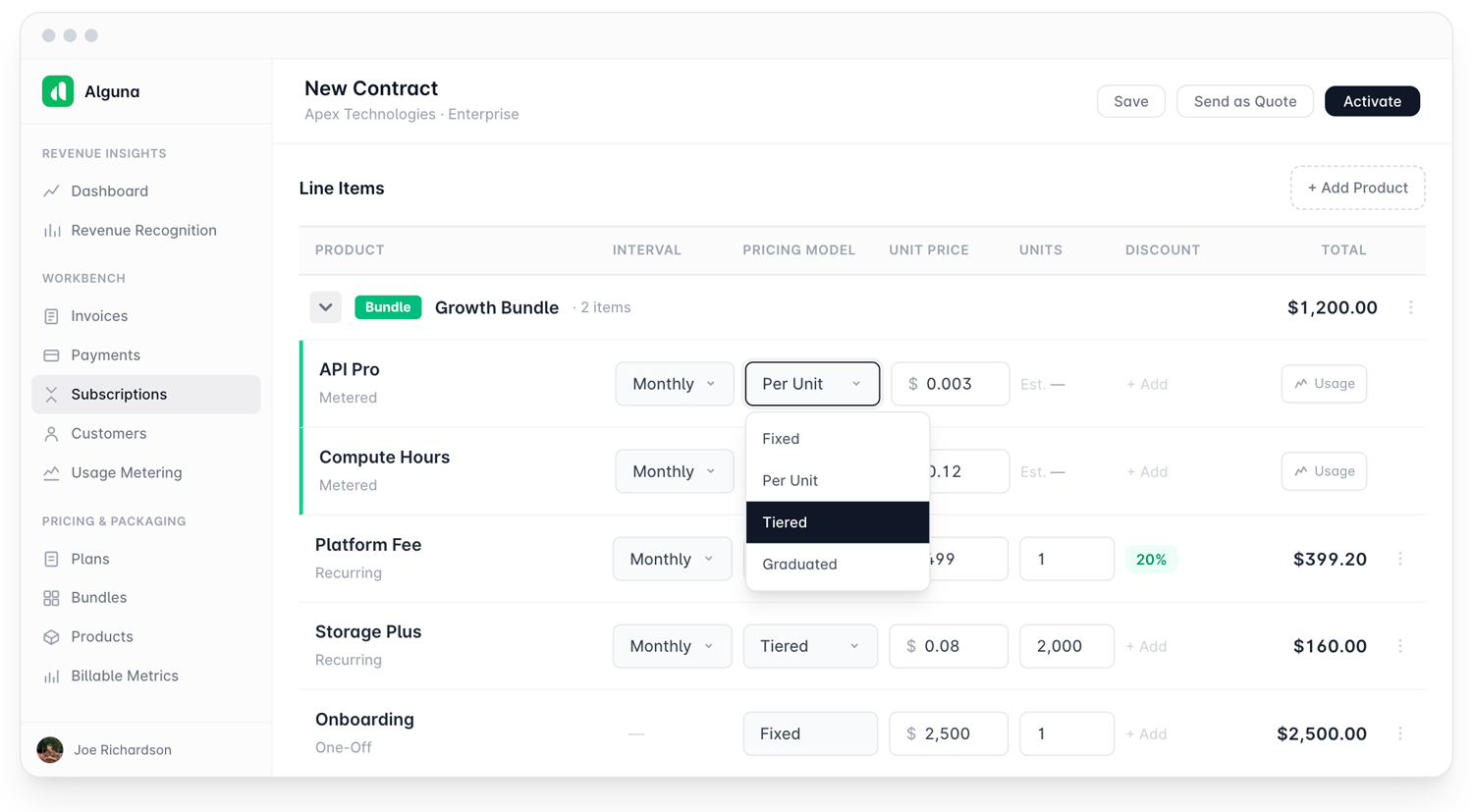
Alguna CPQ is one of the most flexible and configurable no-code CPQs on the market. Purpose-built for B2B SaaS and AI companies, Y Combinator backed Alguna is designed for the reality of SaaS and AI revenue: usage-based billing, hybrid subscription management, mid-cycle upgrades and downgrades, and the operational complexity that comes with selling AI products and services at scale.
The core insight behind Alguna is that traditional CPQ platforms weren't designed for how modern companies and teams actually sell. They assume a discrete product catalog with fixed prices, when the reality is often metered usage, tiered subscription tiers, complex expansion motions, and the need to generate a professional quote in minutes rather than days.
Alguna covers the full journey from quote to cash, including contract management, billing, and invoicing, without the implementation overhead of enterprise CPQ.
For teams managing the quote-to-cash process with spreadsheets, scattered billing tools, or a Stripe setup that's started to buckle under complexity, Alguna offers a path to operational clarity without a six-month implementation project.
Key features of Alguna CPQ:
- Contracts AI: Drag and drop a folder of executed PDFs or DOCX files and process them simultaneously. Perfect for migrating legacy customers or onboarding large sales cycles.
- Voice AI: For specialized clauses or instructions, describe what you need in your own words. Our model interprets voice commands and applies them across your batch, speeding up custom workflows.
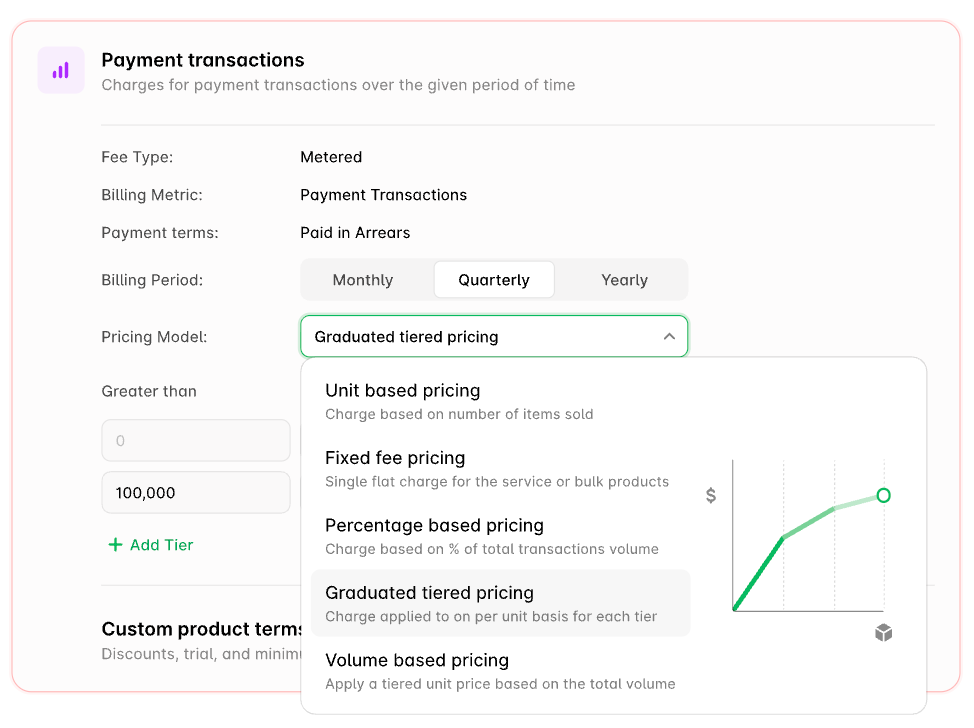
- Supports any pricing model: Seats, usage, outcomes, hybrid, or our most flexible option: expression based pricing, are all available out of the box. Whether you need tiered uasage, commitment + overages, or credits, it can all be set up directly in the UI.
- Approval workflows: Set up and trigger approval workflows on a product-level, discount applied, or overall contract value.
- Built-in eSignature: Custom branded and content-rich quotes with the choice of one or two-way e-signature.
- Price books: Set up your catalog of products and their corresponding base prices. It defines the standard list price that a customer sees before your CPQ engine applies discounts, bundles, or custom pricing rules
- Subscription management: Upgrades, downgrades, mid-cycle changes, co-terminations, and renewals
- Fast deployment: No heavy implementation project or dedicated ops resource required. Most teams go live in weeks.
- Native integrations: Bidirectional connections with CRMs like HubSpot, Salesforce and others.
Pros:
- Purpose-built for SaaS and AI revenue models, including usage-based, outcome-based and hybrid billing
- Quote generation takes minutes, not hours, even for complex deal structures
- You don't need a dedicated revenue ops hire to run the platform day to day
- No engineering dependencies to make changes
Cons:
- Built specifically for B2B SaaS and AI-native companies, so not a fit for manufacturing, physical products, or highly technical configuration
- For companies with simple, fixed-price products, some features may be more than they need
Best for:
- B2B SaaS and AI companies that bill on usage, subscriptions, or a combination of both
- Founders and revenue teams that want to replace a patchwork of Stripe, spreadsheets, and manual invoicing
- Fast-growing companies that need their billing infrastructure to scale without adding headcount
Pricing: Pricing starts at $699 per month. Alguna never takes a revenue cut.
2. Salesforce CPQ (now Agentforce Revenue Management)
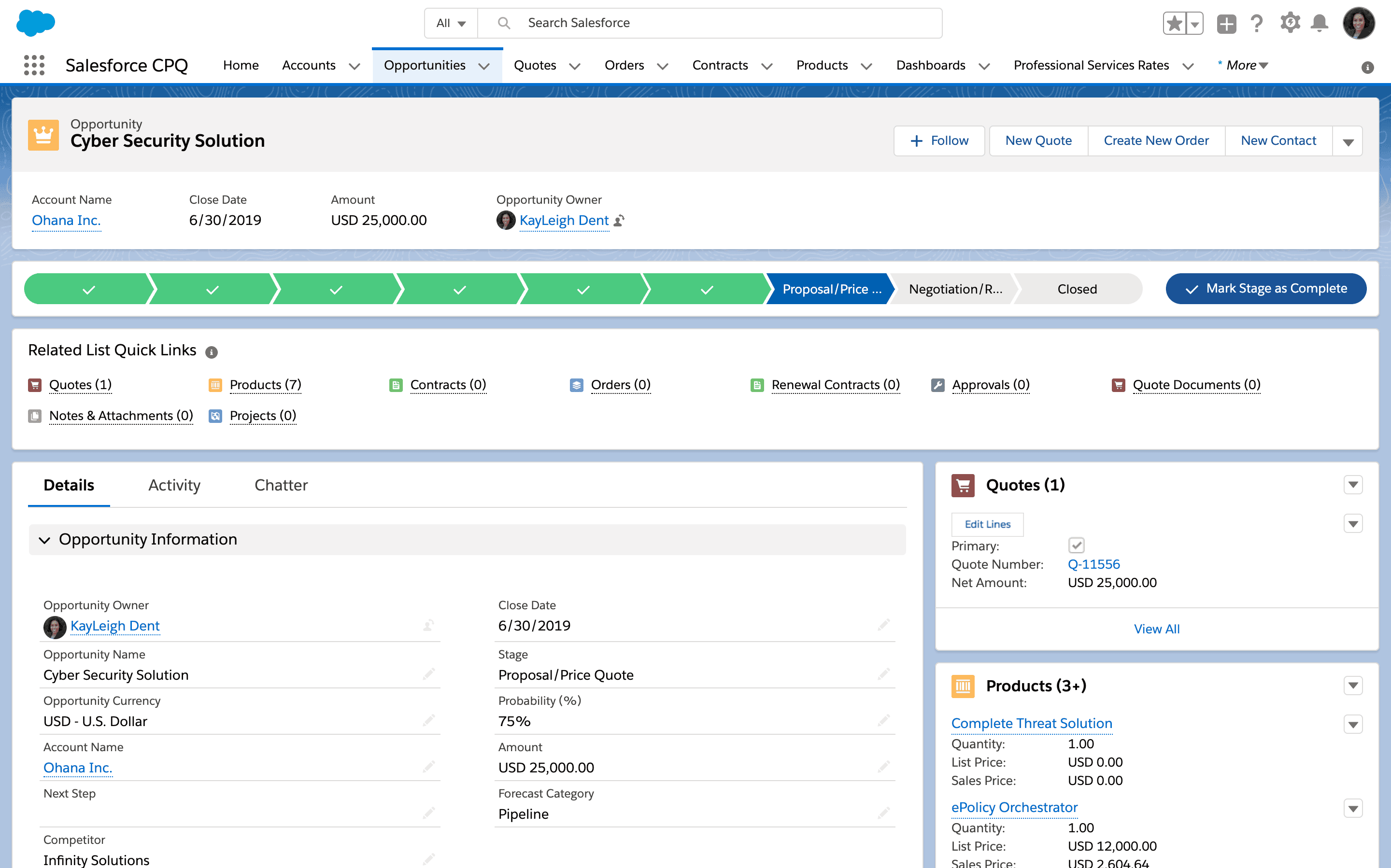
Salesforce Revenue Cloud is the platform that Salesforce is positioning as the future of its CPQ ecosystem. In March 2025, Salesforce officially ended sales on its legacy CPQ product (Salesforce CPQ), and it now directs all new customers toward Agentforce Revenue Management.
The new architecture is more flexible, supports AI-powered quoting through Agentforce, and unifies CPQ, billing, subscription management, and contract lifecycle management in a single platform.
Key features:
- Native integration across the full Salesforce platform (Sales Cloud, Service Cloud, CPQ)
- AI-powered quoting and pricing through Agentforce
- Full quote-to-cash: CPQ, billing, contract management, and order management in one place
- Advanced approval workflows, pricing guardrails, and discount governance
- Multi-currency, multi-channel support for global sales teams
Pros:
- If you're on Salesforce, the native experience makes adoption significantly easier
- Revenue Cloud Advanced is the platform Salesforce is actively investing in, with regular AI and feature updates
- Handles complex product configurations, subscription models, and asset-based quoting
Cons:
- You need a Salesforce license to use it, which adds cost even before Revenue Cloud pricing kicks in
- Implementation is complex and typically requires a Salesforce partner or certified admin
- Total cost of ownership can be significant, especially for smaller or mid-market teams
Best for:
- Enterprises already running their entire revenue stack on Salesforce
- Teams that need deep policy controls, complex approval chains, and native CRM integration
- Organizations with dedicated Salesforce admins or implementation partners on hand
Pricing: Salesforce Revenue Cloud starts at around $75/user/month for CPQ Growth, $150/user/month for CPQ Plus, and around $300/user/month for advanced enterprise tiers.
These figures are subject to change and are often negotiated.
3. DealHub CPQ: Best Conga CPQ alternative for collaborative selling
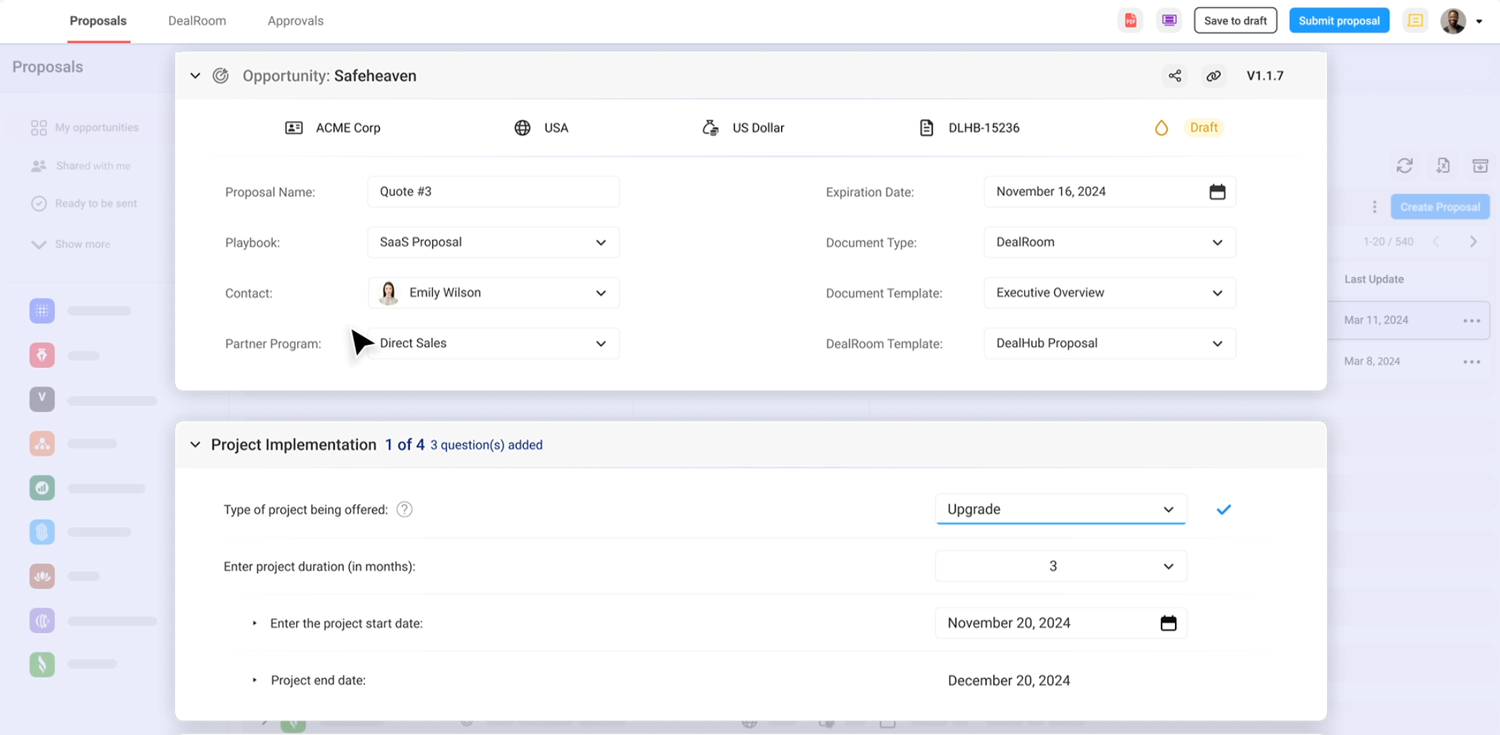
DealHub is a particularly strong fit for mid-market B2B companies that want fast deployment without a heavy implementation project. Its guided selling experience walks reps through product configuration using a playbook-style interface, so they don't need to understand the backend pricing logic to generate an accurate quote.
DealHub integrates natively with Salesforce, HubSpot, Microsoft Dynamics 365, and Freshworks, which means it can work around your CRM of choice rather than forcing you into a single ecosystem.
Its recent acquisition of Subskribe also extends its capabilities into subscription management and usage-based billing.
Key features:
- Guided selling with playbook-style flows that reduce rep training time
- Native integrations with Salesforce, HubSpot, Dynamics 365, and Freshworks
- Built-in contract lifecycle management and digital sales rooms (DealRoom)
- Subscription and renewal management through the Subskribe acquisition
Pros:
- Deploys faster than most enterprise CPQ platforms, with no-code configuration reducing IT dependency
- Works across multiple CRMs, making it a good option if you're not on Salesforce
- Guided selling helps reps generate accurate quotes even for complex configurations
Cons:
- No public pricing, which makes it harder to evaluate fit before talking to sales
- Some users report performance issues and loading delays when working with complex, large quotes
- Can be more tool than necessary for teams with simpler product catalogs
Best for:
- Mid-market B2B teams with complex product catalogs and multiple CRM options
- Companies that need a CRM-agnostic CPQ with fast time to value
- Organizations selling subscriptions, usage-based products, or complex bundles
Pricing: Contact DealHub for pricing. No self-serve plans are available.
4. Oracle CPQ: Best Conga CPQ alternative for teams dealing with tens of thousands of SKUs
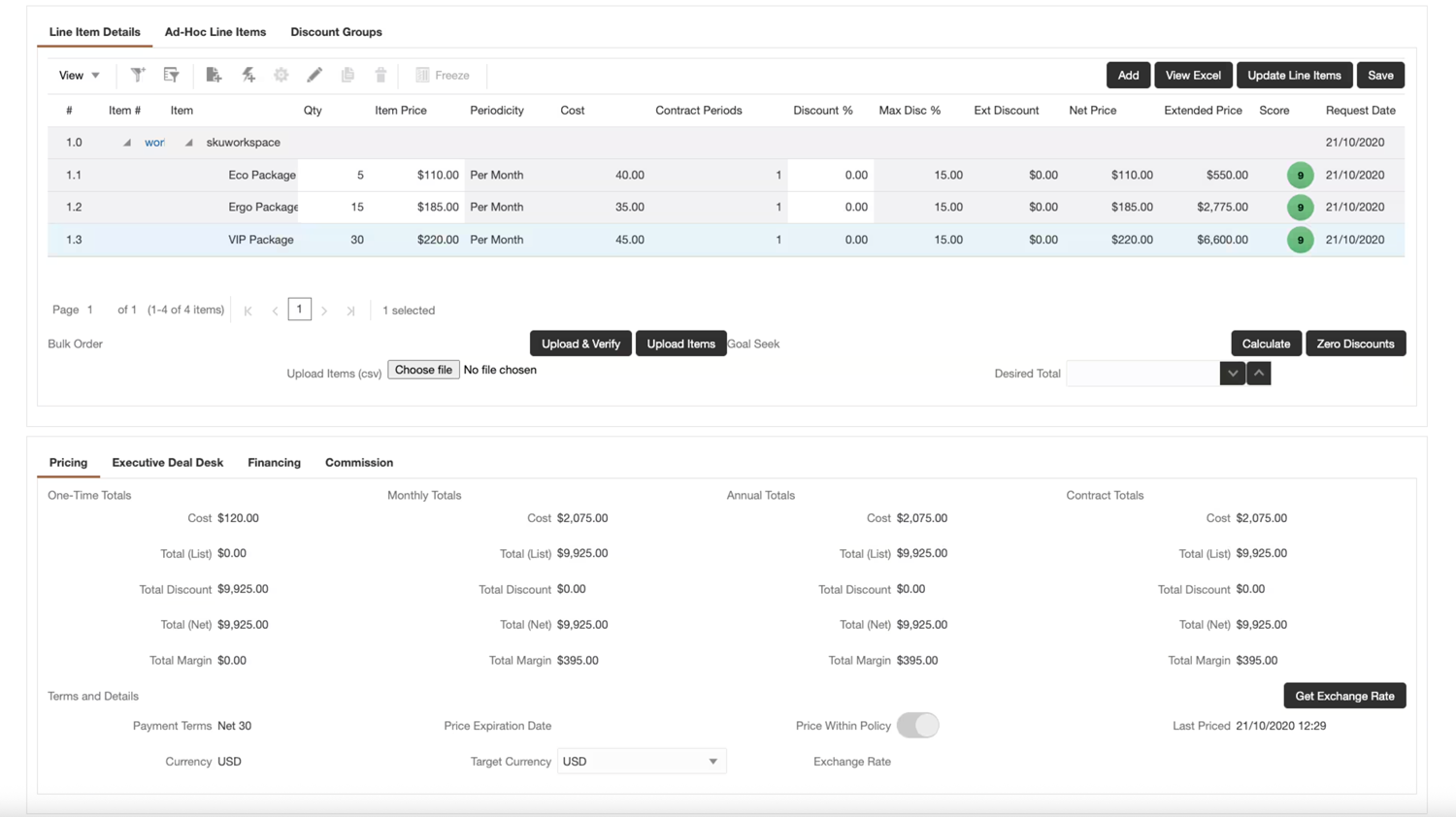
Oracle CPQ is the heavy-duty option in this list, and it's built for organizations that genuinely need that kind of power. If you're managing tens of thousands of SKUs, multi-level bills of materials, complex channel sales models, and deep integration with Oracle's ERP and CRM systems, Oracle CPQ can handle it.
That power comes with a trade-off. Oracle CPQ is not a platform you configure over a weekend. Implementation is complex and often requires Oracle-certified developers, which adds significant cost on top of already-enterprise-level licensing.
The UI is functional but not modern, and for mid-market teams or fast-moving SaaS companies, the overhead is rarely justified.
Key features:
- Configuration logic capable of handling thousands of SKUs and nested product dependencies
- Deep integration with Oracle ERP, CRM, and other Oracle suite products
- Dynamic pricing engines with real-time calculations, discounts, and customer-specific pricing
- Guided selling flows and approval hierarchies for complex organizational structures
- Proposal and document generation with compliance and audit trail support
Pros:
- One of the most powerful configuration engines available, built for true enterprise complexity
- Strong for global organizations that need multi-currency, multi-language quoting
- Deep Oracle ecosystem integration for teams already running Oracle ERP or CX
Cons:
- Heavy implementation lift, typically requiring certified specialists
- Cost structure is squarely enterprise, making it a poor fit for growing or mid-market teams
- The UI and administrative experience can feel dated compared to newer CPQ platforms
Best for:
- Large enterprises in manufacturing, finance, or telecommunications with large, complex product catalogs
- Organizations already running Oracle's enterprise application suite
- Teams with an in-house IT function ready to support a multi-month implementation
Pricing: Oracle CPQ is priced at approximately $240/user/month. Additional add-ons and integration connectors carry separate fees.
5. PandaDoc CPQ: A lightweight alternative to Conga
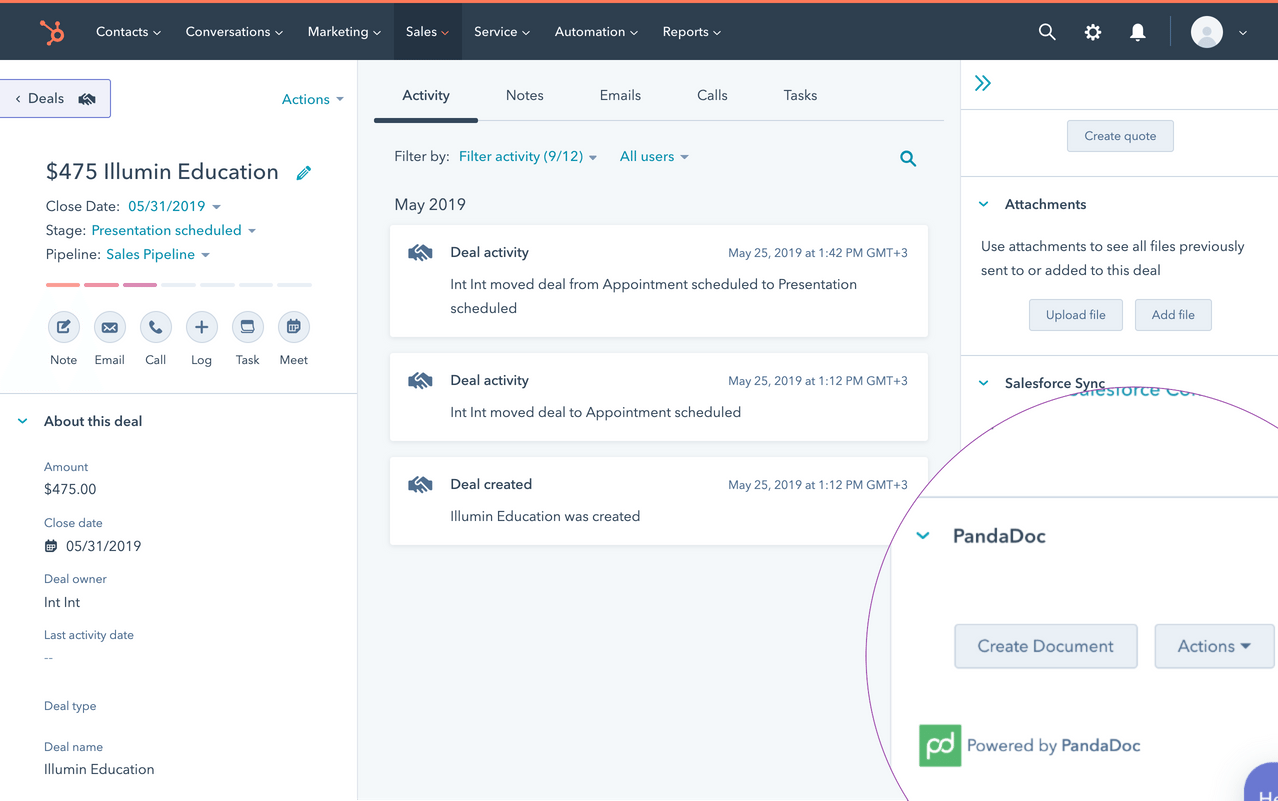
PandaDoc started as a document automation platform, and its CPQ functionality builds directly on that strength. If your sales process revolves around professional proposals, and fast e-signature, PandaDoc is one of the most approachable CPQ options available. Its drag-and-drop quote builder feels intuitive from day one, and it integrates with Salesforce, HubSpot, and Pipedrive with minimal setup.
PandaDoc is best understood as a document-first CPQ rather than a configuration-first one. It's not built for complex engineering inputs or intricate multi-level configuration logic. For SMBs and teams with simpler product offerings, though, that's rarely a limitation.
Key features:
- Drag-and-drop quote and proposal builder with rich media support (images, videos, case studies)
- Integrated e-signature and payment collection (Stripe, PayPal) without switching platforms
- Pricing rules, tiered pricing, and guided selling for standard product catalogs
- CRM integrations with Salesforce, HubSpot, Pipedrive, and others
- Template library and brand customization for polished, consistent proposals
Pros:
- Extremely fast to get up and running, with a 14-day free trial available
- The document and proposal experience is best-in-class for content-heavy sales teams
- Affordable entry price makes it accessible for smaller teams
Cons:
- Not built for complex product configuration or engineering-heavy quoting
- Feature access depends on your plan, and advanced CPQ features require higher tiers
- Less suited to companies with large, technical product catalogs or complex pricing models
Best for:
- SMBs and early-stage companies that need to professionalize their quoting quickly
- Sales teams where proposal quality and design matter as much as configuration logic
- Organizations that want integrated e-signature and payments without a separate tool
Pricing: PandaDoc starts at $19/user/month for the Starter plan, with Business and Enterprise tiers available. CPQ functionality is available on higher-tier plans.
How to evaluate CPQ software
Choosing a CPQ platform is a significant decision, and the wrong choice can cost you months of implementation time, significant budget, and real sales team frustration.
Here's what to look for before you commit.
Start with your CRM. If you're on Salesforce and want to stay there, Salesforce Revenue Cloud or Conga CPQ will give you the deepest native integration. If you're on HubSpot or Dynamics, look for a platform that explicitly supports your CRM, like Alguna, DealHub or PandaDoc.
Understand your pricing model. CPQ platforms that were built for product-based, transactional sales often struggle with usage-based billing, metered consumption, or mid-cycle subscription changes. If your pricing model is anything other than flat-rate, this should be a core evaluation criterion.
Assess implementation honestly. Most enterprise CPQ platforms quote implementation timelines in months. Average implementation for Conga CPQ runs to about four months per G2 reviewers, and complex deployments often run longer. If you need something running in weeks, not months, focus on platforms like DealHub or Alguna that are explicitly designed for faster time to value.
Get total cost of ownership, not just per-seat pricing. Licensing is rarely the whole story. Factor in implementation costs, admin overhead, integration work, and any professional services your vendor requires. Oracle CPQ at $240/user/month looks very different once you add certified developer hours.
Ask about the quote experience for reps. The best CPQ platform is the one your reps will actually use. A platform that's technically powerful but requires extensive training or has a clunky UI will see low adoption, which defeats the purpose. Request a demo and put an actual rep through the quote creation flow.
Check what happens after the quote is signed. A lot of CPQ tools stop at the quote. But if your revenue model involves recurring billing, renewals, or usage tracking, you need a platform that carries you through to cash, not just to signature.
Frequently asked questions about Conga CPQ alternatives
What are the main reasons people look for Conga alternatives?
The most common reasons include a clunky interface that slows reps down, a steep learning curve and long implementation timeline, heavy Salesforce dependency, limited customization without expensive workarounds, and opaque pricing that makes it difficult to understand total cost of ownership.
Do I need a CPQ tool if I'm already using Salesforce or HubSpot?
Your CRM likely includes some basic quoting functionality, but it's rarely sufficient for teams selling complex products, using usage-based pricing, or needing approval workflows and margin controls. CPQ software adds a dedicated configuration and pricing layer on top of your CRM data.
What's the difference between CPQ and billing software?
CPQ covers the front end of the sales process: configuring products, generating a price, and producing a quote. Billing software takes over after the contract is signed, handling invoicing, payment collection, and revenue recognition. Some platforms, like Alguna, cover both ends of the journey in a single tool.
Is Salesforce CPQ still available?
Salesforce officially ended sales on its legacy CPQ product in March 2025. Existing customers can continue using it and renewing their licenses, but Salesforce is no longer selling it to new customers and directs new buyers to Agentforce Revenue Management.
How long does CPQ implementation typically take?
It varies significantly by platform. Enterprise platforms like Oracle CPQ and Conga CPQ typically take four to six months to implement. Platforms built for faster deployment, like DealHub, PandaDoc, and Alguna, can be up and running in a matter of weeks.
What should I look for in a CPQ tool if I sell SaaS?
Prioritize support for subscription billing, usage-based pricing, and mid-cycle changes like upgrades and downgrades. You also want a platform that integrates cleanly with your billing and revenue reporting, so you have a single source of truth for your revenue data.
Stop letting your quoting process slow you down
The right CPQ platform doesn't just save your reps time on quotes. It gives your whole revenue team confidence in your pricing, visibility into your pipeline, and a process that scales without adding headcount.
If you're selling on subscriptions, usage, or any kind of recurring model, you need a platform built for that reality. Spreadsheets and patchwork billing setups aren't a foundation; they're a ceiling.
Alguna is built for B2B SaaS and AI-native teams that want to go from quote to cash without the implementation overhead of enterprise CPQ.