Enterprise CPQ is a different beast.
Because an enterprise deal isn't just a bigger deal. It's a three-year contract with discounts in year one, a ramp in year two and three, a usage component with a negotiated overage rate, a discount that needs sign-off from the CFO, and an invoice issued from a subsidiary in a different currency.
Next, procurement redlines it, the customer amends it mid-term, and an expansion happens before the first renewal.
This requires an incredibly flexible CPQ.
That's why in this guide, we'll define what enterprise CPQ actually means, compare seven enterprise CPQ software side by side (starting with Alguna, which we built to unify CPQ, billing, and revenue recognition), and walk through how to evaluate them for your business.
What is enterprise CPQ?
It enforces product rules, applies pricing and discount logic, routes deals through approvals, and generates a customer-ready quote or order form, all without reps doing spreadsheet math. If you want the fundamentals first, our guide to configure price quote covers the basics.
What makes CPQ for enterprise different from CPQ for a startup isn't the acronym. It's the operating conditions:
- Catalog scale. Hundreds or thousands of SKUs, bundles, and add-ons, often across multiple product lines or business units.
- Pricing complexity. Tiered, volume, usage-based, and hybrid pricing, plus ramps, negotiated overages, regional price books, and multi-currency.
- Governance. Multi-level approval chains, discount guardrails, and audit trails that satisfy finance and legal.
- Multi-entity operations. Quotes issued from different legal entities, with different tax rules and currencies.
- Downstream accuracy. What sales quotes has to flow cleanly into contracts, billing, and revenue recognition, or the savings in quoting are lost to reconciliation in finance.
Enterprise CPQ software at a glance
| Platform | Best for | Strengths | Limitations | Pricing |
|---|---|---|---|---|
| Alguna | SaaS, AI, and fintech enterprises with hybrid or usage-based pricing | CPQ, billing, and revenue recognition on one data model, no-code pricing changes, fast implementation | Not built for physical-goods manufacturing configuration; integration library still growing | Custom for Enterprise CPQ. |
| Salesforce Revenue Cloud | Enterprises standardized on Salesforce | Native CRM data, constraint-based configuration, active product investment | Migration from classic CPQ is a re-implementation; per-user costs add up | $150 to $200/user/month, billed annually |
| Oracle CPQ | Large enterprises in the Oracle ecosystem selling configurable products | Deep configuration, omnichannel quoting, long analyst track record | High cost, specialist skills needed, steep learning curve | From around $240/user/month plus implementation |
| SAP CPQ | Manufacturers and B2B sellers running SAP S/4HANA | Shared configuration and pricing logic with SAP ERP, strong guided selling | Complex implementation, weaker fit outside SAP environments | Custom quote |
| Conga CPQ | Enterprises that want CPQ tightly paired with contract management | Rule-based configuration, margin controls, CLM pairing | Dated interface, customization workarounds, reporting gaps | Custom quote |
| DealHub | Mid-market and lower-enterprise SaaS sales teams | No-code configuration, digital sales rooms, multi-CRM support | No public pricing, billing depth still maturing after Subskribe acquisition | Custom quote, median around $44,400/year |
| Zuora CPQ | Subscription enterprises running Zuora Billing and Salesforce | Subscription-native quoting, ramps and amendments, direct handoff to Zuora Billing | Requires Zuora Billing and Salesforce expertise; users report reliance on admins | Custom quote |
Pricing reflects publicly listed rates or third-party estimates at the time of writing and can change. Always confirm current pricing directly with each vendor.
7 best enterprise CPQ solutions, compared
1. Alguna
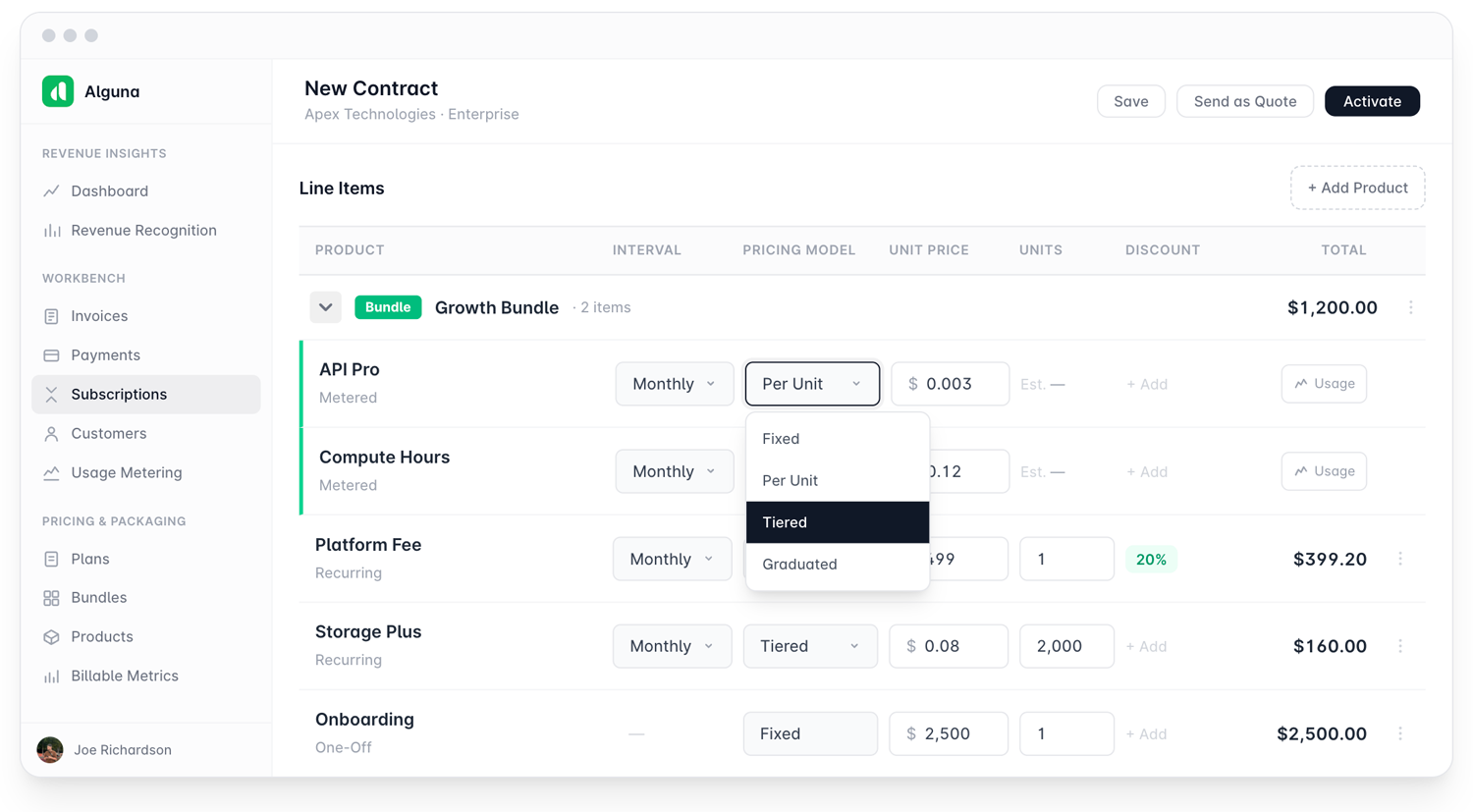
Alguna is a modern pricing, quoting, and billing platform built for companies selling complex contracts. The Y Combinator backed quote-to-revenue platform has become a common Salesforce CPQ replacement for enterprise SaaS and AI companies.
Where most enterprise CPQ software stop at the signed quote and hand off to a separate billing system, Alguna runs quoting, contracts, invoicing, and revenue recognition on a single data model. The quote a rep sends is the contract finance bills against, with no middleware and no second catalog to keep in sync.
That architecture matters most when pricing is hybrid. A platform fee plus usage, a ramp in year two, a negotiated overage rate, and a multi-entity invoice is a routine enterprise deal, and it's exactly the kind that breaks when quoting and billing live in different systems.
There's been both flexibility and a can-do attitude."
- Marc Koskela, Director of Growth Marketing at ComplyAdvantage
Key features:
- Native quoting, e-signature, and contract management in one place. Reps build a quote, send it, and get it signed without leaving Alguna. Once signed, the terms flow straight into subscriptions and billing, so nobody re-keys the deal.
- Multi-phase quotes for ramp deals. One quote can hold year-by-year or period-by-period pricing, quantity step-ups, and time-limited discounts, and each phase bills automatically when it starts.
- Amendments, renewals, and full revision history. Upsells, downgrades, and mid-term changes are quoted as amendments to the live contract. Every revision keeps a snapshot, so you can see exactly what changed between versions.
- Price books with rule-based pricing. You can set pricing drivers such as region, customer type, or volume tier, add multipliers, and use product bundles, all without engineering. It covers tiered, graduated, volume, seat-based, usage-based, outcome-based, and hybrid models.
- Configurable approval workflows. Discounts, non-standard terms, and deal-desk exceptions go to the right approver based on rules you set, before the quote reaches the customer.
- Clause library with deviation tracking. Legal keeps standard contract language in one place. Any clause a rep changes gets flagged for review, so non-standard terms never slip through unnoticed.
- AI contract ingestion. Existing contracts can be uploaded in bulk. AI pulls out the subscription details and matches or creates the customer accounts, so moving off legacy CPQ or spreadsheets takes days, not months.
- Enterprise controls on every deal. Quotes carry expiration dates, PO numbers, and multi-currency pricing. With multi-entity billing and automated revenue recognition on the Enterprise Scale plan, what gets signed is what gets booked.
- Two-way CRM sync with Salesforce and HubSpot. This includes automatic renewal opportunities. Real-time data warehouse sync covers pipeline and revenue reporting, and NetSuite and other ERP integrations handle the books.
Pros:
- Quotes, contracts, and invoices share one data model, which removes quote-to-invoice mismatches at the source.
- Pricing changes ship in hours through configuration, not in a services engagement.
- White-glove migration with a documented parallel-run process is included on Enterprise Scale.
Cons:
- It isn't designed for physical-goods configuration with engineering constraints, such as industrial equipment with bills of materials.
- As a newer platform, its pre-built integration library is smaller than those of Oracle or SAP.
Best for:
- SaaS, AI, and fintech enterprises with hybrid, usage-based, or ramped contracts.
- Teams that want CPQ and billing unified rather than connected with middleware.
- Multi-entity businesses that need consolidated billing and revenue recognition.
- Companies leaving Salesforce CPQ that don't want a full Revenue Cloud re-implementation.
Pricing: Alguna's Enterprise CPQ plan is custom priced.
Book a personalized demo and we'll show you exactly what the setup looks like running on your contracts.
2. Salesforce Revenue Cloud
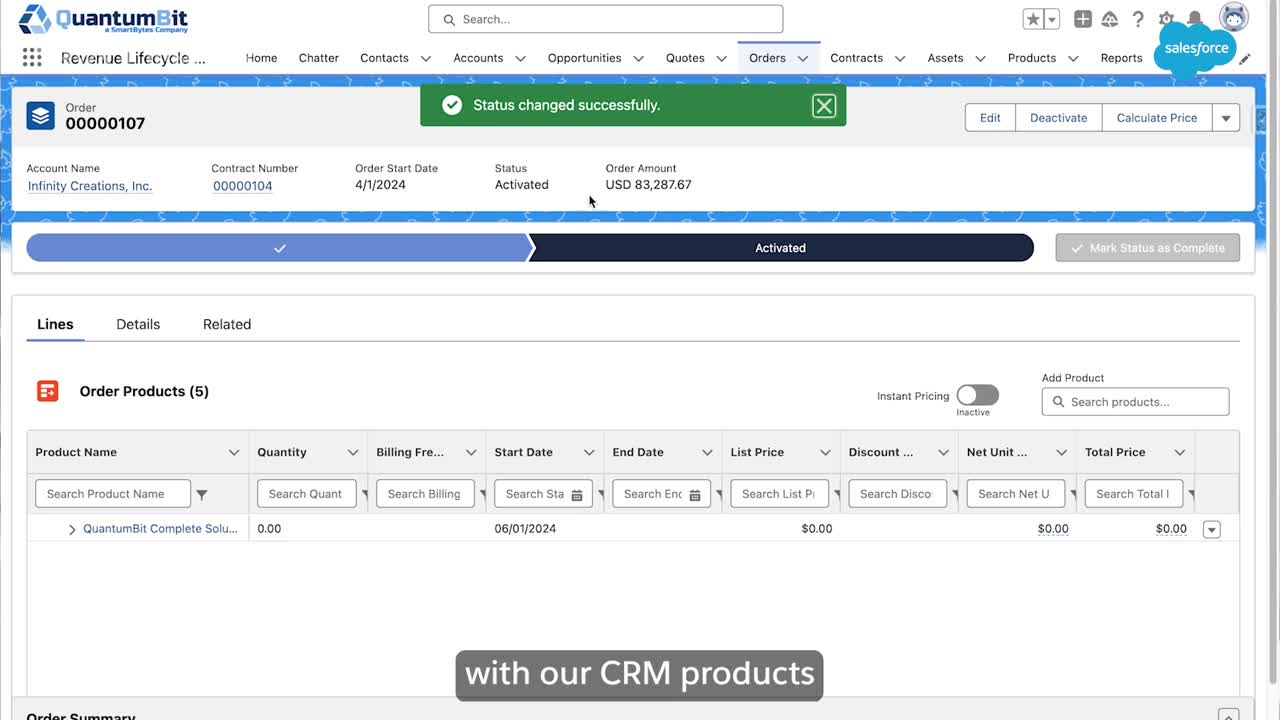
Salesforce Revenue Cloud, now part of what Salesforce calls Agentforce Revenue Management, is the successor to Salesforce CPQ.
Classic Salesforce CPQ is end-of-sale rather than end-of-life, so existing customers can renew and receive support, but new product development has moved to Revenue Cloud. For enterprises already deep in Salesforce, it's the default option on most shortlists.
It's worth being clear-eyed about what that transition involves. Revenue Cloud is built on a different, API-first architecture, so moving from classic CPQ is closer to a re-implementation than an upgrade.
Key features:
- An enterprise product catalog with constraint-based configuration rules for complex bundles and dependencies.
- Quoting, order capture, and subscription management in the Growth edition, with contracts, orders, consumption, and invoicing added in Advanced.
- Native access to Salesforce account, opportunity, and pricing data, with no external login for reps.
- AI and analytics capabilities in the Advanced edition, tied into Salesforce's wider agent strategy.
- Dynamic Revenue Orchestration and Invoice Management available as separate purchases.
Pros:
- The tightest possible integration with Salesforce CRM data and workflows.
- Active investment from Salesforce, unlike classic CPQ.
- A large partner ecosystem for implementation and support.
Cons:
- Migration from classic CPQ requires rebuilding configuration, pricing rules, and templates.
- Per-user pricing becomes a significant line item for large sales organizations.
- Several capabilities enterprises expect, such as contract lifecycle management and orchestration, are sold separately.
Best for:
- Enterprises fully standardized on Salesforce.
- Organizations with in-house Salesforce admins or a trusted implementation partner.
- Companies that want CPQ and CRM under one vendor contract.
Pricing: Revenue Cloud Growth is $150 per user per month and Revenue Cloud Advanced is $200 per user per month, both billed annually. Implementation partner fees are additional.
3. Oracle CPQ
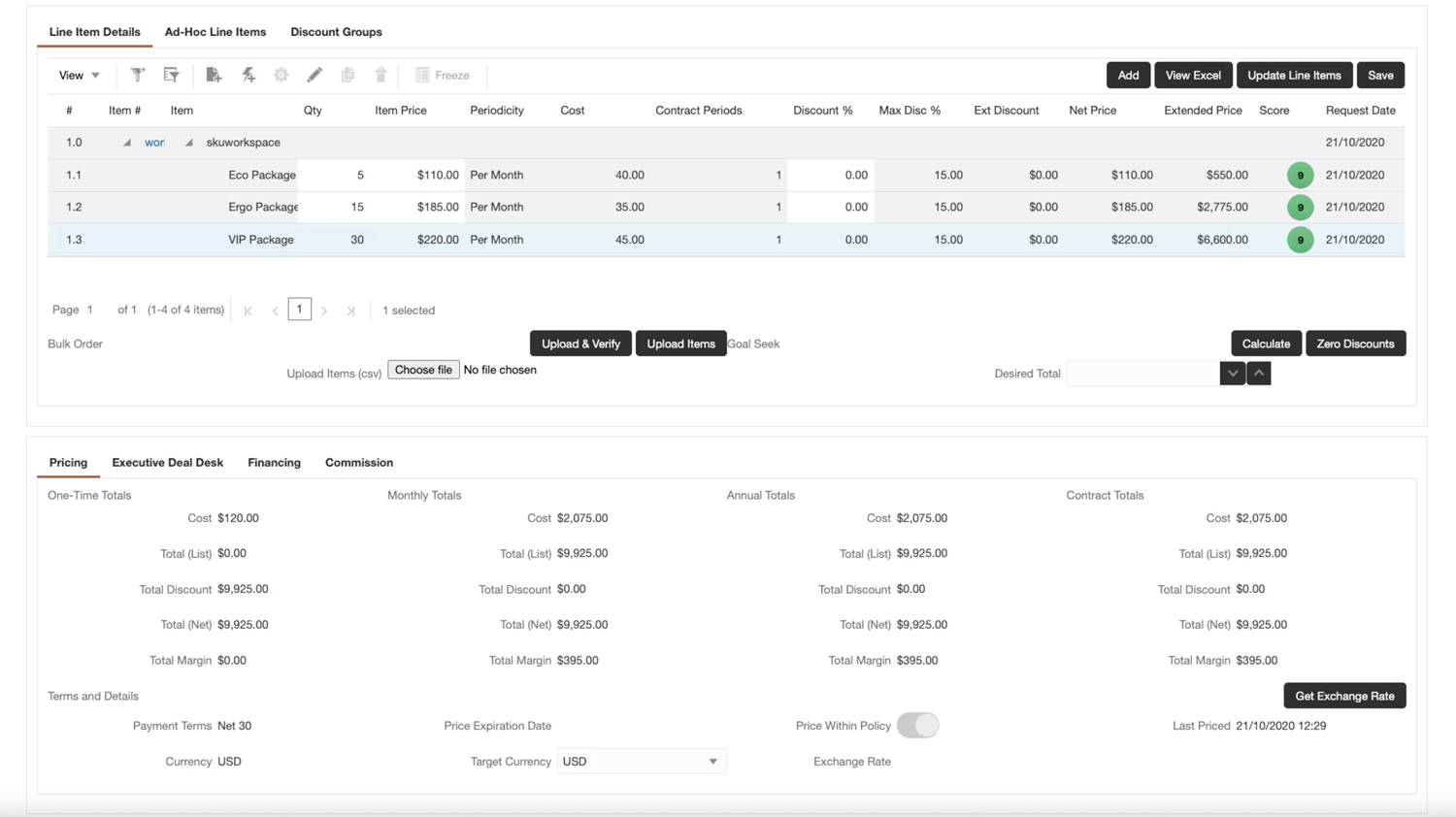
Oracle CPQ, originally BigMachines, is one of the longest-standing enterprise CPQ platforms, and Oracle was named a Leader in the 2026 Gartner Magic Quadrant for Configure, Price and Quote Applications for the ninth consecutive time.
It's built for large organizations selling highly configurable products across direct, partner, and self-service channels.
Key features:
- Advanced product configuration for complex, multi-level product structures.
- Real-time pricing with embedded AI agents for product recommendations, pricing, approvals, and exception handling.
- Omnichannel quoting that supports direct sales, partners, and self-service from one engine.
- Native integration with Oracle Fusion ERP, Oracle Sales, and other Oracle Cloud applications.
- Document generation for professional, branded proposals.
Pros:
- Mature and proven at very large scale.
- Deep configuration capabilities for complex, engineered products.
- Strong fit for organizations already running Oracle ERP.
Cons:
- One of the more expensive options, with implementation often exceeding $100,000 for enterprise deployments, according to ITQlick.
- Customization typically needs specialist Oracle skills.
- Reviewers cite a steep learning curve and vendor lock-in risk.
Best for:
- Large manufacturers, technology, and services companies selling configurable products.
- Enterprises already invested in the Oracle Cloud ecosystem.
- Organizations with multi-channel and partner-led sales motions.
Pricing: Custom quote. Third-party estimates put licenses at around $240 per user per month, with implementation ranging from $25,000 to well over $100,000 depending on scope.
4. SAP CPQ
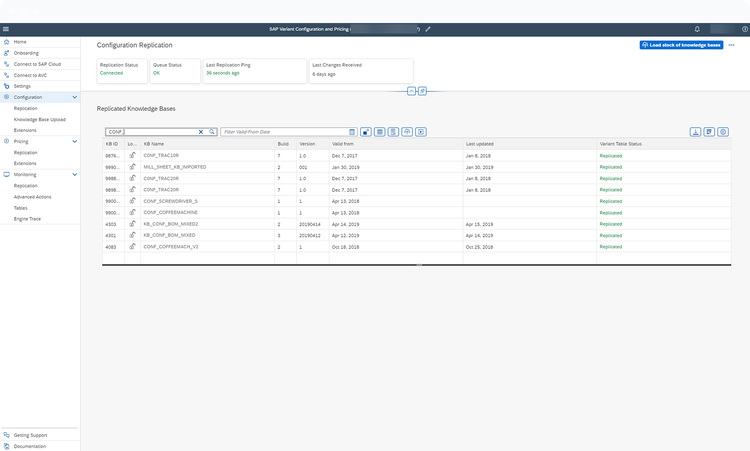
SAP CPQ, formerly CallidusCloud CPQ, is SAP's configure-price-quote application within its Customer Experience portfolio.
Its biggest advantage is shared logic with the SAP back office: it plugs into SAP Variant Configuration and Pricing, the same engine used in S/4HANA, so what sales quotes and what the ERP can fulfill stay aligned.
Key features:
- Rules-based product configuration with constraint and compatibility validation.
- Guided selling workflows that step reps through complex configurations.
- Pricing and discounting logic shared with SAP ERP pricing conditions.
- Quote and proposal generation with approval workflows.
- Prebuilt connectors to SAP S/4HANA, SAP ERP, and SAP Sales Cloud.
Pros:
- Tight alignment between sales configuration and manufacturing or fulfillment rules.
- Strong guided selling for complex product catalogs.
- A natural fit for companies that already run SAP end to end.
Cons:
- Implementation and configuration require significant technical expertise.
- Licensing and setup costs are substantial for larger deployments.
- Value drops considerably outside SAP-centric environments.
Best for:
- Manufacturers and industrial B2B sellers running SAP S/4HANA.
- Enterprises where quotes must match what the ERP can build and ship.
- Organizations with established SAP implementation partners.
Pricing: Custom quote based on users, edition, and integration scope. SelectHub reports 84% user satisfaction across 200 reviews.
5. Conga CPQ
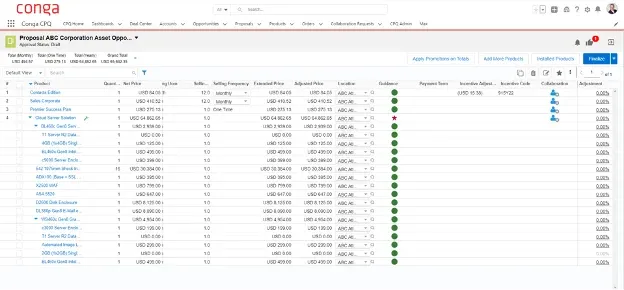
Conga CPQ (marketed as Advantage CPQ) is a long-established enterprise CPQ that many buyers evaluate alongside Conga's contract lifecycle management products.
It handles tangible goods, services, subscriptions, and usage-based offerings, with a strong emphasis on margin protection.
Key features:
- Rule-based configuration across physical products, services, subscriptions, and usage.
- Guided selling with real-time validation and dynamic questioning.
- A single catalog for bundles, with search and configuration rules.
- Subscription lifecycle management, including renewals and modifications.
- Margin controls including rebates, negotiated pricing, and discount approval workflows.
Pros:
- Handles complex pricing rules and high quote volumes well.
- Pairs naturally with Conga's CLM for contract-heavy sales processes.
- Integrates with Salesforce and other CRMs through a large API library.
Cons:
- Reviewers describe the interface as outdated and cumbersome.
- Custom implementations can require extensive workarounds.
- Generating specific reports can be difficult.
Best for:
- Medium to large enterprises in technology, manufacturing, and services.
- Organizations where contract management is as critical as quoting.
- Teams with high quote volumes and intricate product offerings.
Pricing: Custom quote. There is no free trial or free version.
6. DealHub
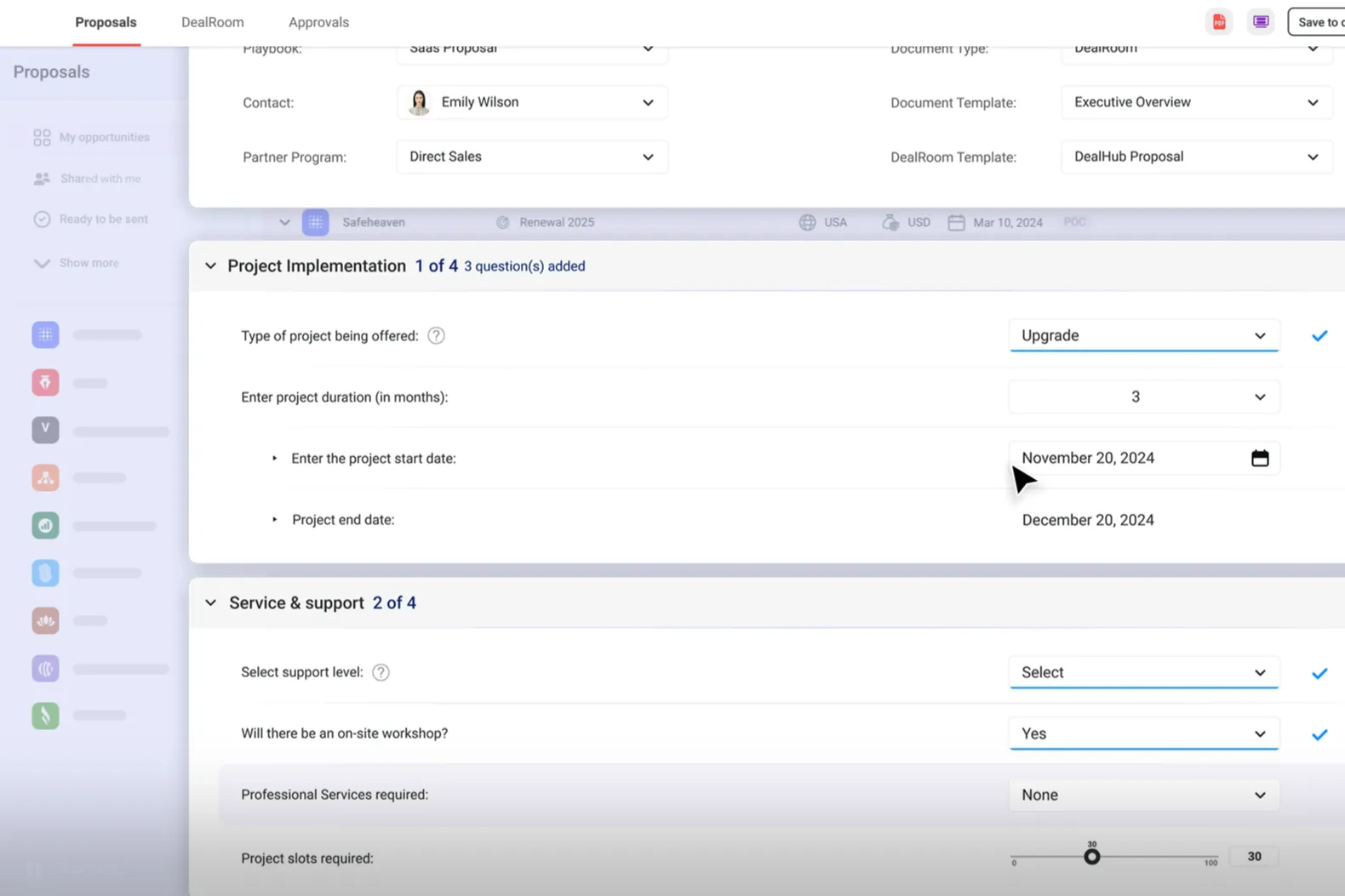
DealHub is a no-code CPQ that acquired Subskribe in November 2025, extending its reach into subscription billing. It's strongest at the upper end of mid-market and the lower end of enterprise. Our DealHub alternatives guide compares it in more detail.
Key features:
- No-code configuration so RevOps can build pricing rules and guided selling flows independently.
- DealRoom, a digital sales room with buyer engagement analytics.
- CPQ, CLM, and billing modules that can be bought together or separately.
- Bidirectional integrations with Salesforce, HubSpot, Microsoft Dynamics, and Freshworks.
- Approval workflows and quote document generation.
Pros:
- Strong review profile on G2, where it's among the highest-rated CPQ tools.
- RevOps teams can manage it without developer support.
- Works across multiple CRMs, not only Salesforce.
Cons:
- No public pricing, which makes early budgeting harder.
- Billing and subscription capabilities are still being integrated following the Subskribe acquisition.
- Per-user, per-module pricing can climb for large sales teams.
Best for:
- Mid-market and lower-enterprise SaaS companies.
- Teams replacing Salesforce CPQ without committing to Revenue Cloud.
- Sales organizations that value digital sales rooms and buyer engagement data.
Pricing: Custom quote on a per-user, per-module basis. According to Vendr, the median annual contract is around $44,400, with a range of roughly $15,000 to $117,000.
7. Zuora CPQ
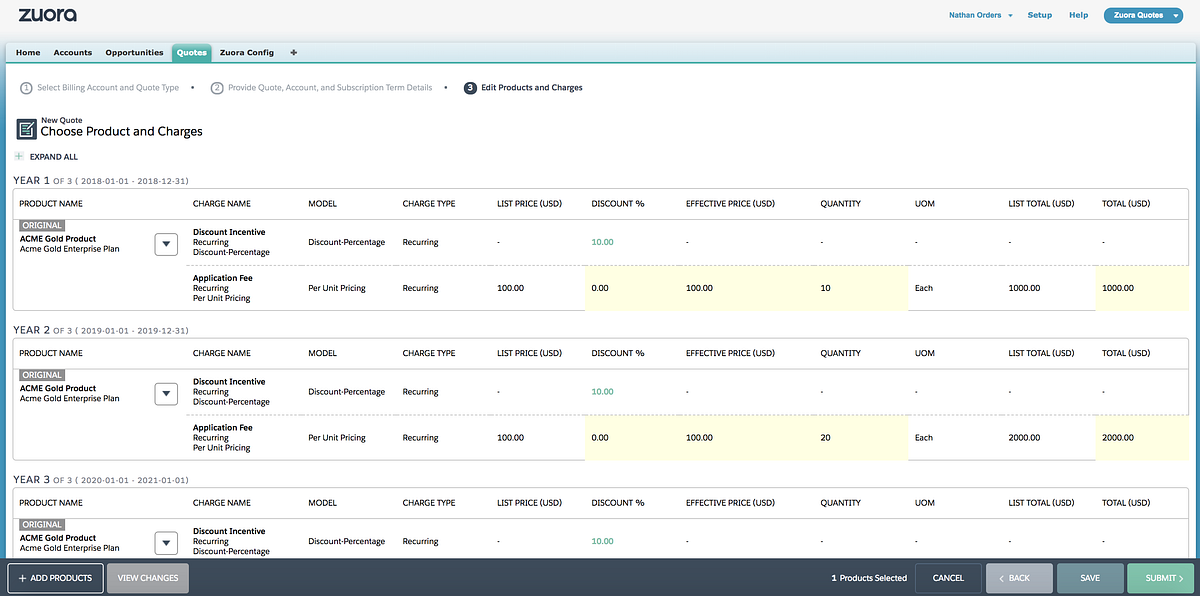
Zuora CPQ is Zuora's quoting application for Salesforce, built to sit in front of Zuora Billing. Its focus is subscription deals rather than product configuration: new business, upsells, cross-sells, renewals, and amendments are all quoted against the same subscription record that billing uses.
For enterprises already running Zuora Billing, it's the most direct way to connect sales and finance on one subscription model.
Zuora has been privately held since Silver Lake and GIC completed their $1.7 billion acquisition in February 2025.
The tradeoff is that Zuora CPQ is only as strong as the stack around it. It assumes Salesforce as the CRM and Zuora as the billing system, so it's rarely a standalone choice.
Key features:
- Subscription-aware quoting inside Salesforce for new deals, upsells, cross-sells, renewals, and mid-term amendments, all tied to the live subscription record.
- Support for multi-year ramp deals and dynamic service terms, so complex contract structures can be quoted without manual workarounds.
- Access to Zuora's shared product catalog and its broad range of pricing models, including tiered, volume, and usage-based pricing.
- Automated handoff of accepted quotes into Zuora Billing for provisioning and invoicing, with revenue recognition available through Zuora Revenue.
- Integrations with NetSuite, Workday, and other ERP systems through the wider Zuora platform.
Pros:
- Quotes and billing share one subscription model, which reduces mismatches between what's sold and what's invoiced.
- Strong handling of amendments, renewals, and ramps, which are the hardest parts of subscription quoting.
- A mature ecosystem of implementation partners experienced with Zuora and Salesforce together.
Cons:
- It requires Zuora Billing and Salesforce, so it isn't an option for teams on other billing systems or CRMs.
- Reviewers on Gartner Peer Insights report heavy reliance on admins for changes, along with occasional performance issues and bugs.
- Implementation needs Salesforce and Zuora expertise, which adds cost and time.
Best for:
- Enterprises already running Zuora Billing that want quoting on the same subscription model.
- Salesforce-centric organizations with complex renewals and amendments.
- Subscription businesses with dedicated RevOps or billing operations teams.
Pricing: Custom quote, typically bundled with Zuora's wider platform. Gartner Peer Insights rates Zuora CPQ 4.2 out of 5 across 52 ratings.
How to evaluate enterprise CPQ software
Here's a practical framework, and our guide to evaluating a CPQ solution has a longer checklist.
Start with where your complexity actually lives. Enterprise CPQ platforms are built for commercial complexity: hybrid pricing, ramps, usage, and negotiated terms. Most SaaS and AI companies need the second, and buying the first means paying for configuration depth you'll never use.
Evaluate against your pricing roadmap. Write down the pricing you expect to sell in 18 months, including usage, credit, or outcome-based components, and test every vendor against that. Our guide to CPQ for usage-based pricing covers the features that matter most here.
Ask who can change a price. In some platforms, a new pricing model is a configuration task RevOps completes in an afternoon. In others, it's an admin ticket or a partner statement of work. Ask each vendor to add a new hybrid plan live in the demo.
Bring your hardest deal to the demo. Take a real contract with a multi-year ramp, a mid-term upsell, a negotiated overage, and a non-standard approval, and ask the vendor to quote it end to end. Scripted demos hide gaps. Real deals expose them.
Follow the quote into billing. Ask to see a signed quote become an invoice and then recognized revenue without anyone re-entering data. If the vendor switches systems mid-demo, that handoff becomes a permanent part of your process.
Handling ramp contracts is a good stress test.
Model the three-year total cost. Per-user licensing, implementation partners, separately sold modules, and the internal admins needed to run the system all belong in the number. A platform with a lower per-seat price can easily cost more once implementation and add-ons are counted.
Pressure-test implementation time. Ask for a realistic timeline for a company of your size and complexity, and speak to a reference customer who went live recently. Our guide to CPQ implementation for SaaS explains what a healthy timeline looks like.
Frequently asked questions
What is enterprise CPQ?
Enterprise CPQ is configure-price-quote software designed for large organizations with complex catalogs, pricing, and approval structures. It automates product configuration, applies pricing and discount rules, routes deals for approval, and generates accurate quotes, ideally passing that data directly into contracts and billing.
How is enterprise CPQ software different from standard CPQ?
Enterprise CPQ software is built for scale and governance. It supports larger catalogs, multi-currency and multi-entity quoting, multi-level approval chains, audit trails, and deeper integrations with CRM, ERP, and billing systems. Standard CPQ tools often handle simpler pricing and smaller teams well but struggle with those requirements.
What are the best enterprise CPQ solutions in 2026?
The most commonly evaluated enterprise CPQ solutions are Alguna, Salesforce Revenue Cloud, Oracle CPQ, SAP CPQ, Conga CPQ, DealHub, and Zuora CPQ. The right choice depends on your CRM and ERP stack and whether your complexity is in products or in commercial terms. For a wider list, see our guide to the best CPQ software.
How much does CPQ software for enterprise cost?
Most CPQ software for enterprise is priced per user per month, typically from around $150 to $240 per user for the large incumbents, plus implementation fees that can range from $25,000 to well over $100,000. Alguna is an exception, with published plan pricing and unlimited seats.
How long does a CPQ enterprise implementation take?
A CPQ enterprise implementation with a legacy vendor commonly runs several months, depending on catalog size, integrations, and data migration. Platforms with no-code configuration and native billing can go live considerably faster because there's less custom build work and no separate billing integration to test.
Is Salesforce CPQ being discontinued?
Salesforce CPQ is end-of-sale, not end-of-life. Existing customers can keep using, renewing, and getting support for it, but it's no longer sold to new customers and new development is focused on Revenue Cloud. Many teams are using this moment to reassess their options.
Do we need CPQ and billing in the same platform?
You don't need them in the same platform, but it helps. When CPQ and billing are separate, every non-standard term has to be mapped between two systems, which is where invoice errors and revenue leakage start.
Unified platforms remove that handoff. Our large tech company CPQ shortlist and our piece on the benefits of AI in CPQ for enterprise sales explore this further.
Your quote should be the start of the revenue process, not a handoff
The best enterprise CPQ lets your sales team quote the deals you actually sell, lets RevOps change pricing without a project plan, and lets finance bill exactly what was signed.
Oracle and SAP are strong choices for product-heavy enterprises with engineered catalogs. Salesforce Revenue Cloud makes sense if you're committed to Salesforce for the long term. Conga and DealHub offer mature quoting with contract and sales room strengths.
But if your complexity lives in hybrid pricing, ramps, usage, and multi-entity contracts, a platform where quoting and billing share one data model will save you more time than any single CPQ feature.
That's what we built Alguna to do.