Trillions of dollars sit locked in accounts receivable every year, most of it managed through manual email threads, static aging reports, and reactive follow-up.
And yet, many companies are still chasing invoices manually, reconciling payments in spreadsheets, and watching working capital sit locked up for weeks at a time.
Intelligent collections software combine AI, automation, and deep integrations with your existing billing and ERP stack to reduce days sales outstanding (DSO), cut the time your team spends on manual follow-up, and give you real-time visibility into your receivables.
But "intelligent collections" is a broad category. Some platforms cover the entire quote-to-cash process, while others focus narrowly on dunning automation or cash application. Choosing the wrong one means paying for capabilities you don't need, or missing the ones you do.
We've evaluated five of the leading platforms on the market today, including Alguna, Tabs, Monk, Fazeshift, and Sequence, to help you find the right fit for your team.
What is intelligent collections software?
Unlike traditional AR tools, which rely on static rules and manual workflows, intelligent collections platforms can analyze payment history, predict which accounts are at risk of paying late, prioritize outreach accordingly, and automate follow-up communications across multiple channels.
At its core, intelligent collections software typically handles:
- Automated dunning: Sending payment reminders via email, SMS, or customer portals at the right time and with the right tone, based on customer behavior and account history
- AI-powered prioritization: Ranking overdue accounts by risk, balance, and payment likelihood so your team focuses on the accounts that matter most
- Dispute management: Tracking and resolving billing disputes in a centralized workflow so they don't stall your collections process
- Cash application: Matching incoming payments to the correct invoices automatically, even when remittance data is incomplete
- Real-time reporting: Dashboards that show DSO trends, aging balances, and at-risk accounts without requiring manual data pulls
The best platforms go further, connecting collections to the broader quote-to-cash workflow, from how deals are quoted and invoiced through to how revenue is recognized and reported. This end-to-end connectivity is what separates truly intelligent collections software from "basic" dunning tools.
⚠️ It's worth distinguishing intelligent collections software from adjacent categories.
Debt collection agency software is designed for third-party collectors managing portfolios of consumer debts. Intelligent collections software, by contrast, is built for businesses managing their own receivables, where maintaining customer relationships is just as important as recovering cash.
Intelligent collections software comparison
Here's a quick side-by-side look at the five platforms we cover in this guide.
| Platform | Best for | Strengths | Limitations | Pricing |
|---|---|---|---|---|
| Alguna | B2B SaaS and services companies that need end-to-end quote-to-cash with an AI AR agent for collections | Full quote-to-cash workflow, AI AR Agent with promise-to-pay capture and dispute handling, Control Tower workspace, flexible billing, white-glove onboarding | Primarily focused on B2B; full platform scope may exceed the needs of teams looking for a standalone collections tool | Custom pricing. Contact for a demo. |
| Tabs | Finance teams managing complex subscription and usage-based contracts | AI contract ingestion, ASC 606 revenue recognition, strong ERP integrations, SOC 2 Type II | Collections features less deep than dedicated AR platforms; pricing not publicly listed | Custom pricing. Contact for a demo. |
| Monk | B2B companies with complex contracts wanting fast deployment and strong collections automation | AI collections agent, 40% average DSO reduction, rapid 3-day median deployment, 24% higher response rates | Volume-based pricing can scale up; limited publicly available documentation compared to older platforms | Volume-based pricing. Contact for a demo. |
| Fazeshift | Enterprise teams needing AI-driven invoicing and collections with broad ERP integration | AI contract data extraction, intelligent escalation workflows, real-time alerts, wide integration coverage | Advanced collections capabilities less documented publicly; pricing requires a demo | Value-based pricing. Contact for a demo. |
| Sequence | Fast-growing B2B SaaS companies with custom deal terms and complex pricing models | CPQ, billing, metering, and revenue recognition in one platform; strong usage-based billing; AI agents for AR | Collections module less mature than dedicated AR tools; pricing scales with billed revenue | Monthly platform fee based on billed revenue. Free for <$1M ARR. Contact for details. |
The 5 best intelligent collections software platforms
1. Alguna: Quote-to-cash software with intelligent collections
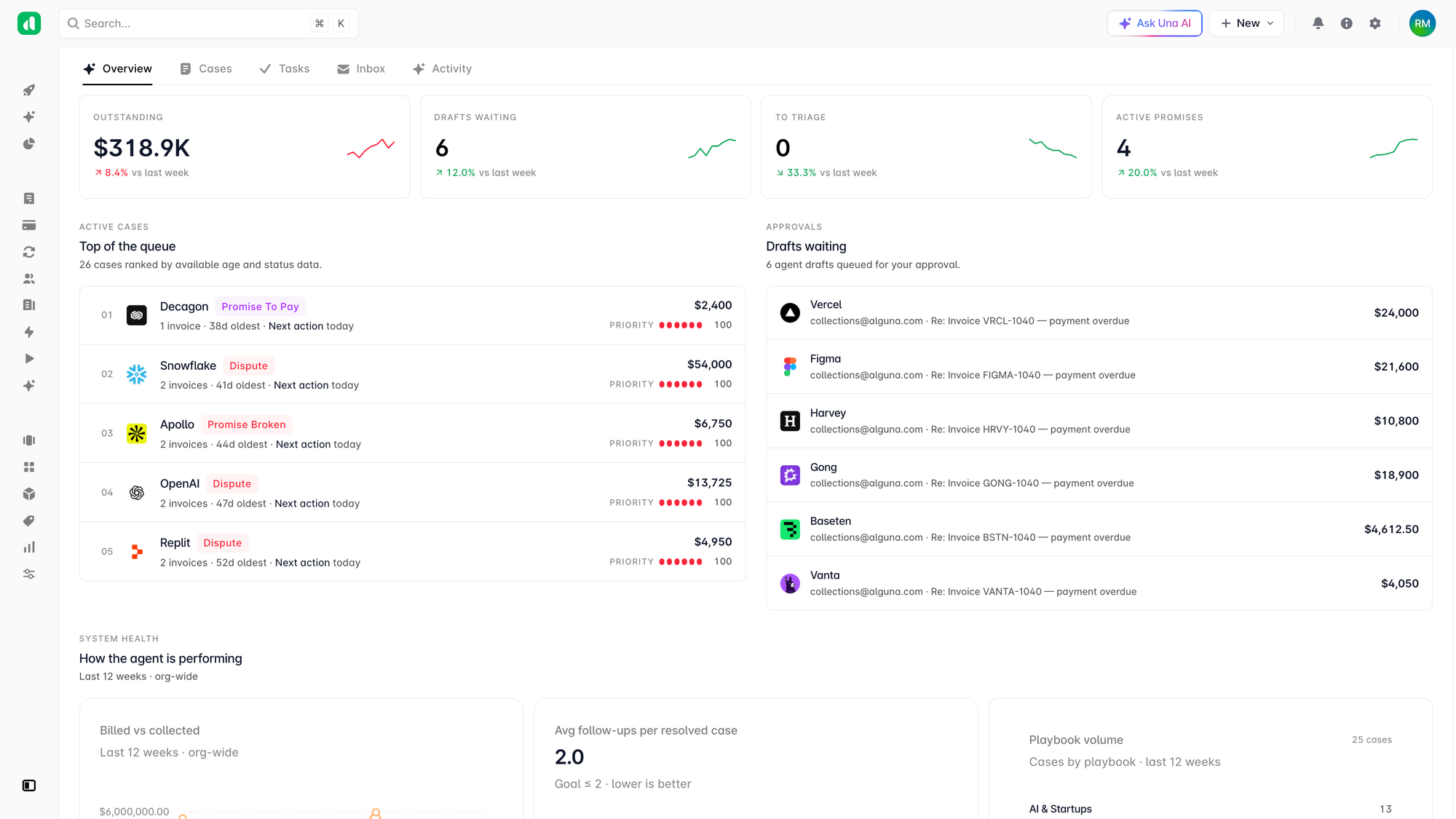
Alguna is an end-to-end quote-to-cash platform built for modern revenue teams. It offers a dedicated AI accounts receivable agent as a standalone product, so you don't have to purchase the full platform if you have other systems, like CPQ software already in place.
Founded in San Francisco and backed by Y Combinator and Mango Capital, Alguna is purpose-built to handle the edge cases that break manual AR processes: portal uploads, PO mismatches, and disputes that sit unresolved for weeks.
Rather than just automating reminders on a fixed schedule, Alguna's AR agent works each overdue account like a collections specialist: it opens a case, follows up on your cadence, reads customer replies, captures promises to pay, pauses itself on disputes, and escalates the exceptions to your team.
The platform is SOC 2 Type II certified and built for enterprise-grade compliance.
Key features for intelligent collections
- AI AR Agent: An autonomous collections agent that drafts and sends follow-ups, reads inbound replies, classifies intent (paid claim, promise, dispute, document request, and more), and decides the right next action based on context rather than a fixed timer
- Control Tower: A dedicated collections workspace with five views: Overview (live KPIs, prioritized queue, approvals), Cases (every overdue account with status and next action), Tasks (drafts awaiting approval and agent-raised reminders), Inbox (inbound customer replies classified and linked to cases), and Activity (a full event timeline)
- Promise-to-pay capture: When a customer commits to a payment date and amount, the agent logs the promise, links it to the invoice, and pauses outreach through the promise date plus a configurable grace window; broken promises automatically trigger follow-up or escalation
- Dispute handling: Disputes detected in inbound replies immediately pause outreach, flag the case, and generate an agent note summarizing the reason, so a human can resolve the issue without the agent nagging an unhappy customer
- Playbook autonomy levels: Three modes per playbook: Monitor (observe only), Suggest (every draft queued for one-click human approval), and Act (agent sends autonomously within your defined allowlist and amount thresholds)
- Configurable personas and tone: Set up mailbox personas with display name, signature, and tone (Friendly, Professional, or Firm) so early reminders stay warm while late-stage chasers carry the right weight
- Built-in guardrails: The agent is hard-blocked from making legal threats, offering discounts, promising refunds or credit notes, admitting fault, or changing contract terms, regardless of what autonomy mode is active
- Contracts AI: Drag and drop any signed contract and Alguna automatically extracts contract data with AI, identifies the customer account, and suggests a match or lets you create a new one.
- No code CPQ: Create quotes for any type of pricing model and finish even the most complex quotes in less than five minutes.
- Flexible billing engine: Supports subscription, usage-based, milestone, and hybrid billing structures upstream of collections, so the agent always has accurate invoice data to work from
- Integrations: connects with CRMs, ERPs, and payment processors to create a connected revenue stack
Pros
- The only quote-to-cash platform in this guide with a purpose-built AI AR agent that reads and responds to customer replies contextually
- Control Tower gives collections teams a single workspace rather than scattered inboxes and spreadsheets
- Promise-to-pay capture and automated pause/resume eliminates the most common cause of unnecessary follow-up on accounts that have already committed
- Granular autonomy controls let teams start in Suggest mode and graduate to Act as trust builds
- Hard-coded guardrails protect customer relationships and reduce compliance risk
- Covers the full quote-to-cash workflow, so collections sits alongside billing and revenue reporting in one platform
- Adam Liska, Co-founder and CEO at Airspeed (formerly Glyphic)
Read the case study
Cons
- Full platform scope may be more than needed for teams seeking a lightweight standalone collections tool, but you can choose to buy Alguna's AR agent as a standalone tool, without buying the complete quote-to-cash platform.
- Younger platform, founded in 2023 as part of Y Combinator. This means the integrations and ecosystem may not be as well developed as incumbents.
Best for
- Finance teams that want an AI AR agent handling collections autonomously, with clear human oversight controls
- Finance teams frustrated by promises that get lost and disputes that stall the collections process
- Companies with complex deal structures that need both a flexible CPQ, billing engine, and strong collections automation in one place
- Teams that want white-glove onboarding and a lower total cost of ownership than enterprise platforms requiring external consultants
Pricing
Alguna's paid plans start from $699/month.
We'll walk you through Control Tower, show you how the agent works a live aging, and set up a playbook tailored to your collections workflow.
Book your personalized demo
2. Tabs
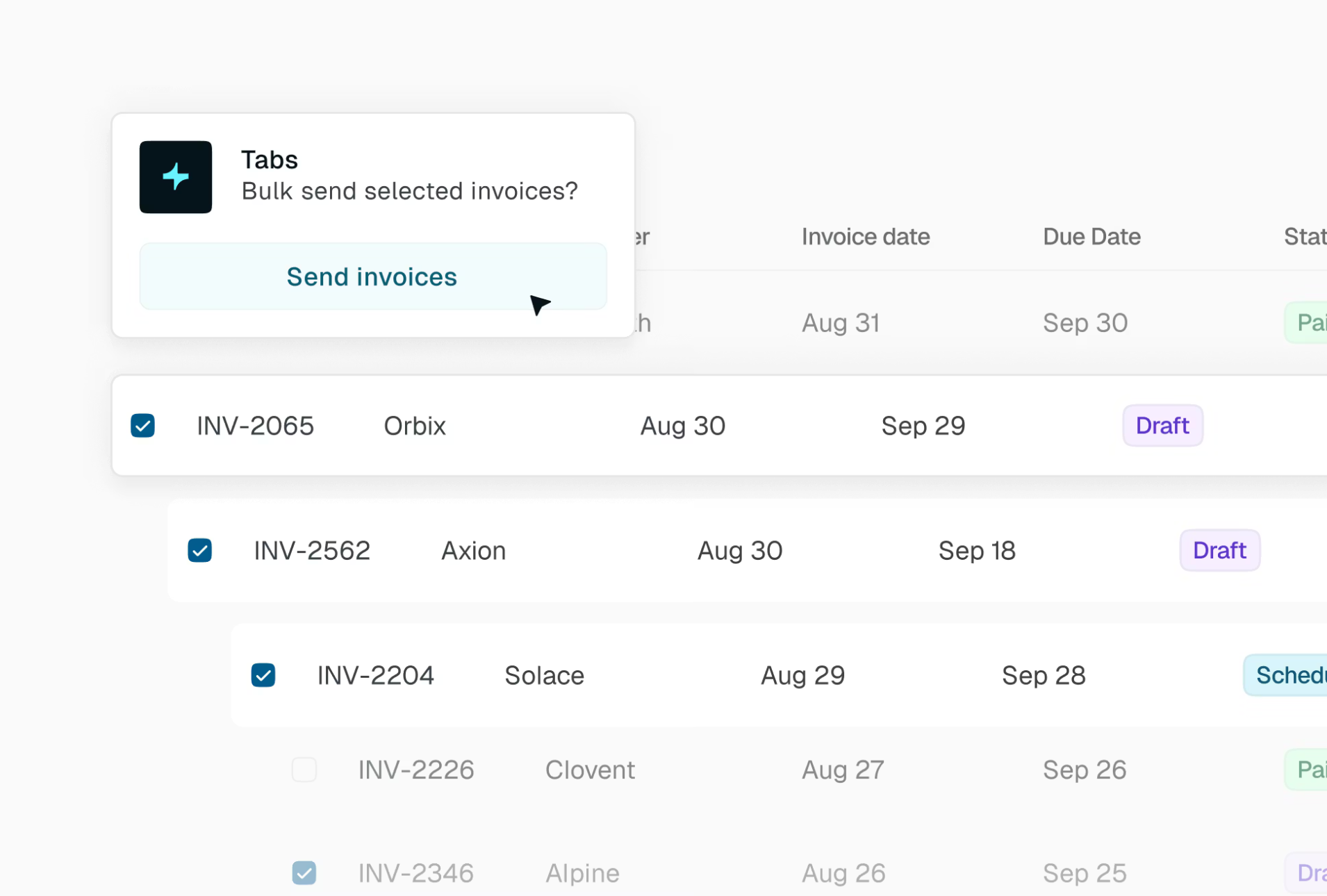
Tabs is an AI-powered revenue automation platform that automates the contract-to-cash process for B2B finance teams. It's built around the idea that billing accuracy starts with clean contract data, and its trained AI models ingest signed contracts directly, extracting terms like pricing, billing frequency, and payment schedules without manual data entry.
Tabs positions itself as a modern alternative to legacy billing tools that push data between spreadsheets without tying invoices back to executed contract terms. Its intelligent workflows handle billing, dunning, and cash application automatically, while real-time dashboards surface ARR, MRR, and cash flow metrics across customers and entities.
Key features
- AI contract ingestion: trained models parse complex B2B agreements and automatically extract pricing, billing schedules, invoice triggers, renewals, and payment terms
- Automated billing: generates invoices directly from executed contracts, eliminating manual re-keying and downstream billing errors
- Collections management: automated payment reminders and embedded payment links streamline cash flow and reduce manual follow-up
- ASC 606 revenue recognition: uses contract and billing data to ensure compliant revenue recognition, reducing reliance on spreadsheets
- Real-time reporting: dashboards covering ARR, MRR, cash flow, AR balances, and renewals, updated in real time
- Integrations: connects with Stripe, NetSuite, QuickBooks, Plaid, Slack, and other tools in your revenue stack
Pros
- AI contract ingestion eliminates a major source of billing errors and manual effort
- ASC 606 compliant revenue recognition built in, reducing month-end close time
- SOC 2 Type II certified with enterprise-grade security and US data centers
- Lightweight implementation makes it faster to deploy than many enterprise AR platforms
- Strong real-time reporting across revenue metrics
Cons
- Collections features are less deep than those offered by dedicated AR automation platforms
- Pricing is not publicly listed; requires a demo to get a quote
- May be more than needed for companies without complex contract structures
Best for
- Finance teams managing subscription-based, usage-based, or hybrid contract structures
- B2B SaaS companies that need both billing automation and ASC 606-compliant revenue recognition
- Teams looking to eliminate manual contract re-keying and downstream billing errors
- Organizations that need enterprise-grade compliance and security (SOC 2 Type II)
Pricing
Tabs uses custom pricing. Contact the team for a demo and a tailored quote based on your billing volume and needs.
3. Monk
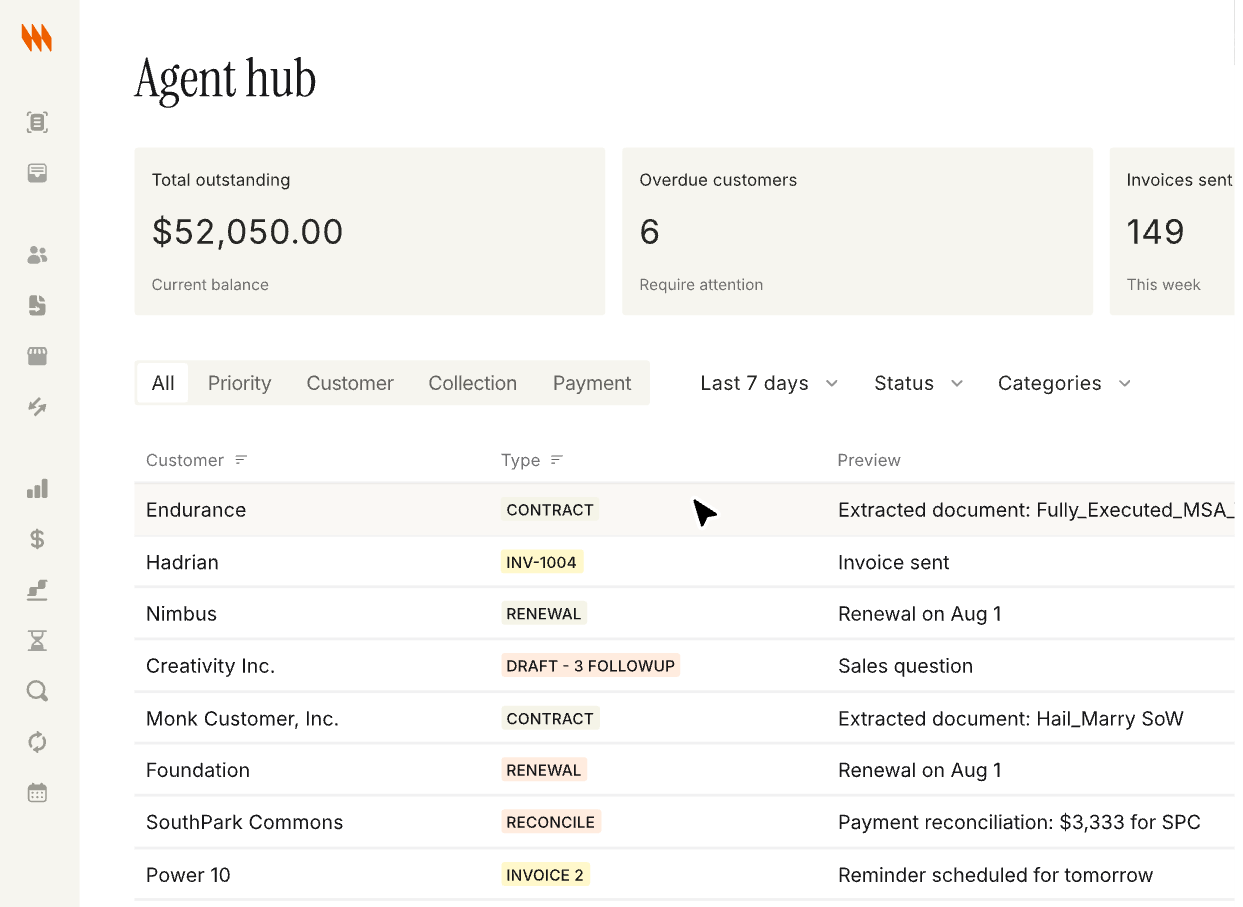
Monk is an AI-native accounts receivable solution that automates the full contract-to-cash lifecycle for B2B companies, from invoicing and collections through cash application and dispute resolution.
Monk's core differentiator is its intelligent collections agent, which uses AI to adapt its voice and approach based on customer history, achieving a 24% higher collections response rate than standard email outreach. Customers report a 40% average reduction in DSO and more than 25 hours saved per AR team member per month. The company currently manages over $1 billion in receivables across its customer base, with a median deployment time of just three days.
Key features
- Intelligent collections agent: AI that shifts voice and communication style per customer history to maximize payment response rates, with human approval workflows for oversight
- Contract-to-cash automation: handles invoicing, collections, cash application, and dispute resolution in a unified platform
- Edge case handling: manages portal logins, AP onboarding, PO matching, and other complex scenarios that typically require manual intervention
- Real-time DSO reporting: cash flow tracking and AR visibility out of the box, without manual data assembly
- 7-day support: enterprise-grade support running seven days a week with direct leadership access and a dedicated implementation team
- Integrations: native connections to Stripe, HubSpot, QuickBooks, NetSuite, and Salesforce
Pros
- Industry-leading collections response rates driven by adaptive AI agents
- Fastest deployment in its category, with a median time to live of three days
- Strong cash flow impact; customers report significant DSO reductions within the first month
- Built to handle complex edge cases that other platforms pass back to humans
- 7-day support with dedicated engineers and agent specialists from day one
Cons
- Volume-based pricing can scale up quickly for high-transaction businesses; requires a demo to understand costs
- Newer platform with less publicly available documentation compared to more established AR tools
- Primarily focused on collections and cash application; less breadth in quoting and CPQ
Best for
- Fast-growing B2B companies with complex contracts and sales-led motions that want rapid deployment
- AR teams spending significant time on manual edge cases like portal uploads and PO mismatches
- Finance teams that want a strong collections agent without building custom automation internally
- Companies that need 7-day support and a hands-on implementation partner
Pricing
Monk uses volume-based pricing that scales with transaction volume rather than a percentage of revenue. Specific tiers are not publicly disclosed. Contact the team for a demo and a custom quote.
4. Fazeshift
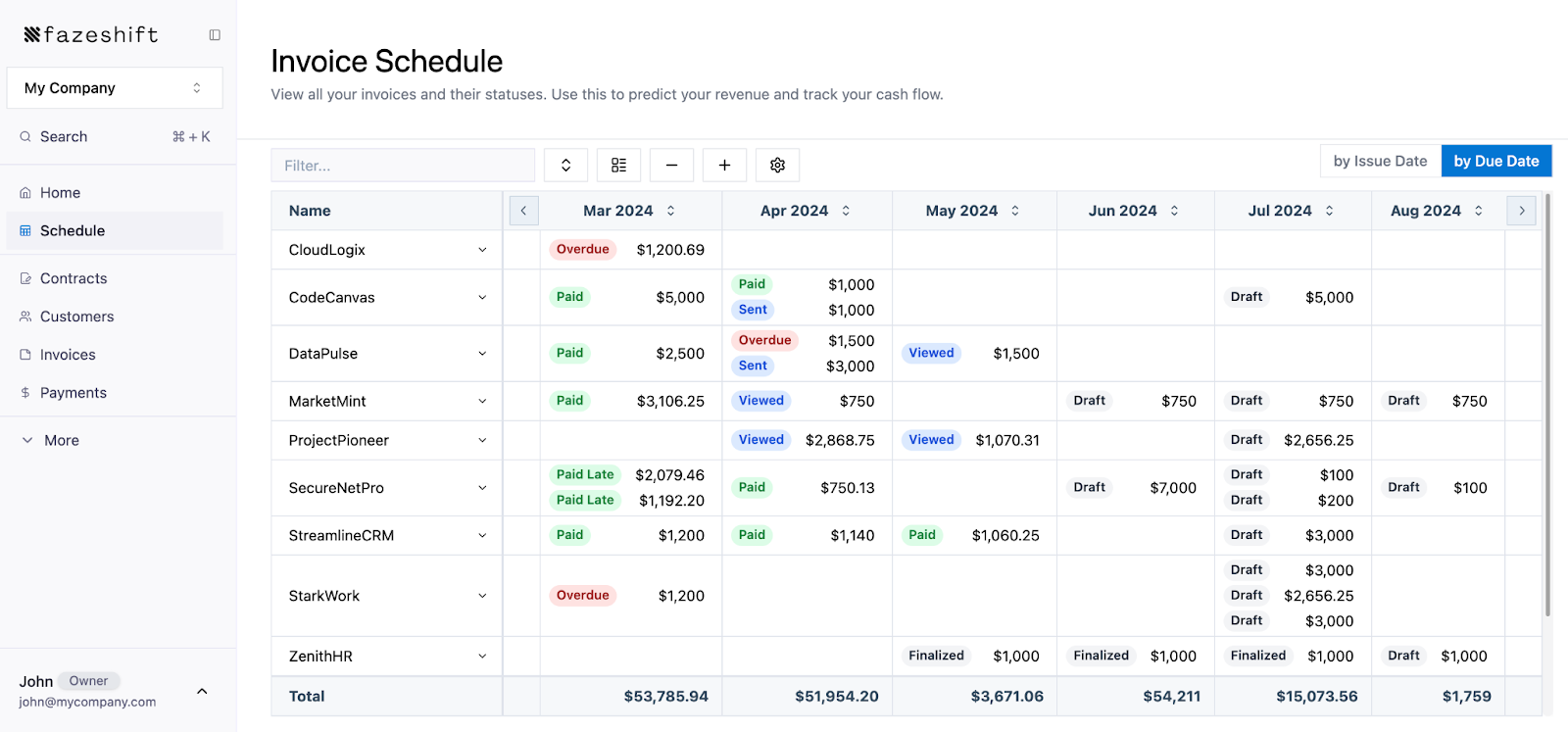
Fazeshift is an AI-driven accounts receivable solution that automates invoicing, cash application, and collections for enterprises across a range of industries.
Fazeshift's collections automation centers on proactive follow-up: the platform sends timely payment reminders and manages intelligent escalation workflows based on customer payment behavior, helping teams reduce DSO without damaging customer relationships.
Key features
- AI-powered contract processing: automatically extracts pricing, billing terms, and payment schedules from sales contracts to generate accurate invoices instantly
- Automated collections: sends payment reminders and manages escalation workflows based on customer payment history and behavior
- Intelligent cash application: automatically matches incoming payments via ACH, wire, credit card, or check to corresponding invoices, syncing with accounting software in real time
- Real-time AR visibility: notifications and alerts keep finance teams informed of significant events, overdue accounts, and required actions as they happen
- Built-in validation: checks invoices for errors before dispatch, reducing disputes and rework downstream
- Wide integration coverage: connects with Salesforce, HubSpot, DocuSign, Stripe, QuickBooks, NetSuite, and Gmail
Pros
- Strong AI contract processing reduces manual data entry and billing errors
- Broad integration coverage works well for enterprises with complex existing tool stacks
- Intelligent escalation workflows manage collections follow-up without human intervention
- Real-time notifications and dashboards provide complete AR visibility
- Value-based pricing model scales with business needs
Cons
- Advanced collections capabilities are less documented publicly compared to some competing platforms
- Pricing requires a demo; not publicly disclosed
- Primarily suited to larger enterprises; may be over-engineered for smaller teams
Best for
- Enterprises that need strong AI-driven invoicing and collections with broad ERP and CRM integration
- Finance teams dealing with high volumes of complex contracts and variable billing terms
- Organizations looking to eliminate manual cash application and reduce reconciliation time
- Companies already using Salesforce, NetSuite, HubSpot, or DocuSign as core systems
Pricing
Fazeshift offers flexible, value-based pricing that scales with business needs. Specific tiers are not publicly disclosed. Contact the team for a demo and a custom quote.
5. Sequence
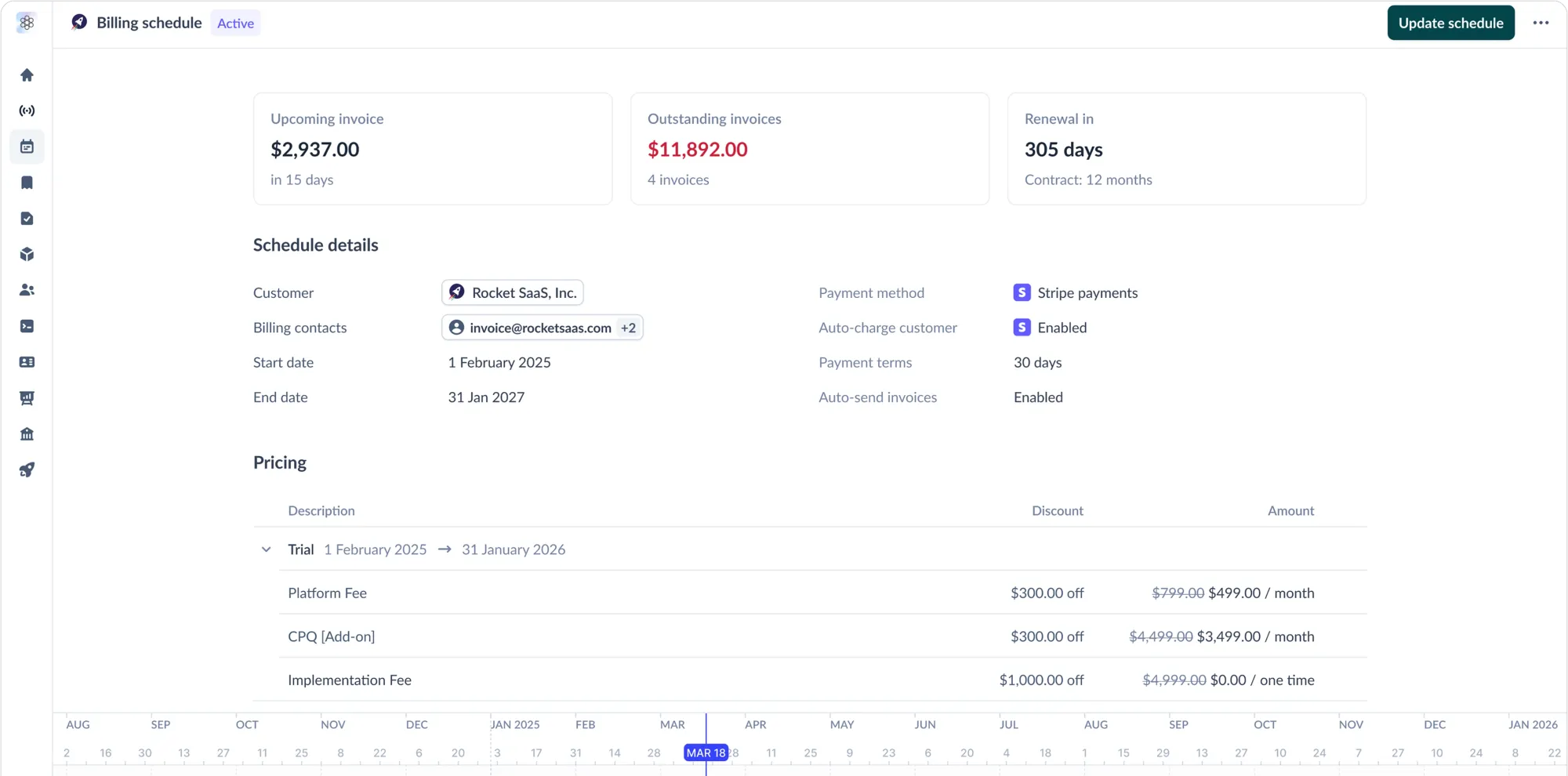
Sequence is a quote-to-revenue platform designed for fast-growing B2B companies with dynamic pricing models and custom deal structures.
Sequence's core proposition is that finance shouldn't be a bottleneck to growth. Its platform handles CPQ, billing, metering, and revenue recognition in a single system, allowing sales teams to close creative deals with custom pricing without adding hours of work to finance.
The platform recently introduced AI agents for AR that automate receivables busywork, including collections follow-up, as part of its broader push toward AI-first finance automation.
Key features
- CPQ and billing: converts custom deal terms into automated billing schedules, handling subscription pricing, usage-based billing, proration, minimum commitments, pricing ramps, and more
- AI-powered contract extraction: AI agents extract pricing and deal terms from contracts forwarded via Slack or email for error-free billing setup
- Revenue recognition: ASC 606 and IFRS 15 compliant revenue recognition, automated from billing data with daily journal generation and real-time ERP sync
- AR automation: AI agents handle collections follow-up, automated payment reminders, and receivables workflows to reduce manual effort
- Real-time reporting: dashboards covering MRR, ARR, cash flow, and collections status across customers and entities
- Integrations: connects with CRMs, ERP systems, data warehouses, Xero, and QuickBooks with bidirectional sync
Pros
- One of the most flexible billing engines available, handling virtually any pricing model or custom contract structure
- CPQ, billing, metering, and revenue recognition in a single platform reduces tool sprawl
- AI agents automate receivables workflows including collections follow-up
- ASC 606 and IFRS 15 compliant revenue recognition built in
- Free tier available for companies under $1 million in annual revenue
Cons
- Collections module is less mature than dedicated AR platforms; primarily a billing and revenue platform
- Pricing scales with billed revenue, which can become costly as revenue grows
- Implementation requires connecting multiple integrations; complex setups may take longer
Best for
- Fast-growing B2B SaaS companies with custom deal terms, usage-based pricing, or complex billing models
- Finance and revenue operations teams looking to consolidate CPQ, billing, and revenue recognition in one tool
- Companies that need ASC 606 or IFRS 15 compliant revenue recognition without manual journal entries
- Startups under $1M ARR that want a free entry point with room to scale
Pricing
Sequence charges a monthly platform fee based on projected billed revenue and the features required. A free tier is available for companies with under $1 million in annual revenue.
How to evaluate intelligent collections software
Not all intelligent collections platforms are built the same. Before you request a demo, it helps to know exactly what you're looking for. Here are the key criteria to assess.
1. Scope: standalone collections vs. end-to-end revenue platform. Some platforms focus narrowly on dunning and cash application. Others, like Alguna and Sequence, cover the full contract-to-cash workflow. Be clear about whether you need a point solution or a broader revenue platform before you start evaluating.
2. Billing model compatibility. If you run subscription, usage-based, or hybrid pricing, make sure the platform can handle your specific model natively, not through workarounds. Ask vendors to walk you through how they'd set up your most complex deal structure.
3. AI capabilities. The term 'AI-powered' is applied loosely in this category. Ask vendors specifically: does the platform use AI to prioritize collections, adapt communication style per account, or predict payment timing? Or does it just use rules-based automation with AI branding?
4. Integration depth. Check whether the platform offers native, bidirectional sync with your CRM (Salesforce, HubSpot), ERP (NetSuite, Sage Intacct), and payment processor (Stripe). API-only integrations require more engineering effort and are more prone to breaking.
5. Implementation timeline and support. Enterprise platforms often require months to implement and external consultants to manage. Modern SaaS platforms typically deploy in days or weeks. Assess total cost of ownership, not just the headline subscription price. Platforms like Alguna that provide white-glove onboarding often work out cheaper in practice.
6. Reporting and visibility. Ask to see the dashboards. You want real-time visibility into DSO trends, AR aging, at-risk accounts, and cash flow forecasts, without having to build custom reports. Make sure the metrics the platform surfaces match the KPIs your CFO actually cares about.
7. Security and compliance. For finance systems handling real money, SOC 2 Type II certification is a baseline expectation. For publicly traded companies or those with US government contracts, ask about SOX compliance and audit trail capabilities.
For a deeper look at the broader AR automation landscape, see our guide to AR automation solutions.
Frequently asked questions about intelligent collections software
What is the difference between intelligent collections software and traditional collections tools?
Traditional collections tools rely on static, rule-based workflows: send a reminder on day 30, escalate on day 60, and so on. Intelligent collections software uses AI and machine learning to analyze payment history, predict which accounts are at risk, adapt communication style per customer, and prioritize follow-up based on real-time data. The result is faster payment, fewer manual tasks, and better customer relationships.
How much does intelligent collections software cost?
Pricing varies significantly by platform and business size. Mid-market AR platforms typically range from $1,000 to $5,000 per month. Enterprise platforms can run into six or seven figures annually.
How long does it take to implement intelligent collections software?
Implementation timelines vary widely. AI-native platforms like Monk deploy in a median of three days. Modern SaaS platforms typically take one to four weeks. Enterprise platforms can require three to six months and external consultants. The implementation timeline has a direct impact on time to value, so factor it into your evaluation alongside the subscription cost.
Will intelligent collections software integrate with my existing ERP and CRM?
Most modern platforms offer native integrations with the major CRMs (Salesforce, HubSpot), ERPs (NetSuite, Sage Intacct, QuickBooks), and payment processors (Stripe). Check whether the integration is bidirectional (data flows both ways in real time) or one-directional (data is pushed on a schedule). Native, bidirectional sync is the gold standard; it eliminates reconciliation work and reduces errors.
What metrics should I track to measure ROI from intelligent collections software?
The most commonly tracked metrics are days sales outstanding (DSO), cost-to-collect (the total cost of running your AR function as a percentage of revenue collected), invoice accuracy rate, and collections team productivity (invoices processed per person per month). Most modern platforms surface these metrics on real-time dashboards. A well-implemented intelligent collections platform typically reduces DSO by 20 to 40 days and cuts manual AR work by 50% or more.
Is intelligent collections software suitable for small businesses?
It depends on the platform. Some, like Sequence (which offers a free tier for companies under $1M ARR), are designed to scale from startup to enterprise. Others are optimized for mid-market or enterprise deployments and may be over-engineered for smaller teams. If you're a small business with straightforward billing, a simpler AR tool may serve you better. If you're growing quickly or managing complex contracts, an intelligent collections platform will pay for itself quickly.
Stop chasing invoices: Let intelligent collections software do it for you
The AR automation market is growing at 14.3% annually, and the companies investing in intelligent collections software now are the ones that will close faster, collect earlier, and grow more efficiently.
The right choice comes down to your billing complexity, the breadth of functionality you need, your integration requirements, and how quickly you need to get up and running.
Use the comparison table and evaluation criteria above to narrow your shortlist, then test your top two or three candidates against your most complex real-world scenarios.
Alguna's AI accounts receivable agent works your aging every day by drafting follow-ups in your voice, capturing promises to pay, pausing on disputes, and escalating the exceptions that need a human.
Book your personalized demo