Every day an invoice goes unpaid, you're effectively lending money to your customers at zero percent interest. DSO (Days Sales Outstanding) puts a number on that problem (and for most B2B businesses, that number is higher than it needs to be).
In this guide, we cover everything from how to calculate DSO and best practices, to the best AR automation platforms for reducing it without adding headcount.
What is DSO?
DSO is one of the core financial metrics in accounts receivable management, and it's often the first thing investors, CFOs, and finance teams look at when assessing the efficiency of a company's revenue operations.
A high DSO means slow collections, tighter cash flow, and more risk. A lower, reduced DSO means your business is converting revenue into cash faster.
For example, if your accounts receivable balance is $500,000 and your total credit sales over the last 90 days were $1,500,000, your DSO would be 30 days.
What's a good DSO?
There's no universal benchmark, but as a rule of thumb, a DSO of under 45 days is considered healthy for most B2B businesses.
Industry, average contract size, and payment terms all affect what "good" looks like for your specific business. The key is to track your DSO consistently over time and trend it downward.
| DSO range | What it typically signals | Common causes |
|---|---|---|
| Under 30 days | Excellent cash conversion | Strong collections process, automated invoicing |
| 30-45 days | Healthy for most B2B businesses | Standard net-30 terms with timely follow-up |
| 45-60 days | Room for improvement | Manual processes, inconsistent follow-up |
| Over 60 days | Cash flow risk; collections need attention | No AR automation, poor invoicing hygiene, disputes |
Why reducing DSO matters for cash flow
When you reduce DSO and increase cash flow, the effects ripple across the entire business. You have more working capital to invest in growth, you reduce your reliance on credit facilities, and you give your finance team a much clearer picture of what's actually coming in.
For SaaS companies, professional services firms, and any business on net payment terms, cash flow management is existential. The faster you collect, the less you need to borrow, and the more control you have over your own financial outcomes.
How to calculate DSO
Understanding how to reduce DSO days sales outstanding starts with being able to measure it accurately.
Here's how to do it:
2. Pull your total accounts receivable balance at the end of that period
3. Pull your total credit sales over the same period
4. Apply the formula: (AR / Credit Sales) x Number of Days
Most finance teams track DSO monthly and compare it against prior periods. Some also use a best possible DSO calculation, which uses only current (non-overdue) receivables as a benchmark for what you'd achieve with perfect collections.
The gap between actual DSO and best possible DSO shows you exactly how much improvement is within reach.
6 best practices to reduce DSO
There's no single lever you pull to reduce DSO overnight. The businesses that consistently maintain a healthy DSO do so through a combination of process discipline, the right tooling, and clear ownership across their revenue teams.
Here are the practices that make the biggest difference.
📄 Send invoices immediately
Every day you wait to send an invoice is a day added to your DSO. Invoice the moment a service is delivered or a contract milestone is hit.
⚡ Automate payment reminders
Manual follow-up is inconsistent and time-consuming. Set up automated reminder sequences that send before and after due dates.
🔒 Clarify terms upfront
Payment terms should be agreed before work begins, stated clearly on every invoice, and reinforced at onboarding.
💳 Offer more payment options
ACH, credit card, and digital wallets all reduce friction. Customers pay faster when paying is easy.
📊 Track aging reports weekly
An AR aging report shows you exactly which invoices are overdue and by how much. Review it regularly and act fast on outliers.
🤝 Align sales and collections
Sales teams that set unrealistic payment terms create downstream AR problems. Shared accountability reduces this risk.
🤖 Use an AI-driven AR platform
Modern, AI-native platforms like Alguna offer AR automation features for reducing DSO without adding headcount.
Electronic invoicing to reduce days sales outstanding
One of the highest-impact, lowest-effort changes most businesses can make is switching to electronic invoicing. Paper and PDF invoices that sit in email inboxes get lost, delayed, and disputed.
Using electronic invoicing to reduce days sales outstanding DSO works because it creates a clear, trackable, digital paper trail from the moment the invoice is sent to the moment it's paid.
How to reduce DSO in accounts receivable with better collections
The question of reducing DSO with better collections comes down to three things: speed, consistency, and escalation. You need to follow up fast, follow up regularly, and have a clear process for escalating accounts that go significantly overdue.
A basic but effective collections cadence might look like this:
- 3 days before due date: automated payment reminder
- Due date: automated confirmation or "due today" notice
- 3 days overdue: personalized follow-up from the AR team
- 7-14 days overdue: escalation to account manager or senior collections contact
- 30+ days overdue: formal collections process or dispute resolution
How to reduce DSO: A step-by-step approach
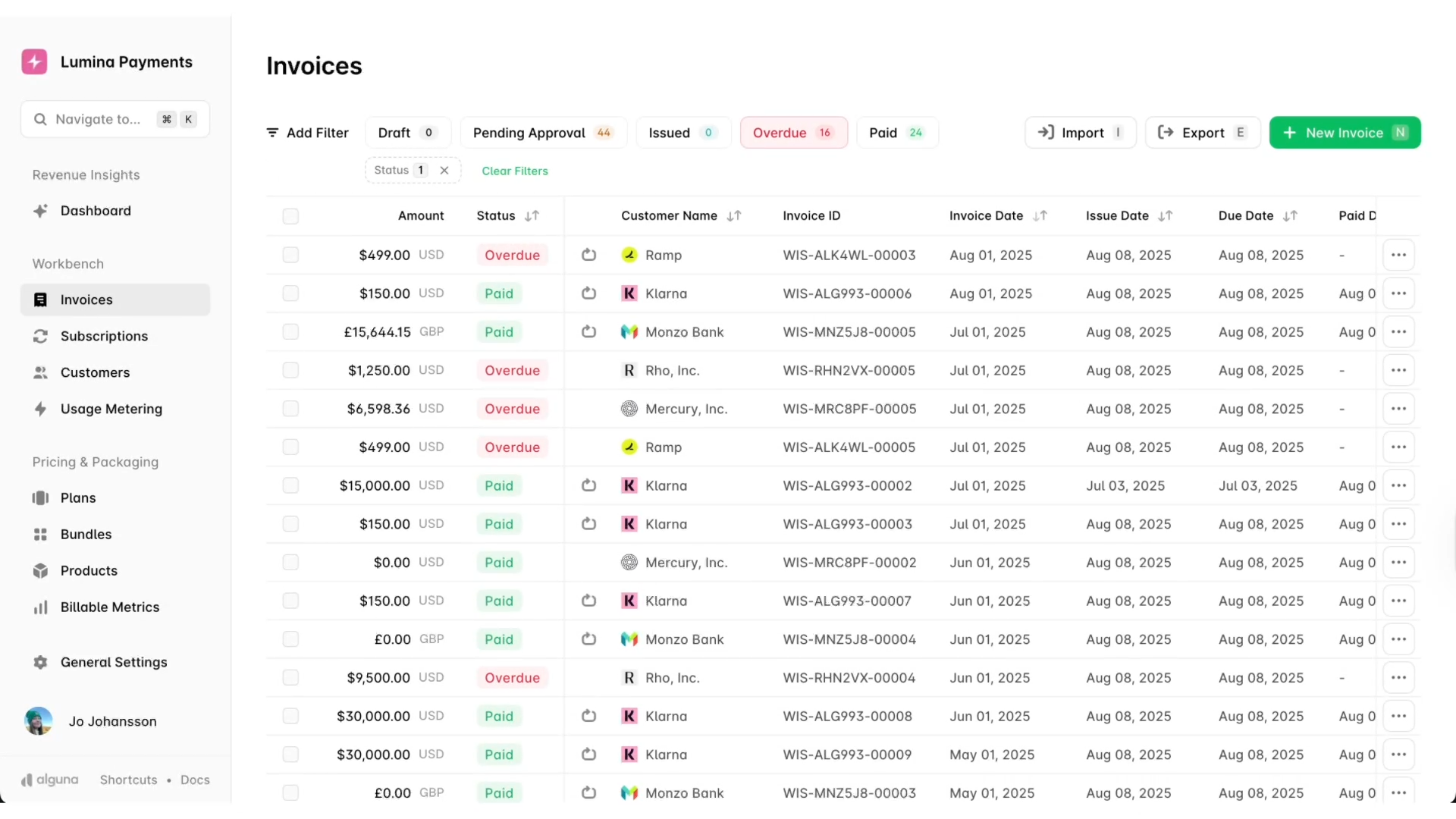
If you're looking for concrete strategies to reduce DSO and ways to reduce DSO that you can implement now, here's a practical framework.
This is roughly the order in which most businesses see the biggest returns.
- Audit your current AR process
Before you can improve, you need to understand where you are. Calculate your current DSO, pull an aging report, and identify the most common reasons invoices go unpaid or are disputed. - Tighten your invoicing process
Make sure invoices go out on time, every time. Include all required information (PO numbers, tax IDs, correct billing addresses) to prevent delays caused by missing details. Consider using an automated billing platform for this. - Implement automated reminders
Replace manual email follow-ups with automated sequences. This alone typically reduces DSO by 5-10 days for businesses still using manual processes. It's one of the most impactful AR automation software features for reducing DSO without adding headcount. - Review and standardize payment terms
Not every customer needs the same terms. Review your book of business and consider shortening terms for lower-risk accounts, or offering early payment discounts (e.g., 2/10 net 30) to incentivize faster payment. - Set up a formal collections escalation process
Define clear ownership and escalation paths. Who contacts a customer after 7 days overdue? After 30? After 60? When does it go to a collections agency or legal team? Having this documented prevents accounts from falling through the cracks. - Use AR automation tools to improve CEI
The Collections Effectiveness Index (CEI) measures how well your team converts receivables into cash. AR automation tools that reduce DSO and improve CEI do this by prioritizing follow-up actions, flagging at-risk accounts, and removing manual bottlenecks from the collections workflow. - Run a monthly DSO review
Track DSO monthly, segment it by customer tier or industry, and hold the AR team accountable to improvement targets. What gets measured gets managed.
How AR automation and AI help reduce DSO
Manual AR processes are the single biggest reason businesses struggle to reduce DSO. When collections depend on a team member remembering to send a follow-up email, you're one sick day, one busy week, or one missed inbox away from a cash flow problem.
Automated accounts receivable software features to reduce DSO remove that dependency. The best platforms handle invoice delivery, payment reminders, cash application, and dispute management automatically, freeing your team to focus on relationship management and exception handling.
How AI is changing DSO management
The newest generation of best AI-driven invoicing tools for reducing DSO go further than simple automation. They use machine learning to analyze customer payment behavior and predict which invoices are likely to be paid late, before they become overdue.
Platforms using AI to predict payment trends and reduce DSO can surface this intelligence proactively, allowing your collections team to act before a problem develops.
How ERP reduces DSO
Many businesses ask how ERP reduces DSO, and the answer lies in integration. When your ERP connects your CRM, invoicing, and collections data in one system, you eliminate the data silos that cause delays. Finance teams can see real-time AR status, trigger collections workflows automatically when invoices go overdue, and report on DSO without manual data wrangling.
That said, ERP systems alone don't always solve the problem. Many businesses find that purpose-built solutions to reduce days sales outstanding DSO that integrate with their ERP deliver better results than relying on ERP-native AR modules, which are often limited in their collections workflow capabilities.
3 platforms that reduce days sales outstanding (DSO)
Today, the best quote-to-cash software and accounts receivable software for reducing DSO and improving cash flow are the new players that were built for the AI era.
Below are three of the best ai-driven invoicing tools for reducing DSO:
- Alguna is an AI-native revenue management platform that handles quoting, billing, invoicing, and collections in one place, so there are no gaps in the process where DSO can quietly climb. Alguna's AR module includes automated reminders, self-serve payment portals, and real-time AR dashboards make it one of the most complete solutions for businesses that want to reduce DSO without adding headcount. Plus, it's AI features makes it one of the best order-to-cash platforms for reducing DSO and improving cash flow.
- Monk is an AR automation platform focused on streamlining collections workflows. It automates dunning sequences, tracks overdue invoices, and helps finance teams prioritize follow-up so nothing slips through the cracks.
- Tabs is a revenue automation platform designed for SaaS and subscription businesses. It automates complex billing scenarios and revenue recognition, reducing the manual work that typically delays invoicing and extends DSO.
When evaluating AR and billing platforms to reduce DSO in the USA or elsewhere, here's what to look for:
| Feature | Why it matters for DSO | What to look for |
|---|---|---|
| Automated invoicing | Eliminates delays between sale and invoice delivery | Trigger-based delivery, customizable templates, e-invoicing support |
| Payment reminders | Consistent follow-up without manual effort | Multi-channel (email, SMS), configurable sequences, opt-out handling |
| Online payment portal | Reduces friction at the point of payment | ACH, credit card, international currencies, partial payments |
| AI payment prediction | Enables proactive collections before invoices go overdue | Behavioral scoring, risk flagging, integration with collections workflow |
| Aging reports and dashboards | Gives visibility into where DSO is highest | Real-time data, customer-level drill-down, CEI tracking |
| ERP integration | Keeps data in sync across finance systems | Native connectors to Salesforce, NetSuite, QuickBooks, HubSpot |
Next steps in reducing DSO
Reducing DSO is an ongoing discipline that requires the right combination of process, technology, and accountability. The businesses that consistently maintain a low DSO typically share a few things in common: they invoice fast, they follow up consistently, they give customers easy ways to pay, and they use automation to do the heavy lifting.
Whether you're just starting to think about your accounts receivable process or you're looking to take it to the next level with AI-driven tools, the strategies above give you a clear starting point.
The ROI from a reduced DSO compounds over time, every day you shave off your average collection period is a day more cash sits in your account rather than someone else's.