Most finance teams aren't short on software (or spreadsheets). They're short on software that has the full picture.
Quotes live in one tool, invoices in another, collections in a shared inbox, and revenue schedules in a spreadsheet nobody wants to own. That means every handoff between them is a place where revenue leaks.
AI revenue management platforms exist to close those gaps by automating everything between a signed deal and recognized revenue: quoting, billing, usage metering, collections, and revenue recognition.
We compared 7 platforms so you don't have to: Alguna, Tabs, Zuora, Chargebee, Agentforce Revenue Management, and Maxio. For each one, you'll see what it does well, where it falls short, who it's best for, and what it costs.
What is an AI revenue management platform?
Instead of a finance or RevOps team re-keying contract terms into a billing tool and then again into a spreadsheet, an AI-powered revenue management automation and insights platform connects those steps so data flows through the entire process automatically.
Most platforms in this category take one of three approaches:
- Full quote-to-cash platforms that unify CPQ, billing, usage metering, collections, and revenue recognition in one system
- Post-signature automation tools that extract terms from signed contracts and automate invoicing and receivables downstream
- Enterprise finance suites that layer AI agents on top of established billing or order-to-cash infrastructure
The right choice depends on where your revenue process breaks today, and we'll cover how to evaluate that later in this guide.
AI revenue cycle management software VS AI revenue management platforms
In healthcare, AI revenue cycle management software refers to tools that automate medical billing, claims, and denials for providers.
In B2B software, the revenue cycle means the quote-to-cash process: pricing a deal, quoting it, billing it, collecting payment, and recognizing the revenue.
If you're a hospital or medical group evaluating AI revenue cycle management companies, this isn't the guide for you. If you're a SaaS, AI, or fintech company that wants AI-powered revenue management software to automate revenue management, keep reading.
AI revenue management platforms compared
| Platform | Best for | Strengths | Limitations | Pricing |
|---|---|---|---|---|
| Alguna | SaaS, AI, and fintech teams that want AI-native quote-to-cash in one platform | Unified CPQ, billing, usage metering, AR automation, and rev rec, agentic AR with configurable autonomy, no revenue cut | Purpose-built for modern pricing models, so it's more than you need for basic flat subscriptions | Flat pricing. Paid plans start from $699/month. |
| Tabs | Finance teams automating billing from signed contracts | AI contract ingestion, invoice-to-cash automation, strong reporting | Sits downstream of the sale, no CPQ, young product with rough edges | From $1,500/month (Launch plan) |
| Zuora | Enterprises with complex subscription and usage monetization | Mature monetization suite, embedded AI agents, strong governance and auditability | Long implementations, high total cost, heavy for mid-market teams | Custom, typically $50,000+ per year |
| Chargebee | Subscription-first SaaS businesses | Established subscription billing, large integration ecosystem | Usage-based and hybrid models are add-ons rather than the core design, overage fees on billing volume | From $599/month plus overage on billing above plan limits |
| Agentforce Revenue Management | Salesforce-centric enterprises | Native Salesforce data model, CPQ plus billing plus AI agents in one ecosystem | Requires Salesforce commitment, per-user costs stack quickly, complex implementations | Roughly $150 to $200 per user/month plus add-ons |
| Maxio | B2B SaaS finance teams focused on rev rec and reporting | Strong revenue recognition and SaaS metrics, solid financial reporting | Billing layered onto reporting roots, limited AI, pricing scales with billings | From $599/month for up to $100,000 in billings |
1. Alguna
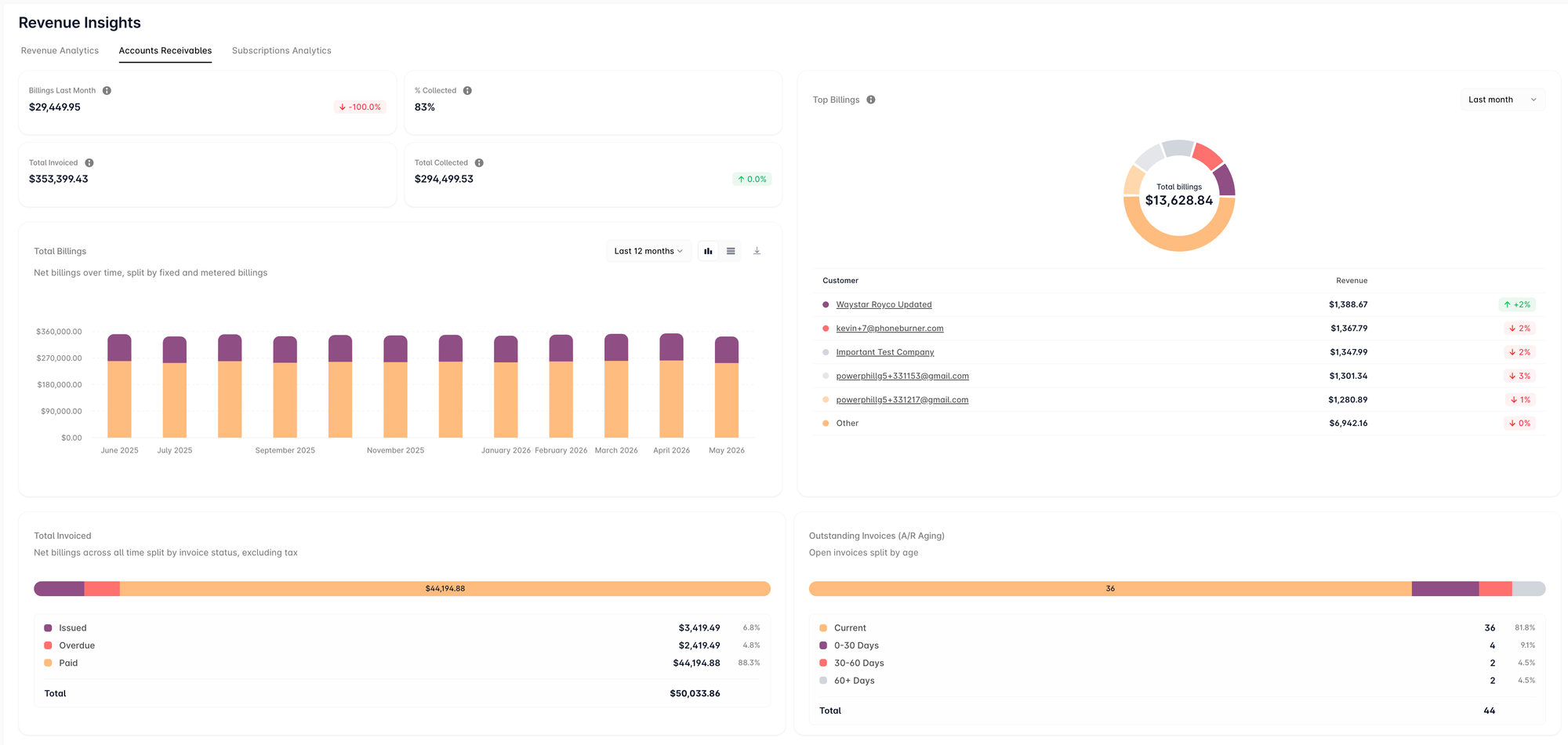
Alguna is an AI revenue management platform built for B2B SaaS, AI, and fintech companies. Backed by Y Combinator, it unifies CPQ, pricing, billing, usage metering, invoicing, intelligent collections, and revenue recognition in a single system, so the deal your sales team quotes is exactly what finance bills and recognizes.
What sets Alguna apart in the AI revenue management platform category is its agentic approach to accounts receivable. The AI AR agent works cases from a Control Tower workspace and operates on an autonomy ladder. That means the AI agent chases invoices, captures promises to pay, detects disputes, and classifies inbound intent, without ever losing control of what touches your customers.
Key features
- Pricing simulator: Test pricing changes against real customer data before rolling them out. Model price increases, new tiers, or discount adjustments and see how they affect revenue across your customer base.
- AI contract extraction: Upload existing terms or start from scratch by using voice AI to dictate contract terms with Contracts AI.
- No-code CPQ: Build quotes that combine subscriptions, seats, usage tiers, prepaid credits with overages, ramps, and one-time fees in a single contract, with approval workflows and embedded eSignature.
- AI accounts receivable agent: A dedicated workspace with Overview, Cases, Tasks, Inbox, and Activity views, where the agent captures promises to pay, detects disputes, and classifies inbound customer intent. Configurable personas keep every message on-brand.
- Usage metering and billing: Stream API calls, tokens, GPU hours, or any billable event into billing logic in real time, with automated invoicing, multi-currency support, and consolidated billing.
- Revenue recognition and compliance: Automated ASC 606 and IFRS 15 revenue schedules, journal entries exported to your ERP, and SOC 2 compliance out of the box.
- Adam Liska, Co-founder and CEO at Airspeed
Pros
- Covers your revenue workflows from quote to cash in one platform
- Agentic AR automation with human-controlled autonomy levels
- Flat pricing with no revenue cut
- White-glove onboarding and fast migrations, with go-lives in weeks rather than months
Cons
- Purpose-built for modern SaaS and AI pricing models, so it's more platform than a company with one simple flat-rate plan needs
- Younger than legacy enterprise suites like Zuora
Best for
- B2B SaaS, AI, and fintech companies with usage-based, hybrid, or enterprise-negotiated pricing
- Lean finance and RevOps teams that want agentic automation without giving up control
- Teams consolidating separate CPQ, billing, and AR tools into one system
Pricing: Alguna offers transparent flat monthly pricing starting at $699/month, with white-glove onboarding and migration. Alguna never takes a cut of your revenue.
Watch how Alguna unifies quoting, billing, usage metering, and agentic AR in one platform, with autonomy you control and pricing you can forecast.
Book your personalized demo
2. Tabs
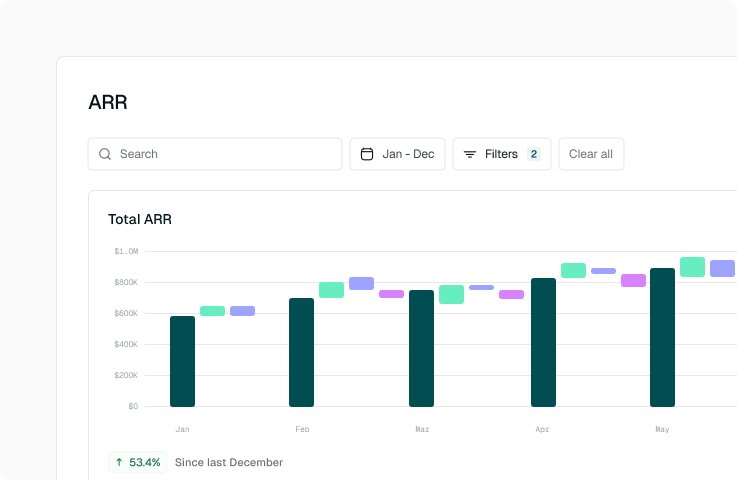
Tabs is an AI-powered revenue automation platform built for B2B finance teams. Rather than handling the sale itself, Tabs focuses on what happens after a contract is signed: its AI extracts billing terms from signed agreements, including PDFs, Word documents, and emails, and converts them into invoices, collections workflows, and revenue recognition entries.
It's a strong fit for finance teams drowning in manually administered contracts, though it deliberately leaves quoting and pricing to upstream tools, which means you'll still need a CPQ and a way to keep the two in sync.
Key features
- AI contract ingestion: Parses signed contracts and amendments and converts commercial terms into billing schedules without manual re-keying.
- Automated invoicing and collections: Invoices generate from contract terms and usage data, with automated dunning sequences and embedded payment links.
- Revenue recognition and reporting: ASC 606 compliant schedules, ARR waterfalls, and real-time reporting synced to ERPs like NetSuite and QuickBooks.
Pros
- Contract ingestion handles messy, non-standard agreements well
- Meaningfully reduces manual billing work for post-signature finance operations
- Reviewers praise responsive support and fast iteration
Cons
- No CPQ, so quoting and pricing live in separate tools
- Still a young product, and users note some features need polish
- Starting price is steep for early-stage companies
Best for
- Mid-market finance teams with high contract volume and varied terms
- Companies prioritizing invoice-to-cash automation over end-to-end quote-to-cash
Pricing: Tabs' published plans start with a $1,500/month flat-rate Launch tier that includes billing and collections, CRM integrations, contract ingestion, and revenue recognition and reporting.
3. Zuora
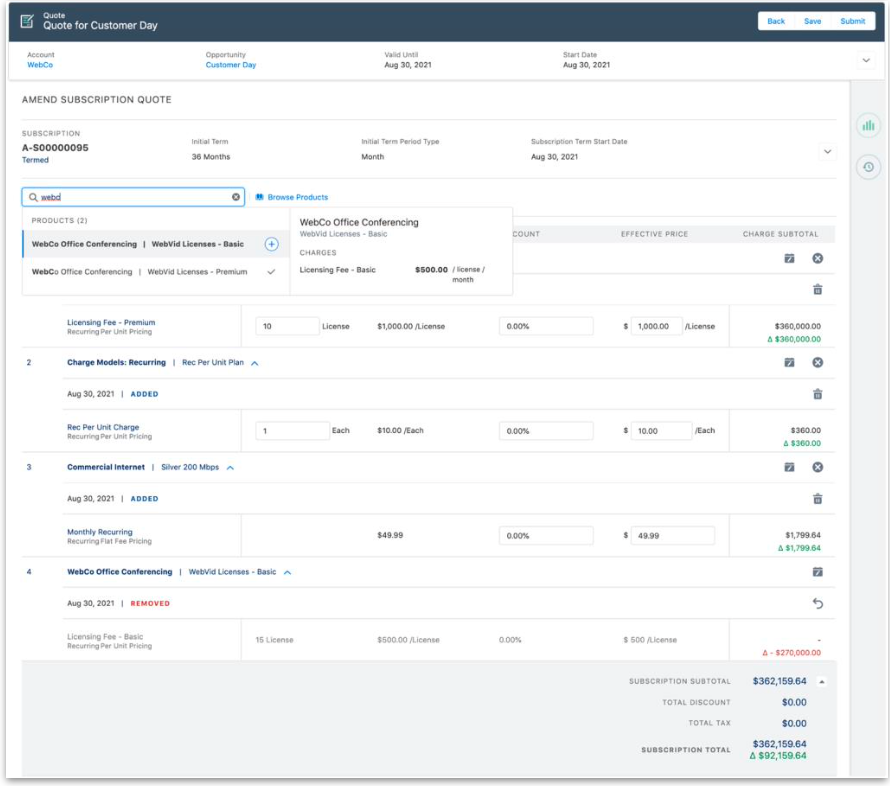
Zuora is the long-standing enterprise monetization platform, spanning billing, payments, CPQ, and revenue recognition. In 2026 it has leaned hard into AI, launching embedded AI agents across quote-to-cash workflows and an AI Monetization Suite for usage, token, credit, and hybrid pricing models.
Its AI operates within existing controls and audit frameworks, with read-only defaults and role-based permissions, which will appeal to finance leaders who worry about generative AI in revenue cycle management touching the ledger unsupervised.
The trade-off is weight. Zuora is built for enterprises with dedicated admins and long planning horizons, and its cost and implementation timelines reflect that.
Key features
- Zuora AI agents: Embedded agents that explain contract modification impacts, simulate ASC 606 allocation changes before they hit the ledger, and assemble audit responses.
- AI Monetization Suite: Flexible commitments, metered entitlements, and a pricing simulator for testing AI product pricing before launch.
- Enterprise billing and rev rec: A mature system of record for complex subscription and usage monetization at global scale.
Pros
- Nearly two decades of monetization depth with strong governance and auditability
- AI capabilities embedded in workflows rather than bolted on as a chat layer
- Handles very complex enterprise contract structures
Cons
- High total cost of ownership and long implementations
- Requires dedicated administration, which is heavy for mid-market teams
- Many newer AI features are gated, in beta, or require enablement requests
Best for
- Large enterprises monetizing complex subscription and consumption portfolios
- Companies where audit and governance requirements dominate the buying decision
Pricing: Custom quotes. Budget roughly $50,000 per year and up, with additional costs for add-on modules and integrations.
4. Chargebee
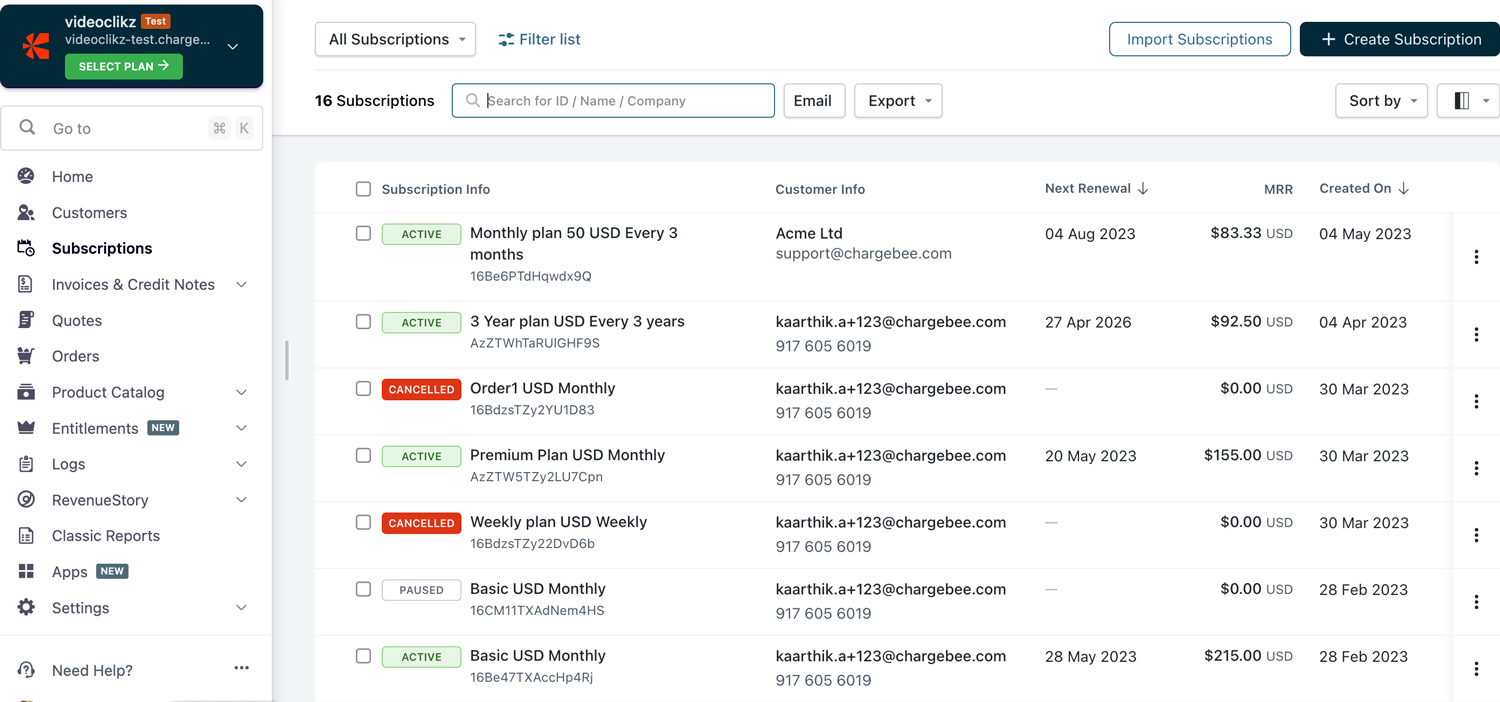
Chargebee is one of the most established subscription billing platforms, popular with SaaS and mid-market companies.
It has added a CPQ module and AI-assisted capabilities in recent years, connecting quoting directly to its billing engine. For businesses whose revenue is mostly recurring subscriptions with occasional usage components, it remains a dependable choice with a large integration ecosystem.
The catch is that Chargebee wasn't built from the ground up for today's usage-heavy and hybrid pricing models, so more complex monetization often means workarounds, add-ons, or engineering effort.
Key features
- Subscription lifecycle management: Plans, trials, upgrades, downgrades, proration, and dunning for recurring revenue businesses.
- Chargebee CPQ: Quoting connected to the billing engine so signed quotes become invoices without re-entry.
- Ecosystem and integrations: Wide coverage across payment gateways, CRMs, accounting tools, and tax engines.
Pros
- Mature, well-documented product with a large partner ecosystem
- Solid for high-volume, self-serve subscription motions
- Reasonable entry point for subscription-first companies
Cons
- Usage-based and hybrid pricing support is decent but not the core design
- Overage fees kick in as billing volume grows beyond plan limits
- AI capabilities are lighter than the AI-native platforms in this list
Best for
- Subscription-first SaaS businesses with straightforward pricing
- Companies with high-volume self-serve billing needs
Pricing: Paid plans start at $599/month for up to $100,000 in monthly billings, with a percentage overage charge on billing above plan limits.
5. Agentforce Revenue Management
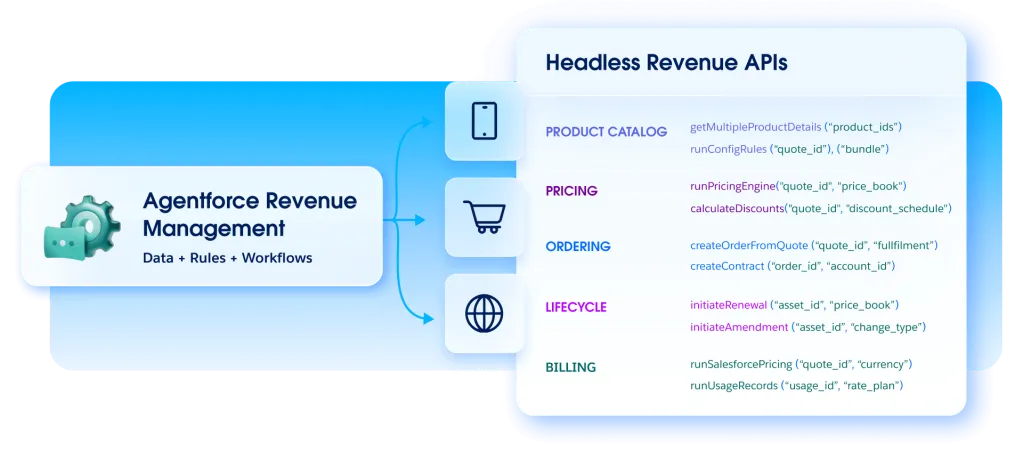
Agentforce Revenue Management, formerly Salesforce Revenue Cloud, combines CPQ, contracts, billing, and AI agents inside the Salesforce ecosystem. If your company already runs sales, service, and data on Salesforce, it offers the appeal of one data model from opportunity to invoice, with Agentforce agents automating quote generation, approvals, and billing tasks.
Outside a committed Salesforce shop, the math changes. Per-user licensing stacks up quickly, AI agent usage is often metered separately, and implementations usually require systems integrators.
Key features
- Native Salesforce data model: Quotes, contracts, orders, and invoices share objects with your CRM, removing sync layers.
- Agentforce AI agents: Agents that draft quotes, check approvals, and automate billing operations inside Salesforce workflows.
- Enterprise CPQ and billing: Complex product catalogs, approval matrices, and contract lifecycle features for large sales organizations.
Pros
- Deep integration for companies standardized on Salesforce
- Single vendor across CRM, CPQ, and billing
- Serious enterprise governance and permissioning
Cons
- Per-user pricing plus consumption credits for AI features add up fast
- Complex, integrator-led implementations
- Weak fit if your stack isn't Salesforce-centric
Best for
- Enterprises deeply committed to the Salesforce platform
- Large sales organizations with complex approval and contract workflows
Pricing: No simple list price. Smaller teams can expect roughly $150 to $200 per user/month for the core platform, with additional charges for AI agent features and consumption credits.
6. Maxio
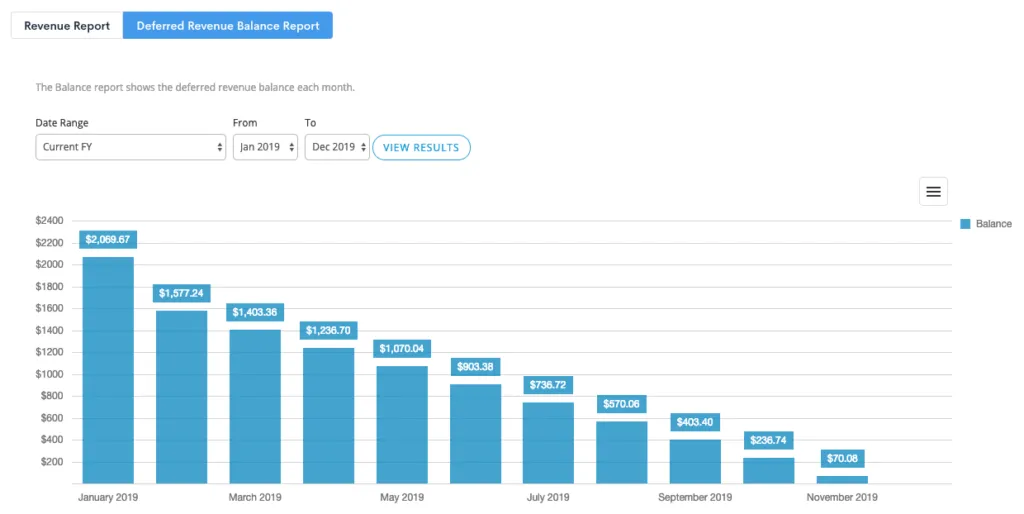
Maxio, formed from the merger of SaaSOptics and Chargify and later adding RevOps.io, is strongest in revenue recognition, SaaS metrics, and financial reporting, with billing layered on top. Finance teams that live in ARR waterfalls, cohort reports, and audit-ready rev rec schedules tend to like it.
As an AI revenue management platform, though, Maxio is more traditional automation than AI. Its roots are in reporting rather than quoting or agentic AR, and complex usage-based billing can require careful configuration.
Key features
- Revenue recognition: ASC 606 compliant schedules and audit-ready reporting built for B2B SaaS.
- SaaS metrics and analytics: ARR momentum, churn, retention, and cohort reporting out of the box.
- Billing and invoicing: Subscription and usage billing connected to its reporting core.
Pros
- Excellent SaaS metrics and investor-grade reporting
- Strong revenue recognition capabilities for audits and fundraising
- Well suited to finance teams that report first and bill second
Cons
- Billing is layered onto reporting roots rather than designed as the core
- Limited AI and no agentic automation
- Pricing scales with billing volume, which penalizes growth
Best for
- B2B SaaS finance teams prioritizing rev rec and board reporting
- Companies with moderate billing complexity and strong reporting needs
Pricing: Paid plans start at $599/month for up to $100,000 in billings, with cost scaling as billings grow.
How to evaluate AI revenue management platform features
Vendor demos all look impressive. To separate genuine capability from marketing, evaluate innovative AI revenue management system features and ideas against your actual revenue process:
- CEnd-to-end revenue workflow coverage. Map where deals break today: quoting, billing, collections, or recognition. A platform that automates one step while leaving handoffs intact just moves the bottleneck. This is the heart of the AI revenue workflow platform vs point solution management question: point solutions fix a symptom, while workflow platforms remove the handoffs that cause it.
- Pricing model support. If you sell usage-based, hybrid, or heavily negotiated enterprise deals, test those exact structures in the demo. Complex pricing structures are where legacy billing tools quietly fall apart.
- AI with controls, not AI theater. Ask how much autonomy you can grant and how you can constrain it. The best platforms let you start agents in observe-only mode and expand their mandate as trust builds, with guardrails and approval thresholds baked in.
- Total cost of ownership. Look past the sticker price to revenue-share fees, overage charges, per-user stacking, implementation costs, and the engineering time required to maintain integrations. A flat fee you can forecast beats a percentage that grows with your success.
- Time to value. Weeks versus quarters matters. Ask for reference customers at your size and pricing complexity, and ask how long their migration actually took.
- Compliance readiness. ASC 606 and IFRS 15 revenue recognition, SOC 2, multi-currency, and multi-entity support should be standard, not roadmap items.
When you shortlist trusted AI-driven revenue management providers, weight recent customer evidence over analyst quadrants. This category is moving fast, and a platform's 2024 reputation may not reflect its 2026 product.
Frequently asked questions
What is AI-driven revenue management?
AI-driven revenue management is the use of AI to automate and optimize the commercial processes that turn deals into cash: pricing, quoting, billing, usage metering, collections, and revenue recognition. Instead of finance teams manually re-keying data between systems, AI extracts terms, generates invoices, chases payments, and flags exceptions, with humans reviewing what matters.
What is AI powered revenue management software best at automating?
The highest-impact areas are usually contract-to-invoice translation, usage metering and rating, collections outreach, cash application, and revenue schedule generation. These are high-volume, rules-heavy tasks where AI reduces both effort and error rates. Quote to cash automation works best when these steps share one data model rather than syncing across tools.
What are the AI-driven automation revenue cycle management benefits?
For B2B companies, the main benefits are faster quote-to-cash cycles, lower days sales outstanding, less revenue leakage from unbilled usage or misapplied terms, cleaner audits, and finance teams that scale revenue without scaling headcount. Studies suggest revenue leakage alone can cost companies 4 to 20 percent of revenue, which is why automating the handoffs matters as much as automating any single task.
Is AI revenue cycle management software the same for healthcare and SaaS?
No. In healthcare, AI-powered revenue cycle management tools automate claims, medical coding, and denials for providers. In B2B software, the revenue cycle means quote-to-cash, and the platforms in this guide serve that process. If a vendor's case studies are all hospitals, it's built for a different problem than SaaS billing.
What is an agentic AI platform for revenue cycle management?
It's a platform where AI agents don't just analyze but act: sending collection emails, capturing promises to pay, applying cash, or updating billing schedules, within permissions you define. Alguna's autonomy ladder is a good example: you choose whether each workflow runs in Monitor, Suggest, or Act mode, so the agent earns autonomy rather than assuming it. Zuora and HighRadius take similar governed approaches for enterprise workflows.
What are the best AI tools for revenue leaders managing 50 plus reps?
At that scale, the bottleneck is usually quote governance and billing accuracy rather than rep productivity. A platform with no-code CPQ, approval workflows, and automated billing, like Alguna, keeps 50 plus reps quoting within guardrails while finance stays out of deal-desk firefighting. Salesforce-centric organizations at that size may also evaluate Agentforce Revenue Management for its native CRM data model.
Where does generative AI fit in revenue management?
Generative AI is most useful for reading and writing: extracting terms from messy contracts, drafting collection messages in a consistent voice, and explaining revenue impacts in plain language. The platforms above pair it with deterministic billing logic, because invoice math should never be a probabilistic guess.
The revenue cycle won't automate itself
Every platform on this list will tell you it automates revenue. The real question is how much of your revenue cycle it covers, how much control you keep over its AI, and what it costs you as you grow. Enterprise suites like Zuora and HighRadius bring depth but demand months of implementation. Post-signature tools like Tabs and reporting-first platforms like Maxio solve real problems but leave the rest of the cycle stitched together. Subscription stalwarts like Chargebee work until your pricing outgrows them.
Alguna covers the whole cycle, from a quote your reps build in minutes to cash an AI agent helps collect, on a flat monthly fee that never takes a cut of your revenue. As Adam Liska, Co-founder and CEO at Glyphic AI, put it: "Alguna ticked every box I needed. Most importantly, it gave me a clear overview of revenue movements, something Stripe just couldn't provide."
Watch how Alguna unifies quoting, billing, usage metering, and agentic AR in one platform, with autonomy you control and pricing you can forecast.
Book your personalized demo