If you run a SaaS or AI company, you already know that closed deals don't pay the bills. Collected revenue does. 🏦
Yet most finance teams are still stitching together spreadsheets, Stripe dashboards, and manual email chains to chase down payments. What happens next we all know too well: DSO climbs, cash flow suffers, and your ops team spends more time reconciling invoices than building the business.
Modern tools don't just automate reminders, they predict payment behavior, apply cash automatically, flag at-risk accounts before they age, and sync tightly with your existing revenue stack.
In the AI era, the right platform can be the difference between a cash flow problem and a competitive advantage.
This guide covers the best AI-driven AR platforms built specifically for companies managing subscription billing, including how they handle DSO management, what their pricing looks like, and which one is right for your stage and model.
What is an AI-driven AR platform?
Traditional accounts receivable collection methods include sending reminders, tracking aging reports, and chasing overdue accounts manually. Modern AI-driven AR platforms eliminate busy back office work.
Instead of treating every overdue invoice the same way, these platforms learn from customer payment history, segment accounts by risk, prioritize your team's outreach, and automate the right follow-up at the right time.
For companies on subscription billing or usage-based pricing models, where invoice complexity is high and volume scales fast, this intelligence layer is especially valuable.
Key capabilities of AI-driven AR platforms
- Automated dunning: Rule-based and AI-personalized payment reminders sent via email, portal, or SMS
- Cash application: Automatically matching incoming payments to open invoices and reducing manual reconciliation time
- Predictive collections: Scoring invoices by likelihood of late payment so teams focus on the right accounts
- Real-time dashboards: Live visibility into receivables health, aging buckets, and DSO trends
- Revenue recognition: Automated GAAP-compliant recognition, critical for subscription companies
- Subscription billing integration: Native connectors to Stripe, billing platforms, and CRMs so invoice data flows without manual export
Comparison: 5 AI-driven AR platforms for subscription billing
| Platform | Best for | Strengths | Limitations | Pricing |
|---|---|---|---|---|
| Alguna | AI and SaaS companies needing end-to-end quote-to-revenue | Unified quoting, billing, and AR; real-time usage metering; flat pricing with no transaction fees | Newer entrant; lighter on pure collections analytics vs. AR-only tools | Free Starter tier; paid plans from $699/month |
| Tabs | B2B companies with complex contracts and non-standard pricing | AI contract ingestion; handles all billing models out of the box; strong ASC 606 compliance; 200+ customers including Cursor | Newer platform with a shorter track record; less suited for self-serve or high-volume consumer billing | Custom (contact for pricing) |
| Monk | B2B SaaS and PE/VC-backed companies needing fast, agentic collections | AI agents handle disputes, portal logins, and edge cases; 40% average DSO reduction; deploys in a median 3 days | Collections-first focus; less suited if you also need to overhaul billing configuration or quoting | Volume-based; no revenue-share. Custom (book a demo) |
| Chargebee | Subscription-first SaaS companies adding light usage components | Strong international tax and currency support; no-code pricing tests; broad integration marketplace | Usage billing is a bolt-on; batch-based metering; 0.75% overage fee scales cost quickly | From $599/month + 0.75% on overages |
| HighRadius | Large enterprises with global, complex AR operations | Gartner Magic Quadrant Leader three years running; full order-to-cash suite; up to 68% DSO reduction | 3–6 month implementation; requires significant IT resources; cost-prohibitive for mid-market | Outcome-based pricing; custom enterprise contracts |
5 best AI-driven AR platforms for subscription billing and DSO management
We evaluated each platform against three core criteria: how well it handles the complexity of subscription and usage-based billing, how meaningfully it reduces DSO, and how quickly a lean finance team can realistically get up and running.
The five platforms below cover different parts of the market — from early-stage SaaS to global enterprise — so we've been specific about who each one is actually built for.
1. Alguna
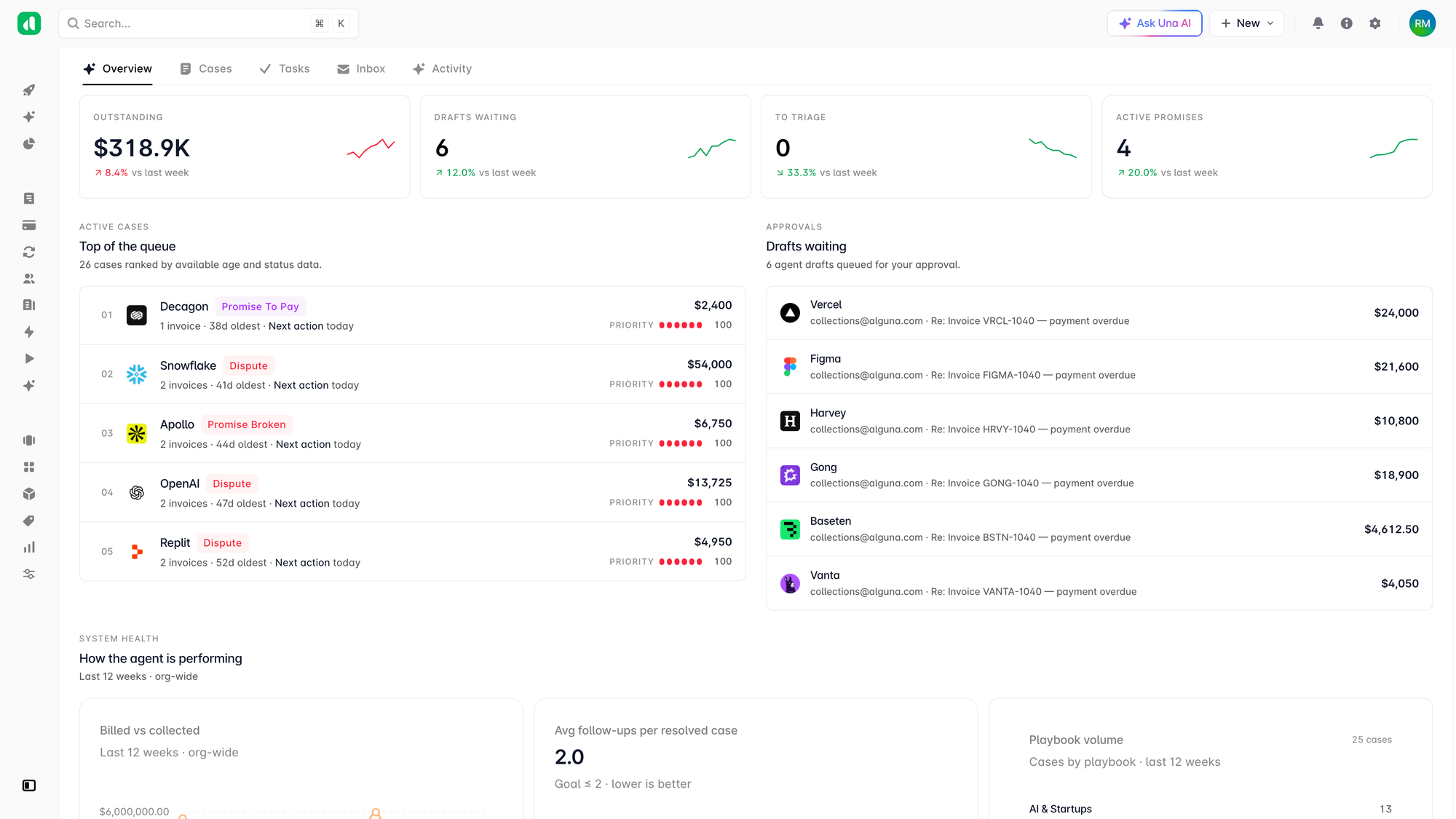
Alguna is an AI-native revenue management platform that handles pricing, quoting, and billing. Founded in 2023 and backed by Y Combinator, it's designed to unify the entire quote-to-revenue process in one place, from configuring pricing and sending quotes, to metering usage, and automating accounts receivable and payment collections.
Unlike legacy AR tools that bolt on subscription support, Alguna is built natively for modern AI and SaaS pricing models including usage-based billing, hybrid pricing, tiered plans, and complex enterprise contracts.
What makes Alguna's AI accounts receivable product stand out, is that it eliminates the handoff friction that typically causes DSO to creep up. When quoting, billing, and receivables all live in the same system, there's no data lag between when a deal closes and when an accurate invoice goes out.
Alguna's AR Agent takes that further: it opens a case for every overdue invoice, drafts and sends follow-ups on your cadence, reads customer replies, captures promises to pay, pauses itself on disputes, and escalates edge cases to your team, all without your AR team copy-pasting the same email 40 times a week.
For companies like Airspeed, the visibility into revenue movements has been a game changer:
- Adam Liska, Co-founder and CEO at Airspeed.
Alguna's AI accounts receivable features
- AR agent with configurable autonomy: Runs on a Monitor / Suggest / Act ladder per playbook, observe only, queue drafts for approval, or send autonomously within your allowlist and amount thresholds.
- Control Tower: A single collections workspace with five views: Overview, Cases, Tasks, Inbox, and Activity, giving your team live KPIs, a prioritized queue, and full event history in one place.
- Promise-to-pay capture: When a customer commits to a payment date and amount, the agent logs the promise, links it to the invoice, and auto-pauses outreach through the promise date plus a grace window, resuming or escalating automatically if the promise breaks.
- Dispute detection: Inbound replies are classified by intent in real time; a detected dispute pauses the chase, moves the case to Dispute status, and notes the reason so a human can step in rather than the agent continuing to nag an unhappy customer.
- Configurable personas and tone: Set display name, signature, and tone (Friendly / Professional / Firm) per playbook so early reminders stay warm and late-stage follow-ups land with the right weight.
- Real-time usage metering: Track billable events as they happen so invoices reflect actual usage without manual reconciliation at month-end.
- Hard-coded guardrails: The agent is permanently blocked from making legal threats, offering discounts, promising refunds or credit notes, admitting fault, or changing contract terms, regardless of autonomy setting.
- Collections analytics dashboard: Real-time, customizable view of total AR, DSO, collection rates, and customer risk scores.
- Customer self-service portal: Buyers can view, dispute, and pay invoices directly, reducing back-and-forth with your finance team.
Pros
- Alguna is built modularly, which means you can pick and mix which products you want to use based on your biggest pain points. For example, you can opt to just use the AR agent or just the no-code CPQ.
- Flat, predictable pricing with no per-transaction or revenue-share fees, meaning costs don't balloon as you scale
- Purpose-built for high-volume companies, not retrofitted enterprise software
- Fast onboarding, most teams go live in weeks (not months) for the full platform or days with Alguna's AR agent
- Single source of truth for revenue, quoting, billing, and AR data all in one place
- Strong white-glove support and flexibility for complex requirements, as ComplyAdvantage's Director of Growth Marketing, Marc Koskela, noted: "Alguna definitely went the extra mile"
Cons
- Less focused on pure collections analytics (e.g., predictive payment scoring, collector work queue management) compared to AR-only platforms
- Newer to market, so the breadth of integrations is still growing compared to incumbents
Best for
- B2B SaaS and AI companies managing usage-based or hybrid billing models
- Teams that want to make the most of AI in accounts receivable, collect faster, and reduce DSO
- Teams that are ready to have quoting, billing, and AR in one unified quote-to-cash platform rather than stitching together multiple tools and spreadsheets
- Fast-growing companies that need to onboard customers quickly and keep revenue operations on autopilot
- Finance leaders who want a clear, real-time view of revenue movements without a complex implementation
Pricing
Paid plans start at $699/month for the full quote-to-revenue solution. Pricing is flat, meaning you avoid the percentage-of-revenue fees common in other platforms.
We'll walk through your billing model, show how the autonomy ladder works, and make sure it's the right fit before you commit.
Book your demo
2. Tabs
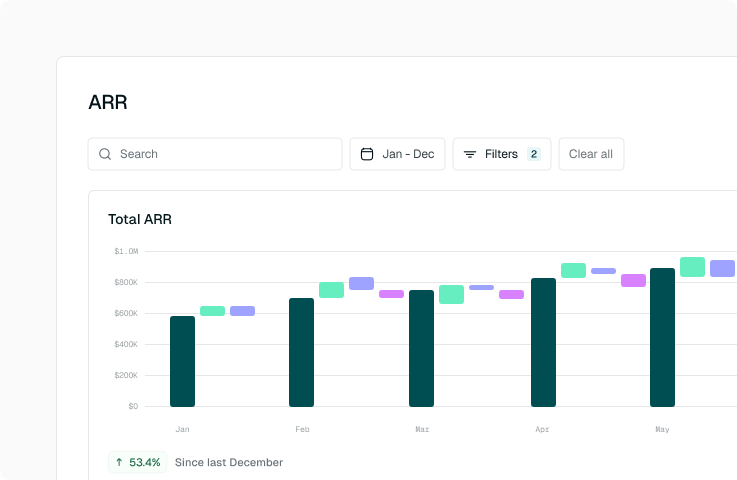
Tabs is a revenue automation platform purpose-built for B2B companies managing complex contracts. Founded in 2023, Tabs' core innovation is using AI to read signed contracts directly and extract billing logic automatically, eliminating the manual configuration work that causes billing errors and delays in more traditional platforms.
Where Tabs stands out is its "Commercial Graph" — a unified data layer that consolidates billing terms, ARR, renewal clauses, and customer activity into one system. AI agents then run in the background to handle invoice prep, cash application, revenue recognition, and reconciliation with audit-ready accuracy. Tabs customers report automating over 80% of manual billing and invoicing tasks.
Key features
- Support for all billing models: Subscription, usage-based, metered, milestone, and hybrid pricing structures handled out of the box
- Collections agents and automations: Monitors due dates and automatically matches and reconciles payments; flags overdue accounts for follow-up
- ASC 606 revenue recognition: Automated GAAP-compliant recognition that updates in real time when contract amendments or add-ons occur
- Real-time AR reporting: Live visibility into AR balance, DSO, aging, cash flow trends, and renewal forecasts — no spreadsheet exports needed
- ERP and CRM integrations: Syncs with Salesforce, HubSpot, NetSuite, and other major platforms via developer-friendly APIs
Pros
- Handles the full contract-to-cash cycle in one platform, including revenue recognition, which is often a separate tool purchase
- Strong momentum: 5x ARR growth in the past year and backing from a top-tier VC
- Automatic invoice adjustments when contracts are amended, reducing billing disputes downstream
Cons
- Newer platform with a shorter track record than incumbents
- Initial setup requires connecting contract storage systems, which can take effort for companies with messy or inconsistent repositories
- Less suitable for high-volume self-serve billing where contracts aren't negotiated individually
- Pricing is not publicly disclosed, which makes initial budget planning harder
Best for
- B2B SaaS, AI, and infrastructure companies with custom contracts, non-standard pricing, and frequent mid-cycle amendments
- Finance teams spending significant time manually interpreting contracts to produce invoices
- Companies that need billing, AR, and ASC 606 revenue recognition in one system without a separate RevRec tool
- Fast-growing companies scaling invoice volume faster than they can hire finance headcount
Pricing
Custom. Contact Tabs for a quote based on your invoice volume, contract complexity, and required modules.
3. Monk
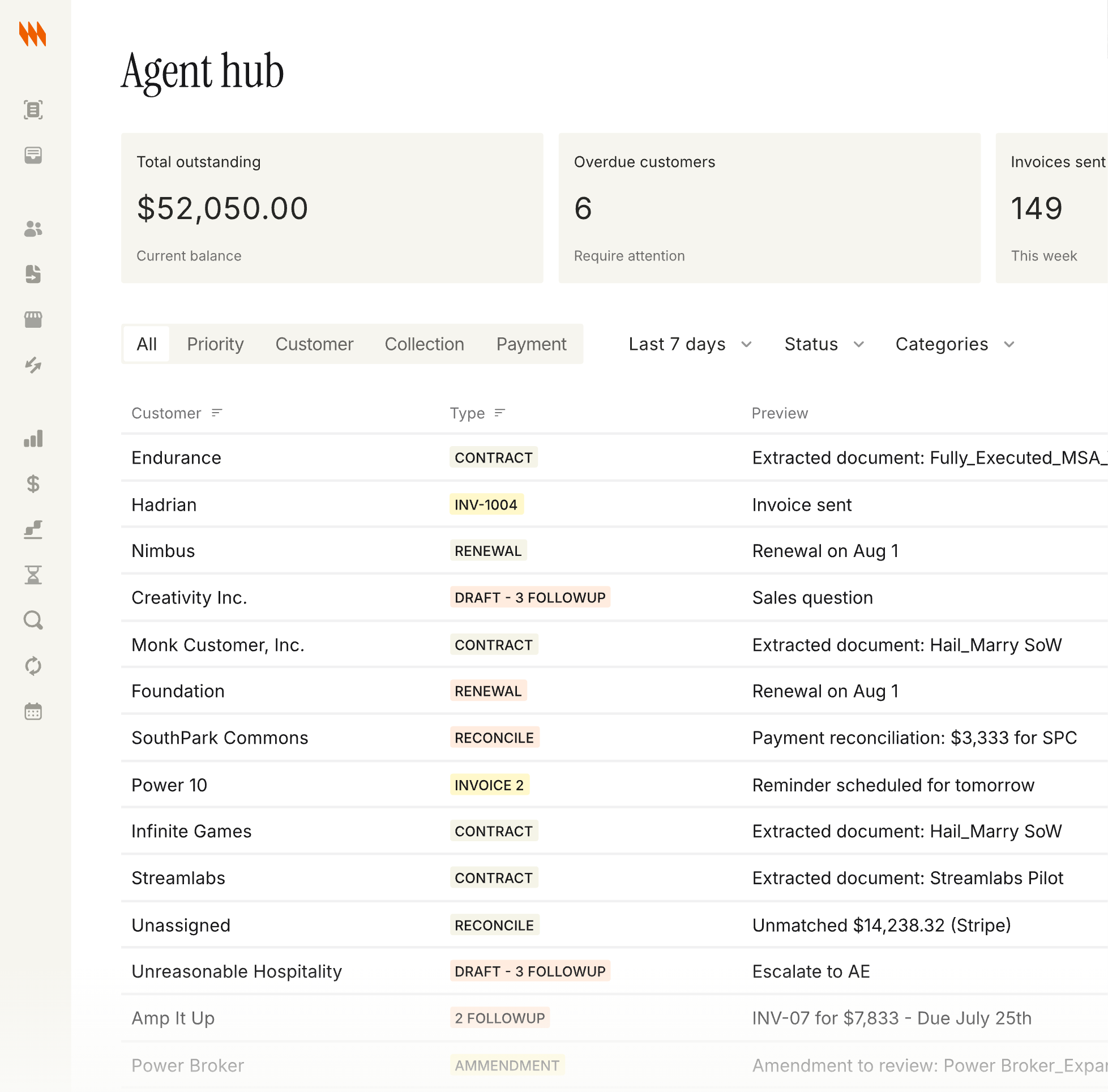
Monk is an AI-native accounts receivable platform founded in 2024 in New York, purpose-built to automate the hard parts of collections that standard dunning tools skip over. In April 2026 it raised a $25M Series A co-led by Footwork and Acrew Capital — bringing total funding to $29M — on the back of documented customer outcomes: an average 40% reduction in DSO, 25+ hours per month saved for AR teams, and a 24% higher collections response rate compared to traditional automated follow-ups.
What differentiates Monk from rule-based dunning tools is its agentic approach. When a payment is late, Monk doesn't just send another templated email. Its AI agents can answer customer questions about invoice line items, upload documents directly into a customer's specific procurement portal, handle PO mismatches, and navigate the W-9 and AP onboarding edge cases that typically require human intervention. Monk currently handles over $1 billion in AR and deploys with a median onboarding time of three days.
Key features
- Intelligent collections: AI agents engage customers via email or voice, answer invoice questions, upload documents to procurement portals, and handle edge cases autonomously — not just reminders
- Contract-to-cash automation: Processes contracts, generates invoices, tracks payment status, and reconciles incoming cash end to end
- Cash application: Matches payments to open invoices in real time across Stripe, HubSpot, QuickBooks, NetSuite, and Salesforce
- Real-time DSO and cash flow reporting: Live dashboards with aging, cashflow projections, and complete revenue view
- Audit logs: Full human-AI action history for every collection interaction, giving finance teams traceability and compliance coverage
Pros
- Handles the edge cases (portal logins, PO mismatches, document uploads) that most AR tools leave to humans
- Fast to deploy: median 3-day go-live with no engineering resource required from the customer's side
- No revenue-share pricing, volume-based pricing means costs scale with your operations, not a percentage of what you collect
- Proven outcomes: customers report a 40% average DSO reduction and some have seen a 122% increase in cash on hand in their first month
Cons
- Collections-first focus means it's less suited if you also need to overhaul your billing configuration, quoting, or revenue recognition workflows
- Very recently founded (2024) — extensive long-term enterprise track record is still being built
- Pricing requires a demo conversation to unlock, which adds friction for teams doing early-stage budget comparisons
Best for
- B2B SaaS, AI, and tech companies with enterprise customers who have complex procurement processes
- PE/VC-backed portfolio companies that need measurable DSO reduction quickly without a long implementation
- AR teams spending 20+ hours per week on manual follow-up, portal navigation, and collections edge cases
- Companies whose billing setup is already solid and want a dedicated, intelligent layer on top for collections
Pricing
Volume-based pricing that scales with your business — not a percentage of revenue. Specific tiers are not publicly disclosed. Book a demo at monk.com for a custom quote.
4. Chargebee
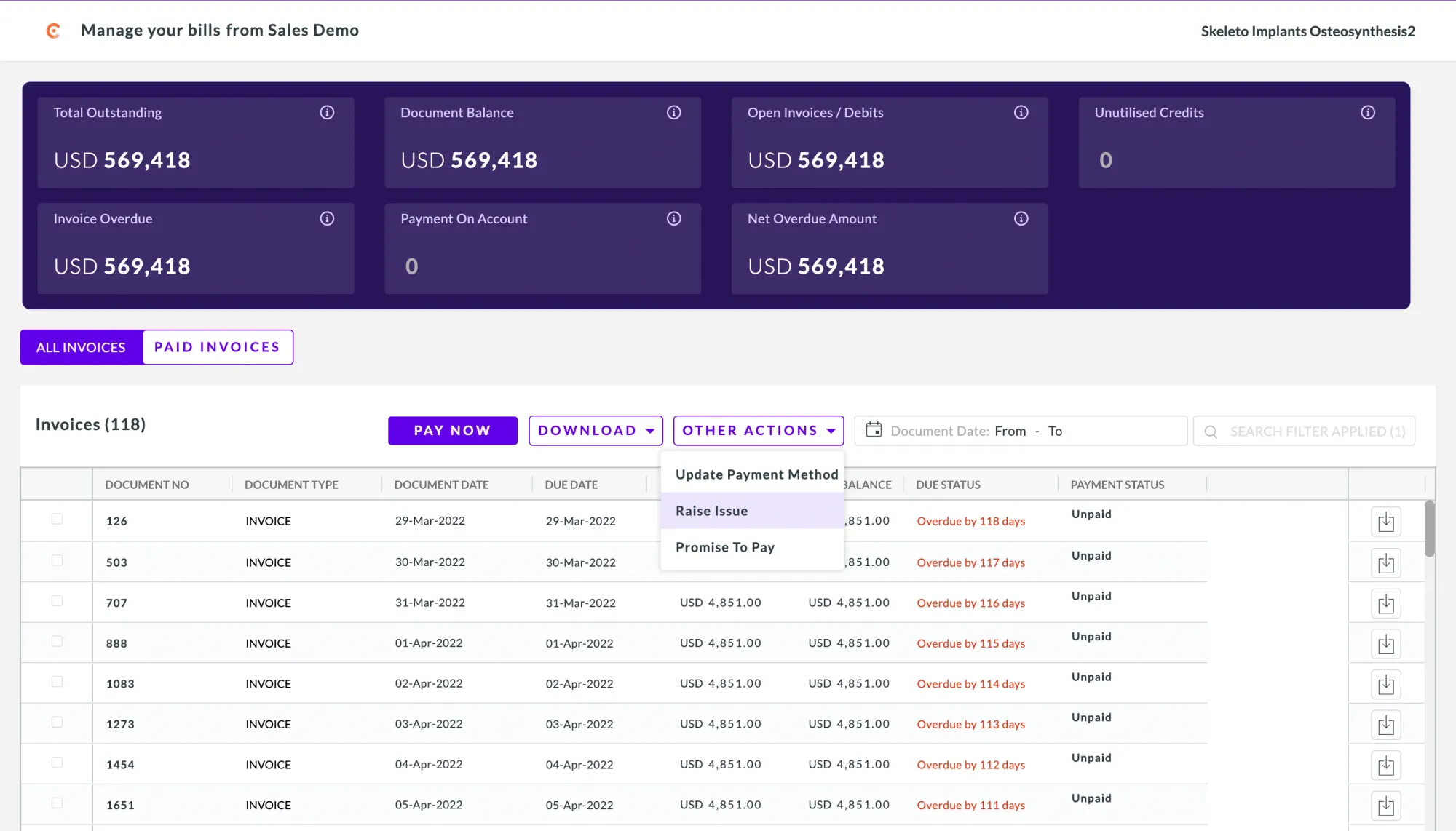
Chargebee is one of the most established subscription billing platforms on the market. For media and ecommerce companies running primarily seat-based or fixed-fee recurring models, it remains a strong default choice. Its AR capabilities come through dunning management, payment retry logic, and revenue recognition features, and it handles international billing, multi-currency invoicing, and tax compliance exceptionally well.
That said, Chargebee's position in this comparison comes with an important caveat: usage-based billing is a bolt-on feature, not a core capability. If your pricing model involves real-time event metering, multi-dimensional usage tiers, or complex consumption logic, Chargebee's batch-based metering will show its limitations.
Its 0.75% overage fee also makes it increasingly expensive as billing volume scales, a structural cost that doesn't exist on flat-rate platforms like Alguna.
Key features
- Subscription management: Full lifecycle management of plans, trials, upgrades, downgrades, and cancellations
- Dunning automation: Configurable payment retry logic and automated follow-up sequences for failed payments
- Revenue recognition: Automated GAAP-compliant deferred revenue and recognition schedules
- International billing: Multi-currency support, localized tax compliance (VAT and GST), and regional payment methods
- No-code pricing tests: Pricing Table feature for running pricing experiments without engineering changes
- Integration marketplace: Broad library of connectors to CRMs, ERPs, and accounting tools
Pros
- Mature platform with a large integration ecosystem and strong documentation
- Excellent international tax and multi-currency support — a real advantage for companies billing across regions
- No-code plan configuration and pricing experimentation is genuinely useful for growth teams
- Strong customer support and onboarding resources
Cons
- Usage billing is a bolt-on feature; metering is batch-based rather than real-time, creating reconciliation lag for consumption-heavy businesses
- The 0.75% overage fee on billings above plan limit makes cost unpredictable and potentially significant at scale
- Collections automation is limited compared to dedicated AR tools
- Interface feels dated compared to newer platforms
Best for
- Subscription-first SaaS companies with seat-based or fixed recurring pricing
- Companies with significant international billing and tax compliance requirements
- Teams already invested in the Chargebee ecosystem that want to add light usage components without switching platforms
Pricing
$599/month for up to $100K in monthly billings, plus 0.75% on overages. Enterprise pricing available on request.
5. HighRadius
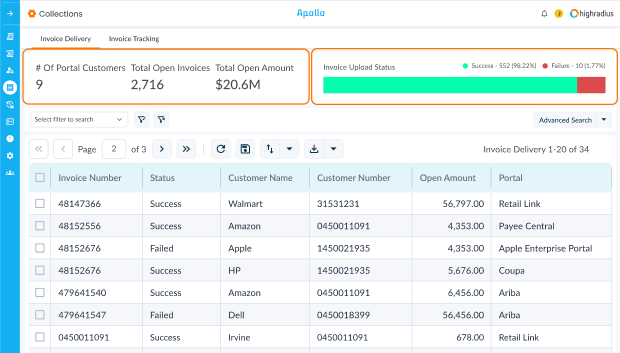
HighRadius is the enterprise-grade option in this category. Named a Gartner Magic Quadrant Leader for Invoice-to-Cash Applications for three consecutive years, it serves mostly large enterprises.
Key features
- Autonomous cash application: AI-powered matching that processes payments with 90%+ straight-through rates across complex remittance formats
- Predictive collections: Machine learning models that identify at-risk accounts before they become problems
- Credit management: Real-time credit risk scoring and limit management with automated monitoring
- Deductions and dispute management: Automated identification, coding, and resolution of short payments and billing disputes
- Treasury and cash forecasting: Real-time visibility into cash position and short-term liquidity across global entities
- Outcome-based pricing: Charges only when AI agents deliver measurable improvements against mutually agreed KPIs
Pros
- The most comprehensive AR automation suite on the market for large enterprises
- Proven at scale: up to 68% DSO reduction and 40% productivity improvement across 1,300+ customers
- Outcome-based pricing aligns incentives so HighRadius only gets paid when it delivers results
- Gartner Magic Quadrant leadership provides third-party validation relevant to large enterprise procurement
Cons
- 3–6 month implementation timeline delays time-to-value significantly
- Complexity and cost are prohibitive for mid-market and growth-stage companies
- Requires significant internal IT resources to deploy and maintain
Best for
- Large enterprises with global AR operations, multiple entities, and high transaction volumes
- Companies managing complex deductions, disputes, and multi-currency collections at significant scale
- Finance leaders who need treasury-grade visibility into cash flow alongside full AR automation
- Organizations where a Gartner-validated vendor is required as part of enterprise procurement
Pricing
Custom enterprise contracts. Contact HighRadius for a detailed proposal.
How to evaluate an AI-driven AR platform for your business
Picking the right platform isn't about finding the one with the longest feature list. It's about finding the tool that fits your specific revenue model, team size, and operational maturity. Here's how to think through the decision:
1. Start with your billing model
The single most important filter is whether the platform was built for your pricing model. If you run usage-based or hybrid billing, you need a platform with real-time metering at its core — not one that processes usage in batches at month-end. If you run simple seat-based subscriptions, the metering question matters less.
2. Define your core DSO problem
Are you struggling because invoices go out late (a billing workflow problem)? Because customers aren't paying on time (a collections and dunning problem)? Because cash isn't being matched to invoices accurately (a cash application problem)? Different platforms solve different parts of the problem. Understand yours before you evaluate.
3. Assess integration requirements
The best AR platform in the world won't deliver value if it can't connect to your CRM, billing system, and accounting software. Map your current stack before you evaluate. Look for platforms with native, two-way integrations — not one-way CSV exports.
4. Consider your team's capacity
Enterprise platforms like HighRadius require dedicated implementation resources and months of setup. Leaner platforms like Alguna or Gaviti are designed for teams that need to be operational quickly. Be honest about what your finance and engineering teams can realistically take on.
5. Evaluate pricing model alignment
Percentage-of-revenue or per-transaction pricing can look affordable in your seed stage and become a significant cost as you scale. Flat-rate platforms with no revenue-share component give you predictable unit economics.
6. Look for a path to a single source of truth
The most painful DSO problems often come from data living in multiple systems — contracts in DocuSign, pricing in Salesforce, invoices in Stripe, and payments in your bank feed. Platforms that unify more of that data in one place reduce the operational overhead and the errors that come from manual reconciliation.
7. Ask for a DSO benchmark
Reputable platforms publish outcome data from their customer base. Tesorio reports 33-day average DSO reductions. HighRadius reports up to 68% DSO improvements. If a platform can't point you to documented customer outcomes, that's worth noting.
Frequently asked questions about AI-driven AR platforms
What is DSO and why does it matter for SaaS companies?
DSO (Days Sales Outstanding) measures how long it takes your company to collect cash after issuing an invoice. For SaaS companies, a high DSO means revenue is sitting in accounts receivable instead of your bank account, limiting your ability to invest in growth, hire, or hit cash flow targets. AI-driven AR platforms are specifically designed to reduce DSO by automating the invoice-to-cash process.
What's the difference between a billing platform and an AR platform?
A billing platform manages how you generate and send invoices. An AR platform manages what happens after the invoice goes out, collections, reminders, cash application, and reconciliation. Some platforms (like Alguna) cover both ends of the process in a single tool. Others specialize in one side. For companies that want to reduce the number of tools in their stack, an integrated platform is worth prioritizing.
How much can AI-driven AR really reduce DSO?
Results vary by platform, billing model, and baseline DSO. Published benchmarks suggest AR automation platforms deliver DSO improvements of 20-35% on average, per Credit Pulse. Tesorio reports average 33-day reductions. HighRadius reports up to 68% improvements for enterprise customers using full agentic AI workflows.
Is usage-based billing compatible with AR automation?
Yes, but it requires a platform that was built for it. Usage-based billing creates more invoice complexity than flat subscriptions: amounts vary month to month, customers may dispute usage figures, and billing cycle timing is tied to metering data. Platforms like Alguna are designed specifically for this model. General-purpose AR tools often struggle with usage-based invoice reconciliation.
What should I look for in an AR platform if I'm a fast-growing SaaS company?
Prioritize speed of implementation, pricing model transparency, and native integration with your billing and CRM stack. Avoid platforms that require long enterprise implementation timelines — you need to be collecting faster, not spending three months onboarding a new tool. Also look for flat-rate pricing so your AR costs don't scale disproportionately with revenue.
Do I need a dedicated AR platform if I already use Stripe?
Stripe is a payment processor and provides basic invoice and dunning capabilities. But it wasn't designed for complex B2B subscription billing, AR analytics, DSO management, or collections workflow automation. As companies scale, they typically outgrow Stripe's native AR capabilities and need a purpose-built platform layered on top — or a billing-plus-AR platform like Alguna that replaces the need for Stripe as the primary billing system.
How long does it take to implement an AI-driven AR platform?Implementation timelines vary significantly. Enterprise platforms like HighRadius typically require 3-6 months. Mid-market platforms like Tesorio and Gaviti are generally live in weeks. Purpose-built SaaS-focused platforms like Alguna are designed for fast onboarding — many customers are live and billing within days of starting.
The right AR platform is the one that fits how you bill
Choosing an AI-driven AR platform isn't a binary decision between the biggest brand and the newest startup. It's about finding the tool that was built for your revenue model, your team's capacity, and the specific DSO problem you're trying to solve.
If you're running usage-based or hybrid billing and you want quoting, billing, and AR in one place — without transaction fees, without a six-month implementation, and without stitching together five separate tools — Alguna was built for exactly that. "With Alguna, we're more confident in our operations, onboarding customers much faster, and we've even unlocked the ability to support self-service accounts that used to be too labor-intensive to manage," said Adam Liska, Co-founder and CEO at Glyphic AI.
If you're spending too much time chasing invoices and not enough time on the deals that grow your business, it's worth seeing what a modern quote-to-revenue platform looks like in practice.
Book your personalized demo with Alguna's team →