If you're looking for Sequence Billing alternatives, it's likely you need more capabilities on the CPQ side and a more flexible billing engine that can handle edge cases without breaking.
In this guide, we break down Sequence Billing in plain terms, compare Sequence and Alguna head to head, and cover six alternatives you should have on your shortlist before you commit.
The goal is simple: Help you pick the platform that scales with how you actually sell and bill.
What is Sequence Billing?
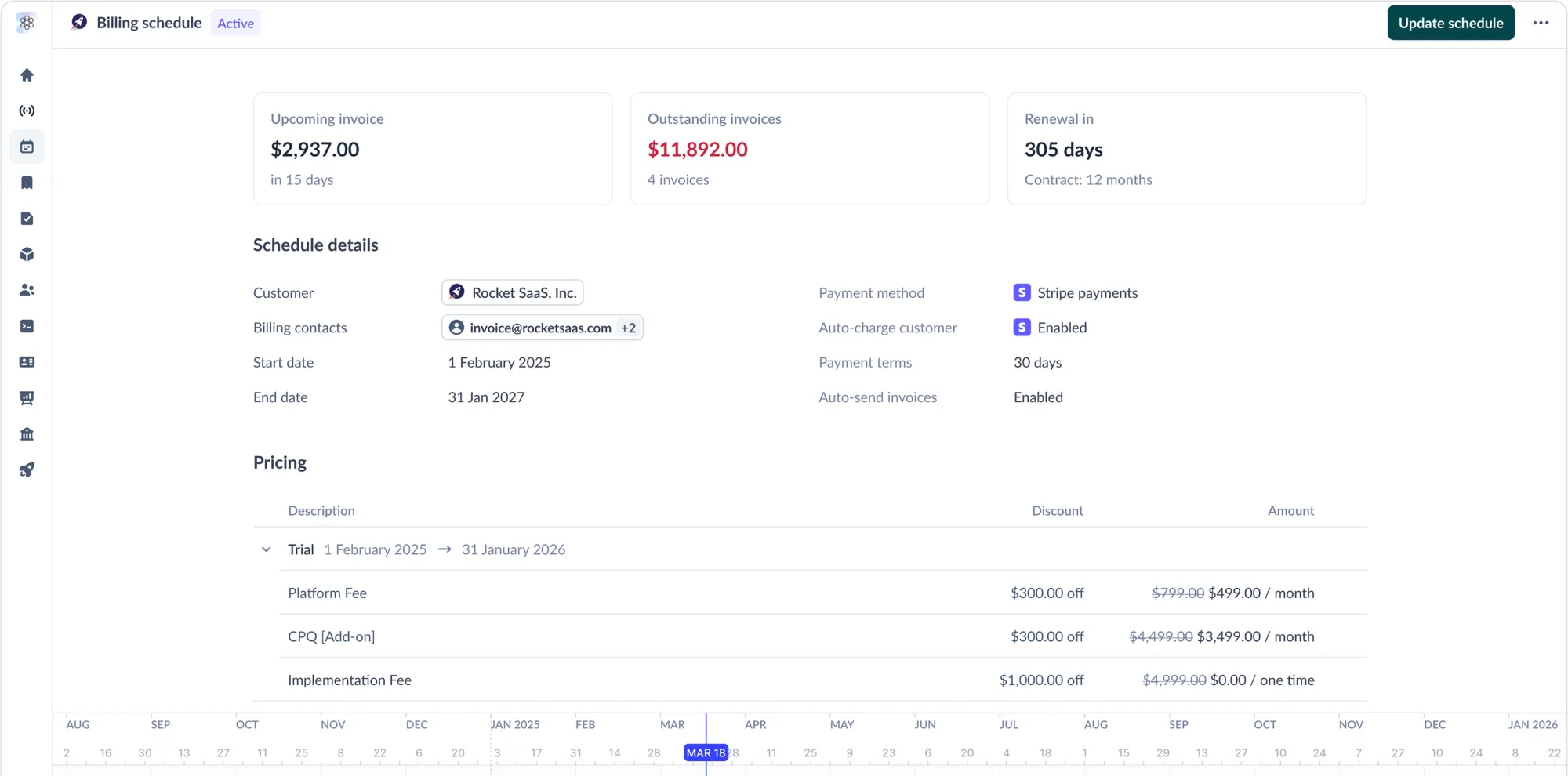
Sequence is a quote-to-revenue platform aimed at B2B SaaS finance teams. Sequence's billing engine turns signed contracts and usage data into automated invoices, handles recurring and consumption charges, manages proration and minimums, and feeds revenue recognition.
Sequence pairs that engine with a configure-price-quote tool, accounts receivable automation, and an ASC 606 revenue recognition module, so the same system can run the full motion from quote to cash.
It helps to understand where Sequence billing sits in the broader category. Quote-to-cash software covers everything from the moment a deal is quoted through to cash collected and recognized in your ledger.
Billing is the engine in the middle, and it has to handle whatever pricing model you throw at it, including usage-based pricing, seat-based plans, credits, commitments, and the hybrid combinations that have become the norm.
That's the lens we use to compare the platforms below.
6 Sequence billing alternatives: Comparison overview
This table compares Alguna against the leading Sequence billing alternatives at a glance. Below, we'll do a deeper dive into each platform, but this table is the fast way to see where each one fits.
| Platform | Best for | Strengths | Limitations | Pricing |
|---|---|---|---|---|
| Alguna | Scaling SaaS, AI, and fintech teams with complex or usage-based pricing that want an AI AR agent and predictable costs | End-to-end quote-to-cash, no-code CPQ, AI AR agent with an autonomy ladder and guardrails, flat fee with no revenue share | Purpose-built for modern pricing, so it is more than teams that only need basic subscriptions require | Flat monthly fee, no revenue share, free tier available |
| Tabs | B2B finance teams that want billing, AR, and rev rec driven straight from signed contracts | AI reads contract terms into billing automatically, near-zero implementation, native usage and hybrid support | Sits downstream of CRM and CPQ, so it is not a quoting tool, public pricing is not listed | Custom pricing, contact sales |
| Orb | Engineering-led AI and infrastructure companies that need precise, high-volume usage metering | Raw-event metering at huge scale, SQL-defined metrics, pricing simulation, strong developer tooling | Setup needs engineering time, no traditional sales quoting layer, pricing is not public | Usage-based on billings and events plus a platform fee, contact sales |
| Chargebee | Subscription-first B2B SaaS that want a mature, finance-led billing suite with broad integrations | Deep subscription lifecycle management, broad payment gateway support, modular add-ons for CPQ and rev rec | Revenue-based fees that scale with growth, modules priced separately, real-time usage is a weaker spot | Free Starter, Performance at $599/month, Enterprise custom, plus 0.75% overage |
| Maxio | Finance teams at growing B2B SaaS that need billing, revenue recognition, and SaaS metrics in one place | Strong revenue recognition and reporting, mature subscription billing, GAAP and IFRS support | Steep learning curve, geared to subscriptions over real-time AI usage, costs rise with billed volume | Grow at $599/month up to $100K monthly billings, Scale quote-only, free sandbox |
| Zuora | Large enterprises with complex, multi-product subscription and usage billing and heavy compliance needs | Billing at massive scale, strong rev rec and audit trails, deep ERP integration, leading subscription CPQ | Long, costly implementation, high total cost of ownership, overkill for simple models | Custom, quote-based, no public pricing or free tier |
Sequence billing alternatives: In-depth guide
Alguna

Alguna is an AI-native, end-to-end revenue automation platform built for modern SaaS, AI, and fintech companies. Rather than bolting AI onto a legacy billing tool, it unifies no-code CPQ, billing, usage metering, invoicing, and revenue recognition in one system, and adds an accounts receivable AI agent on top. The result is a single source of truth for revenue, from the first quote through to cash collected and recognized.
What sets Alguna apart for teams evaluating Sequence is how it treats collections and how it prices. Finance teams work out of a single workspace called Control Tower, and the accounts receivable AI agent handles the chasing within guardrails you set. As Shane Curran, CEO at Evervault, put it: "Alguna enables complex usage-based billing for us in a way that other products can't."
Key features
- No-code, AI-powered CPQ that lets reps configure any type of quotem including usage, hybrid, outcome-based, and multi-entity deals without engineering on every quote. For existing contracts, simply use the Contracts AI feature to extract terms and feed into the billing engine.
- An AI AR agent with a monitor, suggest, and act autonomy ladder, promise-to-pay capture, dispute detection, configurable personas, playbooks and cadences, and approval thresholds, so finance supervises collections rather than running them by hand.
- A billing engine that can handle anything, whether it's subscriptions, seats, usage, outcomes, or hybrid plans
- Built-in revenue recognition that keep what you sold, what you billed, and what you recognized in sync under ASC 606.
- Native Salesforce and HubSpot integrations, no-code connectors to finance and engineering tools, and SOC 2 compliance for enterprise security reviews.
- API-first means you can feed any data into Alunga
Pros
- Modular, API-first platform built to handle millions of subscribers, complex multi-product pricing, and global statutory requirements, with separate products for billing, revenue, collections, CPQ, and analytics.
- Handles the hard consumption, hybrid, and outcome-based models that trip up legacy tools
- An AI agent that takes real work off accounts receivable, not just automated reminder emails
- Flat pricing with no revenue share, so platform costs stay predictable as you scale
- Most teams go live in 2-4 weeks, rather than months
Cons
- Purpose-built for modern pricing, so it is more capability than teams who only need flat subscriptions will use
- As a newer platform, it has a smaller public review footprint than decade-old incumbents
Best for
- Scaling SaaS, AI, and fintech teams whose quote-to-cash workflow is fragmenting across multiple tools
- Finance and revenue operations teams running usage-based, hybrid, or outcome-based pricing
- Companies across multiple entities and regions that need audit-ready revenue recognition
Pricing
Paid plans start at $699 per month. Alguna charges a flat monthly fee with no revenue share, which keeps costs predictable as your billed volume grows.
Walk through your own pricing and contracts, and watch quote-to-cash run end to end with collections handled by an AI agent.
Book a demo
Tabs
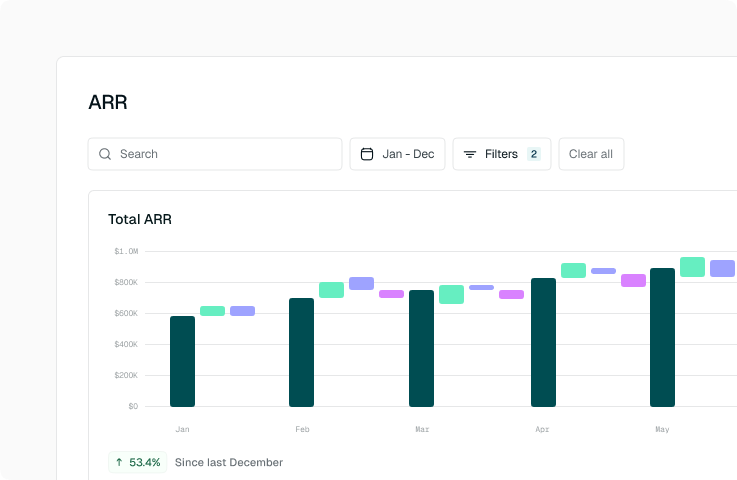
Tabs is a revenue automation platform built for B2B finance teams, and it takes a different angle from billing tools like Sequence. Instead of asking you to model every plan in a rigid product catalog, Tabs uses AI to read billing terms straight from your signed contracts, whether they arrive as PDFs, Word documents, or emails, and turns them into billing schedules and draft invoices. It builds what it calls a commercial graph for each customer, unifying contracts, usage, payments, and terms into one record.
Key features
- Flexible billing for subscription, usage, and hybrid models out of the box, with draft invoices that update automatically when amendments or add-ons change the terms.
- Accounts receivable automation, including invoice delivery to email and AP portals, dunning, and cash application in one place.
- Revenue recognition aligned to ASC 606, with schedules populated from contract terms and service obligations.
- Integrations with payment rails, tax providers, and general ledgers or ERPs such as QuickBooks and NetSuite, plus analytics on aging, DSO, and deferred revenue.
Pros
- Near-zero implementation, since AI builds the billing structure from your contracts
- Handles legacy and one-off contract terms that break rigid catalogs
- Strong fit for reducing days sales outstanding and manual AR work
Cons
- No native CPQ or quoting, so it relies on your CRM and CPQ upstream
- Less focused on the sales-side quoting experience that Sequence emphasizes
- Public pricing is not listed
Best for
- B2B finance teams that want billing, AR, and rev rec driven straight from signed contracts
- Companies with custom, high-variability, or usage-heavy contracts
- Teams that already have a CRM and CPQ and need to operationalize the back half of quote-to-cash
Pricing
Tabs offers a Standard plan with custom pricing based on your needs and transaction volume. There is no public list price, so you need to contact their team for a quote.
Orb (Acquired by Adyen)

Orb is a usage-based billing platform aimed at engineering-led companies, especially AI and infrastructure businesses with very high event volumes. Its core idea is to build billing on raw usage events rather than pre-aggregated totals, which gives teams the freedom to define and redefine billable metrics with custom SQL and to evolve pricing without re-architecting their stack.
Orb is powerful, but it is a different kind of tool than Sequence or Alguna. It is built around the metering and billing engine, not a sales quoting experience, and getting the most out of it usually takes engineering time to wire up ingestion, metrics, and invoicing workflows. For the right team, that depth is the point.
Key features
- High-throughput event ingestion built to handle very large usage volumes with idempotency guarantees for data accuracy.
- Custom SQL billable metrics and dimensional pricing for multi-axis models across regions, tiers, and customer segments.
- Pricing simulation that tests model changes against historical usage before you ship them, which reduces migration risk.
- Built-in invoicing, dunning, and revenue reporting, with native connectors to Salesforce and NetSuite.
- Prepaid credits, contract commits, and threshold billing to keep spend forecastable for larger customers.
Pros
- Excellent for precise, high-volume usage metering
- Flexible, version-controlled pricing changes with simulation before rollout
- Developer-friendly tooling and deep finance integrations
Cons
- Implementation leans on engineering rather than a no-code finance setup
- No traditional sales quoting layer, so it is not a full quote-to-cash replacement on its own
- Pricing is not published and requires a sales conversation
Best for
- AI and infrastructure companies with large, complex usage data
- Engineering-led teams that want full control over metering and pricing logic
- Businesses that have outgrown simpler metered billing and need warehouse-scale accuracy
Pricing
Orb prices on a combination of billings and events, with a platform fee on its higher tiers. Pricing is not listed publicly, so you need to contact their sales team for a quote.
Chargebee
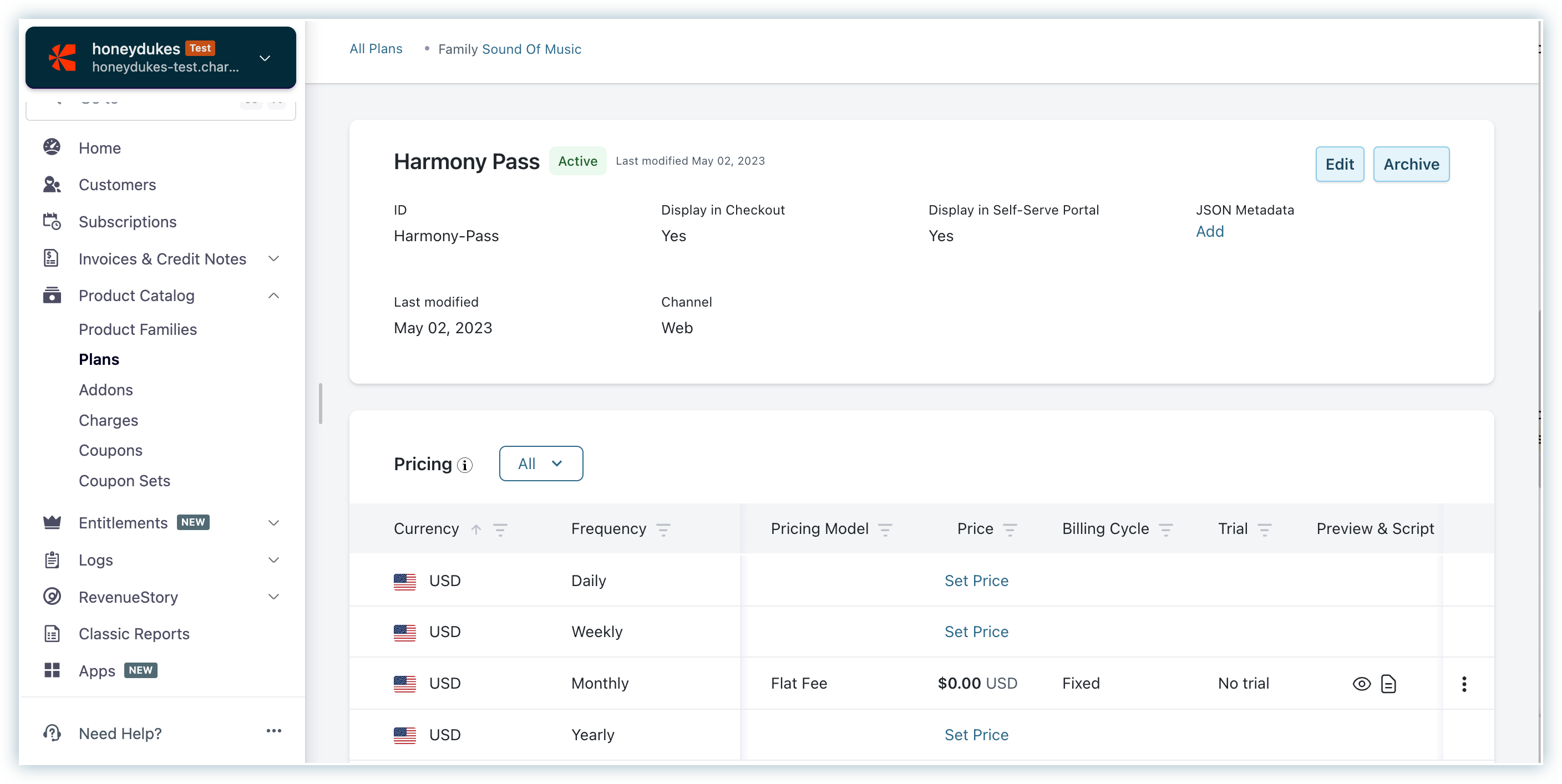
Chargebee is one one of the legacy players when it comes to subscription billing and revenue management platforms. It automates the full recurring-revenue loop, from signup and plan changes through invoicing, dunning, and revenue recognition, and it ships as a set of modules covering billing, CPQ, receivables, retention, and rev rec.
For subscription-first companies with a finance-led buyer, Chargebee is a safe, mature choice with broad payment gateway support and a deep feature set.
The friction tends to show up in CPQ and usage-based abilities as well as cost and structure. Their pricing is revenue-based, modules are sold separately, and several teams have evolved toward real-time usage models faster than a subscription-era platform handles natively.
Key features
- Full subscription lifecycle management, including upgrades, downgrades, pauses, trials, proration, and cancellations.
- A flexible product catalog supporting flat-rate, tiered, usage-based, and hybrid models, plus coupons and discounts.
- Smart dunning and retries to recover failed payments, with a self-service customer portal.
- Add-on modules for CPQ, revenue recognition under ASC 606 and IFRS 15, and retention.
- More than 35 payment gateway integrations and native connectors to major CRMs and accounting tools.
Pros
- Mature, battle-tested platform with a wide feature set
- Broad payment gateway and integration coverage
- Strong fit for classic subscription and recurring revenue models
Cons
- Revenue-based fees and overages that scale as you grow
- Key capabilities like rev rec and retention are separately priced modules
- Real-time, AI-scale usage billing is a weaker spot than newer platforms
Best for
- Subscription-first B2B SaaS with a finance-led buyer
- Teams that need multi-entity accounting and compliant revenue recognition
- Companies that value a long track record and a deep integration ecosystem
Pricing
Chargebee offers a free Starter plan up to $250,000 in cumulative billing, a Performance plan at $599 per month, and custom Enterprise pricing, with a 0.75% overage fee above plan thresholds. Additional modules carry their own pricing.
Maxio
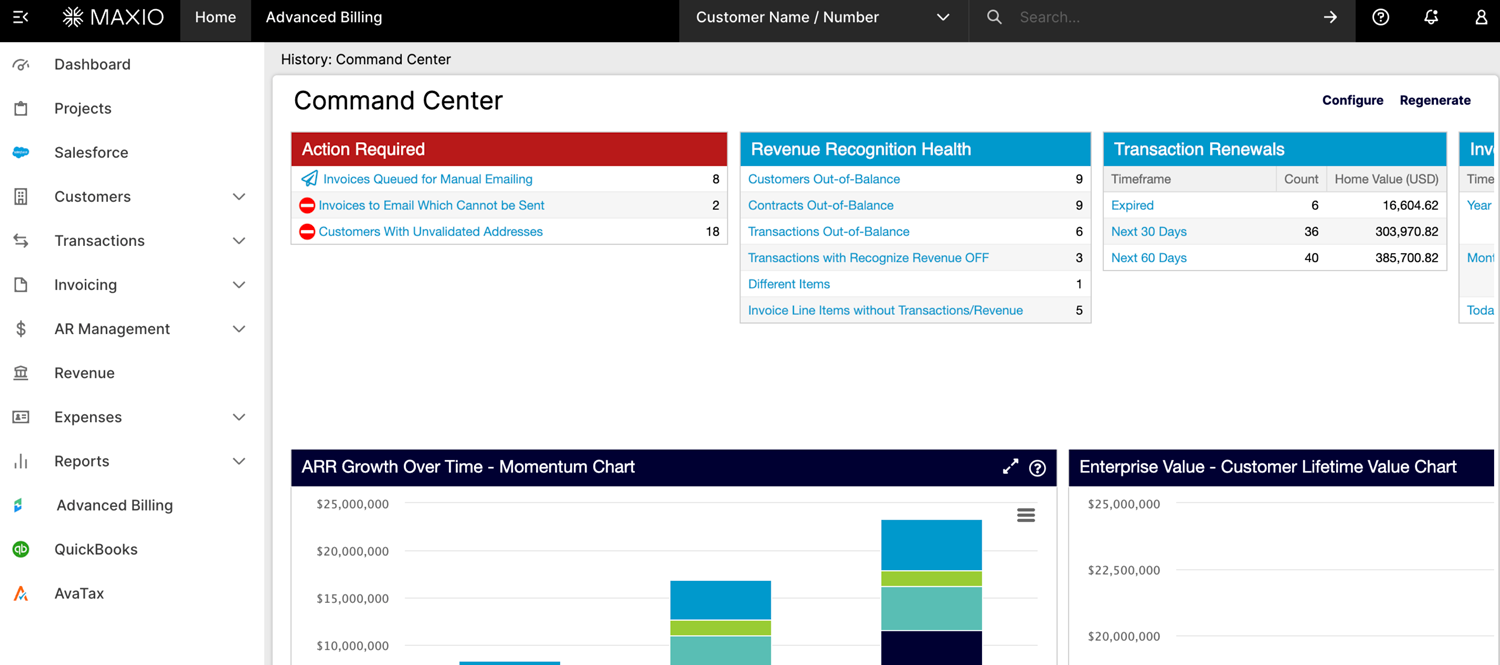
Maxio is a billing and financial operations platform for B2B SaaS, born from the 2022 merger of subscription biller Chargify and revenue-operations specialist SaaSOptics. That heritage shows: Maxio is strongest where billing meets the finance back office, combining subscription and usage billing with revenue recognition and a deep set of SaaS metrics and reporting.
If your priority is clean, audit-ready financials and reporting on top of billing, Maxio is a serious contender. The trade-offs are a steeper learning curve than lighter tools and a design center that favors subscription billing over the real-time, AI-scale usage that newer platforms were built around.
Key features
- Subscription and usage-based billing with flat-rate, tiered, volume, and hybrid models, plus contract-based schedules like milestone or installment billing.
- GAAP and IFRS revenue recognition built into the platform rather than bolted on.
- Automated invoicing, dunning, and accounts receivable management with real-time DSO tracking.
- More than 30 one-click SaaS reports covering ARR, MRR, churn, and revenue waterfalls.
- Multi-entity support and integrations with Salesforce, HubSpot, QuickBooks, and major payment providers.
Pros
- Strong revenue recognition, SaaS metrics, and financial reporting in one place
- Mature subscription billing with flexible contract handling
- Good fit for finance teams that have outgrown spreadsheets and a raw processor
Cons
- Reviewers consistently flag a steep learning curve
- Oriented toward subscriptions more than real-time AI usage
- Costs scale with billed volume above the entry plan
Best for
- Finance-led B2B SaaS that need billing, rev rec, and metrics unified
- Companies preparing for audits or fundraising that value reporting depth
- Teams with established subscription and contract billing needs
Pricing
Maxio's Grow plan is a flat $599 per month up to $100,000 in monthly billings, with a quote-only Scale plan above that threshold and a free Build sandbox for testing.
Zuora
Zuora is the enterprise incumbent in subscription management and quote-to-cash. For large organizations where billing is a finance and compliance function, Zuora is a proven backbone, and the company has been extending it into AI monetization with an AI pricing simulator and quote-to-cash agents.
The trade-off is weight. Zuora is powerful, but implementations commonly run 6 to 18 months, carry significant professional services costs, and demand ongoing administration. For a scaling SaaS or AI company that wants to move fast, that is a lot of complexity to take on, and it is usually more than teams with straightforward models need. Zuora earns its keep at genuine enterprise scale, not before.
Key features
- Enterprise-grade recurring and usage-based billing that supports one-time, recurring, milestone, and consumption pricing, plus mid-cycle proration and amendments.
- A revenue subledger and ASC 606 revenue recognition built for audit-ready close, feeding clean journal entries into your general ledger.
- Zuora CPQ for subscription quoting, with native Salesforce integration across new business, upsells, and renewals.
- Payment orchestration across 40 or more gateways and 20 or more payment methods, with smart retries to recover failed payments.
- Deep ERP and CRM integrations with SAP, Oracle, NetSuite, and Salesforce, plus multi-entity and multi-currency support for global operations.
Pros
- Handles enormous scale and highly complex, multi-product pricing
- Strong revenue recognition, auditability, and multi-entity governance
- Mature ecosystem and deep enterprise ERP integrations
Cons
- Long, costly implementations measured in months, not days
- High total cost of ownership once services and add-on modules are included
- Overkill for teams with straightforward subscription models
Best for
- Large enterprises with complex, multi-product subscription and usage billing
- Finance teams with global statutory, multi-entity, and heavy compliance needs
- Organizations that can resource a long implementation to get enterprise depth
Pricing
Zuora uses custom, quote-based pricing tied to your transaction volume and the modules you need, with no public list price and no free tier. Plan for meaningful implementation and professional services costs on top of the subscription.
How to evaluate Sequence billing alternatives
The right platform depends less on a feature checklist and more on how you sell, bill, and recognize revenue. As you compare Sequence billing against the alternatives, work through these questions.
- Does it match how you price? If you run usage-based, hybrid, or outcome-based models, confirm the platform handles them natively, with real-time metering feeding billing, rather than as a bolt-on. Expansion matters here too: companies over $50M ARR now generate roughly 60% of new revenue from existing customers, so your billing has to scale cleanly as accounts grow.
- Does it cover the full motion or just one step? A tool that fixes billing but leaves quoting in PDFs and rev rec in spreadsheets just moves the bottleneck. Decide whether you want quote-to-cash in one system or are comfortable stitching point tools together.
- How predictable is the pricing? Percentage-of-revenue and revenue-based platform fees feel small early and grow into a real cost later. Model what each option costs at two and five times your current volume, and compare that against a flat fee.
- Who has to operate it? Some platforms expect engineering to wire up metering and pricing logic, while others are built for finance and revenue operations to run with no code. Match the tool to the team that will actually use it daily.
- How much can AI genuinely take off your plate? Look past the agent branding and ask what the AI actually does without supervision, what guardrails constrain it, and whether you can dial autonomy up as trust builds.
- Will it satisfy your auditors? Check for ASC 606 and IFRS 15 revenue recognition, multi-entity support, and certifications like SOC 2 if you sell to enterprise.
Frequently asked questions
What is the difference between Sequence and Alguna?
Both are AI-native quote-to-revenue platforms that cover CPQ, billing, and revenue recognition. The main differences are collections and pricing. Alguna leads with an accounts receivable AI agent and an autonomy ladder so finance supervises collections rather than running them, and it charges a flat monthly fee with no revenue share. Sequence assesses a platform fee based on your projected billed revenue.
Is Sequence billing only for usage-based pricing?
No. Sequence handles subscriptions, seats, usage, credits, commitments, and hybrid combinations, along with custom contract terms. It is built for sales-led B2B companies with complex deals, not only consumption models.
How does Sequence pricing compare to a flat fee?
Sequence ties its monthly platform fee to your projected billed revenue, so the cost rises as you grow. A flat-fee model like Alguna's keeps platform costs steady regardless of how much you bill, which makes budgeting more predictable at scale. If predictable cost is a priority, it is worth reading how Alguna compares to Hyperline on the flat-fee versus revenue-share question as well.
Which platform is best for AI companies?
It depends on your team. Orb is excellent for engineering-led teams that need high-volume, SQL-defined metering. Alguna and Sequence suit finance and revenue operations teams that want no-code control over usage, hybrid, and outcome-based pricing plus the broader quote-to-cash workflow in one system.
Choose a Sequence billing alternative that scales
Pricing has gotten complicated, and most billing tools can't keep up. Sequence is a good fit for teams that have pretty straightforward pricing and billing needs and are comfortable with revenue-based pricing.
The alternatives each have a clear lane, from Alguna's end-to-end revenue management platform, Tabs operationalizing signed contracts and Orb's engineering-grade metering to Chargebee and Maxio's finance depth, and Zuora's enterprise scale.
If you want the full motion in one system, an AI agent that actually works your receivables, and a flat fee that stays predictable as your revenue climbs, Alguna is built for exactly that.
Bring your trickiest pricing and watch quote-to-cash run end to end, collections included.
Book your personalized demo