Fintech pricing is rarely simple.
You're charging per transaction, percentage of volume, interchange plus, revenue share, platform fees, or a hybrid of all of it. As digital payments and embedded finance scale, that complexity multiplies.
Despite that complexity, many fintech teams still manage pricing in spreadsheets or force complex models into basic subscription billing tools. The result is revenue leakage, slow invoicing, and engineering bottlenecks.
Pricing software that's purpose-built for fintech companies fixes this. It gives finance and product teams the infrastructure to model complex pricing, automate calculations, and scale monetization with confidence.
In this guide, we look at the top pricing software for fintech companies and how you should evaluate the best fit for your pricing model.
🚨 If you're in a time crunch, find the most popular choices for fintech pricing software below.
Alguna is a quote-to-cash platform purpose‑built for fintech with a no‑code CPQ, transaction‑based and tiered pricing, real‑time metering, multi-entity, flexible billing schedules, deep CRM/ERP integrations, global tax compliance, and ASC 606/IFRS 15 revenue recognition.
Maxio suits teams looking for an all‑in‑one financial operations platform with broad pricing support, revenue recognition and self‑serve billing.
Zuora serves growing fintechs and enterprises that require enterprise‑grade subscription and usage billing with multi‑entity and global capabilities.
What is pricing software?
Pricing software is technology that allows companies to design, manage, automate, and optimize how they charge customers.
At a basic level, it replaces spreadsheets and hard-coded pricing logic with structured systems that:
- Define pricing rules
- Calculate charges
- Generate quotes or invoices
- Track usage and financial events
- Sync revenue data into accounting systems
For fintech companies, this is not optional infrastructure. Revenue is often tied directly to financial activity such as transactions, payment volume, balances, or assets under management.
The term “pricing software” is broad. It can refer to different categories of tools depending on what part of the revenue workflow they handle.
In this article, when we refer to “pricing software for fintech companies,” we're specifically focusing on CPQ-driven pricing systems that connect quoting, pricing logic, billing, and revenue automation.
What is pricing software for fintech companies?
Pricing software for fintech companies is a system that helps fintech teams design, manage, automate, and optimize how they charge customers across complex financial products.
Unlike subscription billing software, fintech pricing software supports:
- Transaction based pricing such as per payment, per card swipe, or per API call
- Percentage based fees such as interchange plus or take rates
- Tiered and volume based pricing
- Hybrid pricing models that combine platform fees, usage, and revenue share
- Multi entity and multi currency setups
- Contract level pricing with commitments, ramps, and custom terms
In short, it connects pricing logic to real revenue operations.
Why fintech pricing is uniquely complex
Fintech companies rarely sell simple monthly subscriptions. They price around money movement, credit, risk, compliance, and infrastructure.
That introduces complexity most SaaS pricing tools were not built to handle.
Common fintech pricing scenarios include:
- Interchange plus pricing for card programs
- Percentage of assets under management for wealth platforms
- Revenue share models for embedded finance
- Per transaction fees for payments and lending
- Prepaid balances and wallet based billing
- Multi party splits and partner commissions
According to McKinsey’s 2024 Global Payments Report, global payments revenue surpassed 2 trillion dollars and continues to grow, driven by digital transactions and embedded finance. As transaction volumes increase, pricing accuracy becomes mission critical.
In fintech, even the smallest pricing error can scale across millions of transactions, costing millions of dollars.
What pricing software (actually) does
Pricing software for fintech companies typically handles five core areas:
- Product catalog management
Define pricing models, tiers, fee schedules, and usage rules without engineering bottlenecks. - Real time metering
Track transactions, API calls, balances, assets, or other financial events as they happen. - Contract and deal configuration
Support custom pricing for enterprise clients, including commitments, ramps, and negotiated rates. - Billing and invoicing automation
Generate accurate invoices that reflect complex calculations such as interchange plus or blended take rates. - Revenue reporting and compliance
Ensure alignment with accounting systems and standards such as ASC 606.
The best platforms go beyond billing and offer complete quote-to-cash software, unifying pricing, contracts, invoicing, and revenue recognition in one place.
Who needs pricing software in fintech?
You likely need dedicated pricing software if:
- You operate a payments, lending, banking as a service, or embedded finance product
- Your pricing includes percentages, transaction fees, or revenue share
- You manage custom enterprise contracts
- You support multiple currencies or legal entities
- Your finance team relies on spreadsheets to calculate fees
HighAlpha's 2025 Saas Benchmarks Report report highlighted that usage based and hybrid pricing models continue to expand across both SaaS and fintech, increasing operational complexity for finance teams.
As fintech and SaaS monetization models evolve, tooling must evolve with them.
The risk of not using specialized pricing software
Fintech companies that rely on spreadsheets or rigid billing systems often face:
- Revenue leakage due to calculation errors
- Delayed invoicing and cash flow impact
- Limited visibility into margins by product or segment
- Engineering bottlenecks for pricing updates
- Audit and compliance risks
In financial services, pricing errors are not just operational issues. They can become regulatory issues.
Pricing software vs billing software
It's important to distinguish between SaaS billing software and true fintech pricing software.
Traditional billing tools handle recurring subscriptions well, but they struggle with:
- Interchange calculations
- Real time event ingestion at scale
- Multi party splits
- Blended fee structures
- Dynamic pricing experiments
Fintech pricing software is purpose-built for financial products and transaction heavy environments.
Now, on that note, let's take a look at a today's most popular pricing software for fintech companies.
Alguna: Modern pricing and billing for fintech companies
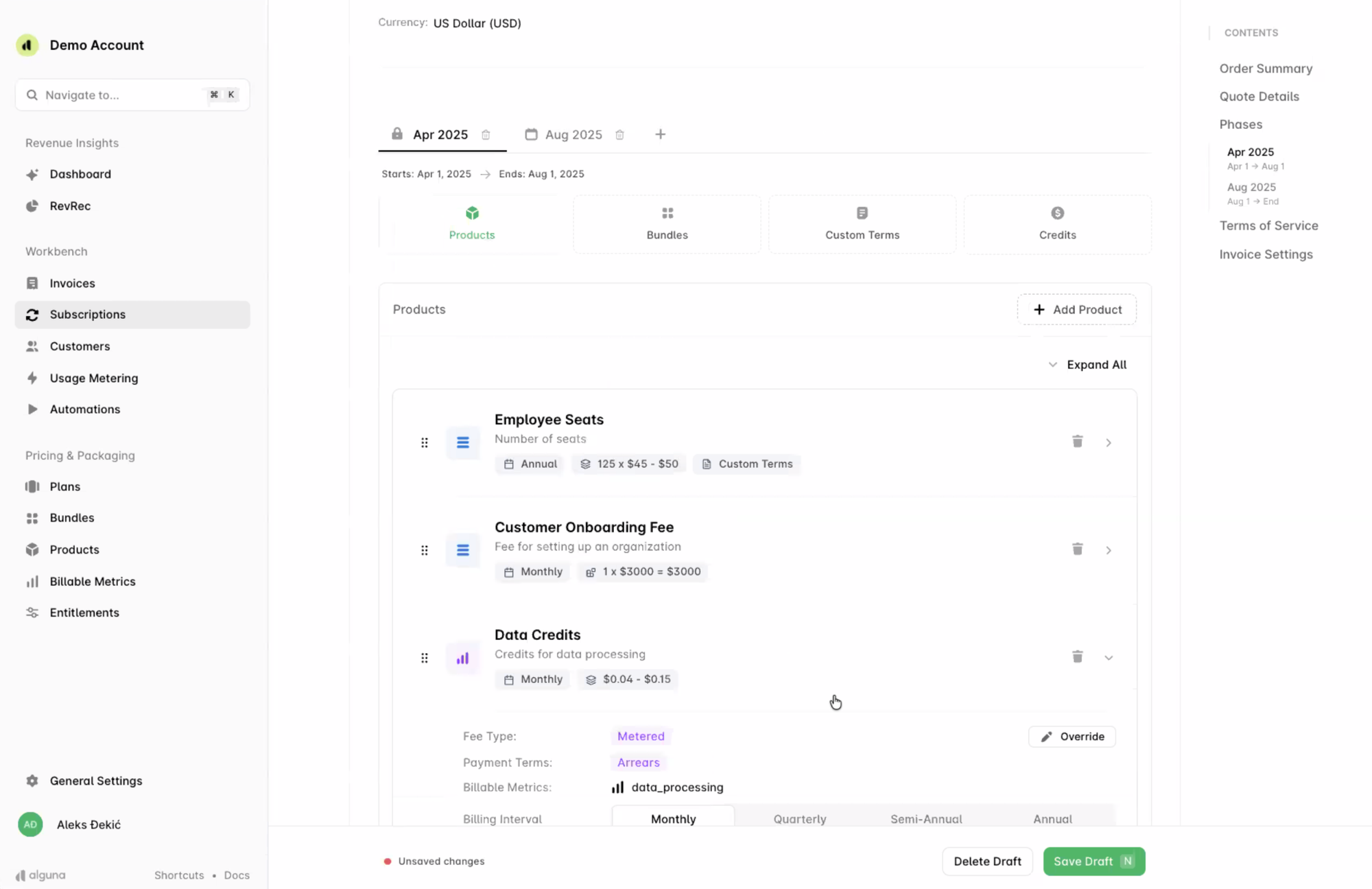
Alguna is built specifically for fintech, SaaS, and AI-native companies monetizing through complex transaction and hybrid pricing models. It combines CPQ, usage metering, billing, revenue recognition, and compliance into one unified system.
Where Alguna stands out:
- Handles transaction-based, tiered, usage-based, percentage, and hybrid pricing
- No-code CPQ for enterprise fintech deals
- Real-time metering for API calls, payments, balances, and volume
- Multi-entity and multi-currency support
- Interchange ++, fx rates, and more
- Built-in tax engine for VAT, GST, and global compliance
- Native integrations with Salesforce, HubSpot, NetSuite, SAP
- Automated revenue recognition
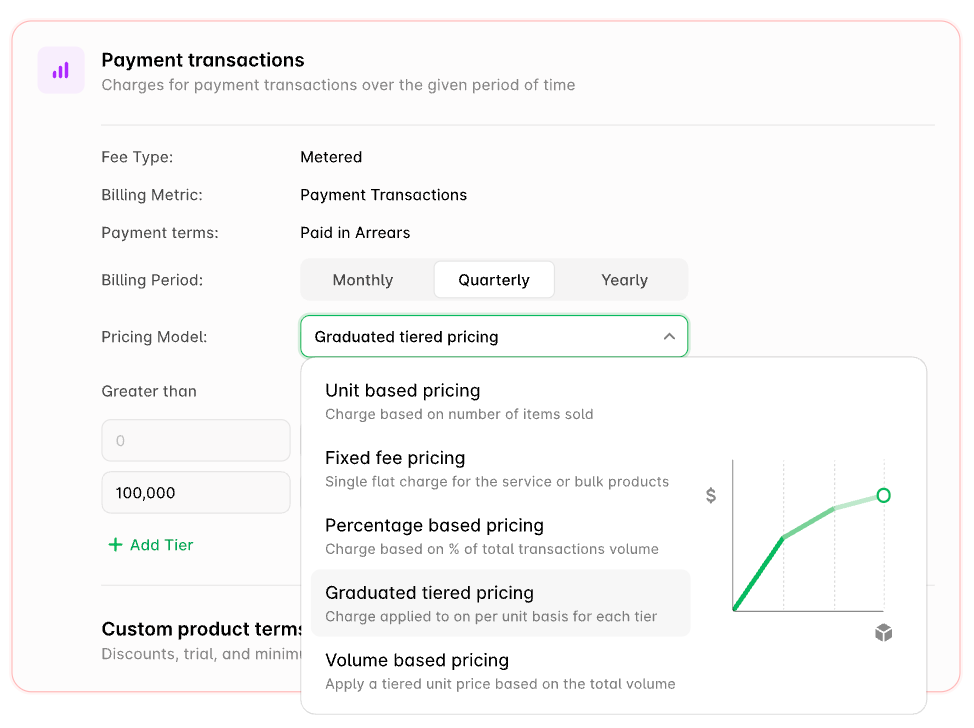
Integrations and compliance: Alguna offers native connectors to Salesforce, HubSpot, NetSuite, SAP and other systems, keeping quotes, invoices and payments in sync. A built‑in tax engine automatically calculates VAT, GST and duties across more than 100 countries, producing audit‑ready reports.
Developer‑first APIs and webhooks expose every function (quoting, billing, invoicing and payments) for extensibility.
Why it works for fintech companies: Fintech pricing often mixes transaction fees with subscription and usage components. Alguna’s configurator allows bundling these charges without code, while its global compliance features simplify cross‑border billing.
For teams building with AI or payment rails, the developer‑first API speeds up integration.
Pricing: Free starter plan. Paid plans start at $699/month. No revenue cut.
See how Alguna models complex transaction, percentage-based, and hybrid pricing in minutes.
Book your personalized demo and walk through your real pricing scenarios.
Zuora: Best for enterprise subscription and usage billing
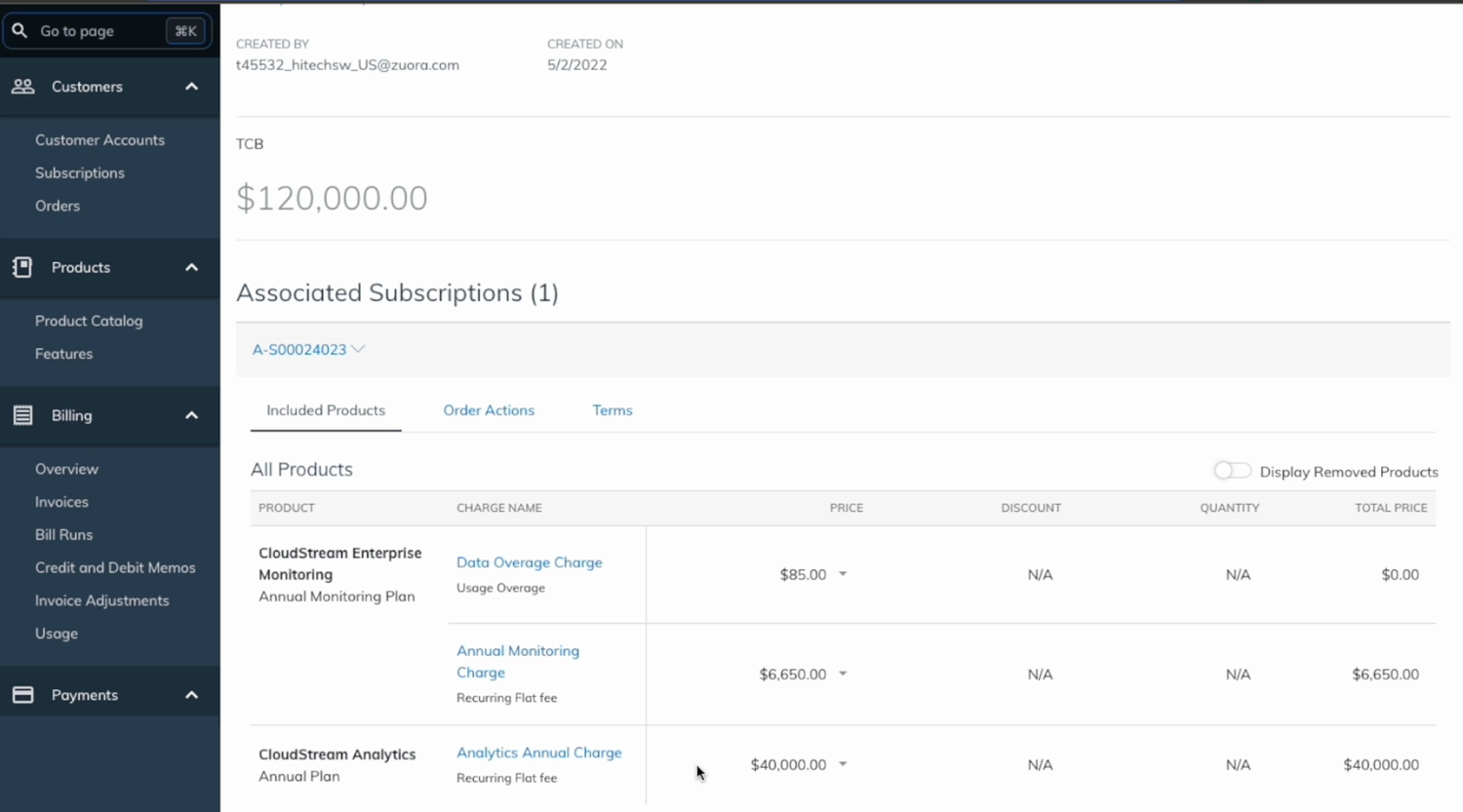
Zuora is a leading pricing and subscription management platform. It supports any mix of recurring, usage‑based or one‑time pricing with a configurable product catalog and rating engine.
The platform unifies quote‑to‑cash, spanning sales, quoting, billing, collections and revenue recognition, and integrates with CRM and ERP systems. Multi‑entity support and advanced revenue recognition make it suitable for global operations.
What stands out:
- Flexible billing engine: Supports recurring, usage‑based and one‑time pricing models through a configurable product catalog.
- Unified quote‑to‑cash: Manages subscription lifecycle, quoting, billing, payments and revenue recognition on one platform.
- Enterprise integrations: Works with Salesforce CPQ, ERP systems and multiple payment gateways for seamless operations.
- Global readiness: Multi‑entity support, multi‑currency billing and advanced revenue recognition enable global compliance.
Why it works for fintech companies:
- Handles complex subscription and transaction models: Fintechs offering payment processing, trading or lending can combine subscription access with transaction‑based and usage‑based fees.
- Scalable quote‑to‑cash: Automates quoting, billing and revenue recognition, which is critical for compliance and scale.
- Global operations: Multi‑entity and multi‑currency capabilities support fintechs expanding across jurisdictions.
- Enterprise‑grade analytics: Provides forecasting and revenue insights needed by rapidly growing fintechs.
Pricing: Zuora’s pricing is tiered and quote‑based. Most companies are looking at minimum $75,000 per year.
Maxio: End‑to‑end billing and financial operations
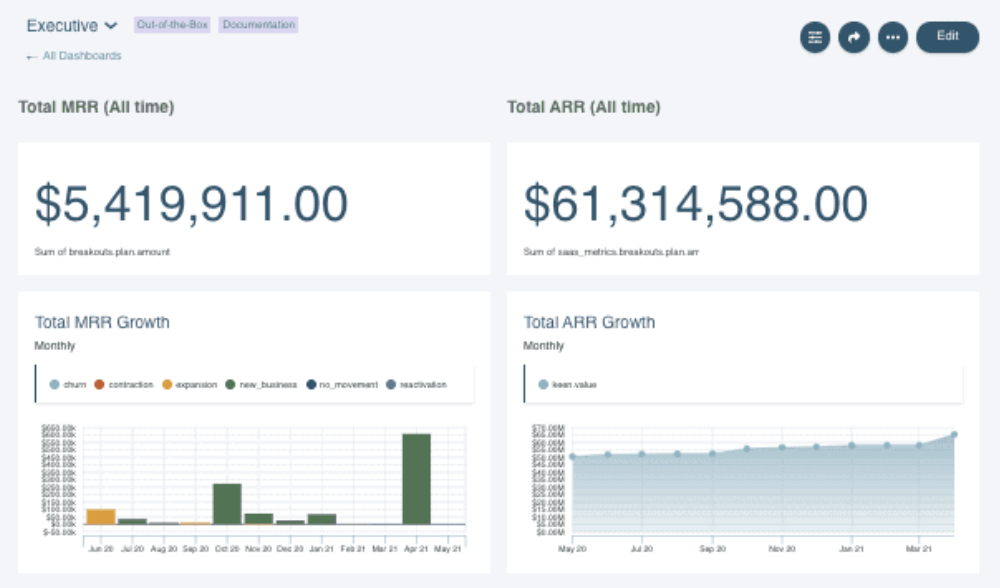
Maxio is an end-to-end billing and financial operations platform designed for B2B SaaS and fintech companies. It combines subscription management, usage-based billing, CPQ, revenue recognition, and accounts receivable into one system.
For companies that want a comprehensive financial operations layer rather than a standalone metering engine, Maxio offers a broad feature set that spans the entire revenue lifecycle.
Where Maxio stands out:
- Broad pricing model support
- Built-in revenue recognition
- Strong financial reporting
- Consolidates billing, tax, payments, and collections
Why it works for fintech: Maxio is ideal for fintech teams that want an all‑in‑one financial operations platform. It pairs robust billing infrastructure with CPQ, revenue recognition and AR management, making it easier to handle complex pricing and compliance requirements.
Pricing: Starts at $599/month for platform plus add-ons for integrations. Additional cost for implementation and customer support.
What to look for in pricing software for fintech companies
When evaluating solutions, focus on:
- Flexibility of pricing logic
- Ability to support percentage based and hybrid models
- Real time usage ingestion
- Multi currency and multi entity support
- Contract level configuration
- Native integrations with accounting and CRM systems
- Scalability for high volume transactions
Ask vendors how they handle edge cases such as refunds, disputes, chargebacks, or mid term pricing changes.
If they cannot answer clearly, it's a red flag.
Choosing the right pricing software
Fintech pricing is inherently complex, and generic subscription billing tools rarely suffice.
That's why platforms like Alguna, Togai, m3ter, Metronome, Maxio and Zenskar enable transaction‑based and usage‑based billing at scale, provide real‑time metering and analytics, and automate invoicing and revenue recognition.
Selecting the right solution depends on your priorities:
- Choose Alguna if you need an end‑to‑end quote‑to‑revenue stack with multi-entity support, deep CRM/ERP integrations, and global tax compliance.
- Consider Zuora if you're a growing fintech or enterprise that require enterprise‑grade subscription with multi‑entity and global capabilities.
- Select Maxio if you require a comprehensive financial operations platform that handles billing, subscriptions, revenue recognition and analytics in one place.
By modeling complex pricing with confidence, fintech companies can reduce revenue leakage, accelerate product launches and provide customers with transparent, compliant billing.
If you are building in payments, lending, banking as a service, wealth tech, or embedded finance, investing in the right pricing infrastructure is not optional. It is foundational.
Let us show you how Alguna handles your exact pricing model, contracts, and revenue workflows in one unified system.
Schedule your personalized demo with our team