If your finance or revenue team is still spending hours reconciling spreadsheets, chasing approvals, and manually generating reports, you're not alone. But you're also leaving money, time, and accuracy on the table.
Revenue automation is changing the way businesses manage, recognize, and report on revenue. Up to 45% of current work activities could be automated using existing technology, with finance functions among the most automatable. And yet, many companies are still running manual processes that are slow, error-prone, and hard to scale.
In this guide, we break down exactly what revenue automation means, how it fits into your broader finance stack, and the practical steps you can take to get started. Whether you're evaluating your first end-to-end revenue automation platform or looking to optimize your existing quote-to-cash process, this guide gives you the foundation you need.
What is revenue automation?
That said, revenue automation is a (very) broad concept, and it typically spans several core areas:
Sales automation: Automating lead scoring, outreach sequences, follow-ups, pipeline management, and CRM updates so sales reps spend more time selling and less time on admin.
Marketing automation: Automatically nurturing leads through email campaigns, retargeting ads, personalized content, and lifecycle triggers based on user behavior.
Billing and payments: Automating invoicing, subscription renewals, dunning management (failed payment recovery), and revenue recognition to reduce churn and billing errors.
Pricing and quoting (CPQ): Configure, price, quote tools that automatically generate accurate proposals and contracts without manual calculation.
Revenue operations (RevOps): Connecting sales, marketing, and customer success data into unified workflows so handoffs are smooth and nothing falls through the cracks.
Forecasting and analytics: Using AI to predict revenue, flag at-risk deals, and surface insights without manual reporting.
Common tools in the space include Salesforce, HubSpot, Stripe, Alguna, Gong, Outreach, Clari, and others.
The goal of revenue automation
The core goal of revenue automation is to make revenue generation more predictable, scalable, and efficient. This is especially important for SaaS and subscription businesses where the customer lifecycle is long and complex.
A well oiled revenue automation system connects data from your CRM, billing platform, ERP, and other sources to create a single, automated revenue workflow. Instead of your team manually pulling data, running calculations, and updating records, the system handles it in real time.
Think of it as the operational backbone for your revenue engine: it ensures accuracy, enforces compliance rules (like ASC 606 and IFRS 15), and gives your team the data they need to make fast, confident decisions.
Revenue automation vs. adjacent concepts
Revenue automation is sometimes confused with related terms.
Here's how to tell them apart:
Each of these concepts has a role to play in a modern finance and revenue stack. Revenue automation, at the highest level, connects and coordinates all of them.
Why revenue automation matters
Manual revenue processes don't just slow your team down, they also introduce risk. A single misapplied recognition rule or miscalculated invoice can result in restatements, compliance issues, and lost customer trust.
Here's what the data tells us:
- PwC research found that AI and automation in finance functions could reduce processing time by up to 70% for routine tasks.
- According to Gartner, finance organizations that have adopted automation report up to 40% lower cost of operations.
- The average company spends nearly 520 hours per year on manual accounting reconciliation — time that automation can give back to strategic work.
For SaaS and subscription businesses especially, the complexity of automated revenue streams makes manual processes unsustainable at scale. With multiple pricing tiers, usage-based billing, and mid-cycle contract changes, the number of revenue recognition calculations grows exponentially with each new customer.
That's what makes automated revenue reporting a competitive necessity.
5 key components of a revenue automation system
A modern automated revenue management system typically includes the following components:
1. Billing and invoicing automation
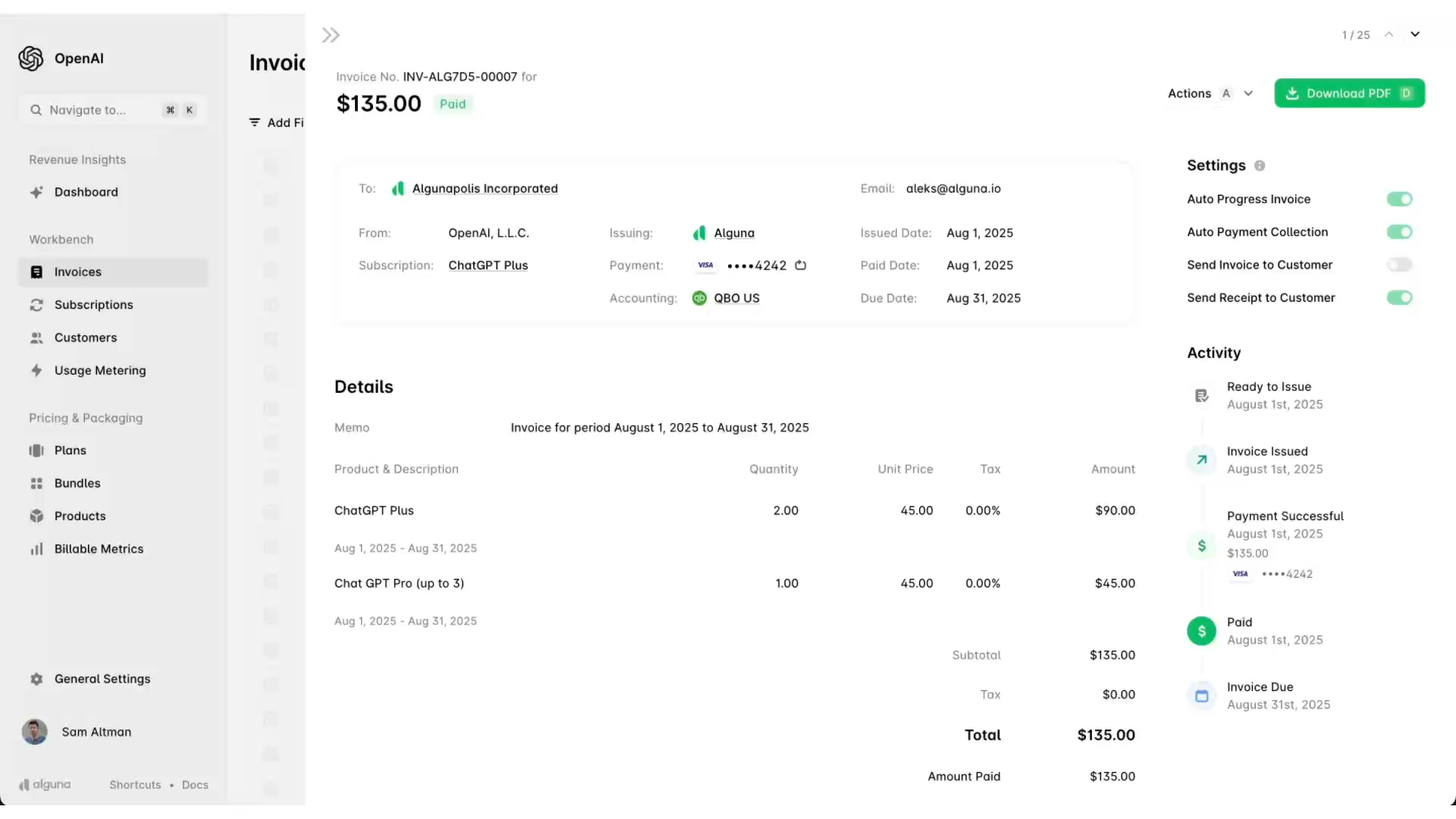
Automatically generates and sends invoices based on contract terms, usage data, or subscription schedules. This eliminates manual billing errors and reduces time-to-invoice.
Platforms like Alguna automate the entire billing workflow, from quote to cash.
2. Revenue recognition automation
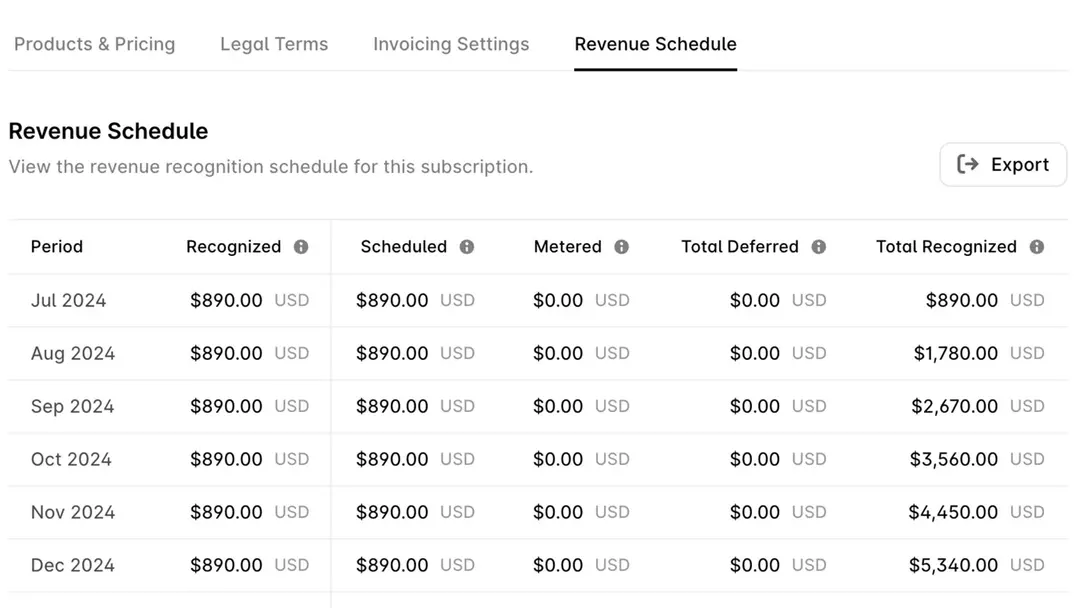
Automatically calculates and schedules revenue recognition in compliance with ASC 606 and IFRS 15. A revenue recognition engine handles deferred revenue, multi-element arrangements, and modifications without manual intervention.
3. Automated revenue reporting
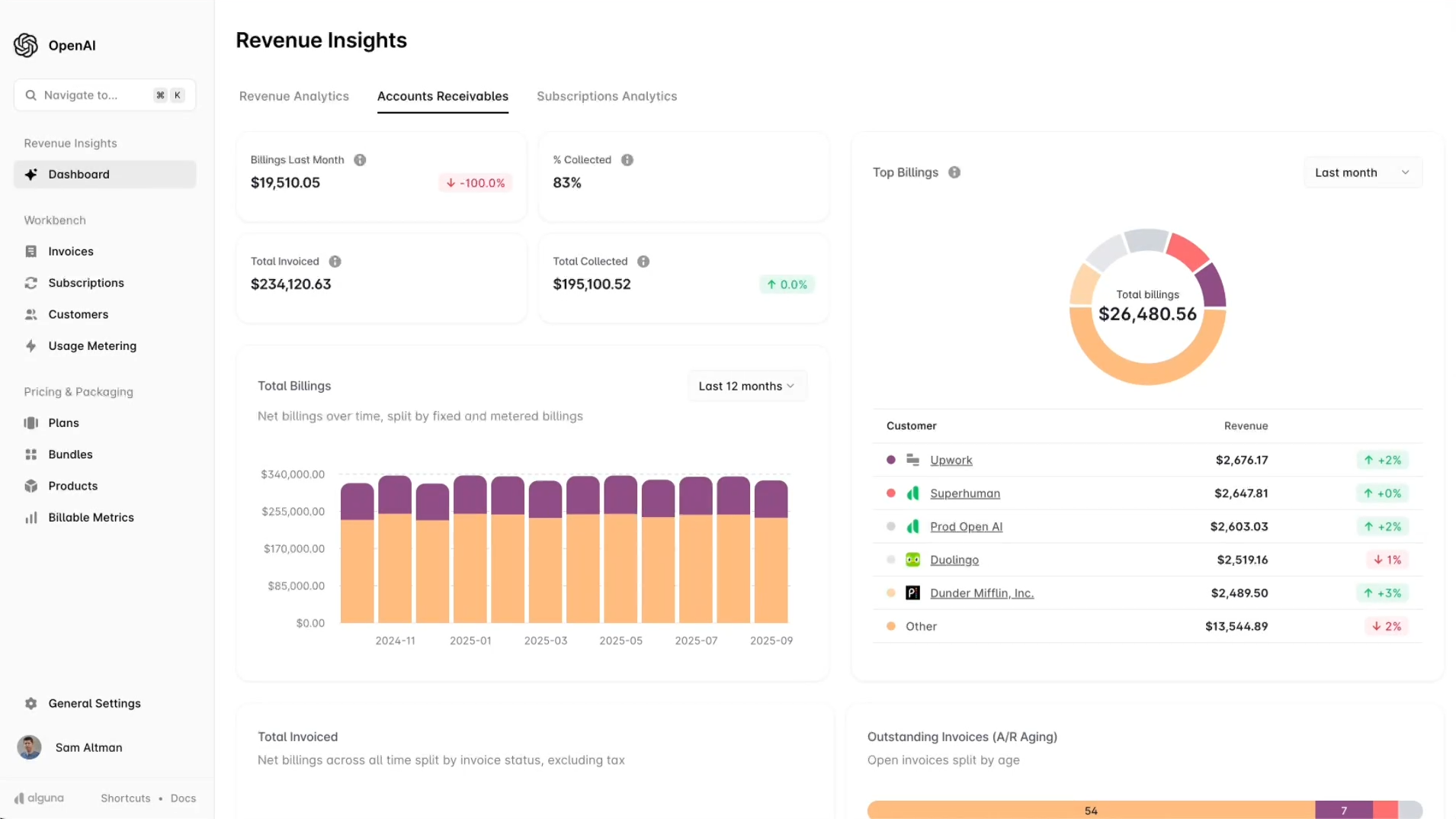
Real-time dashboards and scheduled reports replace the manual spreadsheet cycle. Automated revenue reporting for SaaS teams means your board pack is always accurate and audit-ready, not a weekend project.
4. Revenue forecasting and projection
Automated revenue projection uses historical data, contract information, and pipeline signals to generate accurate forecasts.
With AI revenue automation layered in, these forecasts become more accurate over time as the system learns from patterns in your data.
5. Collections and cash application
Automated systems can match payments to invoices, flag overdue accounts, and trigger follow-up workflows without human involvement. An automated revenue collection system significantly reduces DSO (days sales outstanding) and improves cash flow predictability.
”With Alguna, we’re more confident in our operations, onboarding customers much faster, and we’ve even unlocked the ability to support self-service accounts that used to be too labor-intensive to manage.”
- Adam Liska, Co-founder an CEO at Glyphic
Read the case study
Best practices for revenue automation
Getting value from automation in revenue requires more than just deploying software.
Here are the practices that separate high-performing revenue teams from those still stuck in spreadsheets.
Start with your data architecture
Automation is only as good as the data feeding it. Before you automate anything, audit your data sources: CRM, billing system, ERP, and contract repository. Identify where data is inconsistent, duplicated, or missing. A clean data layer is the foundation of a reliable automated revenue lifecycle management workflow.
Define your revenue recognition policies first
Your automation system will enforce whatever rules you give it. If your revenue recognition policies are unclear or inconsistent, automation will scale those inconsistencies. Work with your accounting team to document your policies under ASC 606 or IFRS 15 before configuring your revenue recognition automation software.
Automate the high-volume, low-complexity work first
Don't try to automate everything at once. Start with the processes that are high volume, rule-based, and low risk. Recurring invoices, standard payment reminders, and routine revenue reports are ideal starting points. Build confidence in the system before tackling more complex scenarios like variable consideration or contract modifications.
Build exception-handling workflows
Even the best automation in revenue management creates exceptions. Design clear workflows for when the system flags an anomaly or can't apply a standard rule.
The goal is to minimize manual effort, not to remove human judgment entirely from complex edge cases.
Monitor, measure, and iterate
Track the impact of your automation using clear metrics: time saved, error rates, days to close, and revenue operations automation ROI. Review these regularly and use them to guide where you invest next.
How to implement revenue automation: A step-by-step guide
Ready to move from manual to automated? Here's a practical implementation roadmap for finance and revenue teams.
- Map your current revenue processes
Before you can automate, you need to understand every step in your current workflow. Document the flow from contract execution to cash receipt, noting every handoff, manual step, and data source. This becomes your automation blueprint.
- Identify automation priorities
Not every process is worth automating. Score each process on two dimensions: volume (how often it happens) and complexity (how rule-based it is). High volume + low complexity = automate first. Low volume + high complexity = automate later or not at all.
- Evaluate revenue automation tools
Look for revenue automation software that integrates natively with your existing stack (CRM, ERP, billing platform). Key questions to ask vendors:
- Does it support your revenue model (subscription, usage-based, milestone-based)?
- How does it handle ASC 606 and IFRS 15 compliance?
- What does the implementation timeline and change management support look like?
- Can it generate automated revenue reporting for your specific metrics?
- Configure your revenue recognition rules
Work with your accounting team to configure your revenue policies in the system. For SaaS businesses, this typically includes subscription revenue schedules, usage-based revenue calculation, and multi-element arrangement allocation.
- Run parallel processing before going live
Before fully switching to automated processes, run the new system in parallel with your existing process for at least one full close cycle. Compare outputs, resolve discrepancies, and build team confidence before cutting over.
- Train your team and set governance rules
Automation changes workflows, not just software. Train your team on the new system, define who can change configuration settings, and establish a review cadence to catch any issues early. Automated processes in revenue management only stay accurate if they're actively governed.
- Measure and optimize
Track your key metrics before and after go-live: close cycle time, error rates, time spent on reconciliation, and revenue and finance automation ROI. Use these numbers to build the business case for expanding automation to additional processes.
The role of AI in revenue automation
AI and automation are redefining revenue cycle excellence. Beyond rule-based automation, AI adds the ability to detect anomalies, predict outcomes, and surface insights that would be invisible in a manual process.
For example, AI revenue automation can:
- Flag unusual revenue patterns that might indicate a billing error or fraud
- Generate automated revenue projections based on pipeline and historical patterns
- Recommend pricing changes based on usage trends and churn signals
- Power automated AI revenue streams by identifying upsell and expansion opportunities
- Deliver automated insights on revenue performance in plain language
Usage-based revenue automation is one area where AI is making the biggest difference. When revenue depends on consumption, the number of variables involved makes manual calculation nearly impossible at scale. AI-powered systems can handle this complexity while still producing audit-ready output.
According to Forrester, AI-driven finance automation is among the highest-ROI technology investments for mid-market and enterprise companies in 2024 and beyond.
What to look for in revenue automation software
When evaluating revenue automation tools, here are the capabilities that matter most for finance and revenue operations teams:
Getting started with revenue automation
Revenue automation is no longer an enterprise-only investment. As software has matured and pricing has become more accessible, it's now within reach for growing SaaS businesses, professional services firms, and any company that needs to scale revenue without scaling headcount.
The best starting point is a clear-eyed look at where your team spends the most time on manual, repetitive revenue work. That's where automation delivers the fastest ROI and builds the momentum for a broader revenue and finance automation program.
Building a revenue engine that runs with accuracy, speed, and minimal manual intervention is no longer a distant ambition. For modern finance teams, it's the new baseline.
Ready to explore what automated revenue management looks like for your business? See how Alguna helps finance teams automate revenue from quote to close.