If you're still running your billing on spreadsheets, a patchwork of Stripe webhooks, or a legacy platform duct-taped to your CRM, you already know the cost.
Missed overages, manual invoicing errors, collections that drag for weeks, and a finance team that spends half its time reconciling data instead of driving strategy. We all know that AI has reshaped SaaS monetization. Usage-based models. Hybrid contracts. Custom enterprise terms. Self-serve checkout layered on top of sales-led deals.
AI billing automation for SaaS companies don't just collect payments, but intelligently manage the entire quote-to-cash process. In this guide, we compare the leading options, break down their pros and cons, and help you figure out which platform is actually right for where your business is today.
Alguna → Purpose-built billing automation for modern SaaS and AI monetization (hybrid + complex usage-based billing logic without engineering bottlenecks).
Metronome → Built for usage metering at massive scale, but no CPQ or rev rec — you'll need to build around it.
Chargebee → Strong subscription management, lighter on advanced AI logic.
Recurly → Subscription optimization focus, less flexible for multi-model revenue.
Stripe Billing → Excellent developer tooling, but not a full RevOps automation layer.
Zuora → Enterprise legacy strength, but heavier implementation.
What is AI billing automation for SaaS?
AI billing automation for SaaS companies refers to software that uses artificial intelligence and intelligent workflows to manage the full revenue lifecycle, from contract creation and pricing configuration through invoicing, payment collection, revenue recognition, and financial reporting, without requiring manual intervention at each step.
Traditional billing software required finance or RevOps teams to manually translate contract terms into billing configurations, track usage, chase failed payments, and reconcile revenue at month-end.
Modern AI-powered platforms do all of this automatically.
Here are a few terms you'll encounter as you evaluate these tools:
Usage-based billing (UBB)
Also called metered billing or consumption billing, this model charges customers based on how much of your product they actually consume, API calls, compute hours, tokens processed, seats used, etc. It remains the dominant model for AI and infrastructure SaaS.
Hybrid pricing
A combination of a fixed subscription base fee plus variable usage charges. The most common model for AI SaaS companies, as it balances revenue predictability for the vendor with usage flexibility for the buyer.
Quote-to-cash (Q2C)
The full workflow from creating a pricing quote for a prospect, through contract signing, billing configuration, invoicing, payment collection, and revenue recognition. The best AI billing automation platforms handle this entire flow end-to-end.
Revenue recognition (rev rec)
The accounting process of recognizing revenue at the correct time, governed by ASC 606 (US GAAP) and IFRS 15 (international). Critical for SaaS companies preparing for fundraising, audit, or IPO.
Dunning
The automated process of retrying failed payments and sending reminders to customers with overdue invoices. Involuntary churn, customers lost because of payment failures, not dissatisfaction, accounts for 20–40% of all SaaS churn, making dunning automation a direct revenue lever.
CPQ (Configure, Price, Quote)
A CPQ (Configure, Price, Quote) is a sales workflow tool that helps reps build accurate, on-brand quotes for complex deals, including tiered pricing, discounts, and usage commitments. In modern billing platforms, CPQ is integrated directly with billing so quotes convert automatically into live subscriptions.
Quick comparison: 6 best AI billing automation platforms for SaaS
Here's a side-by-side view of the top platforms before we go deeper on each one.
| Platform | Best for | Pros | Cons | Pricing |
|---|---|---|---|---|
|
Alguna
Editor's pick
|
AI-native & hybrid SaaS needing end-to-end quote-to-cash | From $699/mo No revenue share. White-glove onboarding. | ||
|
Stripe Billing
|
Early-stage SaaS already on Stripe with simple subscriptions | 0.7% of volume + standard Stripe processing fees | ||
|
Chargebee
Popular
|
Mid-market SaaS with standard subscription models | From $599/mo Up to $100K MRR; 0.75% overage. Enterprise: custom. | ||
|
Zuora
Enterprise
|
Large enterprises with complex global subscription operations | ~$50K+/year Modules & implementation add cost. Custom quote. | ||
|
Maxio
|
Finance-driven B2B SaaS needing billing + revenue recognition | From $599/mo Up to $100K MRR. Enterprise: custom. | ||
|
Metronome
|
Developer-led API/infra companies billing at extreme scale | Custom Typically low tens of thousands/year+. Contact for quote. |
6 best AI billing automation platforms for SaaS: Deep dive
1. Alguna: AI-native and usage-based SaaS companies that want one platform from quote to cash
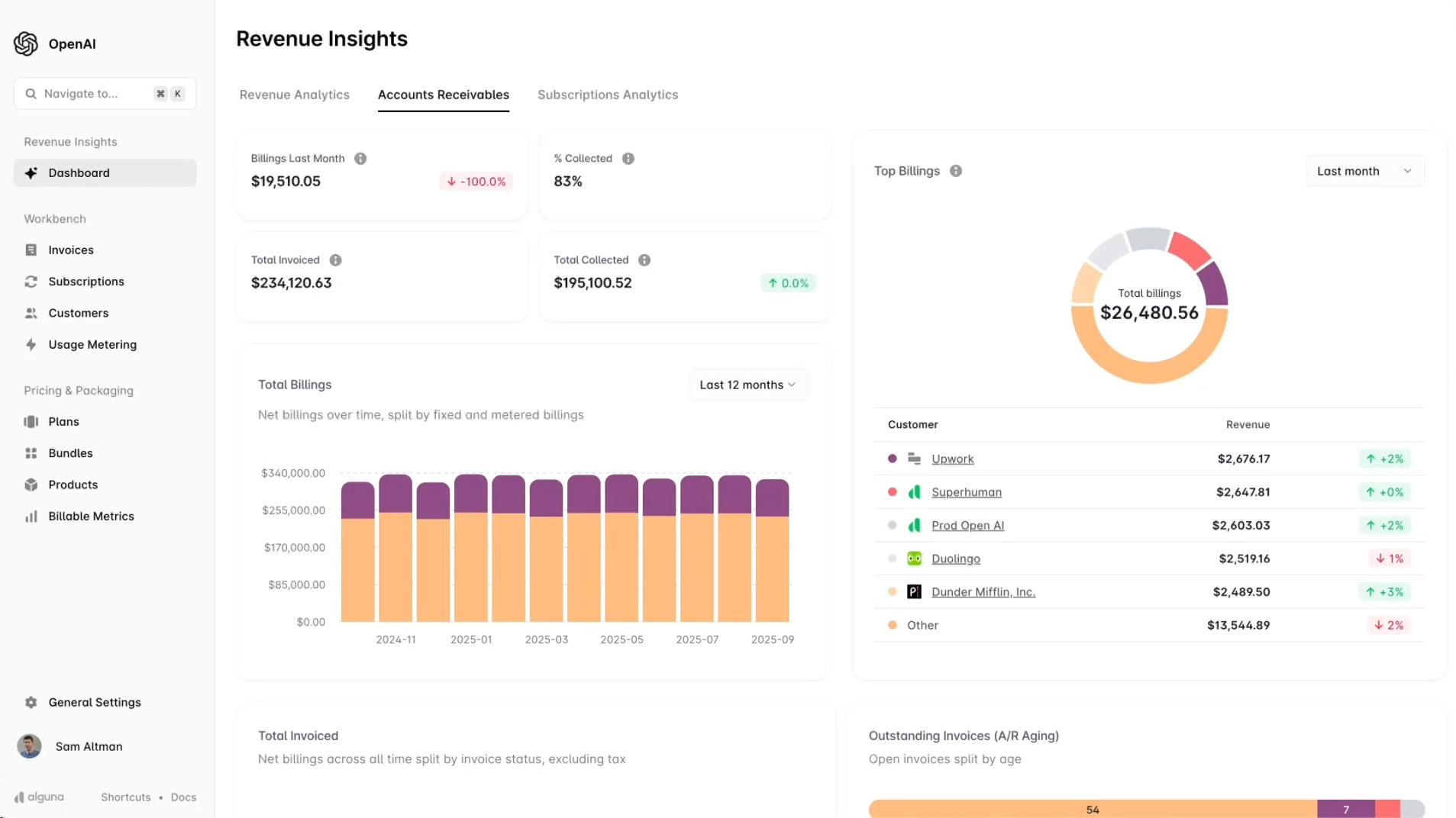
Backed by Y Combinator, Alguna is a modern, end-to-end monetization platform built from the ground up for today's SaaS, fintech, and AI-native companies.
Unlike legacy platforms that bolt usage metering on as an afterthought, Alguna was designed with hybrid pricing as a first principle. It unifies CPQ, subscription billing, real-time usage metering, payments, e-signature, and revenue recognition into a single platform, giving finance and RevOps teams a single source of truth without requiring engineering support.
One of Alguna's standout differentiators is that everything is configurable without code. Sales teams can build and send quotes in minutes, set up complex pricing logic like tiered usage or credit drawdowns, and have contracts e-signed and billing activated automatically.
Key features:
- Recurring billing engine with automated proration and co-terming
- Real-time usage metering and rating for any metric (API calls, tokens, credits, compute hours)
- No-code CPQ with built-in e-signature
- Automated revenue recognition (ASC 606 / IFRS 15)
- Dunning and collections automation
- Multi-currency and multi-entity support
- Self-serve customer portal
- Native integrations with Stripe, Salesforce, HubSpot, QuickBooks, and more
Pros:
- End-to-end quote-to-cash platform with CPQ, billing, payments, and rev rec in one system
- Purpose-built for AI and usage-based SaaS pricing models
- Real-time usage metering configurable without engineering involvement
- Built-in e-signature eliminates the need for DocuSign or separate contract tools
- No revenue-share pricing model: predictable flat-rate cost
- Fast implementation (2-4 weeks) with white-glove onboarding
- Strong analytics: MRR, churn, ARPU, and revenue movements in real time
- Adam Liska, Co-founder an CEO at Glyphic
Read the case study
Cons:
- Newer platform (launched 2023), less battle-tested at massive enterprise scale than, for example, Zuora
- Primarily B2B focused, not ideal for consumer subscription models
- Smaller integration ecosystem than legacy platforms (though core integrations are covered)
Best for:
- AI-native and usage-based SaaS companies with hybrid pricing models
- Series A–C companies scaling from $1M to $50M+ ARR
- Finance and RevOps teams tired of stitching together multiple disconnected tools
- Companies that want fast implementation (days, not months)
Pricing:
Alguna starts at $699/month with no revenue-share fees. Enterprise pricing is available for larger deployments. Contact Alguna for a custom quote.
2. Stripe Billing: Best for early-stage, developer-led SaaS startups with simple subscription pricing already on Stripe
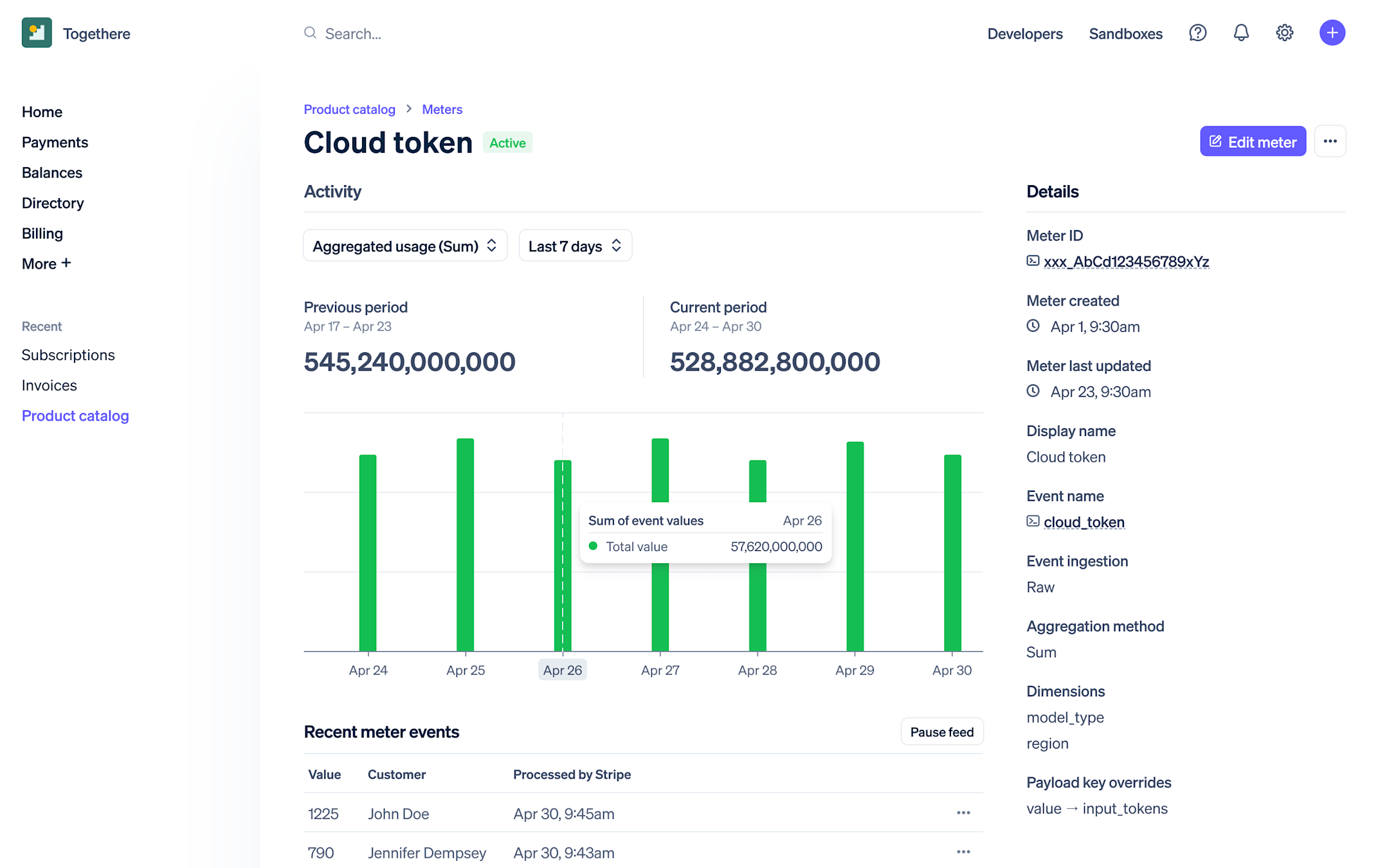
Stripe Billing is the subscription and usage billing layer built natively into Stripe's payment ecosystem. For developer-led teams already processing payments through Stripe, it's the path of least resistance, you're working within a single platform, with excellent API documentation and a strong developer experience.
Stripe Billing supports subscription management, metered usage billing, and automated invoicing, making it a reasonable choice for early-stage companies with straightforward pricing models and engineering capacity.
The key limitation becomes apparent as companies scale or pricing models grow complex. At $10M in annual usage charges, Stripe's 0.7% fee equals roughly $70,000 annually (this is significantly more than purpose-built platforms).
Key features:
- Subscription lifecycle management (trials, upgrades, downgrades, cancellations)
- Metered billing via Stripe Meter API
- Automated invoicing with smart retries
- Customer portal for self-serve subscription management
- Revenue recognition add-on available
Pros:
- Seamless integration with Stripe Payments — no separate merchant account
- Excellent developer documentation and APIs
- Fast to launch for simple subscription models
- Handles basic usage metering via meter API
- Strong fraud detection and payment recovery built in
Cons:
- 0.7% of billing volume scales into a significant cost at mid-market and enterprise
- Limited out-of-the-box support for complex hybrid or negotiated contract billing
- No native CPQ or quote-to-cash workflow, requires engineering or third-party tools
- No built-in revenue recognition (ASC 606 compliance requires Stripe Revenue Recognition as an add-on)
- Changing pricing models or metrics often requires migrating subscribers to new plans
Best for:
- Early-stage SaaS startups already on Stripe with simple subscription models
- Developer-led teams who prefer to build custom billing logic
- Companies prioritizing speed to launch over billing sophistication
Pricing:
0.7% of billing volume, on top of Stripe's standard payment processing fees (2.9% + $0.30 per transaction for US businesses). Enterprise pricing available for high-volume merchants.
3. Chargebee: Best for mid-market SaaS teams with standard subscription models
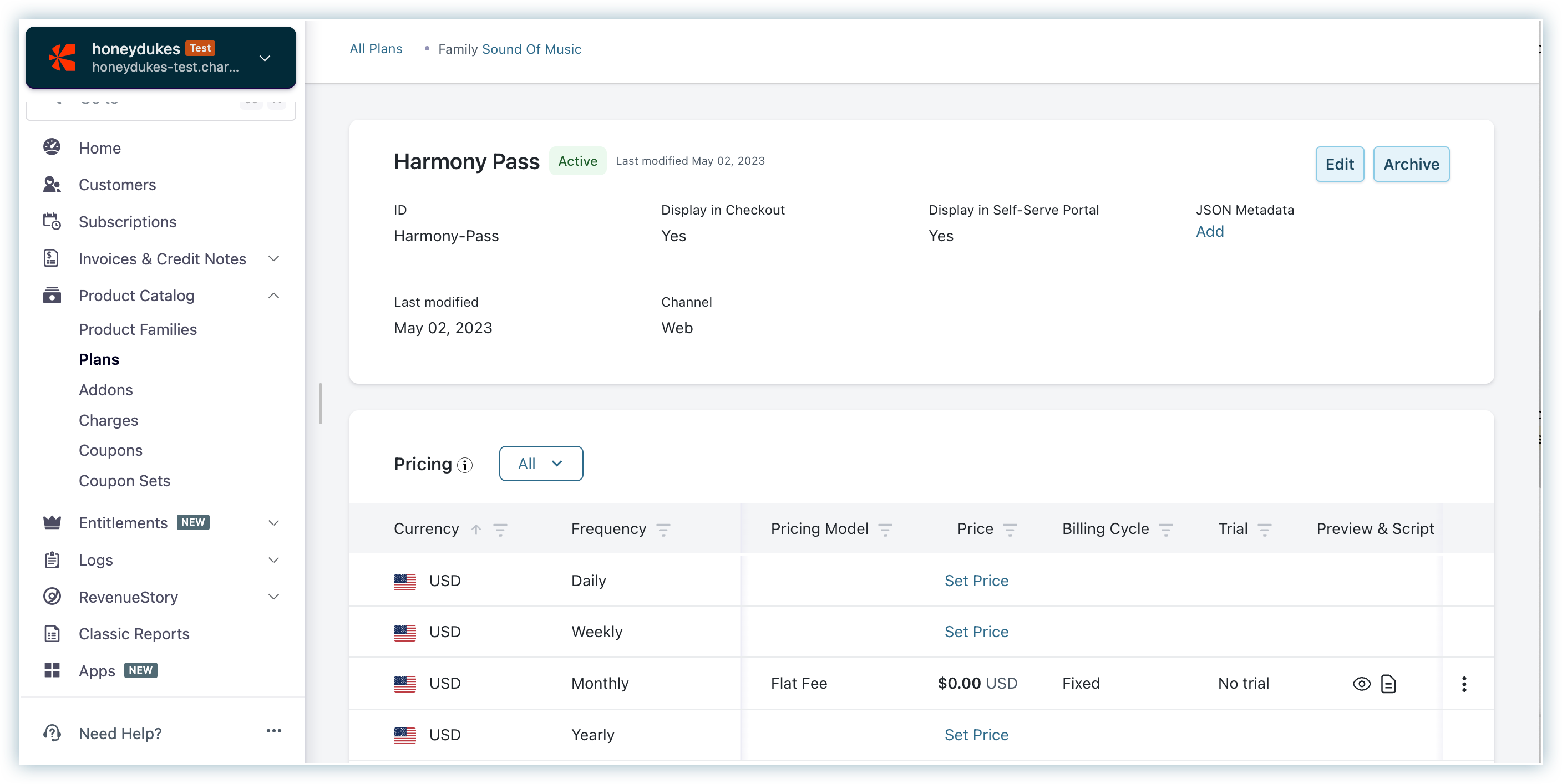
Chargebee is one of the most widely adopted subscription management platforms in the mid-market. It's feature-rich, has a non-technical-friendly UI, and covers a lot of ground.
For a growth-stage SaaS company with a dedicated RevOps function and relatively standard subscription pricing, Chargebee is a solid, proven choice.
Where Chargebee starts to show its limitations is in heavily customized, contract-driven B2B environments. Teams frequently report needing to manually translate contract PDFs into billing configurations, and any deviation from standard subscription logic tends to require engineering involvement.
Key features:
- Subscription and recurring billing engine
- Usage-based billing (metered components)
- Revenue recognition module (add-on)
- Multi-currency and global tax compliance
- Dunning and smart payment retries
- Customer self-serve portal
- Integrations: Salesforce, HubSpot, NetSuite, QuickBooks, Avalara, and more
Pros:
- Mature, battle-tested platform with a large customer base
- Strong subscription lifecycle management out of the box
- Broad integrations with CRMs, ERPs, tax tools, and payment gateways
- User-friendly UI accessible to non-technical finance and RevOps teams
Cons:
- Revenue-share pricing (0.75% of overage revenue) becomes expensive at scale
- Complex hybrid or negotiated-contract billing requires manual setup per deal
- Implementation typically takes ~8 weeks with significant configuration effort
- Reported reliability issues (outages) that impact billing-critical operations
Best for:
- Mid-market SaaS companies ($1M–$20M ARR) with standard subscription models
- Teams with dedicated RevOps resources to manage platform configuration
- SaaS businesses expanding globally needing multi-currency and tax compliance
Pricing:
Starter plan is free up to $250K cumulative billing. Performance plan starts at $599/month (up to $100K MRR, then 0.75% overage). Scale plan at $999/month (up to $200K MRR). Enterprise pricing is custom.
4. Zuora: Best for large enterprises and pre-IPO companies with complex, multi-entity global billing
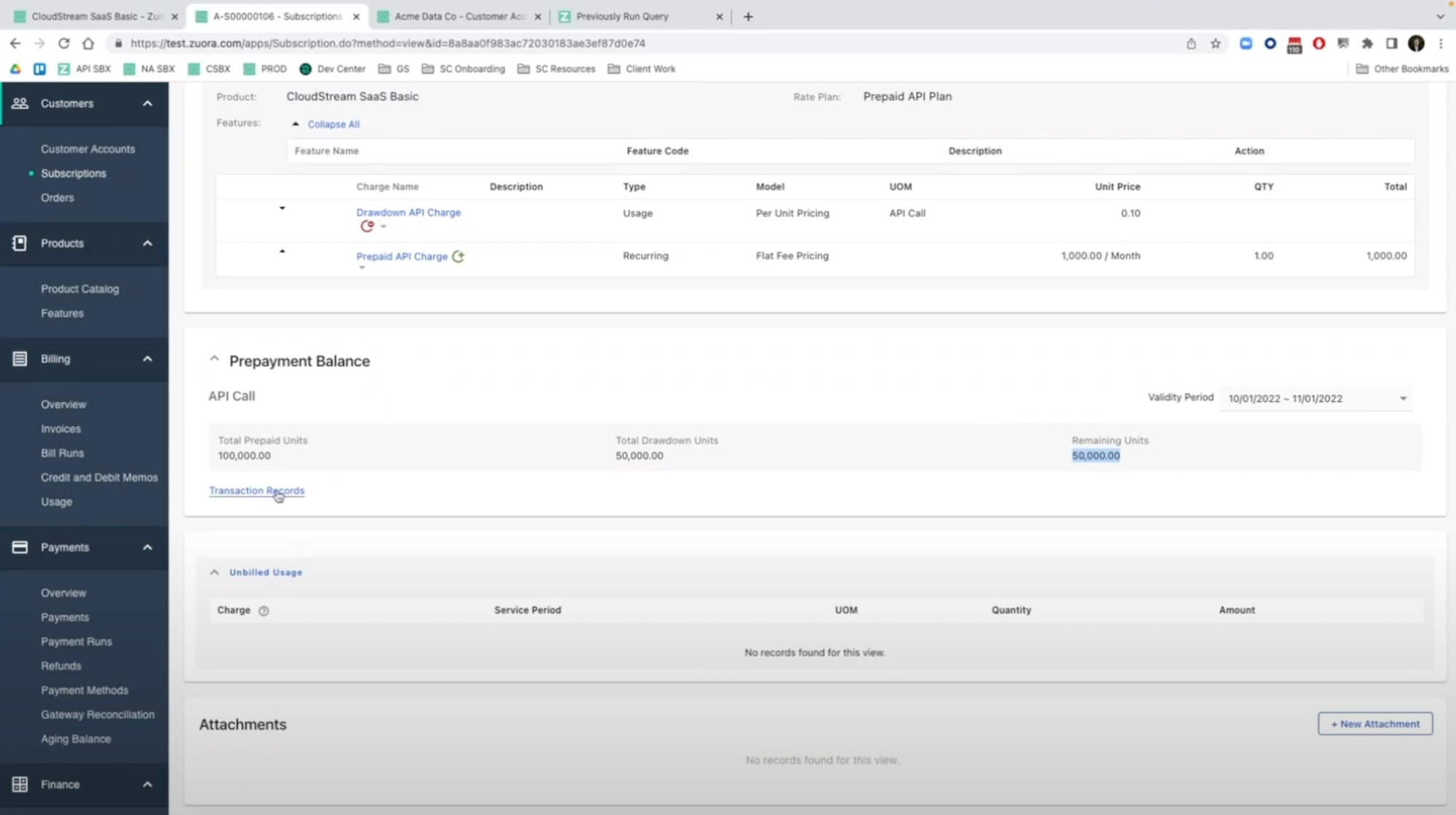
Zuora is the original enterprise subscription management platform and, for large public companies or those preparing for IPO, it remains the industry standard.
It handles multi-entity billing, global tax compliance, ASC 606 revenue recognition, CPQ, and sophisticated analytics at a scale that few platforms can match.
The tradeoffs are well-documented: implementations typically take 3–6 months, pricing typically starts north of $50,000 per year (often scaling into the hundreds of thousands), and the platform requires dedicated administrators to manage.
Key features:
- Order-to-cash and subscription lifecycle management
- RevPro: automated ASC 606 / IFRS 15 revenue recognition
- Zuora CPQ: configure-price-quote for enterprise deals
- Advanced usage billing (via Togai acquisition)
- Multi-entity, multi-currency, global tax compliance
- Comprehensive analytics and reporting suite
- Deep integrations with SAP, Oracle, Salesforce, and other enterprise systems
Pros:
- Most comprehensive feature set of any subscription billing platform
- Enterprise-grade global compliance: multi-entity, multi-currency, multi-jurisdiction tax
- Built-in ASC 606 / IFRS 15 revenue recognition (RevPro module)
- Integrated CPQ for complex enterprise sales workflows
- Audit-ready reporting for public company compliance
- Acquired Togai (2024) to strengthen usage-based billing capabilities
Cons:
- Implementation typically takes 3–6 months and requires dedicated partners or internal teams
- Pricing typically starts at $50,000+/year; modules and implementation add significant cost
- Steep learning curve requiring specialized Zuora administrators
- Heavy configuration complexity makes iterating on pricing models slow
- Overkill for most growth-stage or mid-market companies
Best for:
- Public companies or those preparing for IPO requiring rigorous revenue governance
- Large enterprises ($50M+ ARR) with complex multi-product, multi-entity billing
- Businesses combining hardware, software, and services into single subscription bundles
- Global organizations operating in dozens of countries
Pricing:
Zuora does not publish public pricing. Contracts typically start around $75,000/year and scale into the hundreds of thousands for enterprise packages. Implementation services are additional.
5. Maxio: Best for finance-led B2B SaaS teams that need billing and revenue recognition in a single tool
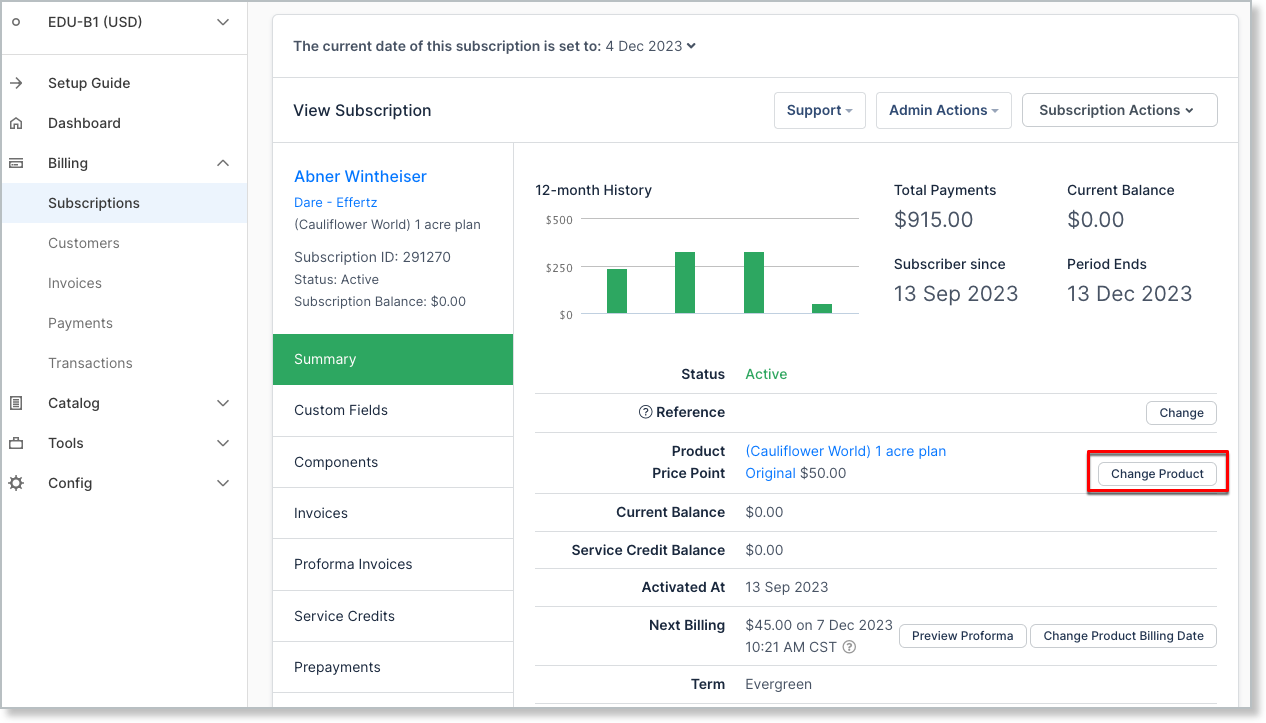
Maxio emerged from the 2021 merger of Chargify (subscription billing execution) and SaaSOptics (subscription financial reporting), creating a platform that sits at the intersection of billing and financial operations. In March 2025, Maxio also acquired RevOps (a CPQ tool), broadening its scope further.
The result is a platform that genuinely shines for finance teams who want billing, revenue recognition, and SaaS KPI reporting unified in one place, without needing to manage three separate tools.
Where Maxio tends to fall short is in complex or fast-changing pricing environments. The merged product architecture can feel clunky, and teams running heavily customized hybrid pricing models often report needing manual workarounds. It's a strong choice for finance-led teams; less ideal for RevOps teams who need to iterate rapidly on pricing logic without engineering support.
Key features:
- Subscription and metered usage billing
- Automated ASC 606 / IFRS 15 revenue recognition
- SaaS metrics dashboard (MRR, ARR, churn, cohort analysis, ARPU)
- Collections and dunning automation
- CPQ module for sales quoting (via RevOps acquisition)
- Integration with accounting systems for month-end close
Pros:
- Unified billing, revenue recognition (ASC 606), and SaaS financial analytics in one platform
- Strong SaaS KPI dashboards: MRR, ARR, LTV, ARPU, churn, cohort analysis
- No-code configuration for standard billing tasks
- Good fit for companies preparing for fundraising or audit
- CPQ module now included (via RevOps acquisition)
Cons:
- UI can feel clunky due to the merged product architecture
- Limited flexibility for complex or rapidly-changing hybrid pricing models
- Does not process payments natively — requires integration with a payment gateway
- Advanced sales tax/VAT handling may require additional integrations
- Implementation timeline of 3–6 weeks
Best for:
- Finance-driven B2B SaaS teams needing billing and revenue recognition unified
- Companies preparing for a fundraising round, audit, or due diligence
- Mid-stage SaaS businesses ($3M–$30M ARR) with relatively standard pricing
Pricing:
Starts at $599/month for up to $100K MRR. Enterprise pricing is custom. Some additional modules (including advanced usage features) may incur additional cost.
6. Metronome: Best for developer-led infrastructure and AI companies billing at massive usage scale
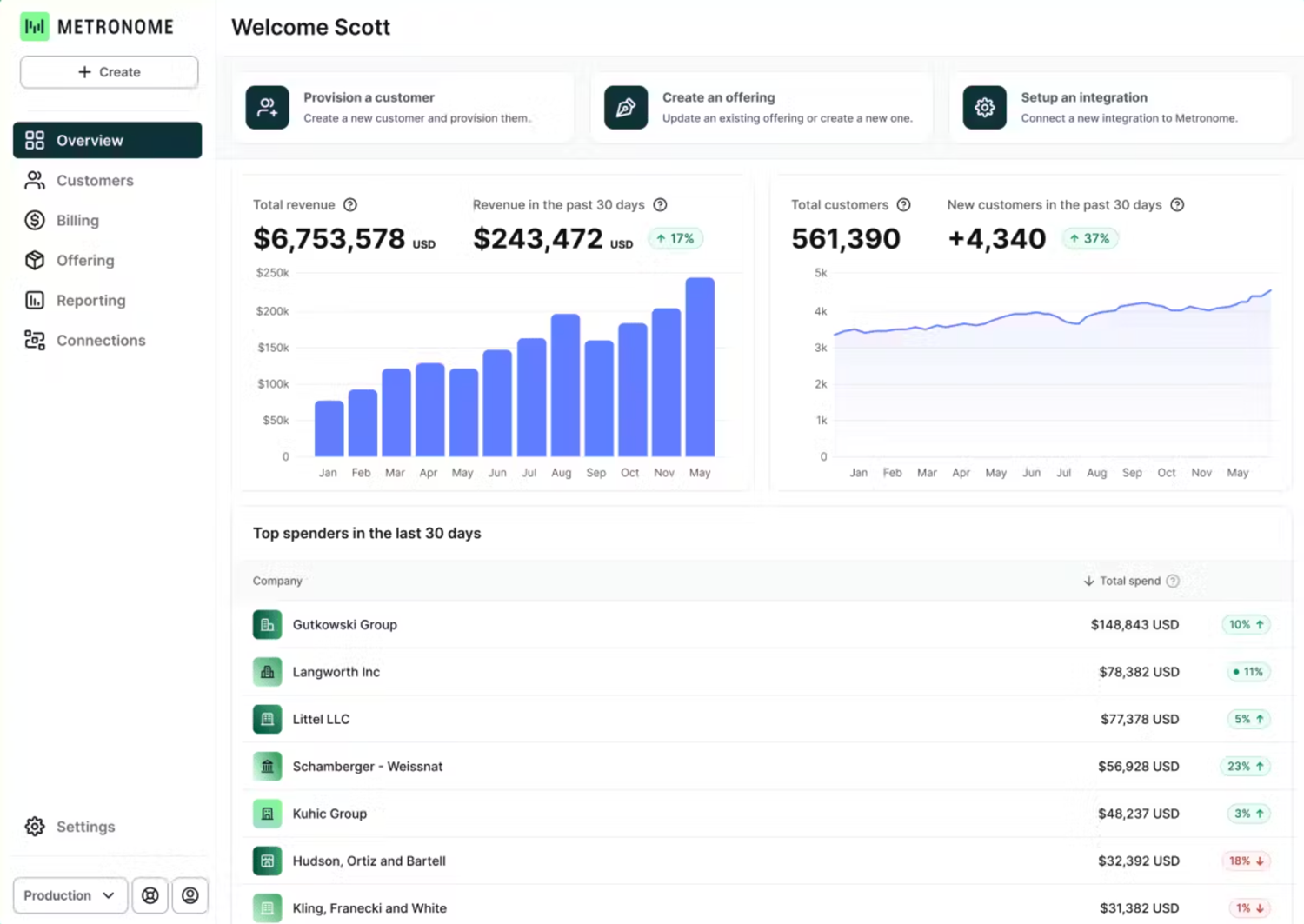
Acquired by Stripe in January 2026, Metronome is an API-first usage billing platform designed specifically for companies that need to meter and bill at extremely high scale. billions of usage events per month. It's a popular tool for developer tool companies, AI infrastructure providers, and cloud platforms where the billing system itself needs to be a high-performance engineering component.
The flip side of Metronome's power is its narrowness of scope. It focuses on metering and billing but doesn't cover CPQ, contract management, or revenue recognition natively.
Finance and RevOps teams at companies using Metronome typically need to assemble additional tools for those workflows — which can negate some of the operational benefits of automation.
Key features:
- High-performance usage event ingestion and aggregation
- Flexible pricing logic: tiered, volume, prepaid credits, custom formulas
- Real-time billing and invoicing based on usage data
- Seat-based and usage-based hybrid models
- Revenue dashboards and usage analytics
Pros:
- Designed for extremely high-scale usage event ingestion (billions of events)
- Highly flexible pricing logic — can model nearly any usage-based or hybrid structure
- Strong developer experience with excellent API documentation
- Used and trusted by major AI and cloud infrastructure companies
- Partners with Chargebee for broader billing management
Cons:
- No built-in CPQ, contract management, or revenue recognition
- Requires significant engineering resources to implement and maintain
- Finance teams often need additional tools for full quote-to-cash coverage
- Custom pricing only — can be expensive for smaller teams
Best for:
- Developer-led AI, infrastructure, or data platform companies
- Teams billing at extremely high usage volumes (millions–billions of events/month)
- Companies with dedicated engineering teams willing to build custom billing workflows
Pricing:
Custom pricing only. Typically starts in the low tens of thousands per year for mid-stage companies and scales up for enterprise deployments. Contact Metronome for a quote.
How to evaluate AI billing automation software for your SaaS company
Choosing the wrong billing platform is an expensive mistake. Migrations are painful, implementations take time, and a bad fit will cost you in engineering hours, revenue leakage, and team frustration.
Here's a framework to guide your evaluation:
1. Map your current (and future) pricing model
Start with pricing architecture. Are you on flat subscriptions, usage-based billing, or a hybrid model? Do you anticipate adding usage-based tiers, credit systems, or outcome-based pricing in the next 12–18 months?
67% of SaaS companies now use some form of consumption-based pricing, if you're not there yet, you likely will be soon. Choose a platform that can grow with your pricing strategy, not just handle today's model.
2. Assess your team's technical capacity
Platforms like Stripe Billing and Metronome are powerful but require engineering investment to configure and maintain. If your finance or RevOps team needs to own billing changes without writing code, particularly important for fast-moving pricing experiments, prioritize no-code or low-code platforms like Alguna or Chargebee.
3. Evaluate the full quote-to-cash workflow
Does the platform cover the full lifecycle from CPQ to invoicing to rev rec? Or will you need to integrate three separate tools? Every integration is a potential failure point and an ongoing maintenance burden.
Ask vendors to walk you through a real scenario: a new enterprise deal with tiered usage pricing, a mid-cycle upgrade, and a month-end close.
4. Scrutinize the total cost of ownership
The base subscription price is rarely the full story. Add up: implementation time and cost, the 0.7% or 0.75% revenue-share fees (which compound significantly at scale), any add-on module costs (rev rec, tax, CPQ), and the ongoing engineering or admin headcount needed to manage the platform.
5. Test implementation speed and support quality
How long will it take to go live? For Zuora, budget 3–6 months. For modern platforms like Alguna, implementation is sometimes measured in days. Always check whether the vendor offers dedicated onboarding support.
6. Verify compliance and reporting depth
If you're raising a Series B or beyond, preparing for an acquisition, or operating in multiple countries, ASC 606 compliance and audit-ready reporting are non-negotiable. Confirm the platform's approach to revenue recognition, is it built-in or an expensive add-on? Does it generate the reports your auditors will actually accept?
7. Demand a sandbox
Before signing any contract, insist on sandbox access. Run your actual pricing model, simulate a complex deal, create a usage-based invoice, test a failed payment workflow, and run a rev rec schedule. The best platforms will encourage this; the worst will avoid it.
Frequently asked questions
What is AI billing automation for SaaS companies?
AI billing automation for SaaS companies is software that uses automation and artificial intelligence to manage the end-to-end revenue lifecycle without requiring manual intervention at each step.
How is AI billing automation different from basic subscription billing software?
Traditional subscription billing software automates recurring payments but still requires manual configuration for each deal, manual tracking of usage, and human intervention for exceptions. AI-powered platforms go further: they can read contracts and extract billing terms automatically, adapt to complex pricing models (hybrid, usage-based, credit-based) without engineering support.
Which AI billing platform is best for early-stage SaaS startups?
For very early-stage startups (pre-$1M ARR) with simple, flat subscription pricing and engineering resources, Stripe Billing is the fastest path to market. For companies above $1M ARR, especially those with any usage-based or hybrid pricing complexity scaling fast, Alguna offers significantly more capability without the engineering overhead, at a predictable flat-rate cost.
What is the average cost of SaaS billing automation software?
Pricing varies significantly by platform and model. Stripe Billing charges 0.7% of billing volume. Chargebee and Maxio start at $599/month with overage fees. Alguna starts at $699/month with no revenue share. Metronome is custom, typically starting in the tens of thousands per year. Zuora typically starts at $50,000–$75,000/year.
The most important consideration is total cost of ownership, not just the base price. Think about implementation, engineering overhead, and percentage-of-revenue fees that can dwarf the subscription cost.
Can billing automation software handle usage-based and hybrid pricing models?
Yes, but not all platforms handle it equally well. Platforms like Alguna and Metronome were built specifically for usage-based and hybrid models. Legacy platforms like Chargebee, Maxio, and Zuora support usage billing but it's an add-on capability, not the core design. Always test your specific pricing logic in a sandbox before committing.
How long does it take to implement a new billing platform?
It varies enormously by platform: Alguna deploys in days to a few weeks with white-glove onboarding. Chargebee and Maxio typically take 2–8 weeks. Zuora implementations routinely take 3–6 months, often with external implementation partners.
Plan for the migration itself to require significant data cleanup and process documentation regardless of which platform you choose.
What is revenue leakage and how does billing automation prevent it
Revenue leakage refers to revenue your company is owed but fails to collect — from missed usage overages, unbilled contract escalators, misconfigured pricing rules, or failed payments that go unrecovered.
Research suggests SaaS companies lose between 1% and 5% of ARR to billing errors. AI billing automation prevents leakage by continuously validating billing configurations against contract terms, metering all billable events in real time, and automating dunning workflows for failed payments.
Is ASC 606 compliance included in billing automation software?
It depends on the platform. Zuora (via RevPro), Maxio, and Alguna include revenue recognition as part of their core offering or as a closely integrated feature.
Stripe Billing and Chargebee offer revenue recognition as separate add-on modules. Metronome does not include revenue recognition natively. If ASC 606 compliance is a priority, especially for fundraising or audit readiness, confirm it's built-in, not bolted on.
Manual billing is a money pit
The SaaS companies pulling ahead aren't just building better products, they're effectively capturing the revenue they've already earned. That starts with getting billing right.
For SaaS companies navigating complex usage-based pricing, hybrid models, and negotiated enterprise contracts, AI billing automation is a must.
The right platform depends on where you are right now: Stripe Billing if you're early-stage, developer-led, and need to move fast. Chargebee or Maxio if you're mid-market with a dedicated RevOps team and standard subscription pricing. Metronome if you're an engineering-heavy team billing at extreme scale. Zuora if you're a large enterprise with regulatory and governance requirements that demand it.
And Alguna if you're a modern SaaS or AI-native company that wants one unified platform, from the first quote to the last dollar of revenue recognized, without stitching together half a dozen tools or writing a single line of billing code.