Did you attend Dreamforce 2025? If so, you probably didn’t miss (yet another) Salesforce name change.
That’s right. Salesforce Revenue Cloud is now Agentforce Revenue Management.
This is part of a broader rebrand that signals Salesforce’s ambitions in quote-to-cash automation and AI-native sales operations.
But does Agentforce make sense for your company? And if not, what are the modern alternatives for fast-growing SaaS, AI, and fintech businesses?
In this guide, we'll break down the main differences between Salesforce Revenue Cloud and Agentforce Revenue Management and why Salesforce is making the shift.
We’ll also compare the best alternatives for companies that want more flexibility, faster time-to-value, and lower cost of ownership, looking at new no-code quote-to-cash solutions like Alguna and legacy players like Zuora.
What’s new in Agentforce Revenue Management
Salesforce rebranded its Revenue Cloud product as Agentforce Revenue Management during its annual Dreamforce event.
While the core functionality (CPQ, billing, revenue recognition) remains, the rebrand introduces a new UI, deeper integration with the Einstein 1 Data Cloud, and improved AI workflows for quoting, discounting, and forecasting.
According to Salesforce, Agentforce is designed to unify the entire revenue lifecycle—from pricing and quoting to billing and renewals—while making it easier for RevOps and sales teams to collaborate.
Key innovations include:
- Einstein-powered quote recommendations
- Agentforce CPQ with guided selling and visual configuration
- Updated billing UI with more self-service options
- Native support for product bundling, usage-based pricing, and ramp deals
- Tight integration with Slack and Einstein Copilot
For Salesforce-centric enterprises, Agentforce offers a familiar (if somewhat complex) upgrade path.
But for smaller or more modern teams, the learning curve and cost may outweigh the benefits, making them look for alternatives.
Why Salesforce is making the shift
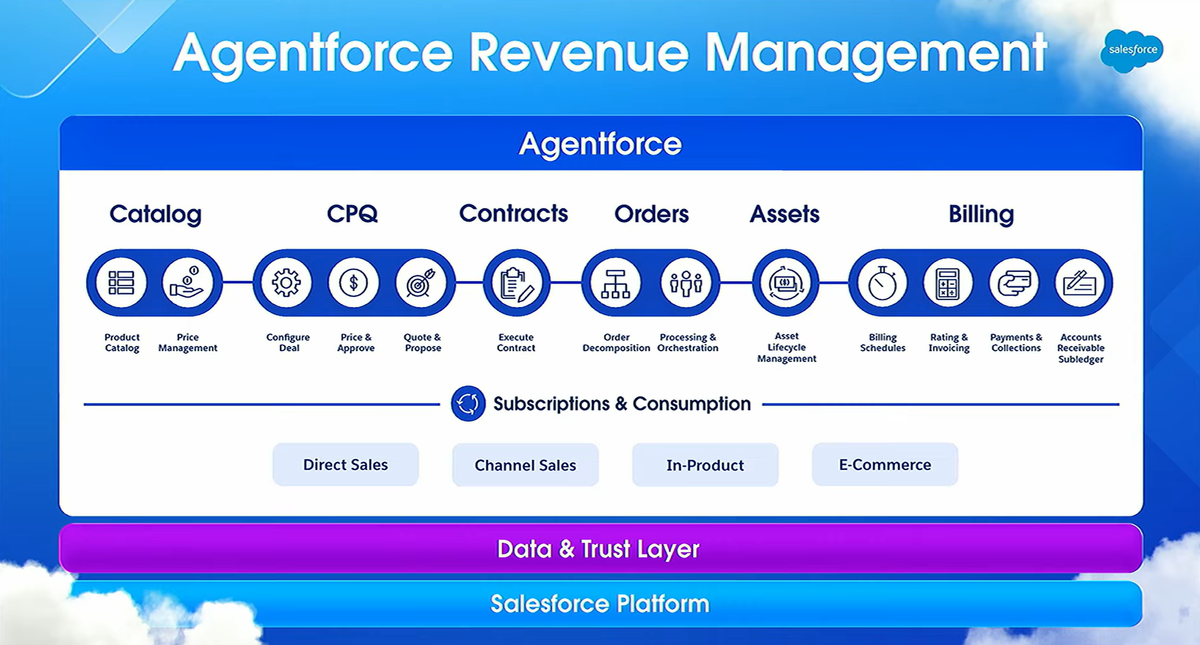
The rebrand to Agentforce is part of a broader strategy to refresh the Salesforce platform around AI, automation, and integrated workflows.
As legacy players like Zuora and others roll out AI-native capabilities, it means Salesforce need to position Agentforce as the intelligent operating layer for revenue.
Not to mention the rise of modern, purpose-built revenue automation platforms like Alguna quickly establishing itself as a preferred quote-to-cash platform for fast-moving SaaS, AI, and fintech companies.
It's also a response to platform fatigue: revenue teams have long complained about fragmented tools and custom integrations. By consolidating CPQ, billing, and revenue recognition into a single platform in Agentforce, Salesforce aims to reduce implementation overhead and increase (further) stickiness within the ecosystem.
But it’s not without tradeoffs.
For companies outside the Salesforce world, or those needing flexible, usage-based billing, Agentforce may be more than they need, both in terms of cost and complexity.
Why companies are looking for alternatives
As powerful as Agentforce could potentially be, it’s not the right fit for everyone. The most common reasons companies seek alternatives include:
- Overhead and cost: Agentforce pricing starts at $150–200/user/month, with additional costs for implementation and customizations.
- Complexity: Many companies report a steep learning curve, especially those without existing Salesforce admins.
- Dated UI/UX: The clunky products haven’t changed, and what takes minutes in Salesforce takes seconds in modern tools.
- Flexibility: Agentforce is optimized for Salesforce-native workflows. If you're using other CRMs or ERPs, or want to experiment with AI pricing models, it may not adapt easily.
- Speed: Implementation often requires external consultants and months of configuration.
For these reasons, growth-stage SaaS and AI companies often turn to more agile platforms that offer better time-to-value.
| Agentforce Revenue Management feature | What it does in Salesforce | Best alternative and equivalent capabilities |
|---|---|---|
| Unified revenue lifecycle (Quote-to-Cash) | Automates quoting, contracting, order management, billing, and revenue recognition in one platform with AI agents. |
Alguna — End-to-end quote-to-revenue automation across CPQ, billing, and rev rec. Zuora — Enterprise revenue lifecycle across subscription and usage models. Nue — Salesforce-native quote-to-bill workflows. |
| AI-assisted quoting | Generates compliant quotes using natural language; guided selling rules reduce errors. |
Alguna — No-code CPQ with AI-driven data extraction and pricing logic. Nue — Salesforce-native CPQ with guided quoting and approvals. Chargebee + CPQ — Automated quote creation layered on billing. |
| Subscription & usage billing | Manages subscription, usage-based, one-time billing, and contract amendments. |
Alguna — Best-in-class hybrid pricing with usage, credits, commitments, and overages. Zuora — Enterprise-grade subscription and usage billing. Chargebee — Recurring and usage billing for mid-market SaaS. Nue — Salesforce-based subscription and usage billing. |
| Automated revenue recognition (ASC 606 / IFRS 15) | Native revenue recognition with compliance support. |
Alguna — Automated revenue recognition tied directly to contracts and usage. Zuora Revenue — Dedicated enterprise revenue recognition engine. Maxio — Built-in revenue recognition and SaaS financial governance. |
| Product & pricing catalog management | Unified catalog with pricing rules used across the revenue lifecycle. |
Alguna — Flexible pricing catalogs for subscriptions, usage, bundles, and add-ons. Chargebee — Centralized catalog for subscriptions and usage. Zuora — Scalable catalog for complex enterprise pricing. Nue — Salesforce-native product and pricing catalog. |
| Analytics & dashboards (ARR, MRR, churn) | Embedded analytics (e.g., Tableau) to track revenue KPIs. |
Alguna — Revenue insights purpose-built for RevOps and Finance teams. Maxio — Finance-grade SaaS metrics and reporting. Chargebee Analytics — Revenue and customer insights. |
| Self-service billing & payments | Customer portal for invoices, payments, and saved payment methods. |
Alguna — Customer portal for invoices, payments, and upcoming charges. Chargebee Customer Portal — Self-service billing and payments. Zuora Customer Accounts — Invoice and payment management portal. |
| Salesforce-native integration | Deep integration with Salesforce CRM, Service Cloud, Data Cloud, Slack, and MuleSoft. |
Alguna — Deep integrations with Salesforce, HubSpot, ERPs, and data tools. Nue — Fully Salesforce-native CPQ and billing. Chargebee — Strong CRM and ERP integrations (not Salesforce-native). |
5 best Agentforce Revenue Management alternatives: Deep dive
If you’re actively evaluating replacements for Agentforce Revenue Management, feature checklists alone won’t get you to a decision. The real differences show up in how each platform handles pricing complexity, contract changes, usage data, and month-end reality.
In this section, we take a closer look at the five strongest Agentforce alternatives in 2026—breaking down where each platform excels, where it falls short, and which types of revenue teams they’re actually built for.
The goal isn’t theoretical comparison, but practical guidance: what works in production, what scales, and what becomes friction once pricing evolves.
1. Alguna: Agentforce Revenue Management alternative for modern teams
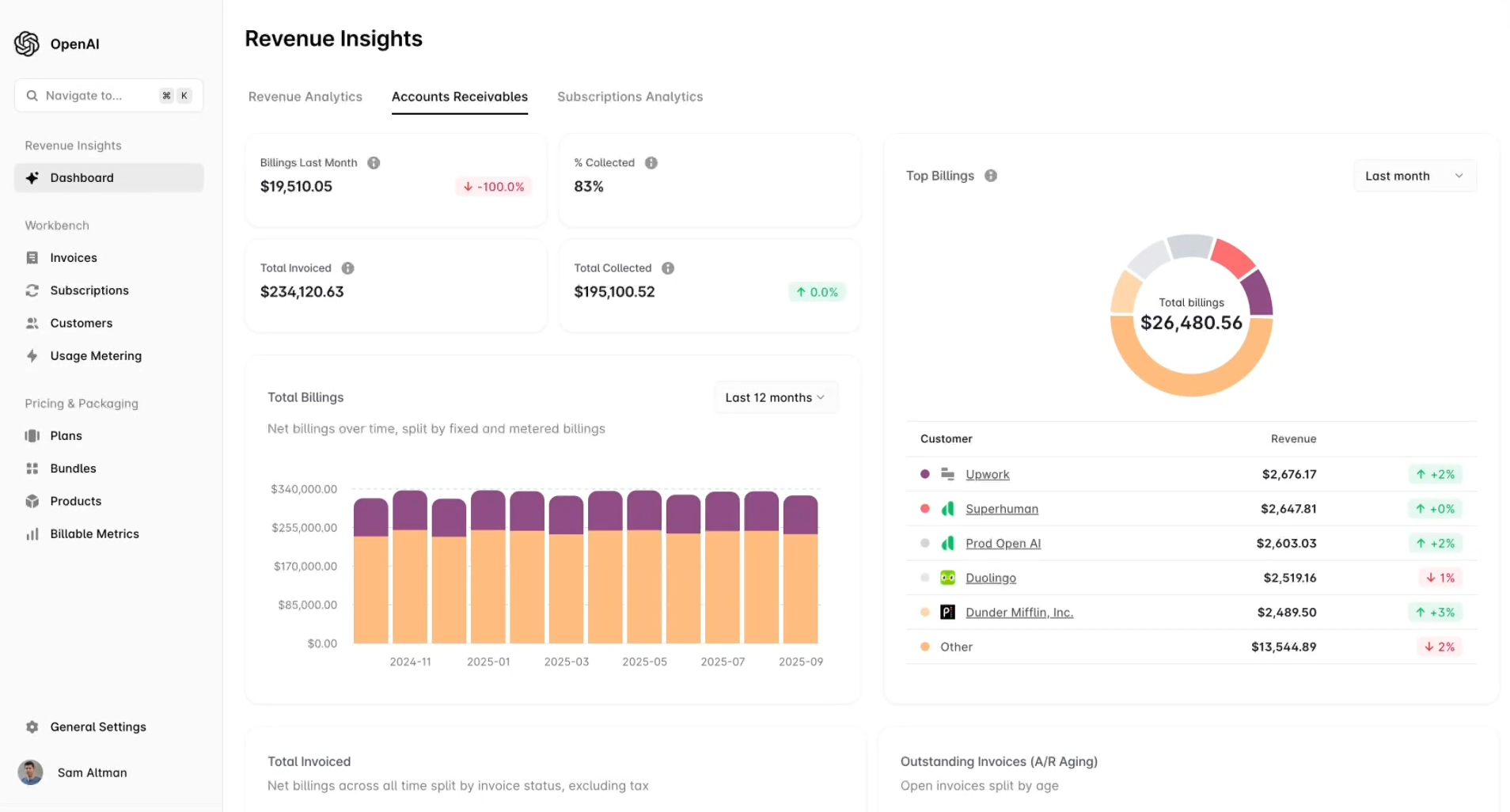
Alguna unifies CPQ, contracts, usage metering, billing, and revenue recognition in a single, flexible system designed for how SaaS, AI, and fintech companies actually monetize in 2026.
Where Agentforce optimizes around Salesforce workflows, Alguna optimizes around pricing reality. That includes hybrid pricing models, mid-cycle changes, credits, ramps, commitments, and experimentation without breaking finance.
Why Alguna wins
- Native support for usage-based pricing, hybrid, credits, ramps, commitments, and overages
- No-code CPQ tied directly to contracts and billing logic
- Real-time usage metering → invoices → revenue recognition
- Built for AI monetization and fast pricing experimentation
- Clean, finance-friendly UX with minimal admin overhead
Where Alguna fits best
- SaaS, AI, fintech, infra, API, or data companies
- RevOps + Finance teams tired of multi-tool “Frankenstacks” and fragmented data
- Companies outgrowing Salesforce-centric revenue tooling
Pricing
Transparent, flat pricing. Paid plans from $699/month. Free tier and startup plans available. Alguna never takes a revenue cut.
Bottom line
If Agentforce feels heavy, slow, or inflexible, Alguna is the most complete and future-proof replacement in 2026.
See how Alguna replaces Agentforce Revenue Management—without the complexity
If Agentforce Revenue Management feels heavy, rigid, or slow to adapt to your pricing model, Alguna was built for exactly that moment.
Book a demo to walk through one of your real pricing or billing workflows.
2. Maxio: Finance-led revenue platform
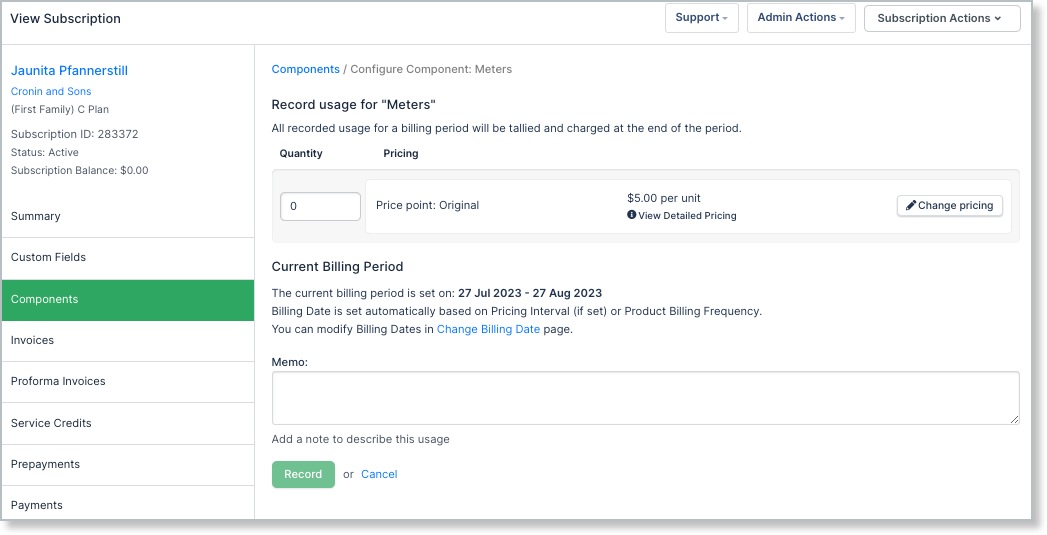
Maxio (SaaSOptics + ChargeOver) is strong on subscription billing and financial reporting, especially for finance-led teams. It excels at billing, metrics, and revenue recognition, but lacks a true CPQ layer—making it a partial replacement for Agentforce rather than a full one.
Strengths
- Strong billing and invoicing
- Finance-grade reporting and SaaS metrics
- Solid revenue recognition capabilities
- Familiar workflows for controllers and finance ops
Limitations vs Agentforce alternatives
- No native CPQ
- Usage-based pricing support is basic
- Pricing logic often lives outside the platform
- Limited support for GTM experimentation
Pricing
Paid plans from $599/month for up to $100k in billings.
Best for: Finance-first SaaS with relatively simple pricing
Not ideal for: Sales-driven or usage-heavy models
3. Chargebee: Popular, but increasingly fragmented
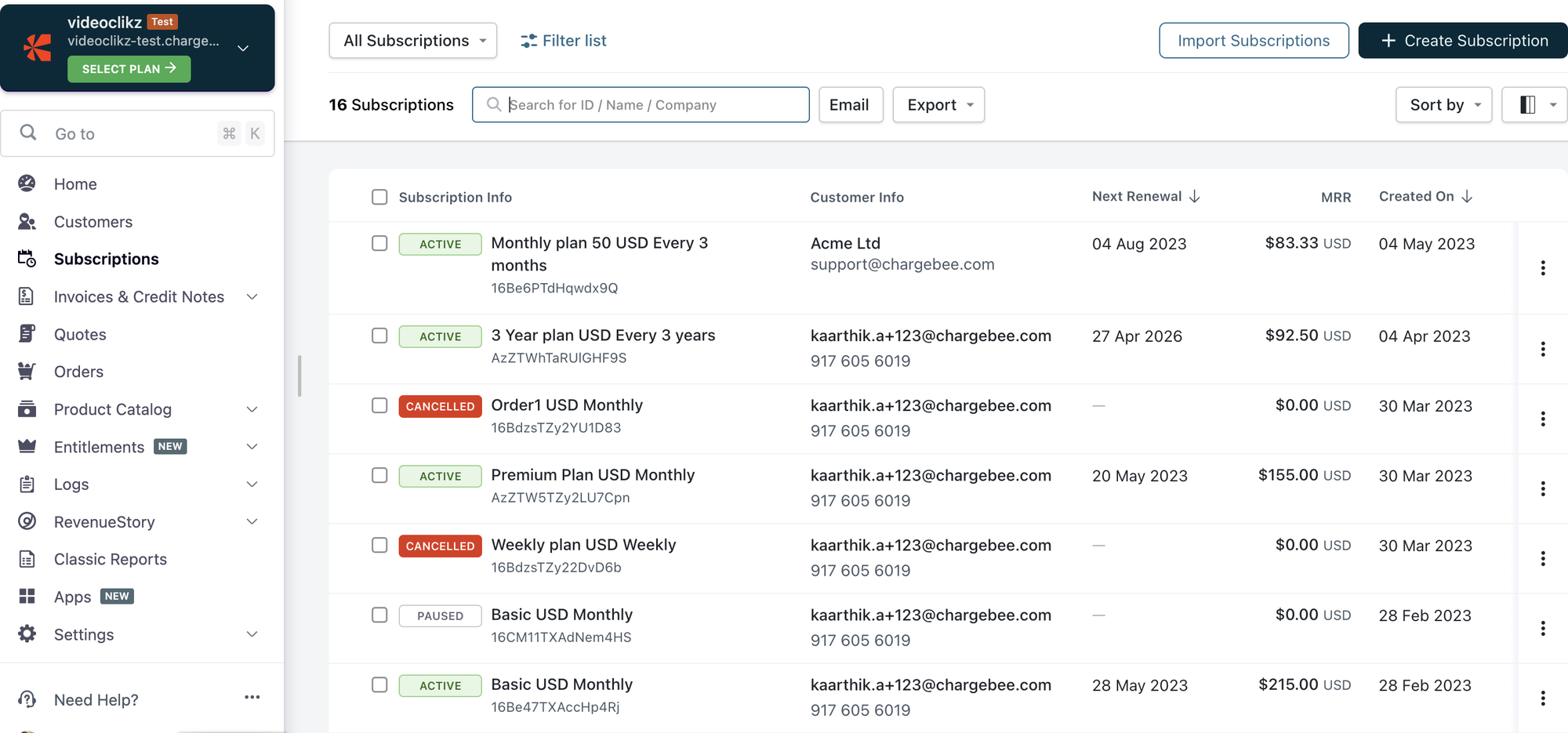
Chargebee is a common choice for subscription billing, especially in SMB and mid-market SaaS. It’s approachable and widely integrated, but as pricing models evolve, teams often end up stitching together Chargebee + CPQ + usage tools.
Compared to Agentforce, Chargebee is lighter, but also less complete.
Strengths
- Easy to get started
- Strong recurring subscription billing
- Large ecosystem of integrations
- Familiar to many RevOps teams
Limitations
- CPQ is not native (often requires add-ons or external tools)
- Usage-based pricing is limited and bolted on
- Revenue workflows frequently span multiple systems
- Can become brittle as pricing complexity increases
Pricing
Paid plans start at $599 per month up to $100,000 in billings (identical to Maxio's pricing approach).
Best for: Straightforward SaaS subscriptions
Watch out if: Your pricing model is evolving quickly
4. Zuora: Enterprice grade revenue system
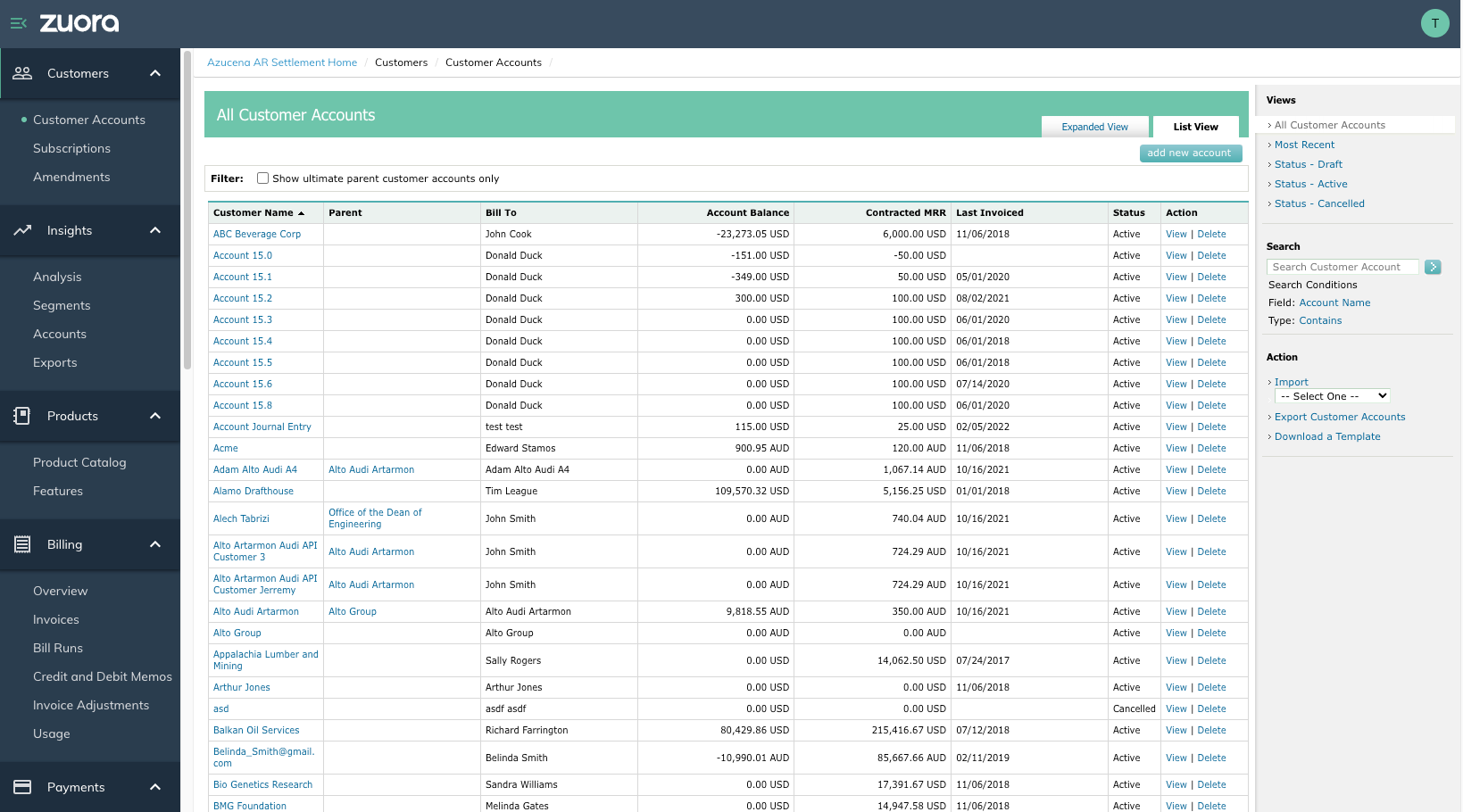
Zuora is the legacy heavyweight of subscription billing and revenue management. It offers deep configurability across billing and revenue recognition, but that power comes with long implementations, heavy admin requirements, and limited agility when pricing models change.
As an Agentforce alternative, Zuora replaces Salesforce dependence with its own complexity curve.
Strengths
- Extremely robust billing and revenue recognition
- Proven at large enterprise scale
- Strong compliance and audit support
- Handles subscriptions, usage, and global entities
Trade-offs
- Long implementation cycles (often months)
- Requires consultants and specialized admins
- CPQ is not a first-class experience
- Slow to adapt to fast GTM and pricing experimentation
Pricing
$50-$150K depending on modules, integrations, and add-ons.
Best for: Large enterprises with stable pricing
Not ideal for: Fast-moving product or GTM teams
5. Nue: Lighter, Salesforce-native alternative
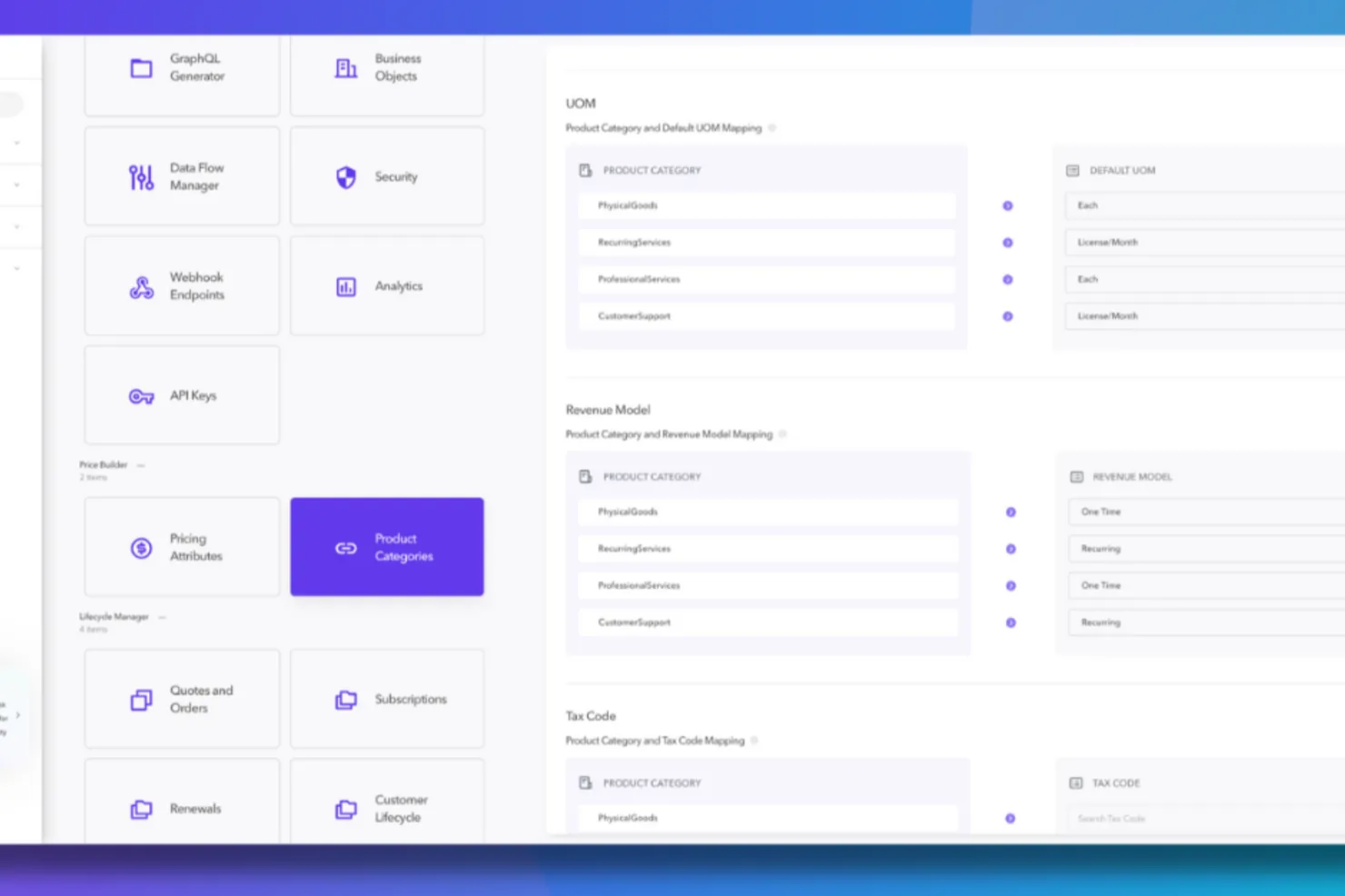
Nue is a Salesforce-native CPQ and billing solution that often appeals to teams who want to move away from Agentforce’s complexity without leaving Salesforce entirely.
While cleaner than legacy Salesforce CPQ, Nue still inherits many Salesforce data-model constraints, especially around advanced usage and hybrid pricing.
Strengths
- Fully Salesforce-native
- Cleaner CPQ experience than legacy Salesforce CPQ
- Faster to deploy than Agentforce
- Familiar UI for Salesforce-centric teams
Limitations
- Limited flexibility outside Salesforce
- Usage-based and hybrid pricing are constrained
- Long-term platform independence is difficult
- Revenue logic remains CRM-centric
Pricing
Custom.
Best for: Teams committed to Salesforce that want a lighter CPQ + billing experience without a full platform shift.
Trade-off: Long-term platform independence.
How to choose the right Agentforce Revenue Management alternative
Choosing the right Agentforce alternative depends on your company’s size, tech stack, pricing strategy, and sales motion.
Here’s a simple framework:
- CRM-centric or flexible stack? If you’re Salesforce-native, Nue may fit. If you’re CRM-agnostic, Alguna or Chargebee may be better.
- Usage-based billing or fixed pricing? Alguna, Subskribe, and Zuora handle complex usage models well.
- Do you need CPQ, billing, or both? Alguna unify these. Some others (e.g. Chargebee) are billing-first.
- How fast do you need to launch? Alguna and Chargebee offer weeks-to-launch vs. months for Salesforce or Zuora.
The future of revenue management goes beyond Salesforce
Agentforce Revenue Management marks a new chapter for Salesforce—and the broader quote-to-cash market. But not every company needs the weight of a full enterprise suite.
If you’re building a modern SaaS or AI business, you need speed, flexibility, and pricing agility. Tools like Alguna are purpose-built for this generation of SaaS monetization challenges.
Whether you're looking to escape spreadsheets, replace legacy CPQ, or simply future-proof your billing system, there's never been a better time to explore alternatives.
Modern, flexible end-to-end revenue management
If Agentforce Revenue Management feels heavy, rigid, or slow to adapt to your pricing model, Alguna was built for exactly that moment.
Book a demo to walk through one of your real pricing or billing workflows and see how Alguna handles it end-to-end, from quote to revenue recognition.