Usage-based pricing used to require engineering time, custom metering code, messy spreadsheets, and brittle billing logic.
Today, no-code usage-based pricing tools make it possible for SaaS and AI companies to launch and iterate on pricing without waiting on dev cycles. All without risking revenue leakage.
This guide highlights the best no-code platforms, how they differ, and what to look for if you’re rolling out usage-based pricing in 2026.
Why legacy billing systems can’t keep up with usage‑based pricing
Legacy billing platforms were designed for seat‑based subscriptions. They require developers to hard‑code pricing changes, upload usage data manually, and integrate multiple systems to generate invoices.
This approach breaks down when customers are billed on tokens, API calls, AI sessions, or outcomes.
Without real‑time metering, customers either get over‑charged or vendors absorb unexpected infrastructure costs. Flat pricing models overcharge low‑usage customers and undercharge heavy users, creating billing disputes and misaligned incentives.
Several trends expose these limits:
- Automation and AI reduce the link between users and value. As automation removes manual work, there are fewer human users to tie revenue to, so seat pricing no longer scales with value.
- API‑first products deliver value through backend calls. The value of many SaaS platforms now lies in their API, not in a user interface.
- Rapid product innovation demands flexible pricing. Tying pricing changes to engineering slows down experimentation.
As a result, companies using consumption models often report that their biggest pain point isn’t choosing the right metric, it’s building a meter that stays accurate and integrating rating, billing and revenue recognition without breaking the product.
What are no-code usage-based pricing tools?
No-code usage-based pricing tools, also known as CPQ (Configure-Price-Quote) are platforms that let product, finance, and RevOps teams:
- Define usage metrics without hardcoding
- Meter usage events in real time
- Package pricing models (per-unit, tiers, volume, credits, hybrid, AI agent meters)
- Generate invoices automatically
- Run revenue recognition
- Change pricing logic without writing code
They replace the old model of “engineering-built billing” with configurable, modular pricing that anyone on the GTM or finance team can deploy.
What makes a no‑code usage‑based pricing tool different
A no‑code usage‑based pricing tool brings billing and pricing control out of the engineering backlog and into the hands of product, finance, and RevOps teams.
Key characteristics include:
- Visual rule builders: Pricing rules can be configured directly in the UI rather than editing code. A no‑code tool lets you build per‑token, per‑seat, or hybrid models through a visual interface in minutes.
- Built‑in metering and event ingestion: The system automatically tracks tokens, API requests, sessions, or custom events in real time, eliminating the need for manual data uploads. Accurate metering is essential; late or duplicate events can result in under‑ or over‑billing.
- Hybrid and outcome‑based pricing: Modern platforms allow mixing flat fees, seats, usage, and even outcomes (e.g., conversations resolved) in a single model. This flexibility is critical for AI‑powered and API‑driven products.
- Native entitlements and feature gating: Usage limits and feature access are tied directly to billing, so when credits run out the system automatically restricts access.
- Versioning and experimentation: Pricing experiments can be run and rolled back without redeploying code. Tools like paritydeals highlight the need for versioned pricing rules and easy plan migrations.
- Integrated revenue recognition and compliance: Mature solutions include revenue recognition and reporting to comply with standards like ASC 606, ensuring that finance teams can close the books without spreadsheets.
No‑code tools therefore empower non‑technical teams to iterate on pricing rapidly while ensuring that billing, taxes, revenue recognition, and entitlements stay synchronized.
Overview: 5 best no‑code usage‑based pricing tools in 2025
The market for usage‑based billing platforms has expanded rapidly. Here is a high‑level comparison of some leading solutions.
⚠️ Note: This table is for quick reference; details may change as vendors update their offerings.
| Platform | CPQ & Pricing flexibility | Usage-based pricing support | No-code experience | Key limitations | Best for |
|---|---|---|---|---|---|
| Alguna | Native no-code CPQ with dynamic pricing rules, hybrid deals, amendments, and mid-cycle changes | Built-in real-time usage metering (API calls, tokens, credits), hybrid pricing | Fully no-code for RevOps & Finance | More enterprise-oriented than self-serve | AI-native SaaS, fintech, and teams monetizing complex or hybrid usage |
| Chargebee | CPQ-like quoting via add-ons and workflows | Supports metered billing, but rigid for complex usage logic | Partial no-code; advanced setups need engineering | Limited CPQ depth for sales-led deals | Mid-market SaaS with relatively simple usage models |
| Subskribe | Sales-led CPQ with strong contract and amendment support | Usage pricing captured in contracts, not real-time meters | No-code for sales workflows | No native usage metering or rating engine | Enterprise SaaS with negotiated, contract-driven usage |
| Maxio | Traditional CPQ for subscription contracts | Usage supported but not usage-first | Low-code / config-heavy | Weak real-time usage support | Finance-led SaaS with predictable contracts |
| DealHub | Strong sales-led CPQ with deal orchestration | Usage-based pricing handled contractually | No-code for sales workflows | No native usage metering | Enterprise sales teams with negotiated usage terms |
5 best no-code usage based pricing tools for fast-moving revenue teams
Below is an expanded, more detailed breakdown of each platform’s capabilities, no-code depth, ideal use cases, metering design, pricing flexibility, and limitations.
1. Alguna: Best no-code usage-based pricing tool for SaaS, AI, and fintech
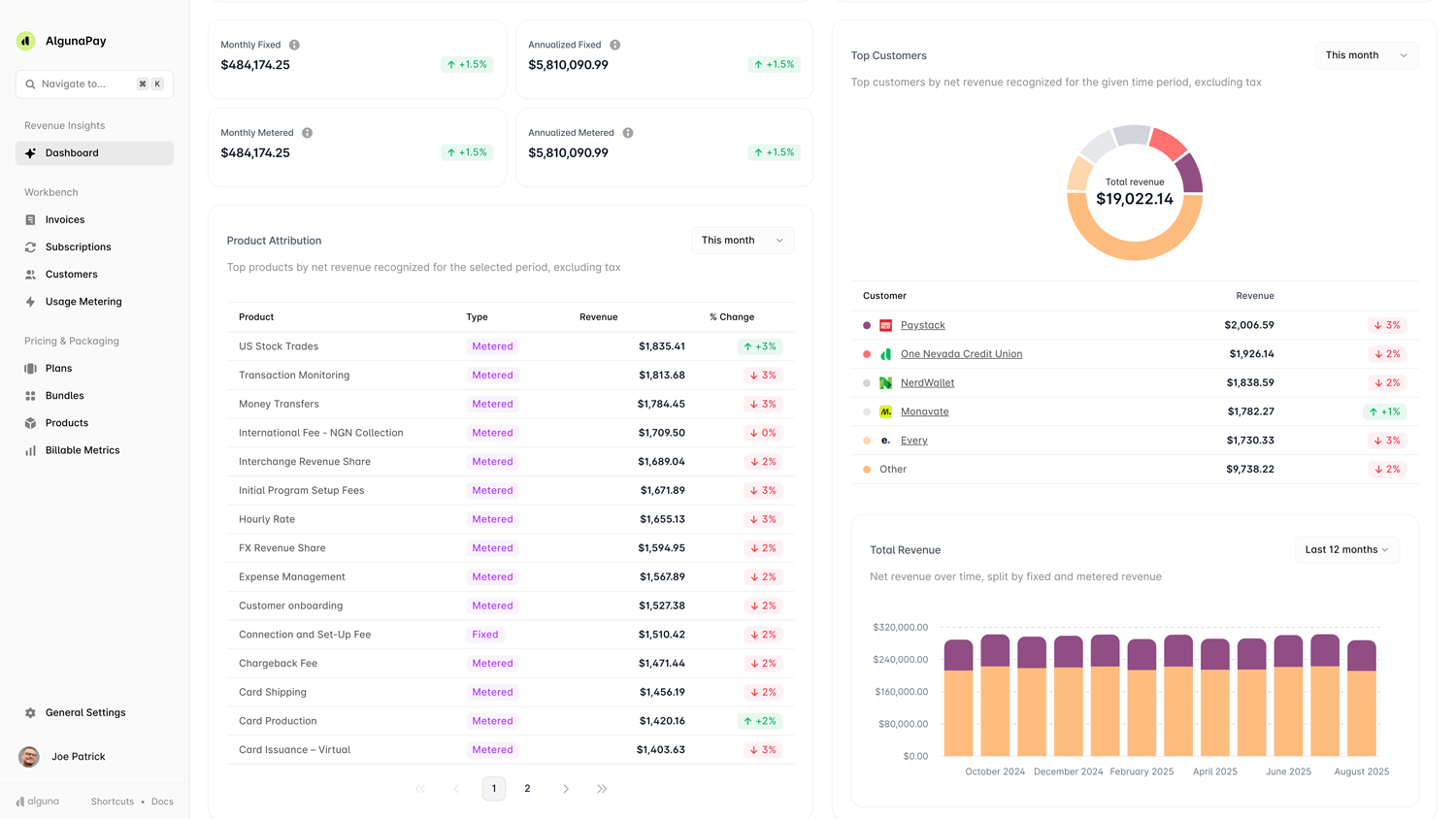
Alguna is an AI-native quote-to-revenue platform that brings CPQ, real-time metering, usage-based billing, credit wallets, and revenue recognition into one system without code.
Alguna is the most complete no-code usage-based pricing tool on the market for modern AI monetization and hybrid pricing strategies.
No-code capabilities
- Fully no-code usage meters (events, attributes, thresholds, transformations)
- No-code configuration for pricing tiers, volume discounts, hybrid units, and minimum commits
- No-code CPQ rules, bundling, approvals, and quote logic
- No-code revenue recognition mapping and allocation
Metering strength
- Real-time usage ingestion
- Multi-attribute metric calculation
- Derived metrics (AI agent actions, compute cycles, messages, API calls)
- Native credit, token, and wallet systems
Pricing model support
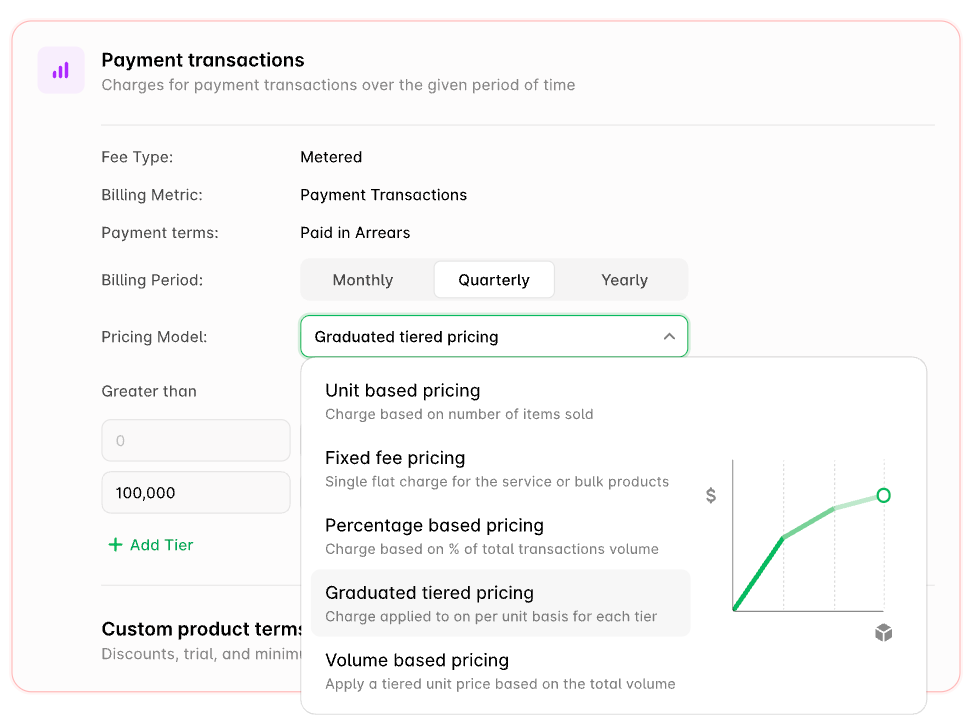
- Per-unit pricing
- Tiered, volume, and block pricing
- Hybrid pricing (base fee + usage + minimum commit)
- Credit wallets and drawdowns
- Agentic and AI metrics (model calls, inference tokens, tasks completed)
Reporting and automation
- Unified billing → revenue → deferred revenue → GL
- Full audit trail across pricing, usage, and contracts
- Usage anomaly detection and spike alerts
- Automated credit expirations, adjustments, and billing rules
Limitations
- Not designed for very early-stage or hobby SaaS
- More enterprise-oriented than purely self-serve tools
Best for
High-growth SaaS, AI platforms, agentic systems, fintech APIs, workflow automation tools, infrastructure companies, or any business with complex or fast-evolving usage-based pricing.
2. Chargebee: Best for subscription-first teams adding basic usage-based pricing
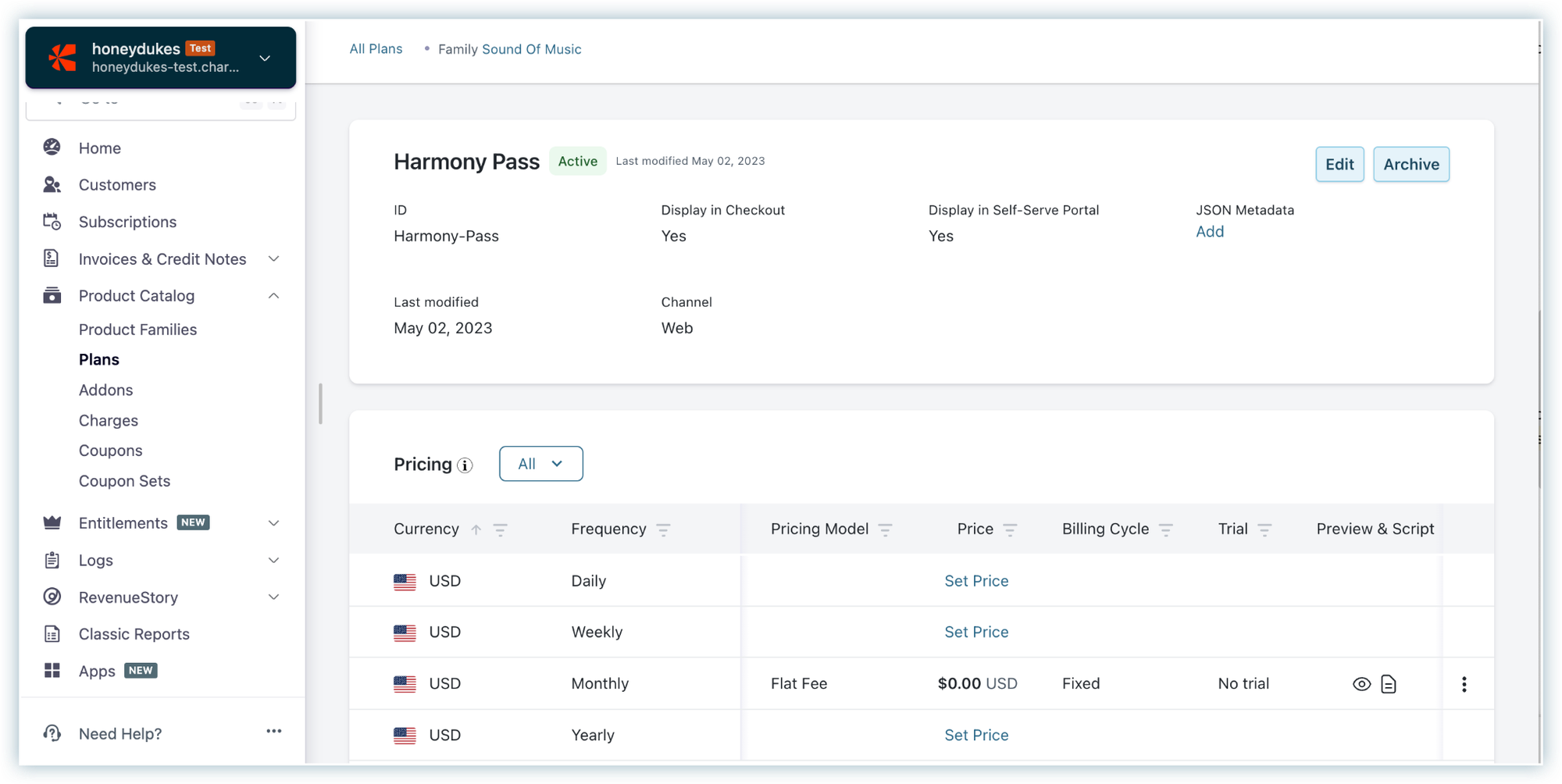
Chargebee is a subscription billing platform with usage-based pricing support layered on top of a traditional recurring billing core.
While it offers metered billing, CPQ functionality is limited and not purpose-built for complex usage-based deals.
No-code capabilities
- UI-based configuration for standard usage meters
- Limited no-code pricing experimentation
- Quoting supported via workflows and integrations rather than native CPQ
- Revenue recognition handled in a separate product (RevRec)
Metering strength
- Metered billing support for basic usage events
- Primarily single-dimension metrics
- Limited support for derived or composite usage metrics
- No native credit wallet system
Pricing model support
- Per-unit usage
- Tiered and volume pricing
- Subscription + usage hybrids
- Limited support for minimum commits or complex drawdowns
Reporting and automation
- Subscription and invoice reporting
- Separate revenue recognition tooling
- Manual intervention often required for complex usage scenarios
- Limited real-time usage visibility
Limitations
- CPQ is not a first-class feature
- Advanced usage pricing often requires engineering support
- Fragmented experience across billing, quoting, and revenue
Best for
Mid-market SaaS companies with relatively simple usage-based pricing layered on top of subscriptions.
Paid plans start at $5pp per month for up to $100,000 MRR in billings.
Subskribe
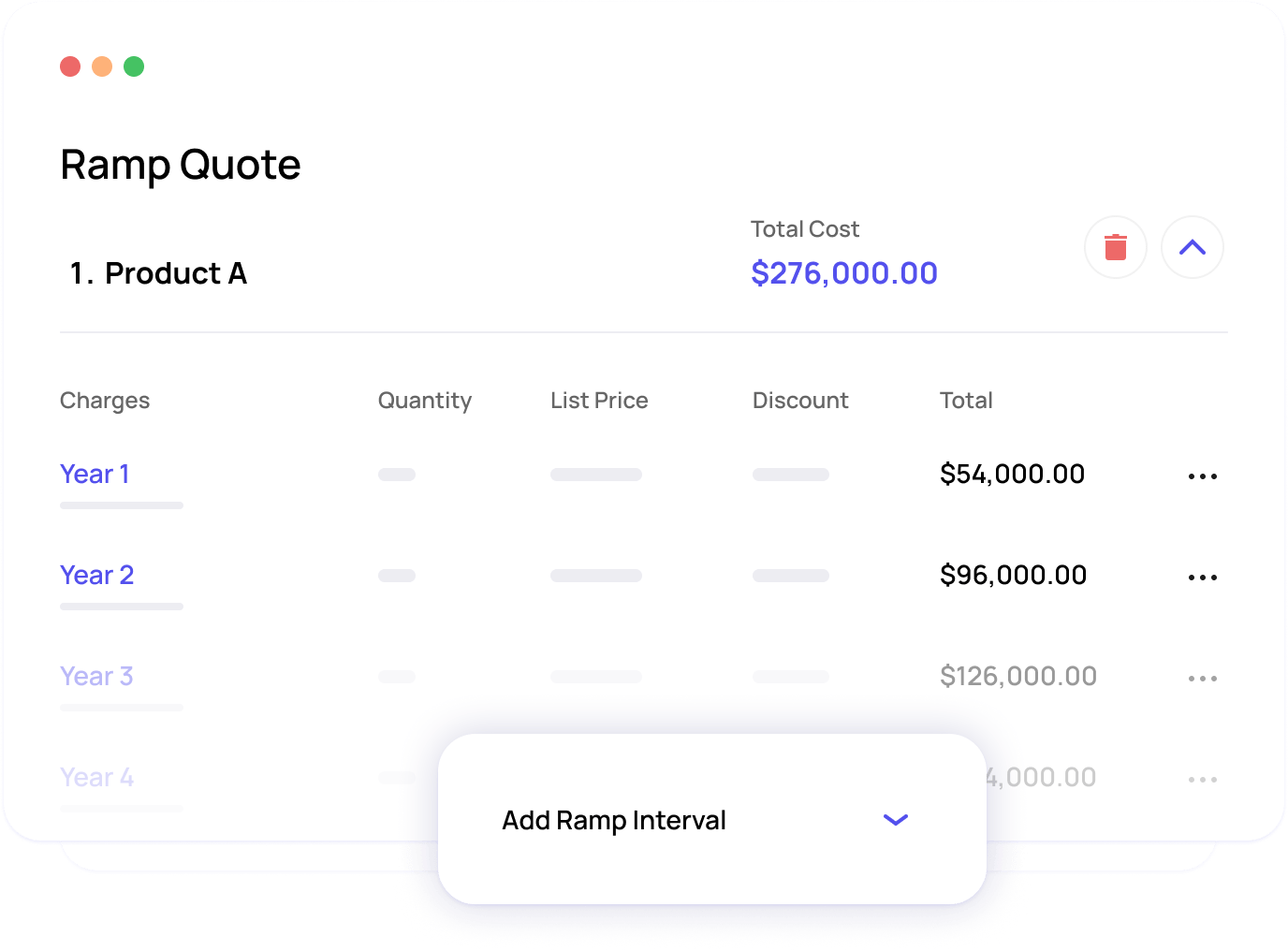
Subskribe is a sales-led CPQ and billing platform built for complex enterprise SaaS contracts, with usage-based pricing handled primarily as contractual terms rather than real-time consumption.
No-code capabilities
- No-code CPQ for configuring deals, amendments, renewals, and ramps
- Strong support for negotiated pricing and multi-year contracts
- Usage pricing defined in contracts rather than live meters
- Revenue workflows closely tied to sales operations
Metering strength
- No native real-time usage metering
- Usage data sourced from external systems
- No derived or AI-specific usage metrics
- No native credit or token wallet system
Pricing model support
- Contracted usage pricing
- Tiered and volume-based commitments
- Hybrid subscription + usage (contract-defined)
- Ramps and pre-negotiated expansions
Reporting and automation
- Strong visibility into contracted revenue
- Sales and finance alignment around booked ARR
- Billing and usage reconciliation handled downstream
- Limited automation for dynamic usage billing
Limitations
- Usage is not metered or rated natively
- Not designed for high-frequency or AI-driven usage
- Pricing changes require contract updates, not configuration
Best for
Enterprise SaaS companies with sales-negotiated usage pricing, long-term contracts, and predictable consumption patterns.
Subskribe offers custom pricing based on seats and revenue. Estimate around $20k per year.
Maxio
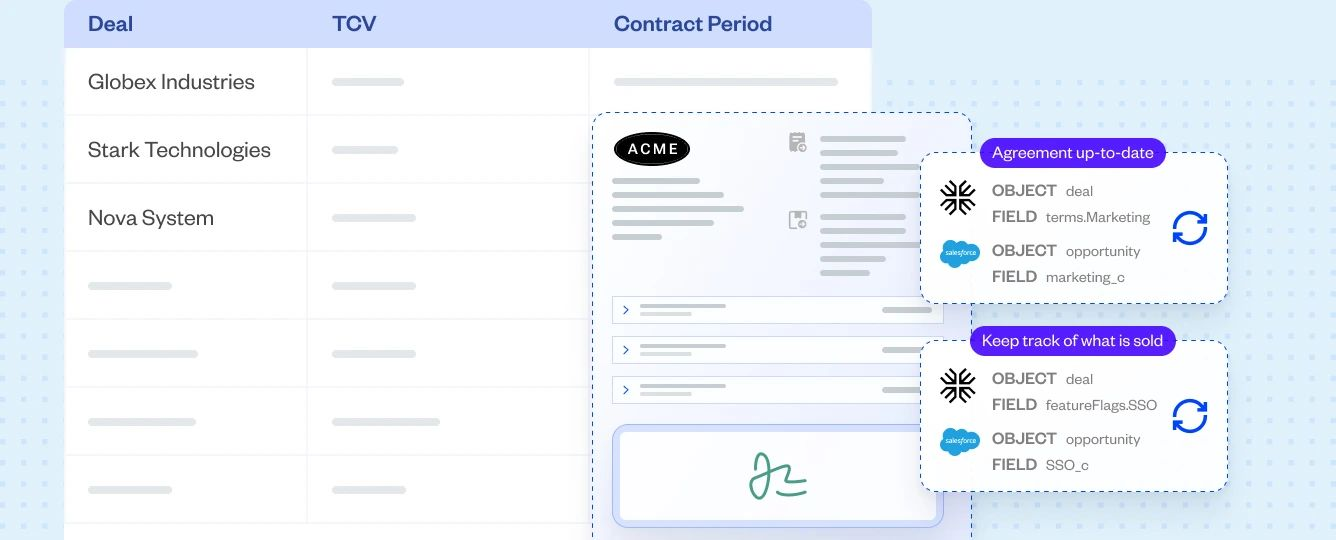
Maxio is a finance-first billing and revenue platform designed primarily for subscription SaaS, with usage-based pricing added as an extension rather than a core capability. CPQ and usage pricing are optimized for predictability, not experimentation.
No-code capabilities
- Configuration-based pricing for standard contracts
- Traditional CPQ for subscription deals
- Limited no-code flexibility for usage-heavy pricing
- Revenue recognition is a core strength
Metering strength
- Supports usage tracking for predefined metrics
- Batch-oriented rather than real-time
- Limited support for complex or derived metrics
- No native credit or wallet system
Pricing model support
- Per-unit usage
- Tiered pricing
- Subscription-led hybrid models
- Weak support for dynamic usage-first pricing
Reporting and automation
- Strong financial reporting and compliance
- Robust revenue recognition workflows
- Less automation for real-time usage billing
- Manual processes common for edge cases
Limitations
- Not designed for AI-scale or high-frequency usage
- Limited flexibility for evolving pricing models
- CPQ optimized for contracts, not usage experimentation
Best for
Subscription-heavy SaaS businesses with finance-led operations and relatively stable pricing structures.
Paid plans start at $599per month for up to $100,000 MRR in billings.
DealHub: Built for enterprise deals (not usage-native nonetization)
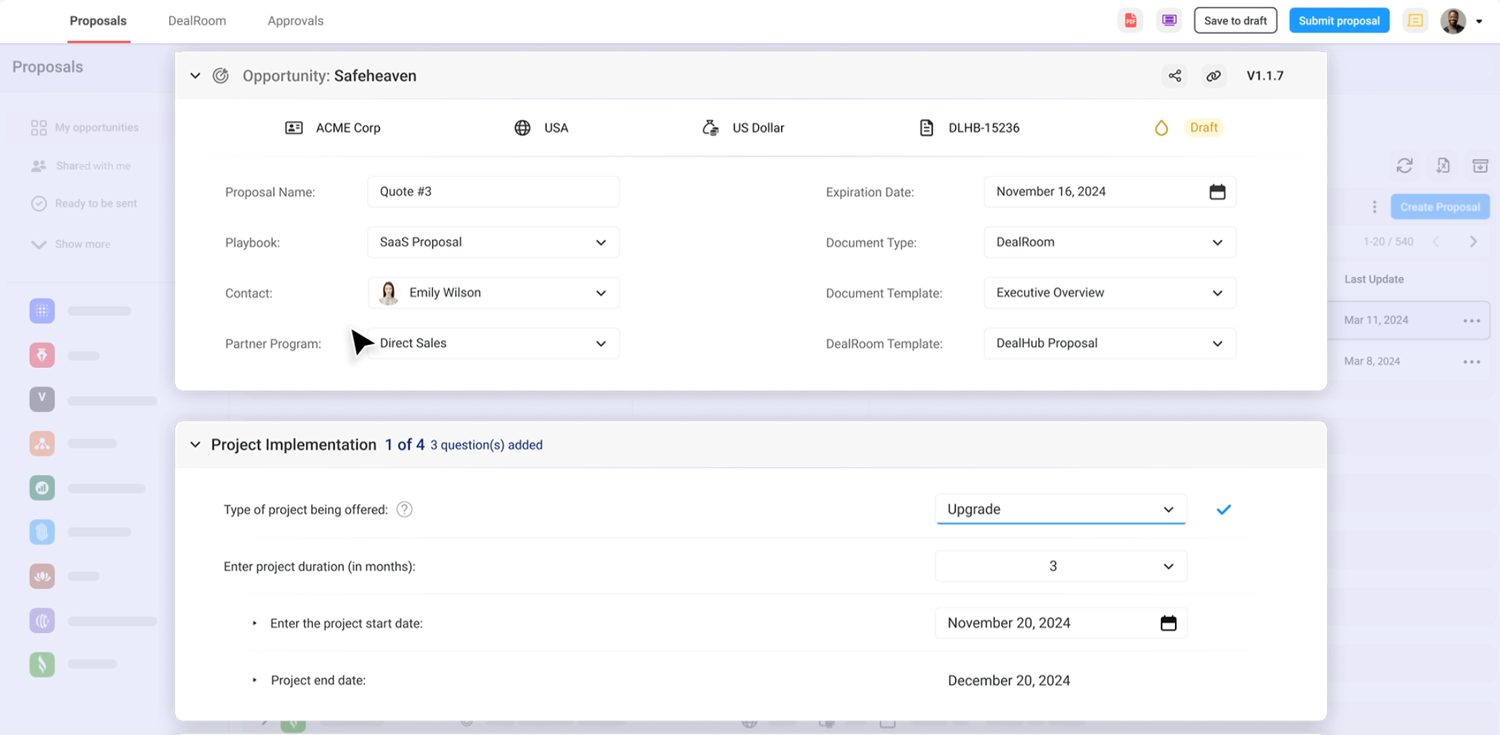
DealHub is a sales-led CPQ platform built to manage complex enterprise deals, with usage-based pricing handled primarily as contractual terms rather than real-time metered consumption.
No-code capabilities
- Strong no-code CPQ for deal configuration
- Visual workflows for approvals, amendments, and renewals
- Usage pricing captured in contract logic
- Heavy CRM (Salesforce) alignment
Metering strength
- No native real-time usage metering
- Usage tracked outside the platform
- Relies on downstream billing systems
- No derived or AI-specific metrics
Pricing model support
- Contracted usage pricing
- Tiered and volume commitments
- Hybrid subscription + usage deals (contract-level)
Reporting and automation
- Strong quoting and deal visibility
- Limited billing and revenue automation
- Dependent on integrations for invoicing and rev rec
Limitations
- Not a quote-to-revenue platform
- No native usage metering or billing
- Usage pricing not dynamic or real time
Best for
Enterprise sales teams managing negotiated, contract-driven usage pricing rather than real-time consumption.
DealHub doesn’t publish list pricing publicly. Pricing will sit on the higher end of the market and requires a custom quote based on users and modules.
Why no‑code is the secret weapon for usage‑based pricing teams
Usage‑based models confer several advantages:
- Lower barriers to adoption: UBP allows customers to start using a product at a low cost, minimizing friction and enabling more users to try the product. This is critical in a product‑led growth strategy.
- Alignment of price with value: When customers only pay for what they use, pricing mirrors the value delivered. Tropic notes that usage‑based pricing enables organizations to ensure they only pay for features and resources that drive real value.
- Expansion and land‑and‑expand: UBP encourages customers to adopt more features and use cases, expanding total addressable market (TAM) and seeding new use cases within an account.
- Higher retention and revenue growth: Usage‑based companies generally see better net dollar retention and revenue growth compared with seat‑based peers.
- Flexibility for AI and cloud services: AI and cloud computing require massive, variable compute resources; usage‑based billing lets companies scale costs with usage rather than locking them into expensive seat licenses.
No‑code tools amplify these benefits by removing engineering bottlenecks. Paritydeals points out that teams shouldn’t have to wait for engineers to implement pricing experiments; instead, product and growth teams need direct control to adjust meters and hybrid pricing rules.
Because pricing can be iterated quickly, companies can test new models (e.g., combining per‑token and per‑outcome pricing) and respond to market feedback faster. Real‑time dashboards and alerts also give customers transparency into their usage and costs, reducing bill shock and strengthening trust.
Emerging trends in no‑code usage‑based pricing
The next frontier for no‑code UBP tools is the integration of AI and predictive analytics. The rise of generative AI and increasing variability in workloads are accelerating the need for flexible, usage‑based models.
This sets the stage for AI‑assisted pricing optimization, systems that can forecast usage patterns, recommend pricing tiers, or automatically adjust rates based on customer segments.
Other trends include:
- Outcome‑based pricing: Rather than charging solely on raw usage, some vendors are moving toward billing on business outcomes such as “conversations resolved” in a support AI product. Flexprice highlights that outcome‑based billing can make pricing more intuitive for customers and reduce churn.
- Multi‑entity and multi‑currency support: As SaaS companies globalize, billing systems must handle multiple currencies, tax jurisdictions, and legal entities. Platforms are adding native multi‑entity support and purchasing‑power‑parity pricing to address this complexity.
- Real‑time spend visibility: Procurement teams need real‑time dashboards and alerts to manage unpredictable usage patterns and avoid budget overruns Modern UBP tools offer self‑serve dashboards and threshold alerts to help customers monitor spend.
- Integration with AI workloads: AI workloads often involve thousands of micro‑transactions (e.g., tokens or API calls) per minute. Tools must ingest and rate these events without lag or duplicate records.
How to choose the right no‑code usage‑based pricing tool
When evaluating no‑code UBP tools, consider the following criteria:
- Hybrid model support: Can the platform handle combinations of seats, usage, credits and outcomes? Hybrid pricing is now more common than pure usage; OpenView reports that 46% of SaaS companies use hybrid pricing models.
- Built‑in metering and real‑time ingestion: Does the tool natively track events at the level you need (tokens, API calls, sessions), without requiring separate metering infrastructure? Look for features like idempotent event ingestion and high throughput.
- No‑code rule configuration: Are pricing and discount rules editable via a visual interface? Tools should allow PMs and RevOps to set up new pricing and promotions without code.
- Revenue recognition and compliance: Does the platform support ASC 606/IFRS compliance? Integrated revenue recognition avoids spreadsheets and ensures audit readiness.
- Integrations: The tool should integrate with your CRM, payment processor, tax engines, customer support systems, and data warehouse. Many vendors now provide pre‑built connectors.
- Scalability and reliability: High‑frequency workloads such as AI or IoT require systems that can handle thousands of events per second and maintain high availability.
- Transparency and customer experience: Look for self‑serve dashboards, usage alerts, and clear invoice breakdowns to minimize disputes and improve customer trust.
Quick 6-step checklist:
✅ Can non‑technical users launch and update pricing models?
✅ Does it support hybrid usage, seat, and outcome pricing?
✅ Is metering built in and real‑time?
✅ Are revenue recognition and tax compliance handled automatically?
✅ Does it integrate seamlessly with your existing stack (CRM, payments, finance)?
✅ Can it scale with AI workloads and global expansion?
Frequently asked questions about no‑code usage‑based pricing tools
What is a no‑code usage‑based pricing tool? It’s a platform that allows non‑technical teams to design and manage pricing models where customers pay for what they use. These tools offer visual rule builders, native metering, and integrated billing so you can launch per‑usage, per‑seat, or hybrid models without writing code.
How does no‑code billing differ from traditional billing? Traditional billing often requires developers to embed pricing logic in code and manually reconcile usage data. No‑code tools provide drag‑and‑drop interfaces for pricing rules and automatically ingest usage events, reducing engineering effort and accelerating go‑to‑market.
What are the benefits of combining usage‑based and seat‑based pricing? Hybrid models let companies capture value from both steady users and high‑usage outliers. OpenView reports that 46% of SaaS companies take a hybrid approach. A no‑code tool should support flat fees plus per‑usage or per‑outcome charges.
Do I need engineering resources to launch usage‑based pricing? With a no‑code platform, most pricing changes can be made by product, finance or RevOps teams. Engineering involvement may still be needed for initial integration or complex customizations, but day‑to‑day configuration and experiments can be managed without code.
Which industries benefit most from no‑code UBP tools? Usage‑based billing originated in cloud infrastructure (AWS, Azure, GCP) but is now common in AI, data infrastructure, API services, fintech, and any product where value scales with consumption. Companies with variable workloads or outcome‑based value are particularly well served by these tools.
Usage-based pricing demands a new kind of CPQ
Usage-based pricing has moved from an experiment to the default monetization model for modern SaaS, AI, and API-driven businesses. But as pricing becomes more dynamic and blends subscriptions, usage, credits, minimum commitments, and AI-specific metrics, the limitations of traditional billing systems become increasingly clear.
This is where no-code usage-based pricing tools, specifically usage-native CPQ platforms, come into play. The most effective solutions are no longer just billing engines or developer APIs. They are quote-to-revenue systems that allow RevOps, finance, and product teams to design, launch, and evolve usage-based pricing models without engineering bottlenecks.
While platforms like Stripe, Chargebee, Maxio, and DealHub each serve important roles, they were not purpose-built to be the system of record for real-time usage monetization. They treat usage as an input, not the core pricing logic.
For companies operating in the AI era—where pricing must adapt as fast as products ship—the winning approach is Alguna's no-code CPQ that natively understands usage. One that unifies quoting, metering, billing, credits, and revenue recognition into a single, flexible platform.
Want to see Alguna's next-gen no-code pricing tool in action?
Simplify complex revenue operations with Alguna’s no-code CPQ solution. Quote, bill, and recognize revenue—all in one system built for subscriptions, usage, credit, and outcome-based models.