• Hybrid pricing is now the default for SaaS, AI, and fintech, but most legacy billing tools weren’t built to support it.
• The right platform should support real-time usage, contract-driven billing, and pricing changes without engineering support.
• Modern platforms like Alguna are built specifically for hybrid billing, enabling faster pricing iteration with less operational overhead.
Hybrid billing combines predictable subscriptions with flexible usage: Modern SaaS, fintech, and AI companies are moving beyond one-size-fits-all pricing.
By blending recurring fees with pay-as-you-go charges (and even credits or one-off fees), hybrid billing models capture more value and deliver fairness to customers.
Implementing this model introduces complexity in billing. That's why hybrid billing software is essential, because without the right tools, charging a mix of subscription, usage, and other fees becomes error-prone and labor-intensive.
Here, we’ll break down what hybrid billing software is, the problems it solves, and who needs it. You’ll also find a side-by-side comparison of leading hybrid billing software, including Alguna’s modern quote-to-revenue platform, to help you evaluate the best fit for your business.
What is hybrid billing (and why pricing is going hybrid)?
If you run a SaaS or AI platform, you’ve probably felt the tension between simple subscriptions and unpredictable usage spikes.
Flat monthly fees are easy to budget for, but they often leave money on the table when heavy users would gladly pay more AND they can alienate light users who pay for capacity they don’t use.
On the flip side, pure usage-based pricing aligns price with value, but it can make your revenue (and customers’ bills) volatile from month to month. This is where hybrid pricing comes in.
Hybrid billing vs hybrid pricing: What's the difference?
• Hybrid pricing = What you charge
• Hybrid billing = How you charge it
Hybrid pricing is a go-to-market strategy that combines two or more pricing models, most often a recurring subscription plus usage-based charges.
For example, a SaaS platform might charge a base fee of $500/month for platform access + $0.01 per API call on top. The subscription provides a predictable floor, while the usage fee captures value as the customer’s usage grows. Companies embrace hybrid pricing because it encourages adoption with predictable costs, captures expansion revenue as usage increases, and better reflects the actual value each customer gets.
However, setting hybrid pricing is only half the battle as you need to execute it on the billing side.
This is what hybrid billing refers to: the operational capability to track all those different charges and invoice them correctly. Hybrid billing means your systems can handle both fixed and variable components seamlessly.
What does that mean in practice?
In practice, that involves: tracking metered usage (API calls, compute hours, transactions, etc.), applying the correct pricing rules and tiers, prorating for mid-cycle changes, and generating a single invoice that combines subscription + usage charges, all while properly recognizing revenue for each component.
In short, hybrid billing gives you the flexibility of usage-based pricing without sacrificing the stability of recurring revenue. It’s the back-end execution that makes hybrid pricing possible.
If you’re offering a hybrid model to customers, you must ensure your billing infrastructure can support it accurately and efficiently, otherwise you risk billing errors, customer confusion, and revenue leakage.
Why hybrid billing is essential for scaling SaaS and AI companies
Moving to a hybrid model can unlock growth, but it also introduces significant operational challenges behind the scenes.
Legacy billing systems and homegrown spreadsheets struggle when you need to handle real-time usage data, dynamic pricing, and complex invoice calculations.
Here are the key reasons hybrid billing software (and automation) is non-negotiable once you scale:
- Scalability: As usage grows, manual billing processes break down. Automation can handle thousands or millions of usage events without delays or errors. Human finance teams simply can’t keep up with high-volume, granular billing calculations.
- Accuracy: Mixing fixed fees with metered charges is prone to mistakes if done by hand. Specialized software eliminates invoice errors and revenue leakage as every API call, GB of data, or transaction is accounted for and billed correctly.
- Transparency: Customers expect to see what they’re paying for. Hybrid billing software provide real-time visibility into usage and charges, whether via dashboards or itemized invoices, reducing “bill shock” and support tickets from confused customers.
- Speed and efficiency: Automated hybrid billing frees up your finance/Ops teams from spreadsheet gymnastics and manual invoice adjustments. This means faster billing cycles, quicker month-end closes, and the ability to iterate on pricing without heavy operational overhead.
- Compliance: Revenue recognition for hybrid models can be tricky (you need to follow standards like ASC 606/IFRS 15). Dedicated billing software helps ensure that subscription vs. usage revenue is recognized properly and audit-ready. It also syncs billing data with your CRM, ERP, and accounting systems to keep the whole revenue process in line.
Without a robust hybrid billing solution, a “simple” hybrid pricing change, say adding an overage fee or launching a new usage-based add-on, can result in weeks of engineering workarounds or finance firefighting.
That’s why more companies are turning to purpose-built platforms to operationalize their hybrid pricing models.
What is hybrid billing software?
Hybrid billing software enables SaaS, fintech, and AI companies to support multiple pricing models in a single billing system. In practice, that usually means combining recurring subscription billing with usage-based billing (plus things like prepaid credits or one-time fees) under one roof.
These platforms are built to handle the operational complexity of modern SaaS monetization strategies. Instead of bolting a usage calculator onto a subscription tool, a true hybrid billing system lets you configure flexible pricing rules and automates the entire quote-to-cash process for hybrid models.
Crucially, hybrid billing software is real-time and integration-friendly. Unlike old-school subscription billing tools, modern hybrid billing platforms meter product usage as it happens (via APIs or event streams), apply dynamic pricing or tiering rules on the fly, automatically generate invoices, and sync data downstream to your financial systems.
“As more companies blend usage-based and subscription pricing, billing has become a strategic capability.
Automation is no longer optional.”
– Bessemer Venture Partners, State of the Cloud 2025
4 core benefits of hybrid billing software
In other words, your billing ops need to evolve as your pricing evolves. Finance and RevOps leaders are now prioritizing specialized billing platforms to replace brittle spreadsheets or patchwork systems that can’t keep up.
If your pricing includes tiers, thresholds, overages, pay-as-you-go elements, or bundled services, hybrid billing software helps you:
- Reduce manual effort by automating usage tracking, rating, and invoice generation. No more reconciling data from multiple sources or sending out two separate bills for one customer.
- Improve accuracy and compliance by centralizing all charges in one system and enforcing consistent rules. This ensures billing matches contracts and that revenue is recognized correctly for each component.
- Launch and iterate on pricing faster. Want to experiment with a new consumption-based add-on or offer custom packages for a big customer? The right platform lets you adjust pricing rules with minimal engineering work, so you can respond to the market quickly.
- Scale confidently as you grow. Whether you double your customer count or introduce new product lines, a solid hybrid billing foundation will handle the increased volume and complexity. This avoids painful migrations or rebuilds later on.
Hybrid billing is quickly becoming a strategic capability for SaaS, AI, and fintech businesses. If your product’s monetization is hybrid (or heading that way), ensuring your billing can handle that complexity is mission-critical.
Hybrid billing software: Comparison overview
Hybrid billing is a fast-evolving space, with solutions ranging from modern all-in-one platforms to add-ons for legacy systems.
Below, we’ve put together a comparison of leading hybrid billing software platforms. Each of these supports a mix of recurring and usage-based billing, though they differ in focus, strengths, and ideal use cases.
Note: Always check vendor websites for most recent features and pricing.
| Platform | Best for | Strengths | Limitations | Pricing |
|---|---|---|---|---|
| Alguna | AI, SaaS, and fintech companies with complex hybrid pricing models needing scale | Real-time usage metering; no-code pricing & quoting; unified CPQ + billing + RevRec; modern UX and fast setup | Newer platform; may be overkill for very basic billing needs | Free tier available. Paid plans start at 699/month (flat subscription, no revenue share) |
| Chargebee | Mid-market SaaS with mostly subscriptions and light usage components | Mature, battle-tested platform; extensive integrations (Salesforce, NetSuite); strong compliance features | Usage rating is not real-time; advanced features gated on higher plans | Starts at $599/month + ~0.75% of overage revenue |
| Maxio | Finance-driven SaaS needing billing + revenue ops in one system | Native revenue recognition; SaaS metrics; CPQ; strong contract handling | Complex UI; less agile for rapid pricing or PLG motions | Starts around $599/month; pricing scales with usage |
| Stripe Billing | Startups using Stripe needing basic metered billing fast | Excellent developer experience; fast implementation; native payments | Limited pricing flexibility; revenue-based fees become expensive at scale | 0.7% of billing volume + Stripe payment fees |
| Zenskar | SaaS startups with event-based pricing (AI / fintech) | Flexible usage ingestion; programmable pricing rules; strong audit trails | Early-stage; requires engineering setup | Custom usage-based pricing |
| Zuora | Large enterprises with global, contract-heavy hybrid billing needs | Extremely flexible billing models; strong contract amendments; built-in revenue recognition; multi-entity support | High cost; long implementation cycles; heavy operational overhead | Custom enterprise pricing (typically $50k+/year) |
1. Alguna: Best for AI, SaaS & fintech companies with complex hybrid pricing
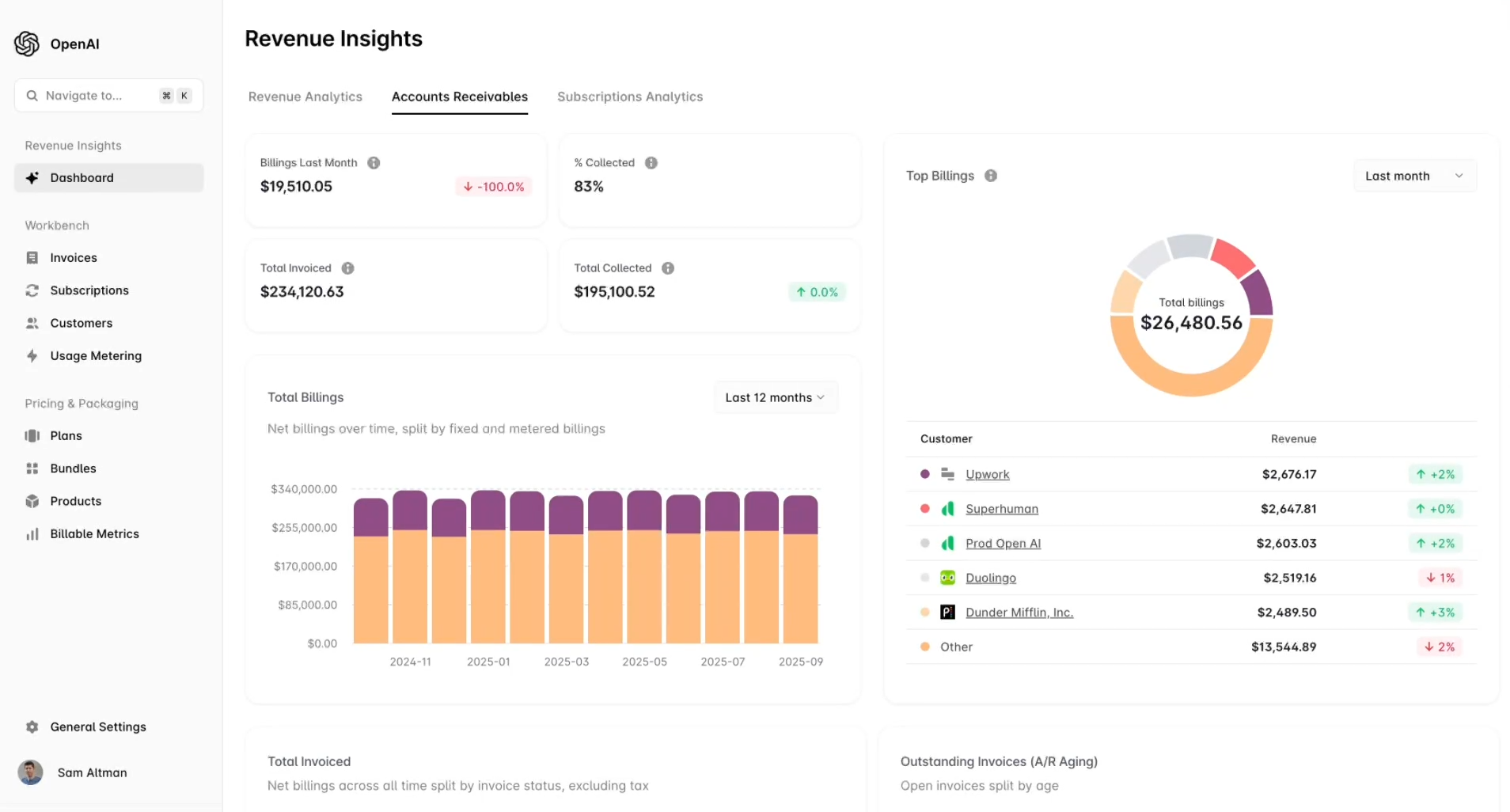
Alguna is an all-in-one quoting, metering, and billing platform that unifies the entire quote-to-cash process for modern tech companies. Designed by seasoned fintech operators and backed by Y Combinator, Alguna was built from the ground up to handle hybrid pricing models, especially for usage-heavy products in SaaS, AI, and fintech.
Think of Alguna as a “full-stack” revenue automation platform, it combines CPQ (Configure-Price-Quote), real-time usage metering, subscription management, invoicing, and even automated revenue recognition in one system.
This means you can model very sophisticated SaaS and AI pricing models (subscriptions, multiple usage metrics, one-off charges, discounts, etc.) without writing custom billing code.
Strengths
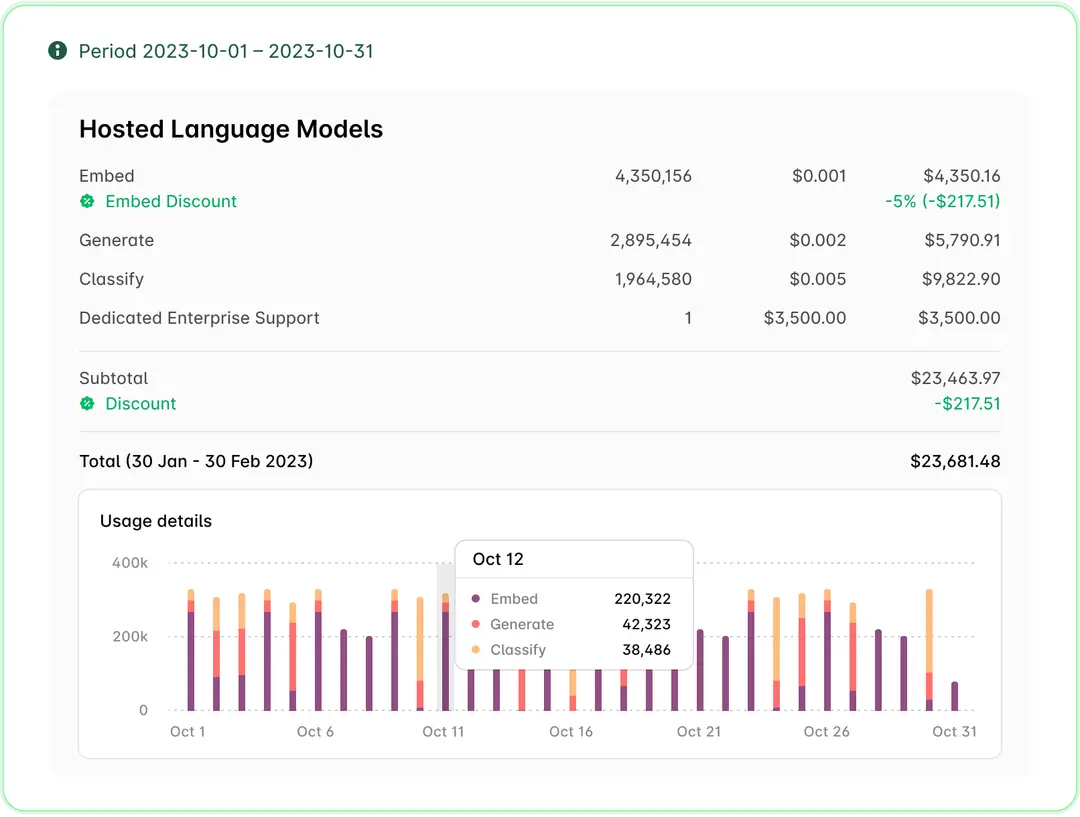
- Real-time usage metering and rating: Usage flows in continuously, enabling live dashboards and faster month-end close
- No-code pricing and quoting: RevOps and finance can launch or change pricing without engineering involvement
- Built for complex hybrid billing: Supports subscriptions, usage, credits, commitments, and overages natively
- Advanced contract handling: Co-termed contracts, mid-cycle proration, amendments, and renewals
- Consolidated invoicing: Supports customers with multiple accounts or entities on a single invoice
- Revenue recognition ready: Native support for ASC 606–compliant revenue workflows
- Fast time to value: Implementation measured in weeks, not months
- White-glove onboarding: Hands-on setup and migration support for teams that need to move quickly
Limitations
- Newer platform: Some large-enterprise integrations or niche features may still be on the roadmap
- Not suited for very early-stage startups: Companies with only flat subscriptions may not need this level of flexibility
Ideal use cases
- SaaS, AI, and fintech companies planning rapid growth or pricing evolution
- Teams experimenting with usage-based or hybrid monetization models
- Companies selling custom or enterprise contracts that require flexibility
- AI/ML platforms pricing by tokens, compute, or events
- API-first and product-led growth businesses combining subscriptions with usage
- Organizations that view billing as a strategic system, not back-office infrastructure
Pricing: Free tier available. Paid plans start at $699 per month. Alguna never takes a revenue cut. Onboarding and migration included.
2. Chargebee: Best for mid-market SaaS adding light usage components
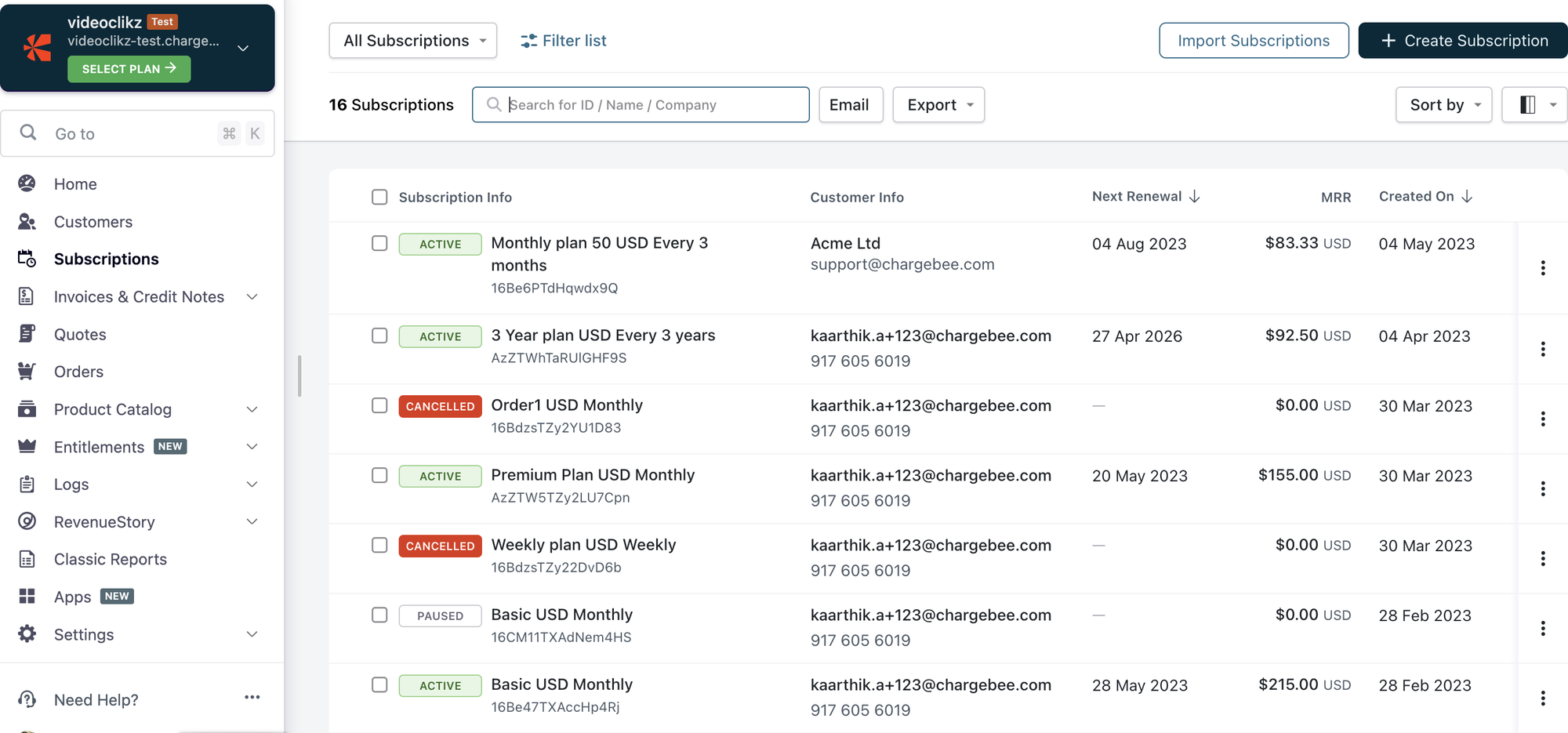
Chargebee is a subscription billing platform (now considered a legacy player) that has added some usage billing capabilities in recent years. It targets mid-market SaaS, e-commerce, and other recurring revenue businesses that primarily sell subscriptions, but may have some usage-based add-ons like overage fees or metered features.
Chargebee is known for its robust subscription management: handling trials, coupons, renewals, multiple payment gateways, etc., with a strong UI for business users.
Strengths
- Mature subscription engine: Reliable handling of recurring billing, renewals, and proration
- Strong subscription lifecycle management: Plans, upgrades, downgrades, coupons, and trials out of the box
- Broad integration ecosystem: Native connections to Salesforce, NetSuite, QuickBooks, Zendesk, and more
- Global billing support: Multi-currency, tax handling (including EU VAT/GST), and regional compliance
- Finance-friendly UI: Non-technical teams can manage billing without engineering involvement
Limitations
- Batch-based usage processing: Usage is calculated at period end, not in real time
- Usage is secondary, not native: Hybrid billing capabilities are layered onto a subscription-first model
- Limited hybrid flexibility: Multi-metric usage, credits, and spend-based commitments are difficult to model
- Feature gating at higher tiers: Advanced capabilities require more expensive plans
- Scaling friction: Becomes restrictive as usage grows into a primary revenue driver
Ideal use case
- Subscription-led SaaS: Pricing anchored around recurring plans
- Light usage add-ons: Overages or small metered components
- Integration-heavy stacks: Teams that rely on CRM and ERP sync
- Pre-hybrid phase: Companies not yet fully committed to usage-led pricing
Pricing: Paid plans start at $599/month for up to $100K MRR in billings.
3. Maxio (SaaSOptics/Chargify): Best for finance-oriented SaaS needing billing and revenue management in one
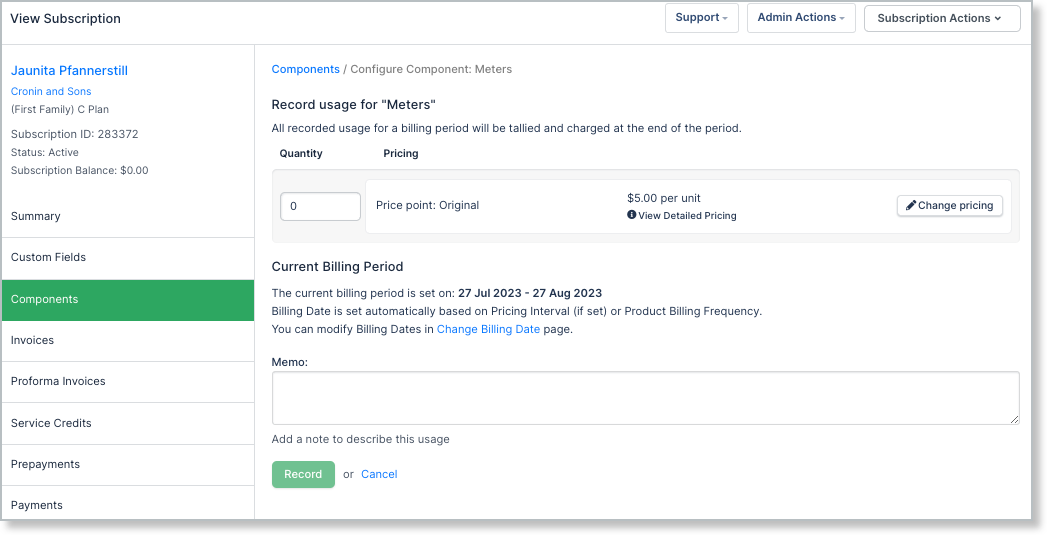
Maxio is the product of a merger between two older SaaS finance tools (SaaSOptics and Chargify), combining subscription billing with financial operations like revenue recognition and SaaS analytics. It’s pitched as a solution for finance teams at B2B SaaS companies who want billing, analytics, and GAAP reporting all integrated.
Maxio supports hybrid billing in the sense that it can charge subscriptions and usage fees, and it has a strong emphasis on the back-office processes around billing (rev rec, reporting, forecasting).
Strengths
- Native revenue recognition: Built-in support for deferred revenue, ASC 606 compliance, and audit-ready workflows
- SaaS metrics and reporting: LTV, churn, ARR, and finance-grade dashboards available out of the box
- Billing + financial subledger: Reduces the need for separate rev rec tools or manual reconciliation
- Contract-aware billing: Supports multi-year deals, ramps, renewals, and co-termed subscriptions
- Built-in CPQ: Enables sales-led quoting tied directly to billing and revenue workflows
- Flexible pricing constructs: Supports tiered pricing, overages, and select custom calculations
Limitations
- Complex UI and configuration: Steeper learning curve due to merged product architecture
- Not real-time usage native: Usage ingestion and rating lag behind newer, event-driven platforms
- Slower pricing iteration: Changes often require setup and coordination rather than quick experimentation
- Finance-first orientation: Less suited for PLG or developer-led monetization models
- Heavy for engineering teams: Limited flexibility for teams wanting programmatic pricing control
Ideal use case
- Finance-led B2B SaaS: CFO-owned billing and revenue operations
- Accounting-driven workflows: Strong need for GAAP compliance and deferred revenue automation
- Sales-led growth: Contract-based deals with predictable pricing structures
- Later-stage maturity: Companies willing to trade agility for financial rigor
Pricing: Just like Chargebee, Maxio’s pricing starts at $599/month for up to $100K MRR in billings.
4. Stripe Billing: Best for startups needing quick, basic hybrid billing software (built on Stripe payments)
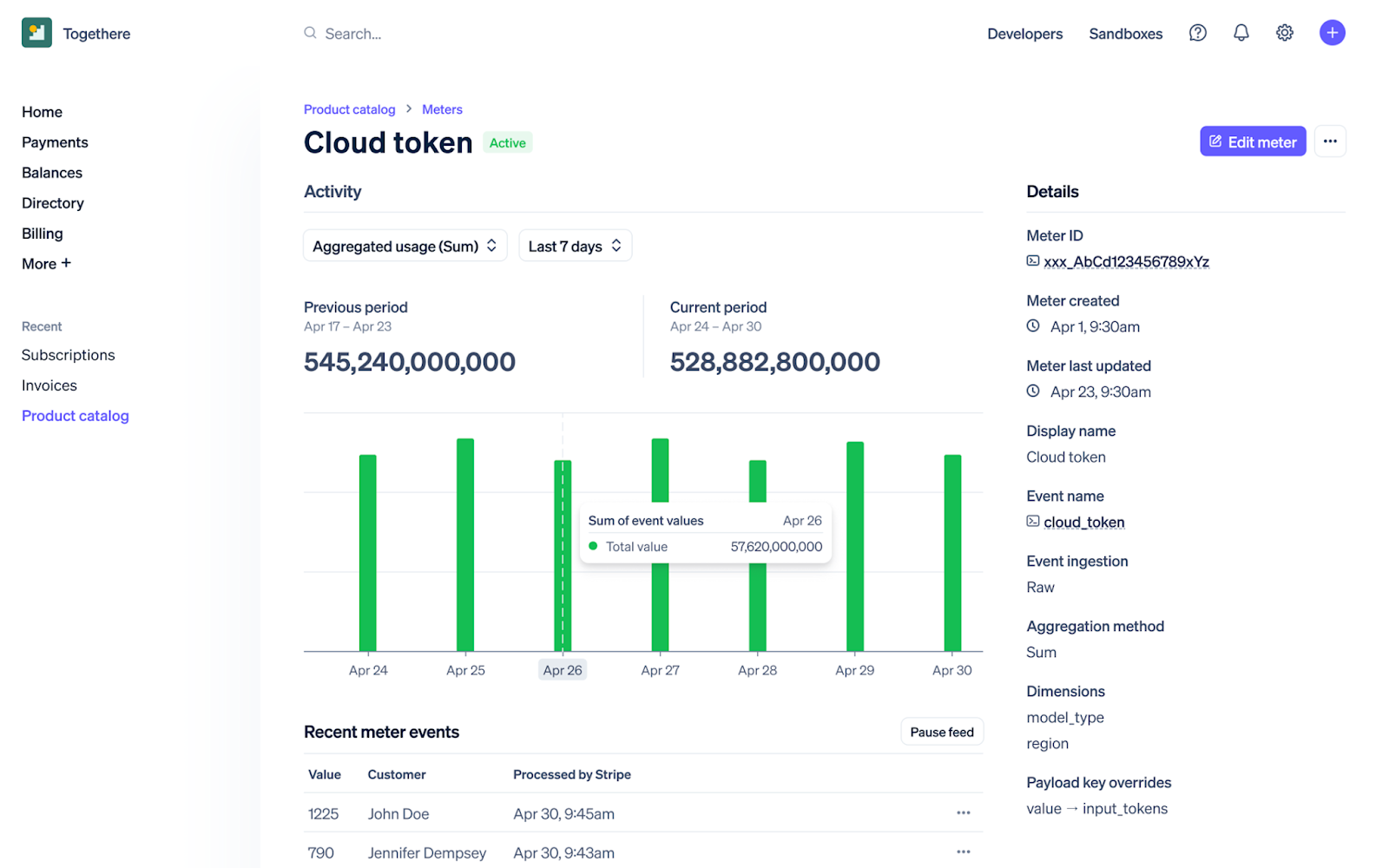
Stripe Billing is an extension of Stripe (the payment processing giant) that allows you to manage subscriptions and simple usage-based charges. It’s very popular among startups and developer teams because it’s essentially an add-on to the Stripe ecosystem, if you’re already using Stripe to collect payments,
Stripe Billing lets you handle recurring charges and metered billing without integrating a separate platform. It’s geared toward simplicity and developer-friendliness.
Strengths
- Fastest time to launch: Subscriptions and basic metered billing can be set up in hours or days
- Excellent developer experience: Clean APIs, strong documentation, and reliable webhooks
- Native payments integration: Billing, invoicing, and payments live in one Stripe ecosystem
- Low initial friction: No new vendor if you already use Stripe for payments
- Stripe ecosystem add-ons: Works seamlessly with Stripe Tax, Checkout, and customer portal components
Limitations
- Limited pricing flexibility: Complex hybrid models (tiered usage, multi-metric pricing, commitments) are hard or impossible to support natively
- Usage is basic, not expressive: Metered billing supports simple counts, not advanced rating logic
- Missing enterprise billing features: No native support for hierarchical accounts, advanced proration, or complex invoicing logic
- Revenue-based pricing tax: 0.5%–0.7% of billed volume becomes expensive at scale
- Engineering-dependent workflows: Non-technical teams rely on code or scripts for anything beyond basics
Ideal use case
- Early-stage startups: Teams optimizing for speed over flexibility
- Simple hybrid pricing: Base subscription plus a single usage metric
- Stripe-native stacks: Companies already standardized on Stripe payments
- Temporary solution: Often a stepping stone before migrating to a dedicated hybrid billing platform
Pricing: Stripe Billing’s standard pricing is 0.7% of the billed volume (0.5% at Scale tier with custom pricing, 0.7% pay-as-you-go).
5. Zenskar: Best for SaaS with event-based pricing in the AI/ML era
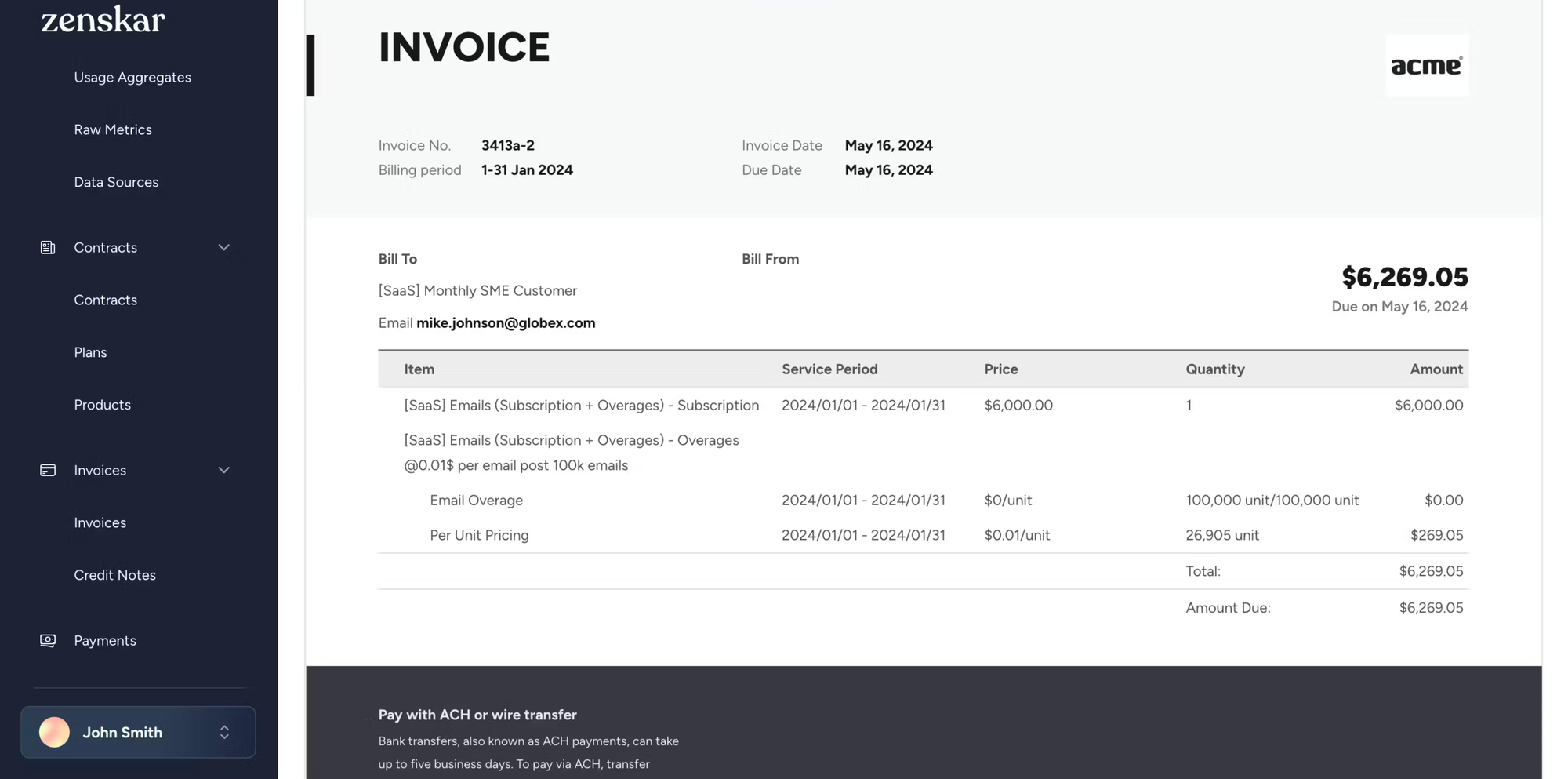
Zenskar is a billing platform that came out in 2022 focusing on the new wave of SaaS pricing, especially for AI and machine learning services. These often involve highly granular, event-based usage (think thousands or millions of tiny events like API calls or model inferences).
Zenskar positions itself as an infrastructure for billing these event streams, with fine-grained pricing logic and strong auditability. It’s a relatively young company, so it targets other startups and innovative SaaS firms.
Strengths
- Event-based billing engine: Designed for granular, high-volume usage data
- Programmable pricing logic: Supports complex, multi-attribute pricing rules
- Strong auditability: Detailed trails for usage events and billing calculations
- Modern architecture: Built for AI, fintech, and data-heavy products
- Flexible monetization models: Supports non-traditional pricing structures
Limitations
- Early-stage platform: Ecosystem, integrations, and tooling still maturing
- Engineering-heavy setup: Less turnkey than finance-led billing platforms
- Limited no-code controls: Pricing changes often require technical involvement
- Not fully quote-to-revenue: May require additional tools for contracts or rev rec
Ideal use case
- AI-native and data products: Value driven by granular events
- Custom pricing models: Beyond simple per-unit usage
- Engineering-driven monetization: Teams deeply involved in billing logic
- High-growth experimentation: Willing to trade polish for flexibility
Pricing: No transparent pricing. Custom pricing across all plans.
6. Zuora: Enterprise-grade hybrid billing software
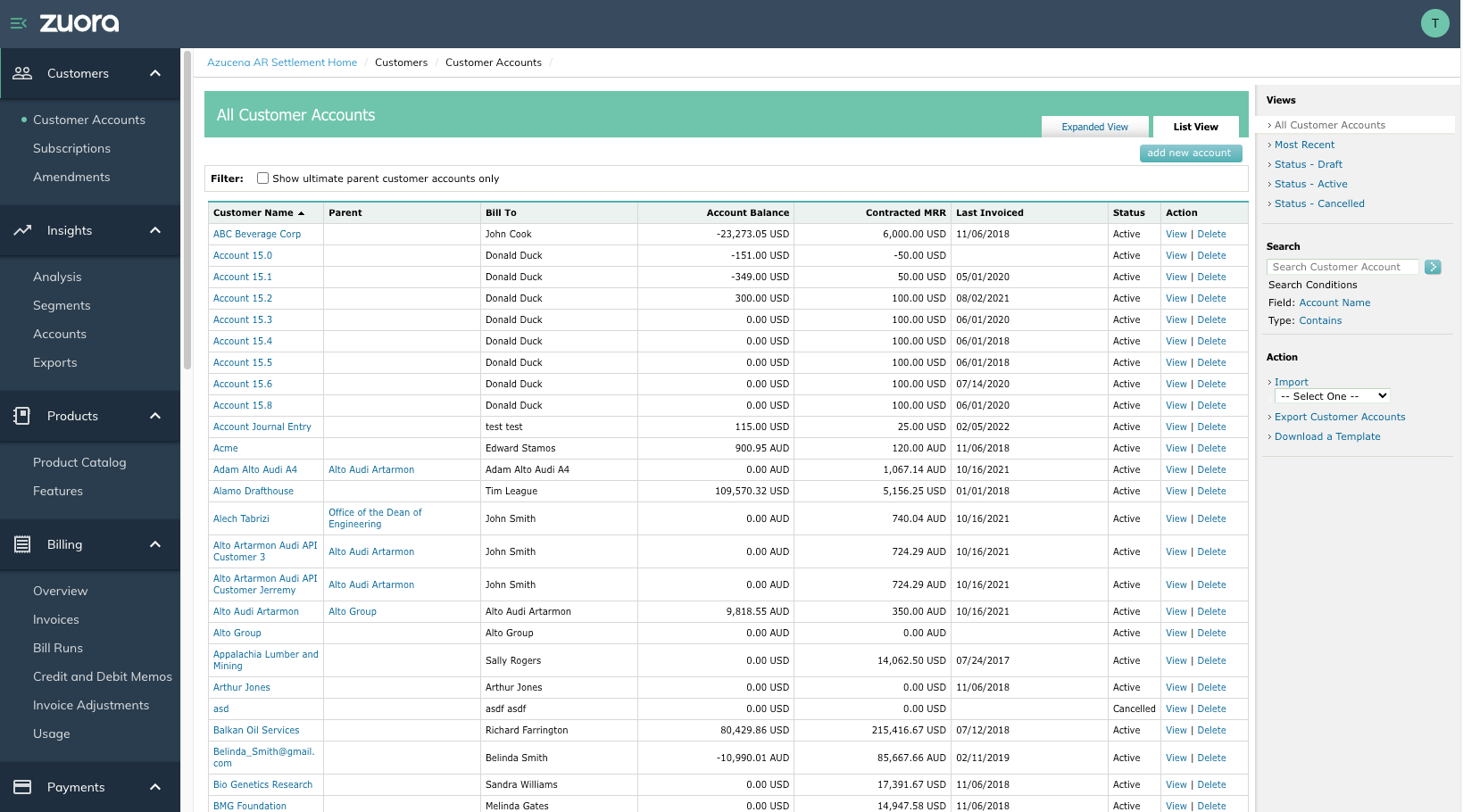
Zuora is one of the longest-standing billing platforms in the market and is widely used by large, global enterprises. It was originally built for subscription billing, but over time has expanded to support hybrid billing models that combine subscriptions, usage-based charges, one-time fees, and complex contract structures.
For companies operating at massive scale, or with strict compliance and reporting requirements, Zuora can handle nearly any billing scenario. That power, however, comes with significant cost and operational overhead.
Strengths
- Extremely flexible billing model: Zuora can support subscriptions, usage-based pricing, tiered and volume pricing, minimum commitments, overages, and complex amendments within a single customer account. It’s one of the few platforms that can model nearly any hybrid billing scenario without custom engineering.
- Enterprise-grade contract and amendment handling: Zuora’s order and amendment system provides a full audit trail for upgrades, renewals, and pricing changes, critical for enterprises managing long-term or frequently modified contracts.
- Built-in revenue recognition: Native support for ASC 606 / IFRS 15 makes Zuora attractive to finance teams that need billing and revenue recognition tightly aligned, especially for variable consideration and multi-element arrangements.
- Global readiness: Strong support for multiple currencies, tax jurisdictions, entities, and ERP integrations (Salesforce, NetSuite, SAP) makes Zuora viable for international businesses.
Limitations
- High cost and long implementation: Zuora typically starts at ~$50k+ per year, with implementation projects often taking 3–6 months and requiring certified partners. Total cost of ownership is high.
- Operationally heavy: Zuora often requires dedicated admins or billing specialists. Day-to-day changes—especially pricing experiments—can be slow and complex compared to modern, no-code platforms.
- Not built for speed or experimentation: While powerful, Zuora is not well-suited for fast-moving teams iterating frequently on pricing, usage metrics, or GTM motions. Simple changes can require extensive configuration and testing.
Ideal use case
Zuora is a strong fit if:
- You are a large enterprise with complex global billing requirements
- Billing stability and compliance matter more than speed
- You can support a long implementation and dedicated billing resources
Pricing: Custom enterprise pricing. Expect $50k–$150k+ annually, depending on volume, modules, and services.
Don’t let billing be the bottleneck in a hybrid future
Hybrid pricing has emerged as a winning strategy for SaaS, AI, and fintech companies because it balances predictability and growth. But without the right infrastructure to support it, even the smartest pricing model can turn into an operational headache.
Many companies have learned the hard way that trying to force hybrid models through outdated billing systems (or manual processes) leads to mistakes, customer frustration, and internal burnout.
As you evaluate your own monetization strategy, ask yourself: Is our billing setup ready for where our pricing is heading? If you’re starting to mix subscriptions with usage-based charges (or plan to), consider:
- Are we able to bill customers accurately and transparently for every component of our pricing?
- How much manual effort or custom code is currently required to get invoices out the door? (And will that scale if our user base doubles?)
- Can we easily experiment with new pricing or packaging, or are we blocked by tooling limitations each time we want to make a change?
- Do our finance and sales teams have real-time visibility into usage, revenue, and any revenue at risk, or are we always looking in the rear-view mirror?
- Are we prepared to comply with accounting standards and audits as our billing gets more complex?
If the answer to any of the above is “no” or even “not sure,” it’s a signal that your billing foundation might need an upgrade. The good news is that the hybrid billing software ecosystem is robust, as we’ve seen, there are solutions tailored for almost every stage and requirement, from lightweight startup-friendly tools to heavy-duty enterprise systems.
The key is to choose a platform that aligns with your current needs and can grow with you as hybrid monetization becomes central to your business.
Hybrid billing is the future of monetization
Customers are demanding more flexible pricing, and companies are finding innovative ways to charge for value delivered, which means mixing and matching models will be standard.
Billing should not be the bottleneck that holds you back from implementing the pricing that makes sense for your market. By investing in the right hybrid billing software, you empower your team to iterate on pricing and product without fear, ensure revenue doesn’t slip through the cracks, and build trust with customers through transparent, accurate charges.
Don’t wait for billing issues to catch up to your pricing. Instead, get ahead of the curve, choose the right platform, and turn billing into a strategic advantage rather than a back-office burden.
Price, quote, and bill for any product at any time with Alguna
Design subscription plans, attach usage components, and set up overage rules with zero engineering support. Get up and running in weeks—not months.