Usage-based pricing has become the default pricing model for many modern SaaS and AI companies. From API calls and tokens to active users and data processed, customers increasingly expect to pay based on what they actually use.
But while usage-based pricing aligns price with value, manually managing it doesn't scale.
Spreadsheets, custom scripts, and retrofitted subscription tools quickly break down as usage grows, pricing becomes more complex, and finance teams need audit-ready numbers.
That’s why leading companies are turning to modern monetization platforms to automate usage based billing.
In this guide, we’ll walk through:
- What usage based billing automation actually means
- Why manual approaches fail
- The core components of an automated setup
- A step-by-step framework for implementation
- Common pitfalls to avoid
- How modern platforms like Alguna simplify the entire workflow
What is usage based billing?
Usage based billing (also called consumption-based or metered billing) means customers are charged based on measurable usage instead of (or alongside) a flat subscription fee.
Common usage metrics include:
- API calls or requests
- Tokens consumed (LLMs and AI products)
- Active users or seats
- Data processed or stored
- Credits consumed over time
Why manual usage based billing doesn’t scale
In the beginning, many teams typically start with a DIY approach:
- Engineering logs usage events
- Finance exports CSVs
- RevOps reconciles numbers in spreadsheets
- Invoices are manually adjusted each month
And this approach is totally fine. That is, until you hit a certain volume of contracts/customers.
As usage grows, teams run into:
- Billing inaccuracies from missing or delayed usage data
- Revenue leakage from unbilled consumption
- Customer disputes due to unclear invoices
- Slow close cycles and late revenue recognition
- High engineering overhead to maintain custom logic
Manual processes also make it nearly impossible to experiment with pricing or support complex structures like tiered, ramped, or overage-based usage.
That’s where automating usage based billing becomes critical.
What does it mean to automate usage-based billing?
Automated usage based billing means using software to handle the full lifecycle of usage monetization—from metering to invoicing—without manual intervention.
A fully automated system:
- Collects usage data in real time
- Applies pricing logic automatically
- Generates accurate invoices
- Syncs billing data with revenue recognition
- Provides audit-ready reporting
Instead of stitching together tools, automation centralizes everything in one workflow, creating a single source of truth for all revenue movements.
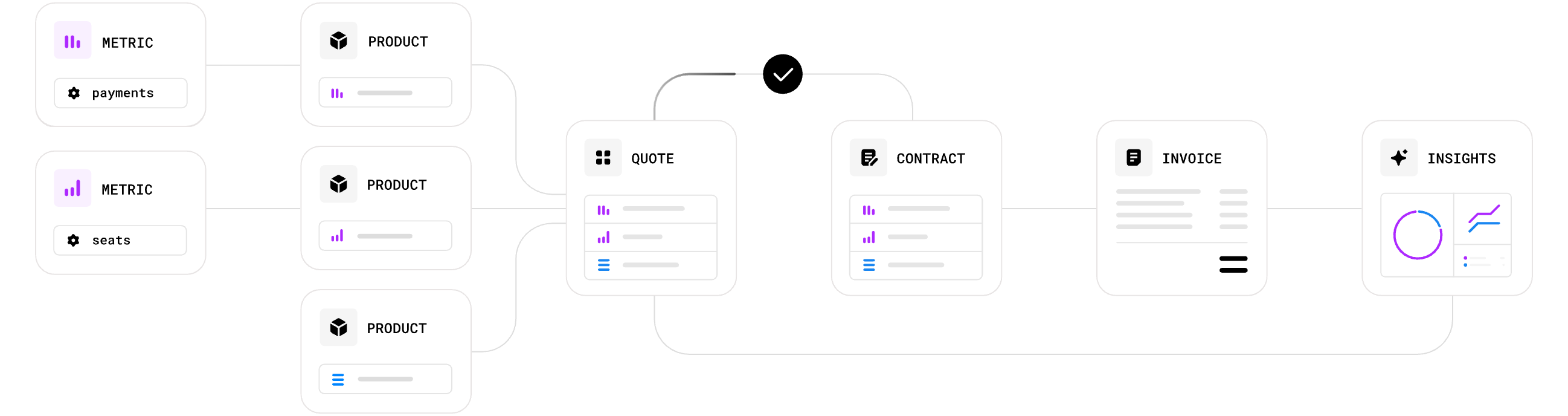
Core components of automated usage based billing
To understand how to automate usage based billing properly, it helps to break it into five core components.
1. Usage metering

Everything starts with accurate usage data.
Usage metering systems track events such as:
- API calls
- Token usage
- Feature consumption
- Credit drawdowns
Key requirements include:
- Real-time or near-real-time tracking
- Idempotent event handling (no duplicates)
- Customer-level attribution
- Support for multiple metrics
2. Pricing and rating logic
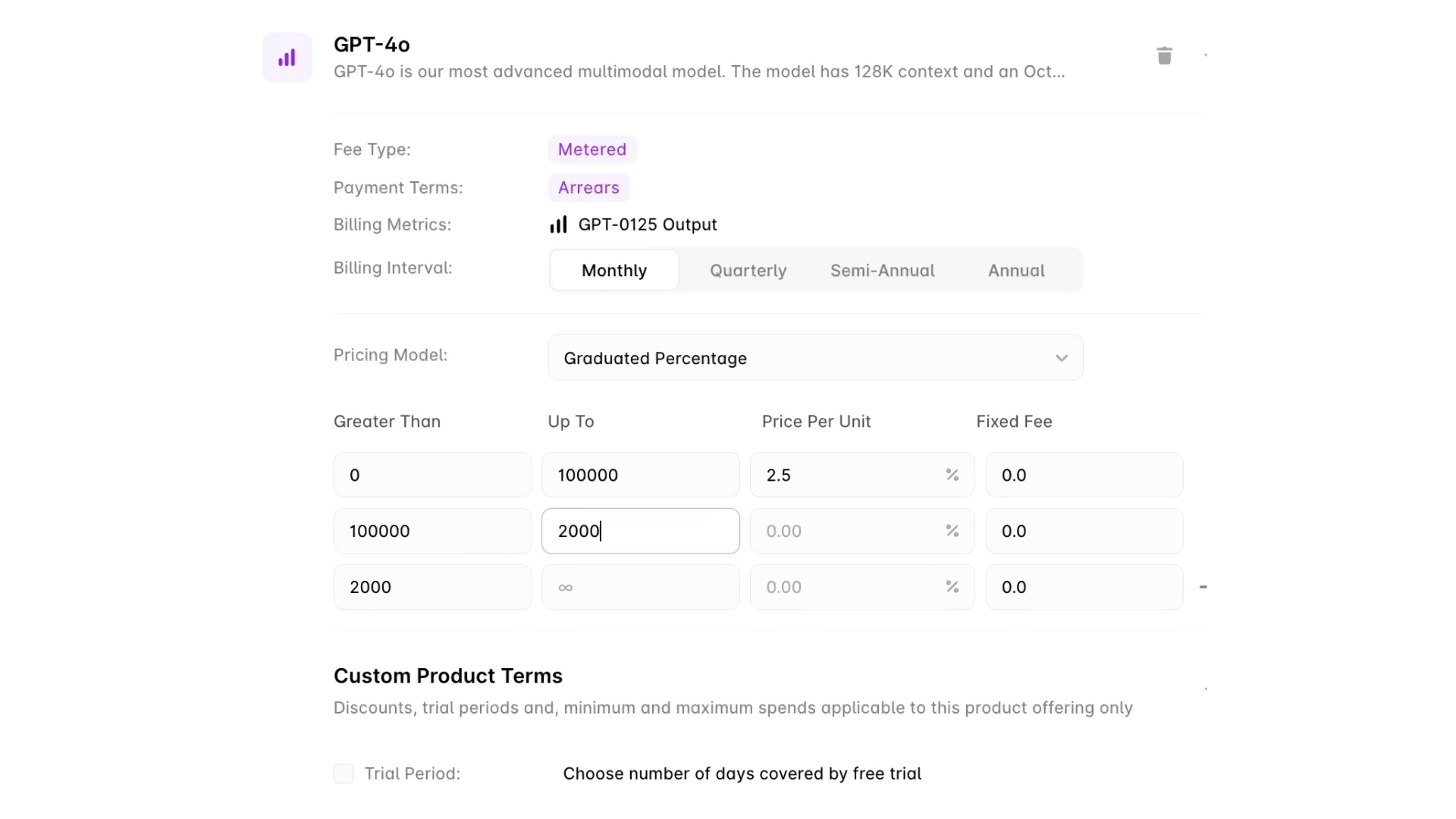
Once usage is captured, it needs to be priced correctly.
This includes:
- Per-unit pricing
- Tiered or volume-based rates
- Free allowances
- Overage charges
- Customer-specific pricing
Automation ensures that pricing rules are applied consistently without manual calculations or exceptions.
This is especially important for teams running pricing experiments.
3. Automated invoicing
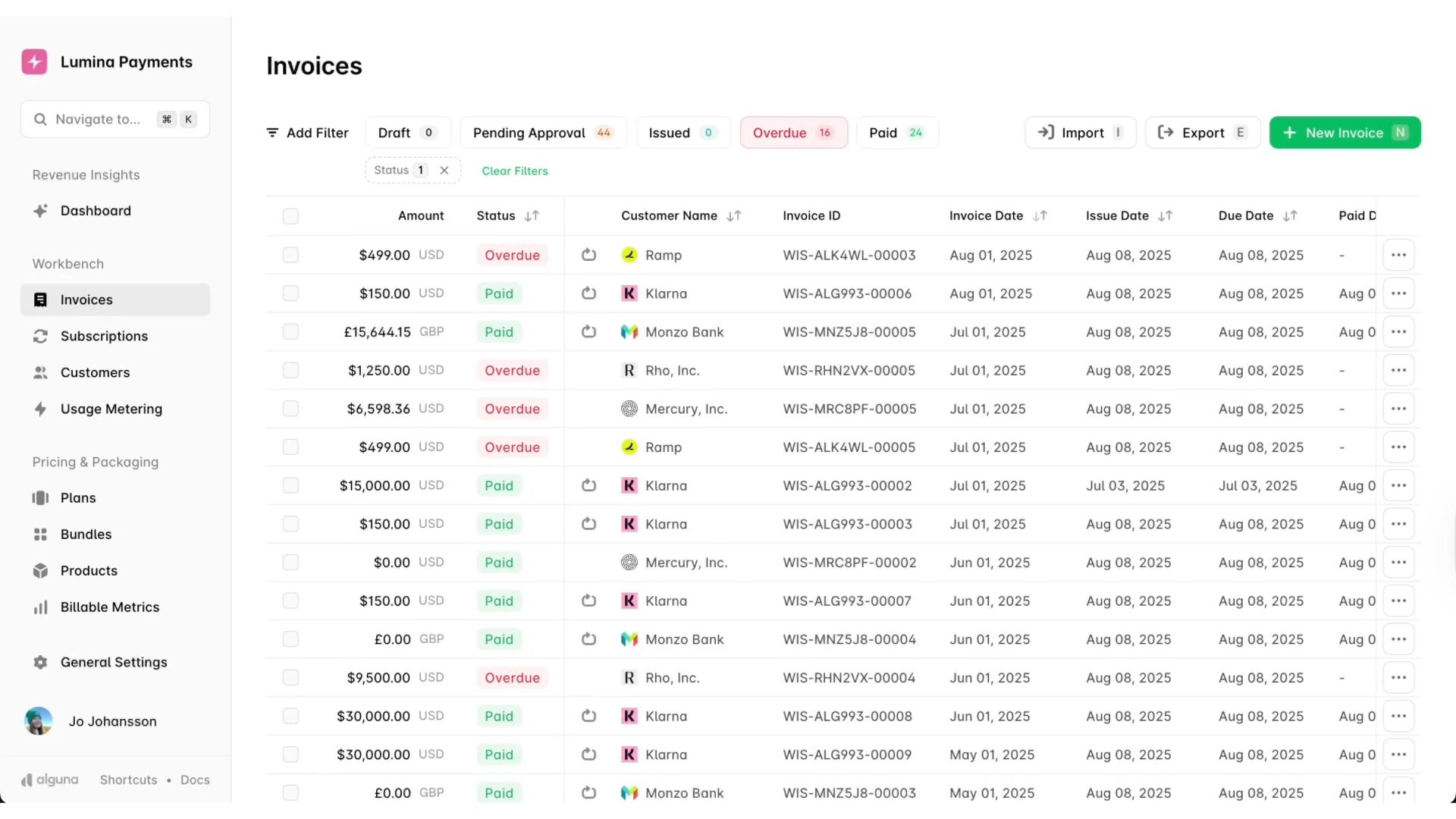
Automated invoicing turns usage data into clear, customer-friendly invoices.
Key capabilities include:
- Line-item visibility into usage
- Support for monthly, quarterly, or custom billing cycles
- Proration and mid-cycle changes
- Consolidated invoices across products
Without automation, invoicing becomes the biggest bottleneck in usage-based models.
4. Revenue recognition and finance alignment
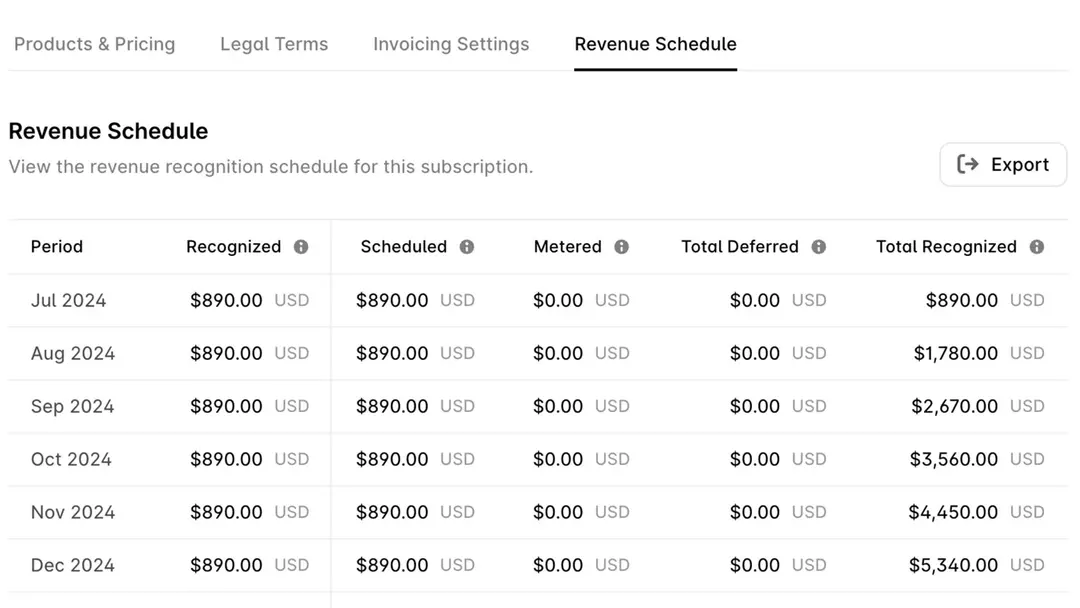
Billing automation isn’t complete unless it connects to revenue recognition.
Usage-based revenue introduces complexity under ASC 606 / IFRS 15:
- Variable consideration
- Usage-based performance obligations
- Deferred revenue tracking
Automated platforms ensure that billed and unbilled usage flows cleanly into revenue schedules.
5. Reporting and audit readiness
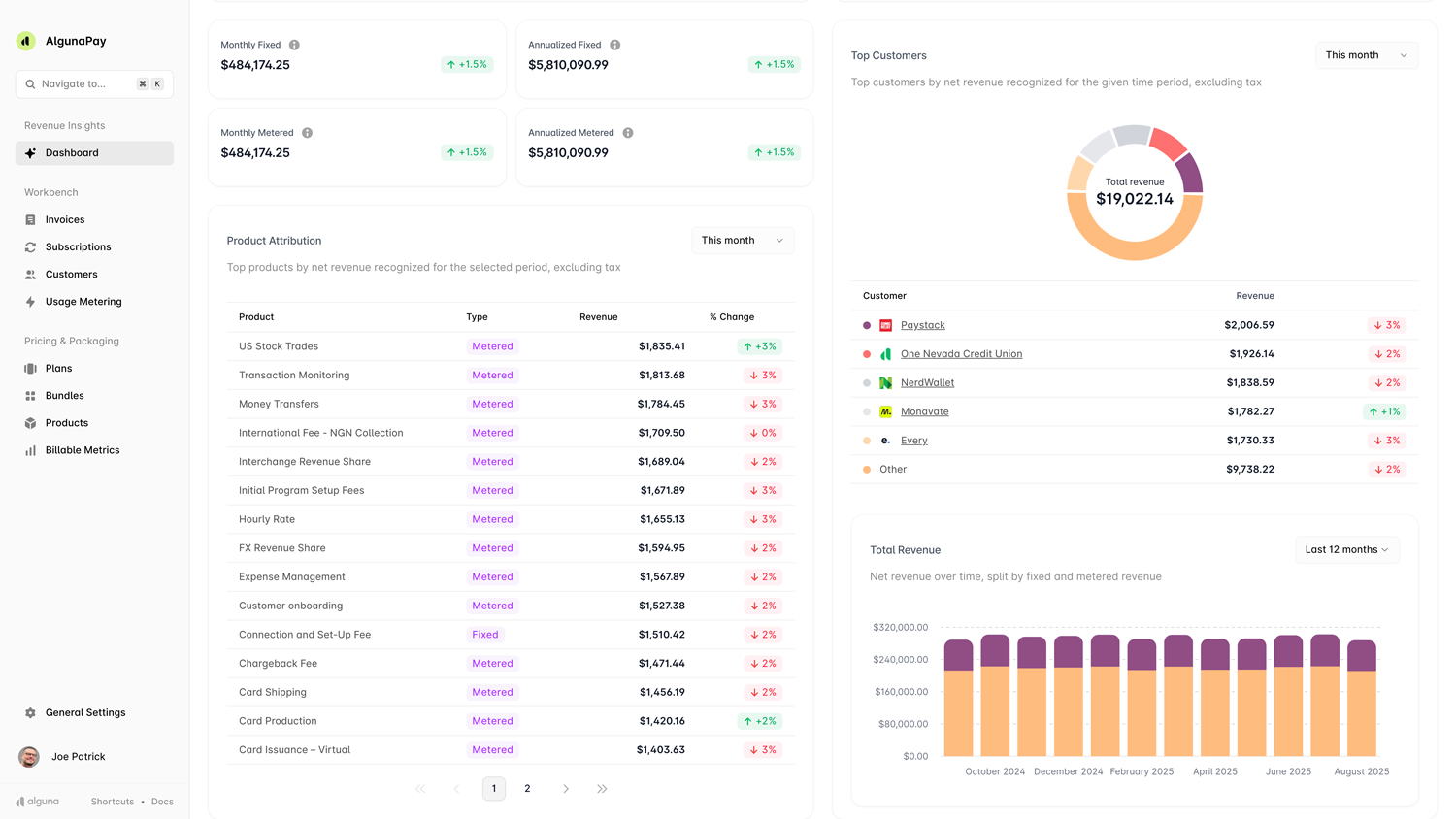
Finally, automation provides visibility and control.
Finance and RevOps teams need:
- Usage vs billed revenue reports
- Forecasting based on consumption trends
- Audit trails for every usage event
- Board-ready metrics
This is where automated usage based billing shifts from “nice to have” to mission-critical infrastructure.
How to automate usage based billing: Step-by-step guide
Here’s a practical framework you can follow.
Step 1: Define billable usage metrics
Start by answering:
- What actions actually represent value to customers?
- How granular does usage need to be?
- Do metrics differ by plan or customer?
Keep metrics simple at first. You can always expand later.
Step 2: Instrument usage tracking
Work with engineering to:
- Emit usage events at the source
- Attach customer, product, and metric metadata
- Ensure events are reliable and replayable
Step 3: Configure pricing logic
Define pricing rules in a system that supports:
- Multiple pricing models at once
- Customer-specific overrides
- Future pricing changes without migrations
Step 4: Automate invoicing and billing cycles
Set up:
- Billing cadence (monthly, quarterly, custom)
- Invoice formats with usage breakdowns
- Automated adjustments for overages or credits
Customers should be able to clearly understand what they used and what they’re paying for.
Step 5: Connect billing to revenue recognition
Ensure your billing system:
- Automatically creates revenue schedules
- Handles usage-based variability correctly
- Supports audits without manual reconciliation
This step is often overlooked and causes the most pain later.
Common mistakes to avoid
When automating usage based billing, watch out for these pitfalls:
- Over-engineering metrics too early
- Using billing tools that weren’t built for usage
- Separating billing and revenue recognition
- Relying on spreadsheets for “edge cases”
- Ignoring customer invoice clarity
Why modern revenue teams choose Alguna to automate usage based billing
Alguna is an AI-native, end-to-end revenue automation platform built specifically for modern SaaS and AI companies.
Backed by Y Combinator and designed by experienced fintech operators, Alguna automates the entire usage-based billing lifecycle—from real-time usage metering and flexible pricing logic to automated invoicing and revenue recognition—without relying on spreadsheets or custom engineering work.
With Alguna, teams can launch and iterate on usage-based pricing faster, eliminate billing errors and revenue leakage, and give finance, RevOps, and product teams a single, audit-ready system to manage how usage turns into revenue.
With Alguna, RevOps and Finance teams can:
- Meter usage in real time
- Support subscriptions, usage, credits, and hybrid pricing
- Automate invoicing and collections
- Handle revenue recognition out of the box
- Launch pricing changes without engineering bottlenecks
Instead of stitching together a Frankenstack of tools, Alguna unifies quote-to-revenue in a single platform.
Why automating usage-based billing is a competitive advantage
Learning how to automate usage based billing isn’t just a technical exercise. It’s a strategic decision that impacts revenue accuracy, customer trust, and your ability to scale.
The companies that win with usage-based pricing are the ones that:
- Invest early in automation
- Treat billing as a product experience
- Align finance, RevOps, and engineering
If you’re exploring automation or planning to scale usage-based pricing, Alguna’s guides on hybrid billing, AI monetization, and automated revenue management are natural next steps.