We’ll define CPQ, explore these needs, compare top vendors, and show how Alguna’s no-code CPQ makes it easy to roll out complex usage-based offers fast.
Ready to from a fragmented multi-tool setup to a unified and automated source of truth for all your revenue? Book a demo with Alguna to see it in action.
Revenue teams that are evaluating configure price quote software for usage-based billing models face a complex set of requirements.
And to be honest, very few configure price quote (CPQ) tools are up for the task.
In the AI era, many companies opt for a hybrid pricing model. That means CPQ tools need to handle both traditional subscriptions and discounts, but also manage dynamic usage charges, tiered rates, credits, token consumption, and more.
In this guide, we’ll break down what configure price quote (CPQ) software is, why it’s becoming critical for usage-based pricing, how the dynamics of configure price quote are changing, and what to look for in the best configure price quote software platforms.
We’ll also compare leading CPQ vendors that support usage-based models with no-code configurability and real-time billing accuracy. By the end, you’ll know exactly what CPQ criteria you need to support modern billing (and why Alguna is uniquely suited to accelerate your quote-to-cash process).
What is Configure Price Quote (CPQ)?
In other words, CPQ tools streamline the process of building complex quotes, pricing them correctly (with all applicable rules and discounts), and routing them for approvals.
The term “CPQ” is essentially the configure price quote definition, a shorthand for the critical steps in quoting.
Modern CPQ software automates what used to be a manual, error-prone task. With CPQ, sales teams can select a mix of products or features, apply pricing rules (e.g. volume discounts, regional pricing, customer-specific terms), and instantly produce a professional quote or proposal document.
This eliminates the need to manually calculate pricing or worry about mistakes. It integrates with CRM so reps can configure deals, apply discounts, and create proposals all in one place.
Common use cases of configure price quote platforms
CPQ was originally popular in industries like manufacturing and telecom (think configuring a complex hardware bundle or data plan). Today, it’s used widely in B2B technology and SaaS. Any company with a variety of products, optional add-ons, or complex pricing models can benefit from CPQ.
For example, a SaaS provider might use CPQ to let reps build a quote that includes a base subscription, add-on modules, professional services, and even usage-based overage charges, all priced correctly under one contract.
CPQ ensures quotes are accurate and compliant with approved pricing policies, which reduces errors, speeds up deal cycles, and provides a seamless customer experience.
In short, a CPQ platform is the nerve center of your quote-to-cash process, connecting the configuration of a deal to pricing and billing.
The changing dynamics of CPQ in a usage-based world
While CPQ software has been around for years, the dynamics of configure price quote processes are evolving rapidly due to shifts in how companies charge for products.
The biggest change? The rise of usage-based billing models. Traditionally, many sales deals were straightforward. They would have a fixed price for a product or a recurring subscription fee.
But in 2025 and beyond, more businesses are adopting consumption-based pricing (also known as pay-as-you-go or usage-based pricing) where charges vary based on how much the customer actually uses. This trend is exploding across SaaS, cloud, fintech, and AI services because it aligns price with value delivered to the customer.
New dynamics, new challenges
For Sales Ops and RevOps teams, this shift creates new challenges and requirements.
- How do you quote a deal that isn’t a static price, but depends on variable usage?
- How do you communicate a pricing structure that might involve tiers, thresholds, or units consumed?
- How can your quoting process ensure real-time accuracy if the final bill will depend on usage data coming in later?
These are the new dynamics of CPQ. A configure price quote platform must be far more flexible and connected than before – it needs to handle not just configuring products, but configuring pricing schemes that may change month to month based on behavior.
Legacy CPQ tools (and home-grown spreadsheets) struggle here. If your CPQ can’t model usage fees, credits, or token consumption, reps end up doing workarounds, which ultimately leads to errors or delayed quotes.
In a world where deals might include usage-based overages, tiered pricing brackets, or hybrid subscription + usage plans, your CPQ can either be a launchpad or a roadblock.
Key features needed: CPQ for usage-based billing models
If you’re evaluating CPQ solutions with an eye on usage-based or hybrid pricing, make sure they can handle the following models and capabilities:
- Usage-based billing (Pay-as-You-Go): The CPQ must support pricing based on actual consumption of a product or service. In a usage-based model, charges are variable, e.g. $0.10 per API call, $5 per 1000 messages, etc.
The software should let you configure products with a unit price and have the quote dynamically calculate total cost based on a usage quantity. It’s essential that CPQ can handle metered usage pricing, where the bill might differ each period. Many SaaS companies use this to align price with value (for instance, charging per GB of data processed). - Token or credit models: In some cases, companies sell prepaid usage credits or tokens. The customer might purchase a block of credits (tokens) upfront and consume them over time, with the option to top-up when exhausted.
It should also manage rules like prepaid credits with overages. For example, 1000 tokens included per month and any usage beyond that incurs overage fees. This ensures you can quote both the commitment and the overage pricing in one go. - Tiered and volume pricing: Tiered pricing (also known as volume-based pricing) means the unit price changes at different levels of usage. For example, the first 1000 units might cost $1 each, the next 4000 units cost $0.80 each, and so on (i.e. discounts kick in at higher volumes).
A robust CPQ must support pricing tiers and breakpoints. Similarly, graduated pricing or volume discounts should be configurable where the quote can automatically apply the correct rate based on the quantity quoted. If your model offers variable rates (cheaper per-unit pricing for higher usage brackets), the CPQ should calculate that seamlessly. - Variable overages and allotments: A common SaaS pricing model is a hybrid subscription with overages, e.g. a customer pays $X per month which includes 10,000 API calls, and any usage above that is charged at a fixed rate per call. Your CPQ tool should allow quoting of such plans: it needs to show the committed amount and the overage rate. Essentially, it’s a combination of a fixed fee plus a usage-based component.
Handling overage pricing rules (and showing the customer what happens if they exceed the included amount) is crucial. Advanced CPQs will let you configure a product with an included quantity and an overage charge if the usage goes beyond that threshold. This ensures sales can quote, for example, “$500/month including 100 GB of data, then $0.05/GB for overages.” - Commitment-based pricing: In some enterprise deals, customers commit to a minimum spend or usage level, often in exchange for better rates. Commitment-based pricing means the customer agrees to pay for a certain amount of usage (or dollars) regardless of actual consumption, and if they go over, they pay more.
A CPQ must support quoting of these minimum commitments plus any usage overage beyond the commit. For instance, a cloud contract might require a $1M annual commit, with any usage beyond $1M billed at a standard rate. Quoting this requires CPQ to present the committed amount and outline the overage terms. Modern billing platforms note that commitment-based models combine a minimum spend with usage overages to give customers flexibility while protecting revenue. Ensure your CPQ can reflect such terms cleanly. - Hybrid billing schedules: Flexibility in billing schedules is another key need. You might have contracts where certain components are billed annually upfront (commitments or subscriptions), while usage fees are billed monthly or in arrears. A CPQ solution should handle hybrid billing timing – meaning it can quote a deal that mixes billing frequencies (e.g. “$100k/year platform fee, plus monthly usage charges based on consumption”).
Likewise, if you offer ramp deals (gradually increasing commits) or quarterly true-ups, the CPQ should support scheduling those changes. In short, look for CPQ tools that allow different charge types (one-time, recurring, metered) all to be combined in one quote, each with its own billing cadence. - Flexible discounting and approvals: In the world of usage-based deals, pricing can get complex, and discounting plays a big role in negotiations. Your CPQ software should have robust discounting controls – the ability to apply percentage or flat discounts at various levels (line item, bundle, total deal) and to enforce approval workflows for large discounts. For example, maybe sales can give up to 20% off usage fees but anything beyond requires finance approval.
Also, tiered discounts or volume discounts (like giving an extra 5% off if the customer commits to a higher usage tier) should be configurable. This ties into approval processes: CPQ should automate who needs to sign off if a rep overrides standard pricing. The goal is to empower reps to structure creative deals (like usage commitments with discount incentives) without losing governance.
All of the above capabilities are becoming non-negotiable for configure price quote software for usage based billing. A flexible CPQ solution will let you mix and match these elements to design innovative offers.
Comparing the best CPQ software for usage-based billing: 4 platforms to consider
When it comes to configure price quote software that can handle usage-based models, a few vendors stand out.
Below we compare some leading CPQ solutions and how they approach usage-based pricing:
Alguna: The #1 CPQ solution for usage-based billing
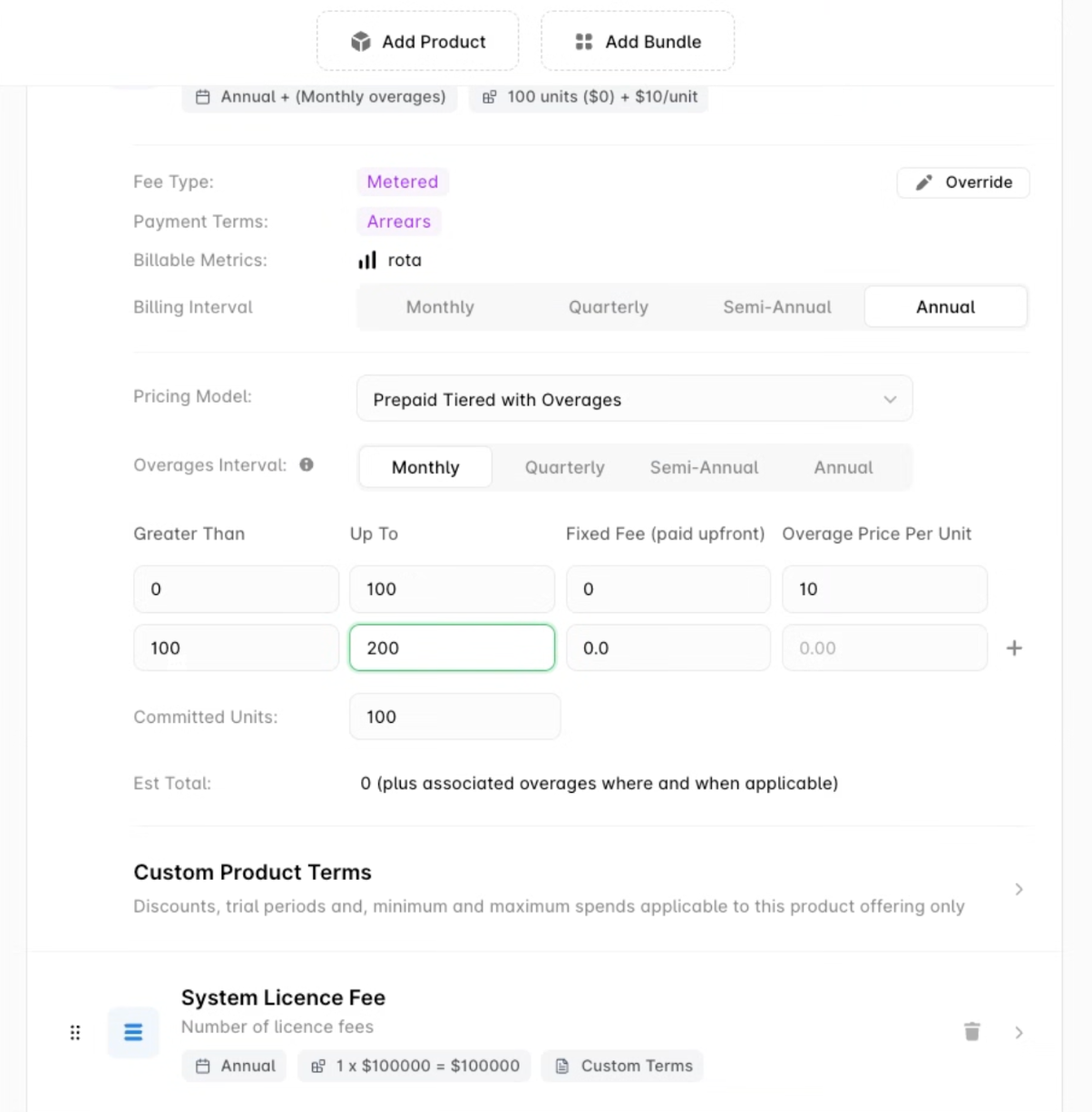
When it comes to configure price quote software for usage-based billing, Y Combinator backed Alguna is the leading challenger in the space.
Built by experienced fintech operators, Alguna is designed for fast-moving RevOps and sales teams that want complete autonomy to experiment with pricing, no-code configurability, real-time accuracy, and speed.
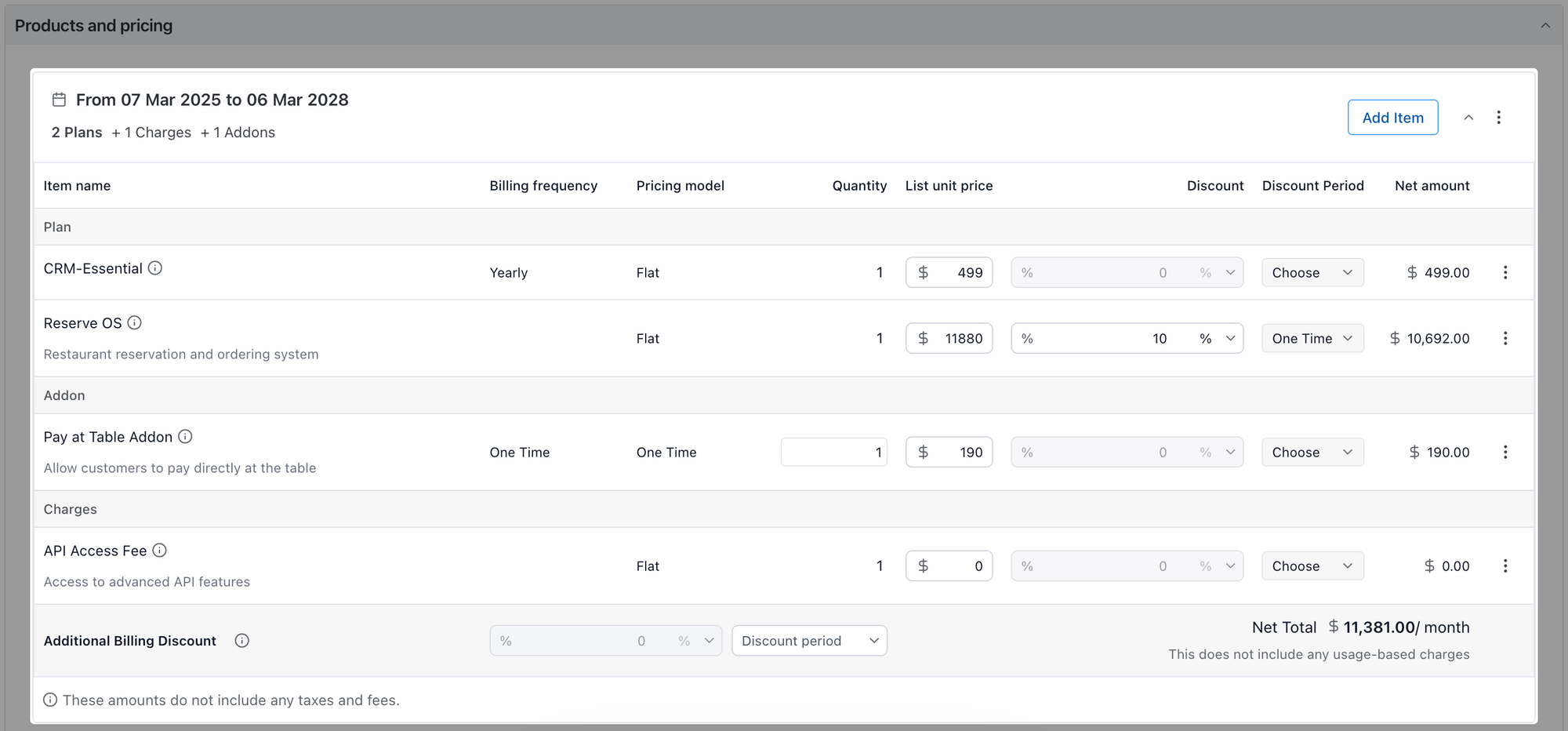
Alguna offers a modern, flexible CPQ that scales with your business. It's an all-in-one quote-to-revenue platform that unifies CPQ with usage metering, billing, and revenue recognition.
- Purpose-built for flexible pricing: Unlike legacy CPQ tools that were designed for static SKUs or simple subscriptions, Alguna was engineered for today’s dynamic SaaS and AI pricing strategies. It supports any combination of pricing models, from flat recurring fees to tiered usage rates, prepaid token models, overages, and beyond all in one system.
Non-technical users can easily define these models. Alguna's configure price quote platform offers a flexibility that is usually only possible with custom coding, but Alguna delivers it out-of-the-box.
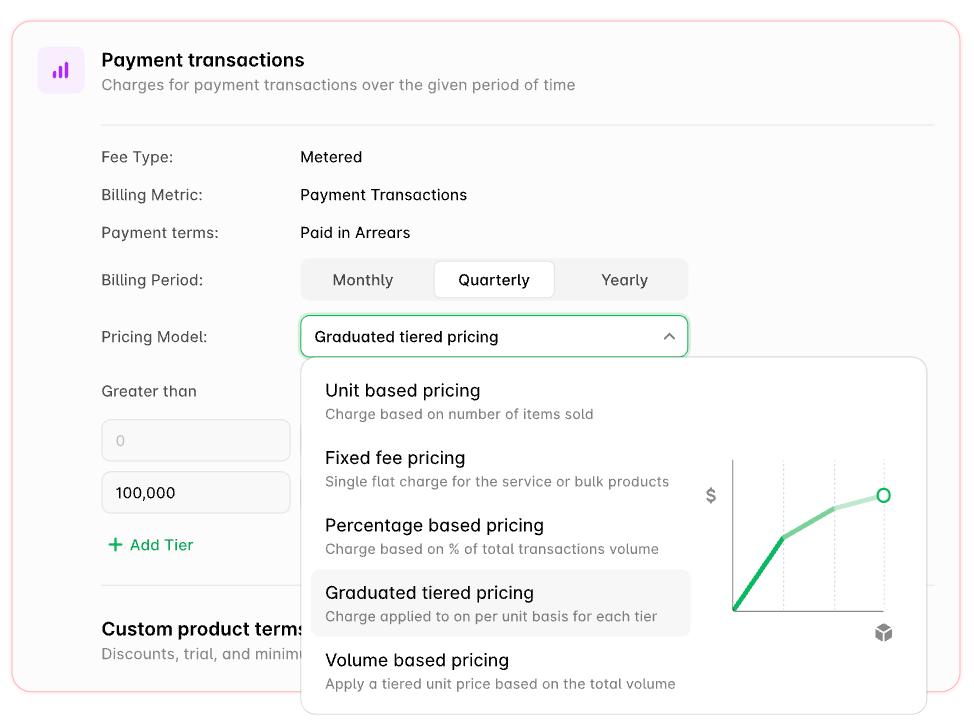
- No-code configurability: A huge selling point of Alguna is its no-code interface for managing products, pricing rules, and workflows. The platform provides a visual UI where you can configure products and price rules without writing a single line of code. This means RevOps and finance teams can tweak pricing or launch new packages on their own, in minutes.
- Unified CPQ + billing: One of Alguna’s core philosophies is unifying the entire quote-to-revenue process. Alguna CPQ isn’t just a quoting tool; it’s natively connected to Alguna’s billing and usage metering engine. Why does this matter? Because it ensures that what you quote is exactly what gets billed, with real-time billing accuracy.
- Deep CRM and workflow integration: Alguna recognizes that CPQ lives in a broader sales tech stack. It offers native integrations with major CRMs like Salesforce, HubSpot, and Zoho, so reps can generate Alguna quotes from within their CRM UI. This is critical for adoption as your sales team doesn’t have to learn a new tool from scratch. Alguna CPQ surfaces inside the tools they already use, such as HubSpot and Salesforce.
- E-signature and approval workflows: Go from quote generation to customer signature to automatically kicking off billing and provisioning, all in one flow.
- Purpose-built for modern use cases (AI, SaaS, etc.): Alguna scales to high event volumes, which is important if you’re metering millions of usage events. It also supports multi-currency, multi-entity billing out-of-the-box, so as you expand globally or across business models, Alguna grows with you. The platform includes analytics for revenue and usage, helping teams see how pricing changes affect KPIs.
- Pricing transparency: Free tier available for smaller teams. Flat, predictable pricing, starting at $699 per month for scaling businesses. Alguna never takes a revenue cut.
Salesforce CPQ (with Salesforce Billing)
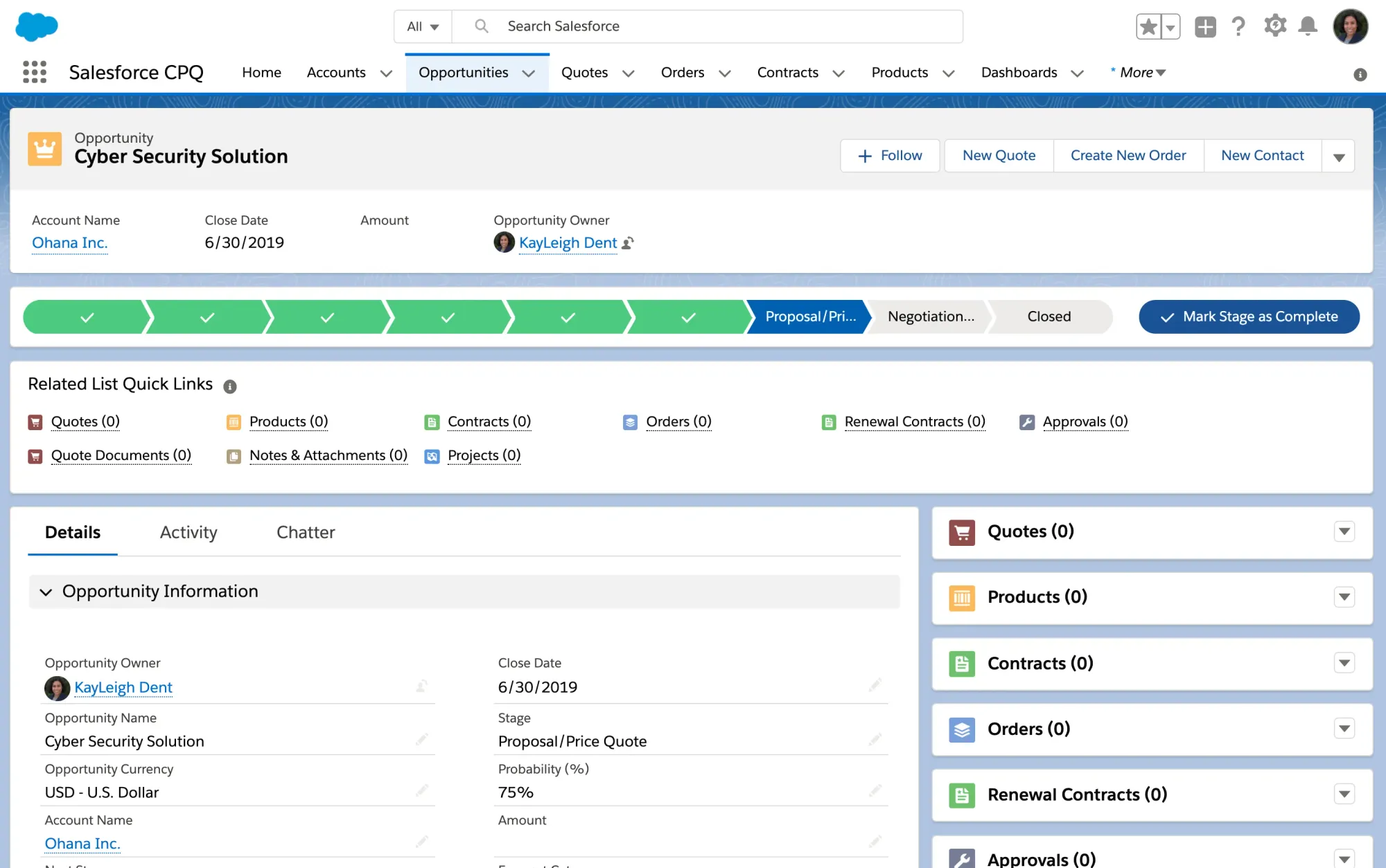
Salesforce CPQ is one of the most widely used CPQ platforms, especially for companies already on Salesforce CRM. It excels at standard product configuration, discounting, and approval workflows inside the Salesforce interface.
That said, Salesforce CPQ as we know it is Salesforce CPQ can support usage-based pricing, but it often requires the addition of Salesforce Billing (part of Salesforce Revenue Cloud) to fully manage consumption-based charges.
Salesforce uses a concept called Consumption Schedules or Usage Schedules, where you define tiers or rates for a usage-based product and link it to the quote line. This allows reps to quote usage charges in a tiered or volume model, and then Salesforce Billing will later rate the actual usage against those tiers.
Usage-billing strengths: If you enable these features, Salesforce CPQ can model things like tiered pricing within quotes, include usage summary objects, and even pass usage data from your product into the billing system to create invoices. It’s quite powerful for complex pricing rules, especially with the ecosystem of add-ons and a large community.
Potential drawbacks: The downside is complexity and cost. Setting up usage-based products in Salesforce CPQ typically needs significant configuration and often custom scripting. It’s not an out-of-the-box toggle as your admins will have to configure price dimensions, consumption rate tables, and possibly Apex triggers to handle usage data.
Additionally, Salesforce CPQ + Billing is an expensive stack, and projects can take months to implement. It’s great if you are deep in the Salesforce ecosystem and have complex enterprise needs (and budget). But for leaner teams or those needing agility, the heavy setup can be a bottleneck.
In short, Salesforce CPQ supports usage-based models in theory, but be prepared for a non-trivial implementation to make it work smoothly.
Zuora CPQ (Zuora Quotes)
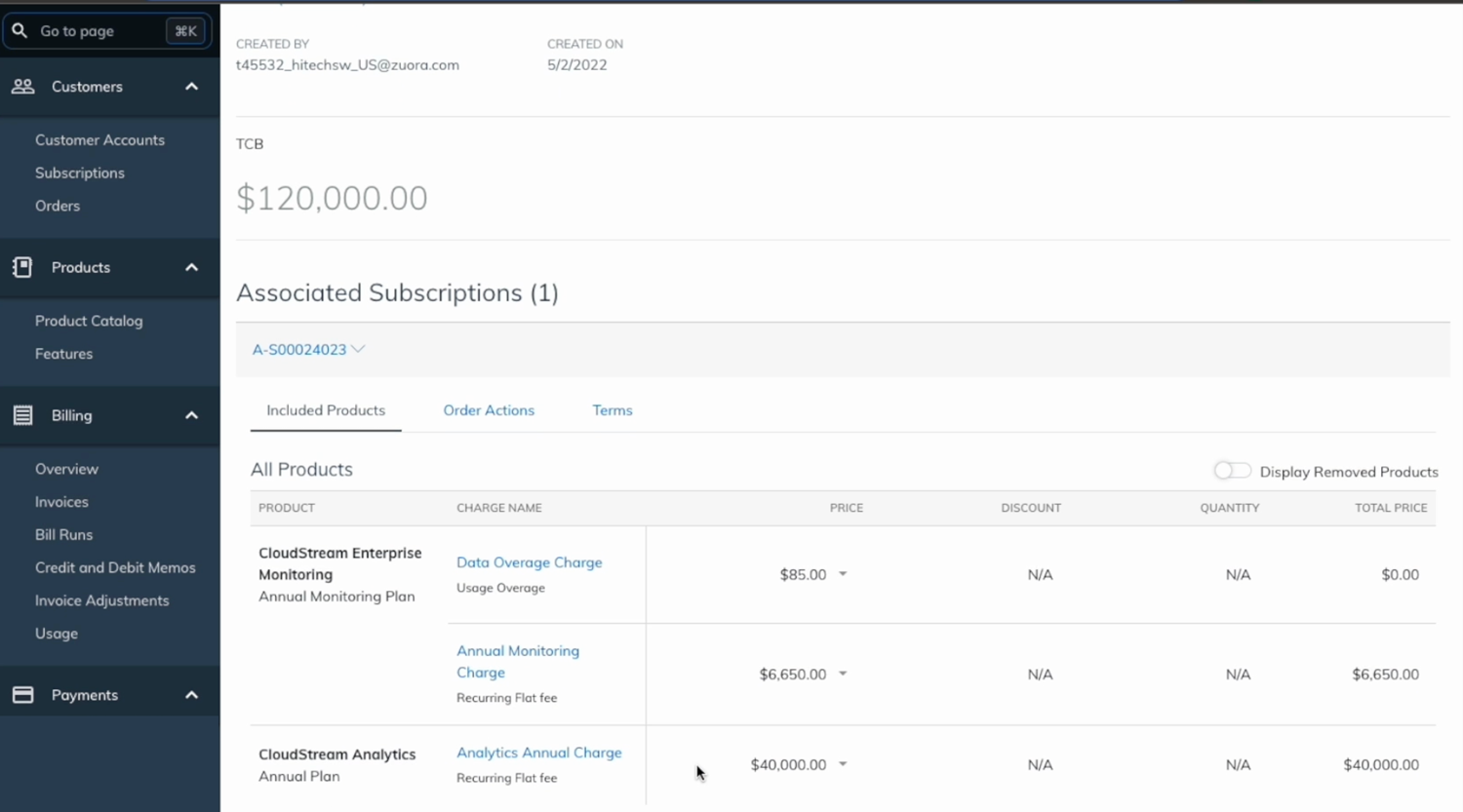
Zuora is best known as a leading subscription billing platform, used by enterprises for managing recurring revenue. They offer Zuora CPQ (formerly Zuora Quotes) which is tightly integrated with their billing system.
Zuora CPQ is purpose-built for subscription businesses that also need to quote complex deals. It handles recurring, one-time, and usage-based charges in a unified way. Zuora acquired Togai in 2024 to strengthen its usage-based metering and pricing capabilities.
Usage-billing strengths: Zuora shines in environments where you have complex subscription + usage hybrids. For example, you could quote a customer for an annual subscription that has an annual commit plus monthly usage fees, all within Zuora CPQ.
The platform can natively handle advanced rating scenarios like overage smoothing, high-water marks, and multi-attribute pricing (charging based on multiple metrics). Crucially, since it’s tied to Zuora’s billing, any quote created can turn into an active subscription with usage tracking, and invoices are generated with high accuracy. Finance teams like Zuora because it’s robust on compliance (ASC 606 rev rec, etc.).
Potential drawbacks: The flip side of Zuora’s power is its complexity and cost. It’s often considered an enterprise-grade solution and can be overkill for smaller teams. Customers report that Zuora’s implementation is lengthy (often requiring consultants) and the learning curve is steep. It’s not uncommon for a Zuora project to take 6+ months to go live, which is challenging if you need agility. Cost is also a factor as Zuora typically starts around $50k+ per year for a full deployment, and its pricing model can include volume-based fees which add up.
In summary, Zuora CPQ is a top choice for large organizations that need a unified quote-to-cash for subscriptions and usage, and have the resources to support it. If you’re a fast-moving startup or simply need a no-code CPQ, Zuora might feel too heavy.
Chargebee (billing-powered CPQ)
Chargebee is a popular subscription and billing management platform, especially among SaaS and mid-market companies. In recent years, Chargebee introduced its own CPQ module, that connects quoting directly with their billing system.
The idea is similar to Alguna's: align sales quotes with the billing engine so that once a quote is signed, it’s essentially an “invoice-in-waiting” with no translation errors. The difference is that Chargebee wasn't built from the ground up for today's complex pricing models.
Usage-billing strengths: Chargebee supports usage-based pricing and hybrid models to a decent extent. You can define metered components in the product catalog (e.g. a plan has a usage-based add-on) and configure rates for them. Chargebee can then handle invoicing for those usage charges at the end of the period. In CPQ terms, Chargebee’s quoting interface will allow a sales rep to pull in products from the Chargebee catalog, including any usage-based charges, and generate a quote PDF.
Potential drawbacks: Compared to dedicated CPQ systems, Chargebee’s CPQ might be less feature-rich in complex deal construction. Users often find the UI simpler but somewhat basic and limited as it’s optimized for standard SaaS offers, not necessarily huge enterprise deals with multiple custom components.
Pricing: Chargebee's CPQ is not a standalone product. You need to combine it with Chargebee Billing.
Overall, Chargebee CPQ is a strong choice for mid-market SaaS that want an all-in-one subscription billing + quoting solution without the complexity of Salesforce or Zuora. Just ensure your usage scenarios are within what their platform supports out-of-box.
Accelerate sales with the right configure price quote software for usage based billing
As usage-based pricing becomes a dominant strategy in SaaS and other industries, having the right CPQ platform is mission-critical. The ability to configure, price, quote complex usage based deals with precision and speed can make the difference between winning or losing revenue.
For teams that want the best configure price quote software for usage-based billing, Alguna truly shines. It marries ease-of-use with powerful capabilities, enabling RevOps and Sales Ops to launch innovative pricing models faster than the competition. By adopting a solution that handles quotes and usage billing in one, you eliminate manual errors, ensure billing accuracy, and empower your sales team to sell value in a flexible way.
The result? Quicker deal cycles, happier customers (no surprise bills!), and a more agile go-to-market operation.
Ready to see the future of CPQ in action?
Don’t let legacy quoting tools or spreadsheets hold back your growth. It’s time to equip your revenue team with a CPQ platform designed for today’s usage-based pricing models.