I'm known to complain if my phone bill is $10 more than expected. Now imagine getting hit with a $10k bill you didn't expect (or budget for).
This is bill shock.
Bill shock happens when a customer receives an invoice that is (far) higher than expected. It’s most common in usage-based and consumption-based pricing models, where costs scale with activity rather than a fixed monthly fee.
With the rise of usage based pricing in SaaS, especially popular with API companies, bill shock is becoming a growing concern.
In this post, we'll dive into what it is, the impact on growth, and strategies for bill shock prevention (specifically in usage-based pricing).
Bill shock meaning (in plain English)
Instead of gradual, predictable increases, customers experience a sudden spike that feels unexplained or unfair, even when usage technically justifies the cost.
In SaaS, AI, and cloud products, this is especially visible as cloud bill shock, where infrastructure usage, API calls, or compute consumption grows faster than teams anticipate.
Why bill shock happens
Most bill shock scenarios are caused by missing safeguards.
Common drivers include:
- Unbounded usage (APIs, compute, data processing) without limits or alerts
- Poor cost visibility, where customers can’t see usage in real time
- Delayed or monthly-only billing, which hides problems until it’s too late
- Complex pricing logic that customers don’t fully understand
For AI and developer platforms, avoiding bill shock in usage-based pricing APIs is particularly hard. A single misconfigured loop, bot, or integration can multiply usage overnight.
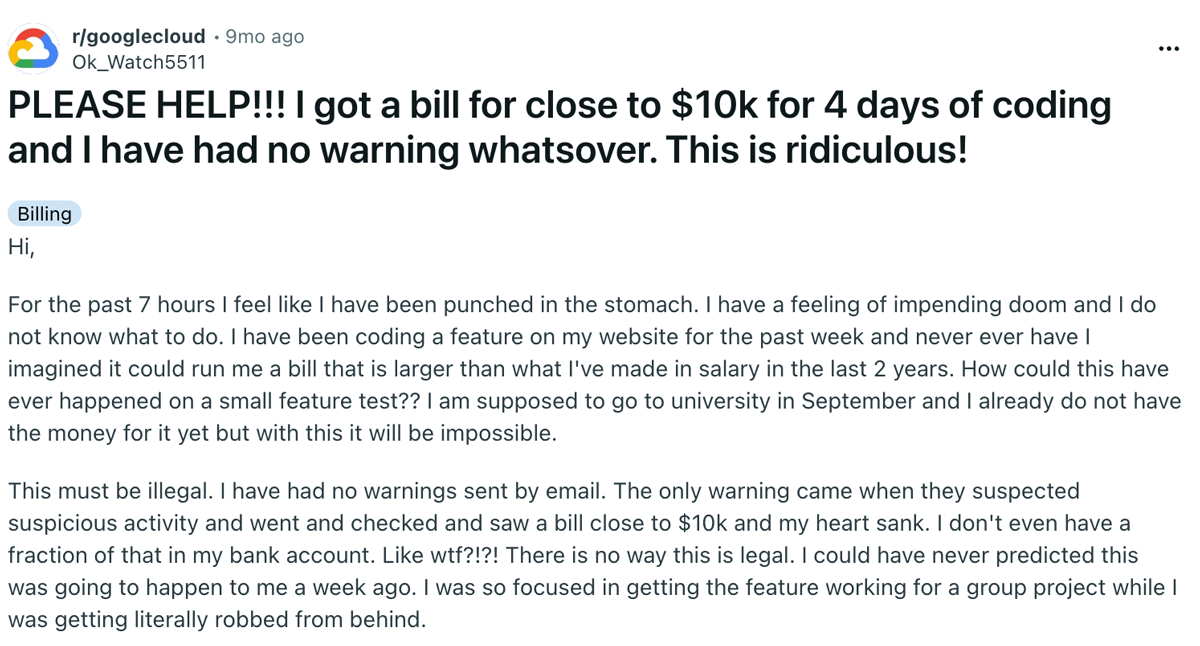
Bill shock for usage‑based pricing: 3 real world-examples
Usage‑based pricing (also known as consumption‑based or metered billing) charges customers for exactly what they use. This could be API calls, data processed, messages sent or tokens consumed.
When implemented well, it scales revenue with value delivered. But when poorly executed, it can produce runaway spend and create bill shock.
Why usage‑based pricing amplifies bill shock
- Revenue unpredictability: Because revenue tracks usage, monthly income fluctuates and forecasting becomes harder.
- Sticker shock and churn risk: Customers may be surprised by higher‑than‑expected bills if usage spikes, which can erode trust and prompt churn.
- Confusing metrics: New units (e.g., tokens, API calls) may not map intuitively to outcomes, causing customers to feel pricing is opaque
Real‑world examples of bill shock in APIs
- AI API over‑usage: A developer described how a small experiment with OpenAI’s GPT‑4 led to a $500 bill shock because GPT‑4 costs about 30× more than GPT‑3.5, there was no real‑time cost tracking and usage spiked during debugging.
- Mapping API misconfiguration: A logistics company built a real‑time tracking system on top of Google Maps. Frequent location updates from 150–200 contractors generated a $25 000 API bill.
The root cause wasn’t Google Maps itself. I t was a design that treated “real‑time” as constant requests instead of updating only when meaningful changes occurred. - Cloud infrastructure: AWS bill shock occurs when monthly charges jump unexpectedly by 50 % or more due to cross‑region data transfers, idle resources or untagged assets.
In one example a Fortune 500 retailer saw a $220 K weekly spike when cross‑region replication ran unchecked.
8 practical steps to avoiding bill shock in usage-based pricing (APIs)
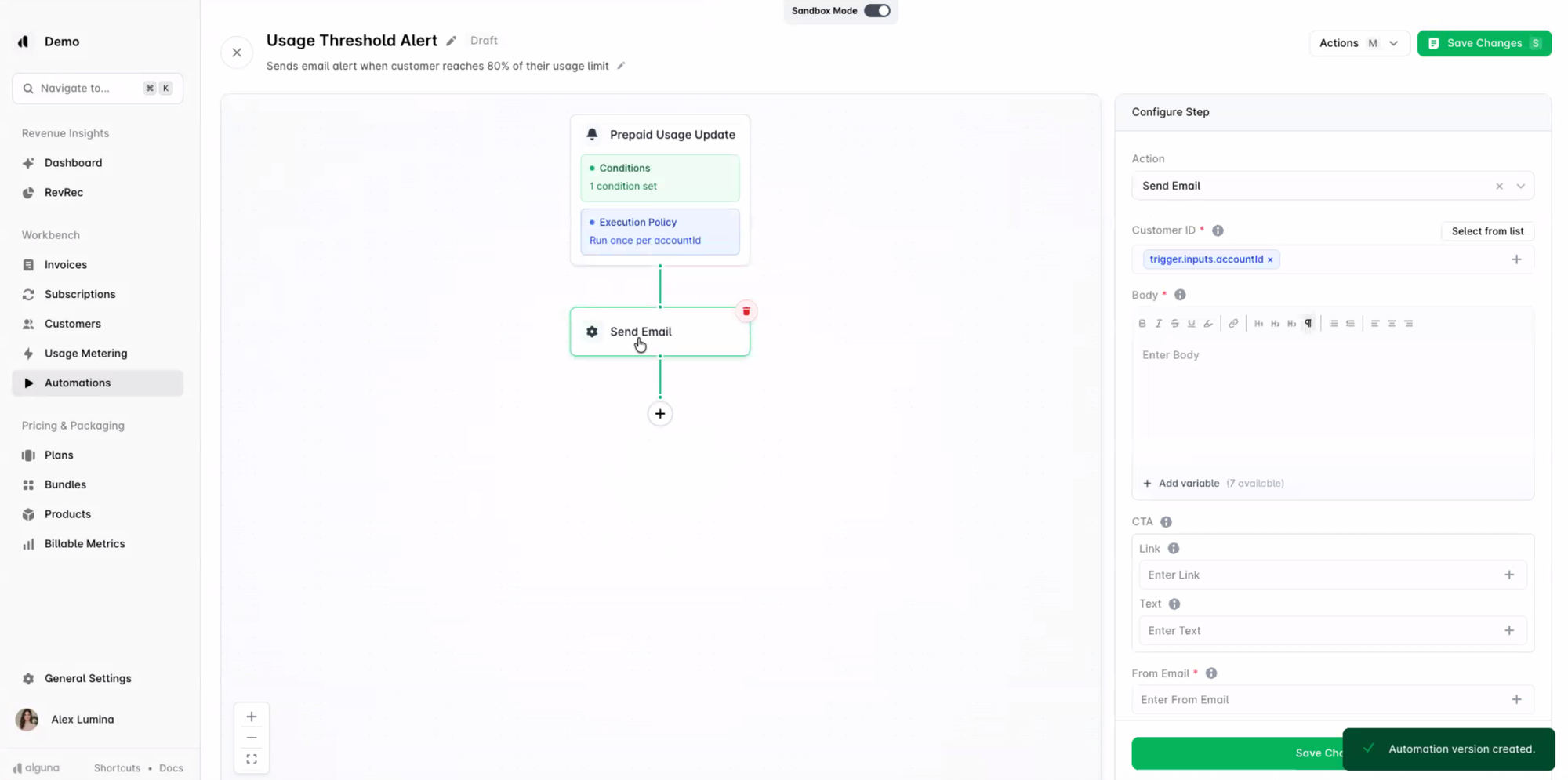
To avoid bill shock usage‑based pricing APIs, companies should design pricing and billing systems around visibility, control and efficient usage.
Key strategies for bill shock prevention
- Implement real‑time metering and analytics: Track usage in real time and surface costs immediately. Provide dashboards that show consumption by model or endpoint, burn rate, and budget forecasts.
Tools like usage monitors can break down costs per model and send alerts when usage exceeds set thresholds. - Set usage alerts and soft/hard limits: Usage‑based SaaS providers should allow customers to configure alerts at 60 %, 80 % or 90 % of budgets and set soft caps or hard stops.
This prevents runaway spend and provides time to adjust. In AWS and other clouds, budget caps and cost gates can automatically block deployments that would exceed thresholds. - Offer prepaid credits and budget management tools: Pre‑purchasing API credits gives customers control and helps vendors smooth revenue. The HubiFi guide notes that giving customers dashboards, usage alerts and spending limits is key to preventing bill shock.
When usage assumptions, pricing units, overage rules, or spend limits aren’t clearly modeled in the quote, customers anchor on an incomplete picture of cost.
A CPQ for usage-based pricing prevents this by turning usage into something concrete before the deal is signed. Instead of a single headline number, it can model multiple usage scenarios, show how spend scales at different volumes, apply caps or credits, and make overages explicit.
By aligning what’s quoted with how usage will actually be metered and billed, CPQ removes ambiguity early. This sets the right expectations with finance and procurement, ensures customers know exactly what drives their bill, and ultimately, reduces the risk of bill shock later.
- Simplify pricing units and documentation: Use clear, understandable metrics (e.g., per 1 000 requests) and provide examples of how usage translates to outcomes. Confusing pricing models are a major cause of hesitation and frustration.
- Batch and optimize API calls: Reduce the number of calls by batching requests, caching data or using local computations. In the Google Maps case, redesigning tracking around route context and triggering updates only at meaningful points cut API costs from $2–3 K per month to almost zero.
For AI APIs, choose the right model for the task (e.g., GPT‑3.5 for simple tasks instead of GPT‑4) and group similar requests to avoid unnecessary usage. - Provide cost simulators and forecasts: During sales and onboarding, show customers modeled cost scenarios for different usage levels. This helps CFOs and procurement teams budget for variable bills.
- Integrate with finance and operations: Metering data should flow cleanly into billing, invoicing, finance and support systems. Cross‑functional cost reviews and shared KPIs ensure that teams treat cost like a metric instead of an afterthought.
- Continuous improvement: Usage‑based pricing models should evolve over time. Companies should revisit units and packaging, introduce new abstractions like credits or bundles, and make changes gradually with clear communication
Transparent usage and billing is a growth lever
Usage‑based pricing aligns revenue with customer value, but without proper guardrails it can lead to bill shock and churn. Transparent metering, real‑time alerts, budget caps, efficient design and clear communication are essential to building trust.
Revenue teams that design for visibility and control don’t just avoid bill shock, they unlock faster adoption, smoother expansion and stronger long-term relationships.
When customers can see, understand and manage their usage, flexible pricing becomes a competitive advantage, not a concern.