SaaS revenue recognition has become increasingly complex.
Finance and RevOps teams must navigate ASC 606, multi-element arrangements, prepaid usage, hybrid pricing models, and real-time usage data. All while maintaining accurate reporting and audit compliance.
Manual spreadsheets no longer cut it. SaaS companies need revenue recognition software that automates the process end-to-end: from billing and contract changes to deferred revenue schedules and GAAP-ready journal entries.
This guide ranks the 7 SaaS revenue recognition software that should be on your evaluation shortlist. Each platform is evaluated based on its rev-rec depth, billing model support, compliance automation, pricing, and implementation speed.
Quick fix: Best SaaS revenue recognition tools
- Alguna: Best automated SaaS revenue recognition software for the AI era
- Stripe: Best for startups already in the Stripe ecosystem
- Tabs: Strong for early-stage usage-based billing, limited rev-rec depth
- Chargebee: Good for subscription billing; rev-rec suitable mainly for straightforward SaaS
- Maxio: Purpose-built for B2B SaaS, strong rev-rec but slower implementations
- Zuora: Enterprise-grade, powerful but heavy and costly
- Sage Intacct: Strong ERP financials; revenue recognition requires complex setups
5 revenue recognition challenges for SaaS companies
SaaS finance teams face several recurring challenges when managing revenue recognition:
- Complex pricing models: Hybrid contracts, usage-based billing, and prepaid plans require dynamic revenue schedules.
- ASC 606 compliance: Mapping performance obligations and allocating revenue accurately can be time-consuming without automation.
- Contract changes: Renewals, cancellations, upgrades, and downgrades often require re-allocations and re-forecasting.
- Manual processes: Spreadsheets introduce risk, slow down close, and make audit prep painful.
- Scaling operations: Growing revenue across multiple entities, currencies, or product lines adds complexity fast.
The best B2B SaaS revenue recognition software mitigate these challenges while keeping finance teams both compliant and agile.
Overview: Best revenue recognition software for SaaS companies
The table below compares the best revenue recognition software for SaaS companies, ranging from startup-friendly solutions like Stripe to complete quote-to-revenue engines like Alguna.
| Platform | Rev-Rec depth | Best for | Go-live | Pricing |
|---|---|---|---|---|
| Alguna | Real-time ASC 606, unified billing + usage + rev-rec, AI-native | AI, SaaS, usage-based, complex hybrid models, scaleups | Weeks | Free tier. Paid tiers start at $699/month for the entire platform. No revenue cut. Migration included. |
| Stripe Revenue Recognition | Basic–intermediate ASC 606 for Stripe-native billing | SaaS on Stripe needing quick GAAP compliance | Very fast (built into Stripe) | Starts at $25/mo + revenue cut based on volume |
| Tabs | Basic–intermediate, good for usage, limited audit detail | Startups with simple usage | Fast | Starts at $1,500/month. |
| Chargebee | Basic ASC 606, subscription-focused | Simpler SaaS subscriptions | Medium | Starts at $599/month for up to $100k in billings. |
| Maxio | Strong ASC 606, robust reporting | B2B SaaS with stable models | Months | Same as Chargebee. Starts at $599/month for up to $100k in billings. |
| Zuora | Enterprise-grade multi-element rev-rec | Large enterprises | 6–18 months | Min $75k per year. |
| Sage Intacct | Strong ASC 606 in ERP | Finance teams needing ERP rev-rec | 3–6 months | Starts around $12,000/year. |
Comparison: 7 best B2B SaaS revenue recognition software
Below are seven of the best B2B SaaS revenue recognition software on the market, each designed to help SaaS founders, CFOs, and RevOps teams automate compliance, accelerate month-end close, and stay audit-ready.
Whether you're still using spreadsheets, exploring AI pricing models, or managing complex B2B contracts, there’s a platform built for your needs.
1. Alguna: Best revenue recognition software for SaaS companies
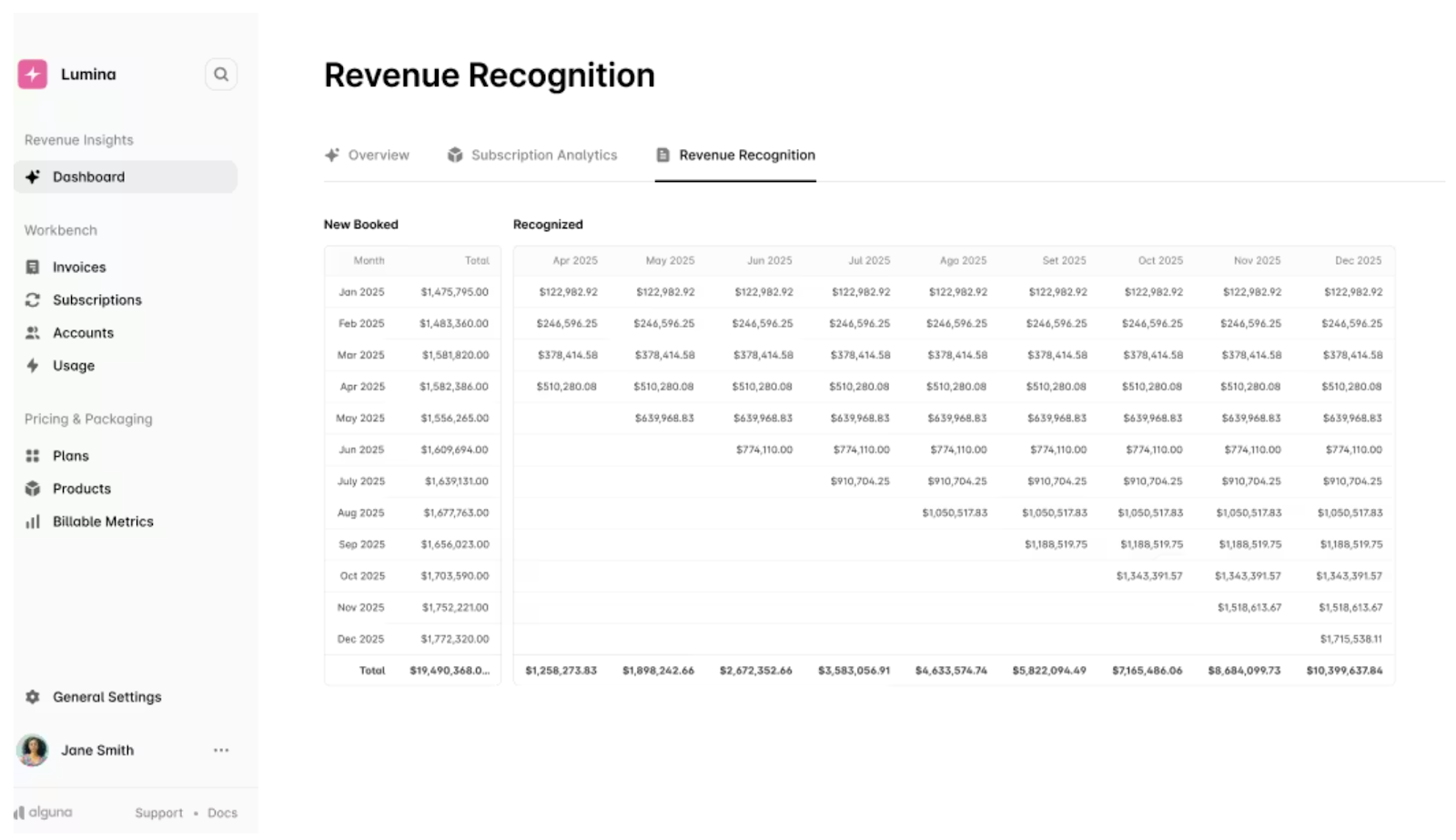
Alguna is an AI-native quote-to-revenue platform that unifies CPQ, usage metering, billing, and revenue recognition in one place.
Alguna was purpose-built for B2B SaaS (particularly in fintech, Gen AI, and other SaaS verticals) and can handle complex B2B SaaS and AI businesses that need flexible pricing automated compliance.
Where legacy platforms rely on batch jobs or delayed schedules, Alguna runs revenue in real time, recognizing revenue the moment usage hits, a contract changes, or a term modifies.
Alguna is purpose-built for modern SaaS and AI companies experimenting with hybrid models like:
- Usage-based pricing (API calls, tokens, credits)
- Seats + consumption add-ons
- Prepaid with rollover
- Minimum commitments with overages
- Outcome-based pricing (events)
- AI agent monetization (GPU hours, inference calls)
Highlights:
- Unified revenue engine (CPQ → billing → usage → rev-rec → reporting)
- AI-native architecture, built for token, credit, and outcome-based monetization
- Real-time ASC 606 compliance with automatic schedules and adjustments
- Multi-contract, multi-entity support out of the box
- Clear audit trails for auditors, CFOs, and finance teams
- Fast implementation with most teams going live in weeks (not months)
- Audit-ready revenue rules without custom scripts or consultants
Key revenue recognition features:
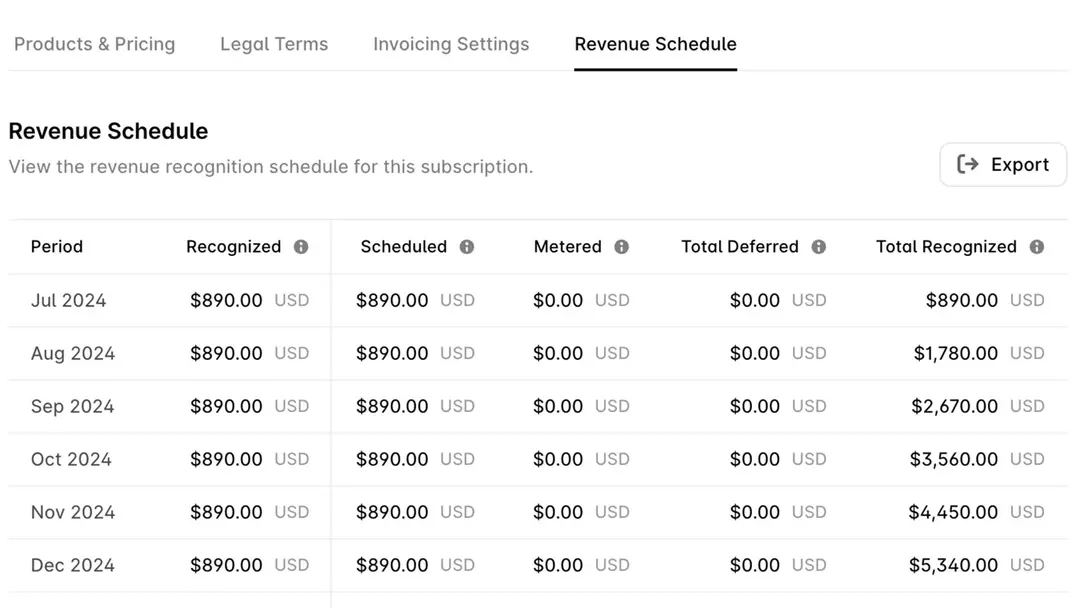
Compliance: Alguna fully automates ASC 606/IFRS 15 compliance. Its revenue engine supports the core principles and disclosures required under both standards. Finance teams can automate the five-step recognition process (including SSP analysis and combined accounting methods) and rely on Alguna’s built‑in audit trails.
Pricing models: Alguna natively handles any and all major SaaS pricing models. This includes subscriptions, usage-based billing, hybrid pricing, one-time charges, and milestone schedules. Its product catalog and billing system are designed for complex arrangements, with support for subscriptions, usage-based billing, bundles, and complex multi-element arrangements. This means you can model flat fees, tiered metered charges, custom contract terms or any mix, and Alguna will automatically allocate and recognize revenue accordingly.
Reporting and audit-readiness: Alguna accelerates month-end close with real-time recognition and reporting. The platform offers 100% audit traceability, providing rich reporting and audit support. All revenue schedules, deferrals, and journal entries are fully traceable back to the source contract lines and quotes. Finance teams can export complete audit logs and detailed recognition schedules. Standard revenue waterfall and ARR reports are generated automatically, and users can drill into contract-level detail to answer any auditor query.
Pricing: Alguna offers transparent and flat pricing starting at $699/month. This includes white-glove onboarding and migration with no extra charge for integrations and add-ons. There's also a free tier for smaller companies.
Alguna is ideal for mid-market or enterprise SaaS that are:
- Scaling fast and want to automate revenue recognition
- Using usage-based or hybrid monetization models
- Scaling beyond Stripe Billing or spreadsheets
- Prioritizing accuracy, automation, and unified data
Book your personalized demo today
2. Stripe Revenue Recognition: Built-in accrual reporting for Stripe Payments
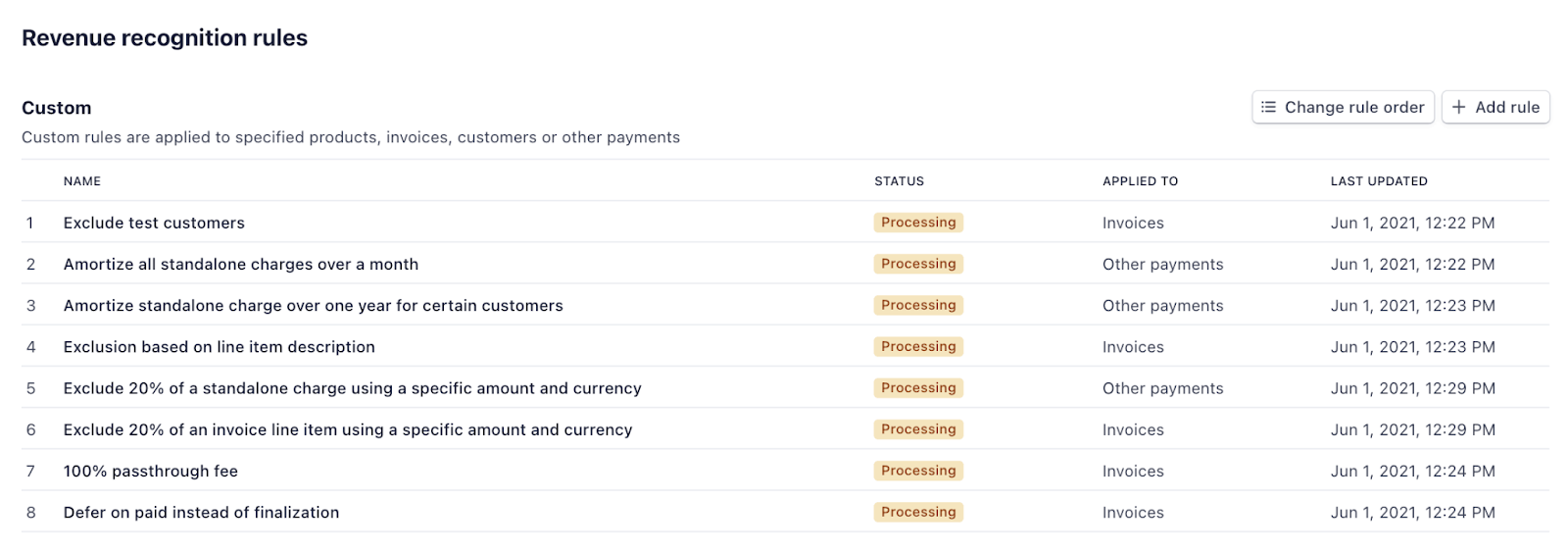
Stripe’s Revenue Recognition is a native Stripe tool that automates accrual accounting for all Stripe transactions (subscriptions, one-time sales, usage, etc.). It fully supports the ASC 606/IFRS 15 five-step model, generating compliant revenue schedules and journal entries so you can “close your books same-day” without manual spreadsheets.
As expected, Stripe Revenue Recognition is tightly coupled with Stripe Billing/Payments.
Strengths
- Built-in, hands-off ASC 606/IFRS 15 compliance.
- Tight Stripe integration means billing data flows directly into accounting (no separate ETL).
- Real-time dashboards and auto-generated journal entries eliminate error-prone spreadsheets.
- Supports multi-currency and a wide range of payment methods. Easy month-end close with drill-down audit trails (even includes credits/refunds adjustments).
Limitations
- Only natively covers Stripe payments and revenue from other platforms must be imported manually.
- Advanced usage/hybrid features are still maturing (some capabilities listed as “coming soon”).
- Complex multi-element contracts or multi-entity consolidations may require additional tools.
- The percentage-based pricing can become expensive at scale.
Key revenue recognition features:
Compliance: Stripe Revenue Recognition streamlines accrual accounting and is explicitly built to meet IFRS 15/ASC 606 standards. It automatically aggregates all Stripe transactions (subscriptions, one-off charges, usage events) into revenue contracts, applies the selected recognition policy (e.g. ratable vs point-in-time), and produces compliant revenue and deferral schedules.
Pricing models: This is handled through Stripe Billing. Stripe’s rev-rec functionality works with whatever billing model you build whether flat subscriptions, metered usage, one-time invoices, etc. The Revenue Recognition engine treats each invoice or event as a contract according to your setup.
Reporting and audit-readiness: Stripe Revenue Recognition provides built-in financial reports and dashboards. The Stripe Dashboard will show graphs of recognized vs deferred revenue over time, ARR metrics, and accounts receivable aging. It also auto-generates a “Statements” series of reports (e.g. P&L, balance sheet, trial balance) that you can download or share.
"Stripe gives us the ability to customize how we want to present our invoices to our customers, structure our products, and accept payments. We were even able to overcome a product display problem relating to how Stripe displays items on our invoices through a way that wasn't recommended by Stripe and Stripe continued to work the way we wanted it to anyway. The fact that we later had to change it to take advantage of a paywalled Revenue Recognition feature in no way downplays the value that Stripe provided."
Read the full review on G2
Pricing: Stripe Revenue Recognition is priced as a flat subscription plus a small usage fee. As of 2025, plans start at $25/month (for up to $10K of card volume) and scale up ($190, $450, $860, $1,650 per month) depending on your monthly payment volume. Each tier also charges roughly 0.20–0.25% on volume above its cap.
Best for:
- SMB and mid-market SaaS businesses already using Stripe Billing who want a turnkey way to recognize revenue without a separate system. It’s particularly convenient if your billing is entirely on Stripe and you want to avoid exporting data to another accounting tool.
- Stripe Revenue Recognition is ideal for teams with standard usage/subscription models that want simplicity and native integration over advanced flexibility.
3. Tabs: Good for usage metering, less mature for ASC 606
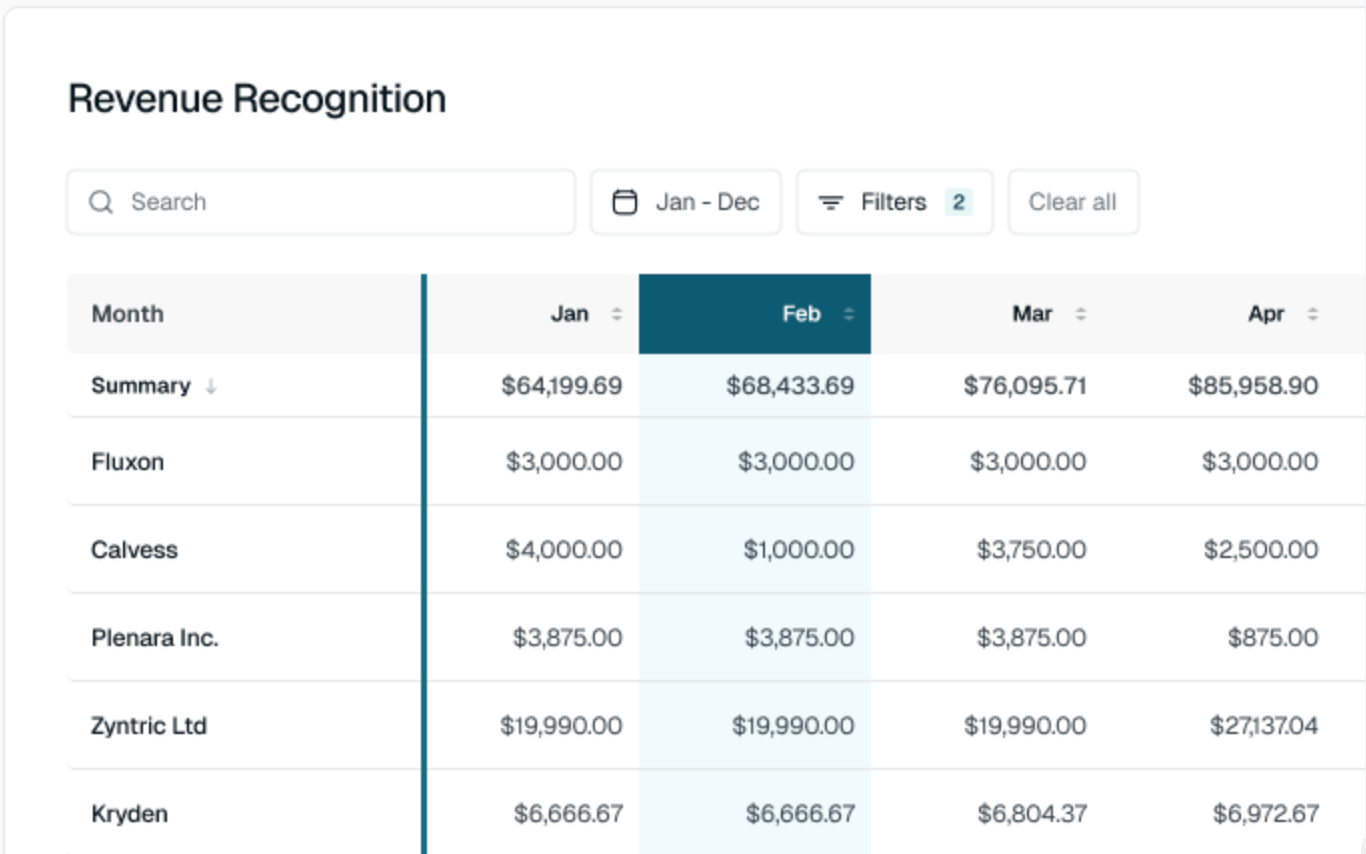
Tabs is an AI-powered billing and revenue automation platform aimed at modern SaaS and subscription businesses. It combines contract ingestion, invoicing, payments, collections, and revenue recognition in a single SaaS application.
Tabs is often used by finance and RevOps teams at growth-stage SaaS companies (especially those with usage-based or hybrid models) to streamline quote-to-cash.
Strengths:
- Modern UX and fast setup
- Good for simple usage-based SaaS
- Lightweight and more affordable
Limitations:
- Revenue recognition depth is limited vs Alguna or Maxio
- Weak multi-entity and multi-currency support
- Reports can lack audit-grade detail
- Better suited as a billing layer than a revenue engine
Key revenue recognition features:
Compliance: Tabs is fully ASC 606/IFRS 15–compliant out of the box. Its revenue recognition engine is built to enforce compliance on every deal. You can set up recognition rules and schedules that align with GAAP, and Tabs will automatically generate the correct schedules and journal entries as contracts change.
Pricing models: Tabs supports any pricing model natively. In practice this means Tabs can invoice flat subscriptions, usage- or metered charges, one-time fees, services, hardware add-ons, and any combination.
Reporting and audit-readiness: Tabs offers real-time recognition and reporting. It auto-posts journal entries back to your ERP (e.g. NetSuite, QuickBooks) and offers built-in validation checks. Tabs generates automated revenue schedules, ARR/NRR waterfalls, deferred revenue roll-forwards and related reports. Finance teams get an “audit-ready” revenue sub-ledger, complete with drill-downs to individual contracts and transactions.
"Tabs is solving a critical problem for fast-growing companies: how to scale invoicing and revenue recognition without needing to scale headcount at the same pace."
Read the full review on G2
Pricing: Tabs starts at around $1,500/month and includes contract ingestion, basic billing/collections, and standard RevRec capabilities. Higher tiers (Growth, Scale, Enterprise) are custom-priced based on volume and complexity. Tabs also has add-ons for usage metering and product-led growth features.
Best for:
- SaaS startups and mid‑market teams that need intelligent end‑to‑end billing and revenue automation.
- If you have subscription AND usage-based revenue (or are introducing usage models/PLG).
4. Chargebee RevRec: SaaS revenue recognition software subscription businesses
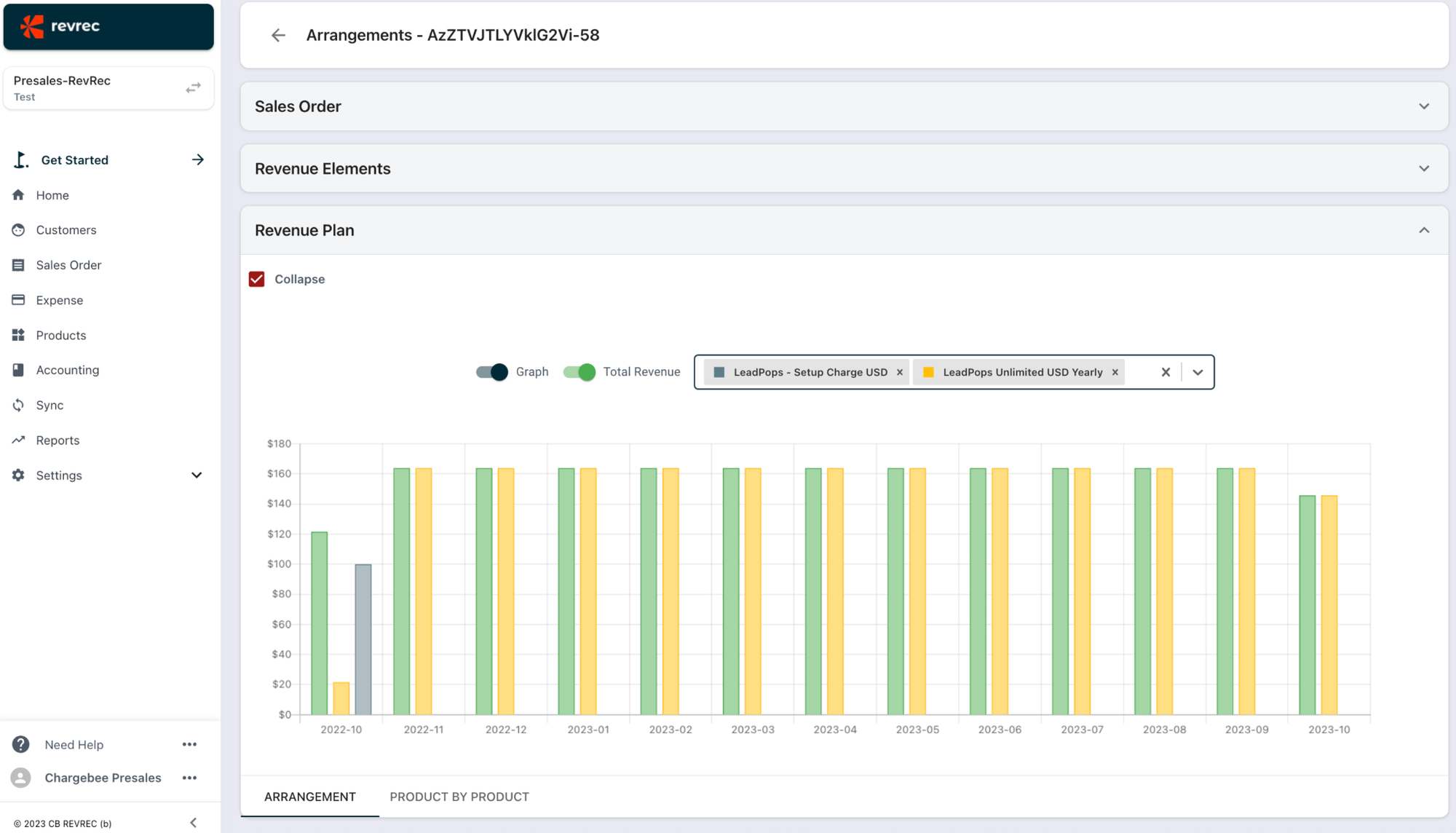
Chargebee is a widely used subscription billing and revenue management platform, targeting startups and mid-market SaaS companies. Its RevRec module (Chargebee RevRec) builds on Chargebee Billing to provide ASC 606/IFRS 15–compliant recognition for subscription and usage revenue.
Strengths
- Provides clear, accurate financial reports that are easy to access and audit
- Multi-entity and global support
- Solid integrations and ecosystem
Limitations
- Complex and time-consuming to set up
- Customers aren’t fans of the user experience and UI
- Revenue recognition is slower, batch-based, and not real time
- Not designed for usage, events, or hybrid monetization
- Complex or negotiated contracts require workarounds
Key revenue recognition features:
Compliance: Chargebee RevRec automates high-volume and complex revenue transactions while ensuring compliance with ASC 606/IFRS 15. It strictly follows the five‑step framework and supports GAAP workflows. Chargebee provides a central revenue sub-ledger that produces GAAP‑ready reports and journal entries.
Pricing models: Chargebee Billing (and RevRec) natively support mixed pricing. You can use flat-rate subscriptions, tiered or per-unit metering, add-ons, usage-based (metered) charges, discounts/coupons, one-time fees, etc. Chargebee advertises multi-model support, with multiple pricing model support including usage and calendar billing.
Reporting and audit-readiness: Chargebee generates automatic revenue schedules and detailed reports. Its sub-ledger can produce ARR, deferral, and revenue detail reports that finance can review or export. For audit purposes, Chargebee provides complete traceability: you can tie every recognized revenue amount back to the original contract or invoice.
"Chargebee RevRec offers a simple and effective way to automate revenue recognition. The user interface is intuitive, making navigation easy, and the available settings provide a good level of customization. This allows me to adapt the revenue recognition process to fit my company's specific needs."
Read the full review on G2
Pricing: Chargebee’s core Starter billing plan is free for businesses under $250K annual billing. Above that, it charges a percentage (0.75%) of billing on top of the base plan.
The Performance plan (which includes RevRec) starts at roughly $7,200/year for up to $100k in monthly billing volume (billing is annual commitment). Larger companies can move to an Enterprise plan with custom pricing.
Note that Chargebee offers built‑in revenue recognition analytics and key metrics, though some advanced reporting may require a higher-tier plan.
Best for:
- Mid-market SaaS and e-commerce companies that want an integrated billing + RevRec solution.
- Strong fit if you already use Chargebee for subscription billing, and you need automated ASC606 compliance.
5. Maxio: Purpose-built for SaaS, strong reporting, longer implementations
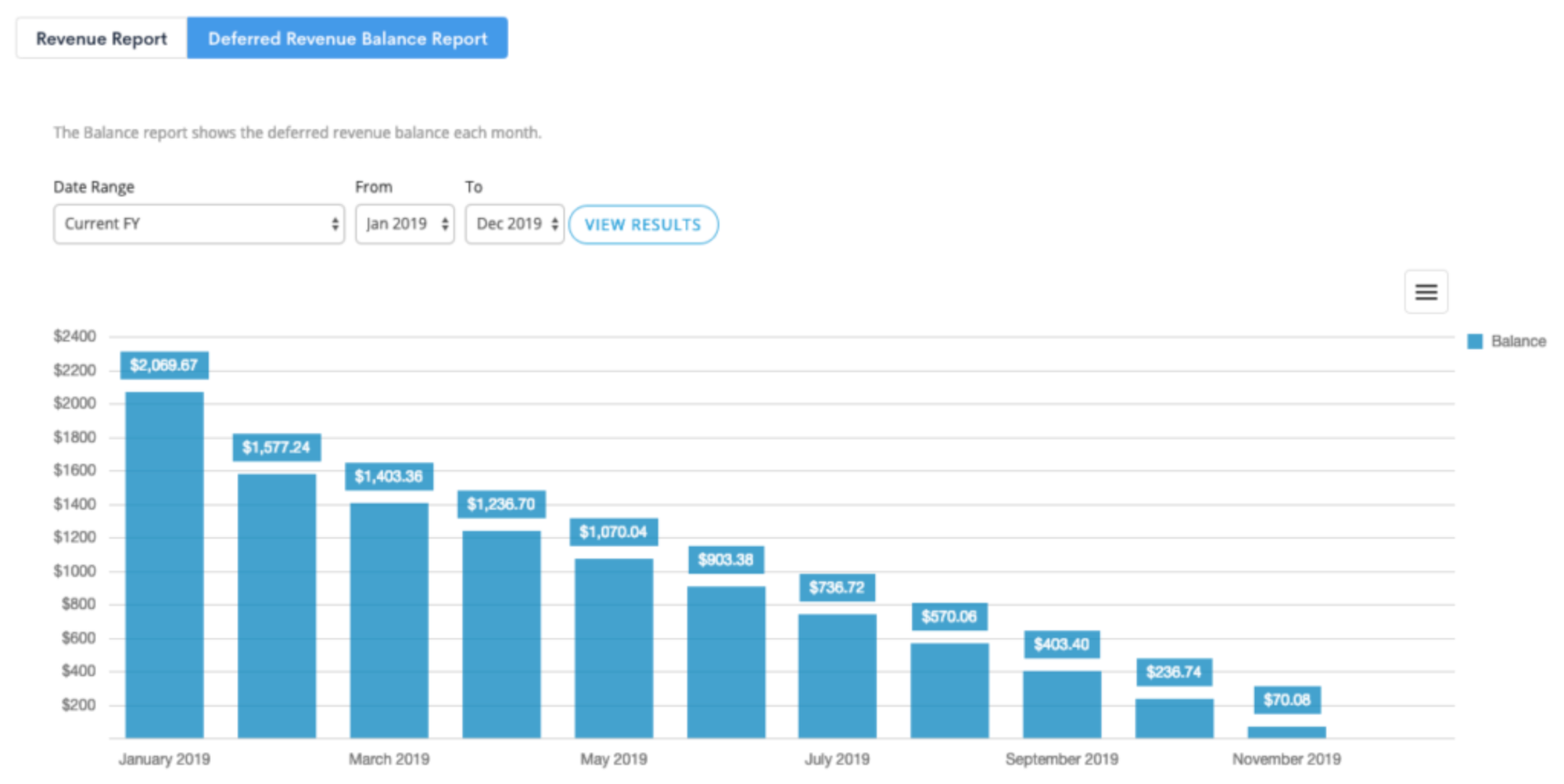
Maxio (formerly Chargify + SaaSOptics) has mature financial reporting and revenue recognition capabilities. It’s a full-stack subscription management and finance platform tailored to B2B SaaS. It combines billing, usage metering, CPQ, and finance workflows, including a powerful revenue recognition module, in one platform.
It’s a solid choice for SaaS companies but can become operationally heavy.
Strengths
- Robust ASC 606 engine
- Rich SaaS metrics and reporting
- Good for subscription and some usage models
Limitations
- Implementation can take months
- UI and workflows can feel dated
- Not optimized for modern AI-driven usage models
- Multiple modules needed for end-to-end revenue
Key revenue recognition features:
Compliance: Maxio’s revenue recognition is built for SaaS compliance. The platform streamlines ASC 606 and IFRS 15 compliance by applying configurable recognition rules across contracts. You define recognition templates and SSPs according to your accounting policies, and Maxio auto-generates the schedules. It supports dual reporting and any standard scenario (upgrades, subscriptions, multi-element sales, etc.), so you can be confident audits will go smoothly.
Pricing models: Maxio handles subscriptions, usage and even milestone billing. All plans include recurring billing, usage-based pricing, and contract management. The features comparison confirms support for fixed, usage-based, and milestone billing. You can model price ramps, free trials, coupons, multi-currency, and customer hierarchies.
Reporting and audit-readiness: Maxio provides extensive SaaS financial reports and analytics. It offers ARR, cash flow forecasts, financial metrics and dashboards built in. For revenue recognition specifically, you get waterfall reports, deferred revenue roll‑forwards, A/R aging, and detailed contract revenue summaries. Maxio also syncs with popular GLs (NetSuite, Sage, QuickBooks, etc.) to post journal entries and consolidate books.
"I am very happy with the subscription-based billing capabilities of Maxio, which include streamlined revenue recognition reporting and an easy setup for SaaS subscription billing. The subscription billing and dunning processes are particularly useful and are used extensively."
Read the full review on G2
Pricing: Maxio’s Grow plan starts at $599/month (billed annually) for up to $100K monthly billing. This includes full recurring and usage billing plus basic RevRec. Above $100K/month, you move to Scale, which is custom‑quoted. (Larger accounts can also license CPQ, advanced analytics, or intercompany features.)
Best for:
- B2B SaaS companies on a growth track that want a unified billing + accounting platform.
- Teams that need sophisticated usage-based or international billing alongside built‑in RevRec.
6. Zuora Revenue: Enterprise-grade financial SaaS reporting
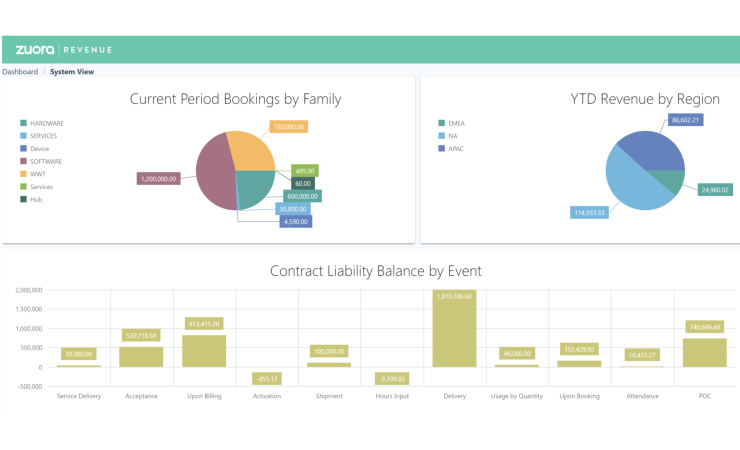
Zuora is an enterprise-grade cloud finance suite. In the revenue recognition space, it’s known as Zuora Revenue (formerly RevPro). This solution targets large companies and global enterprises (often B2B SaaS, telecom, IoT, etc.) with extremely complex billing and revenue processes.
Strengths
- Highly configurable for enterprises
- Strong revenue engine for large-scale deployments
- Handles multi-element arrangements well
Limitations
- Extremely expensive (subscription + services)
- Long implementations (6–18 months)
- Requires consultants for configuration and changes
Key revenue recognition features:
Compliance: Zuora Revenue is expressly built for ASC 606/IFRS 15 compliance. It handles multi-element bundles, subscriptions, usage, promotions, and any revenue scenario with flexible rules. Zuora’s system ensures standards like time-value-of-money and variable consideration are properly applied. In short, it’s audit‑proof: the platform generates compliance disclosures, revenue schedules, and SS Pallocations automatically. Zuora also boasts strong audit controls (Sox/SOC) and granular traceability.
Pricing models: Zuora supports any pricing model. Its focus on complex deals means it can handle usage pricing, hybrid contracts (mix of recurring and one‑time), product bundles, multi-currency, ramp-ups, and more. Essentially, Zuora’s revenue engine is pluggable into any GTM strategy.
Reporting and audit-readiness: Zuora offers very advanced reporting. It includes over 60 standard financial reports (waterfalls, disclosures, trend analysis, etc.) and a close process dashboard with real-time analytics. You get built-in reports for revenue audits (e.g. trial balance, AR aging, reconciliations).
"Zuora provides strong flexibility in managing subscription billing and revenue recognition. Its automation features reduce manual work, and the platform scales well as the business grows. I particularly like how easily different pricing models can be configured, which helps adapt to changing customer needs."
Read the full review on G2
Pricing: Zuora Revenue is sold by custom quote and is quite expensive. According to marketplace and user reports, entry pricing is roughly $75,000+/year for a small implementation, with full enterprise deployment easily exceeding $250,000/year.
In practice, Zuora is a major investment aimed at large companies.
Best for:
- Enterprise SaaS or software companies (or any business with millions in recurring revenue and complex offerings) that need an enterprise-grade RevRec solution.
7. Sage Intacct: Strong ERP, but heavy setup for revenue recognition
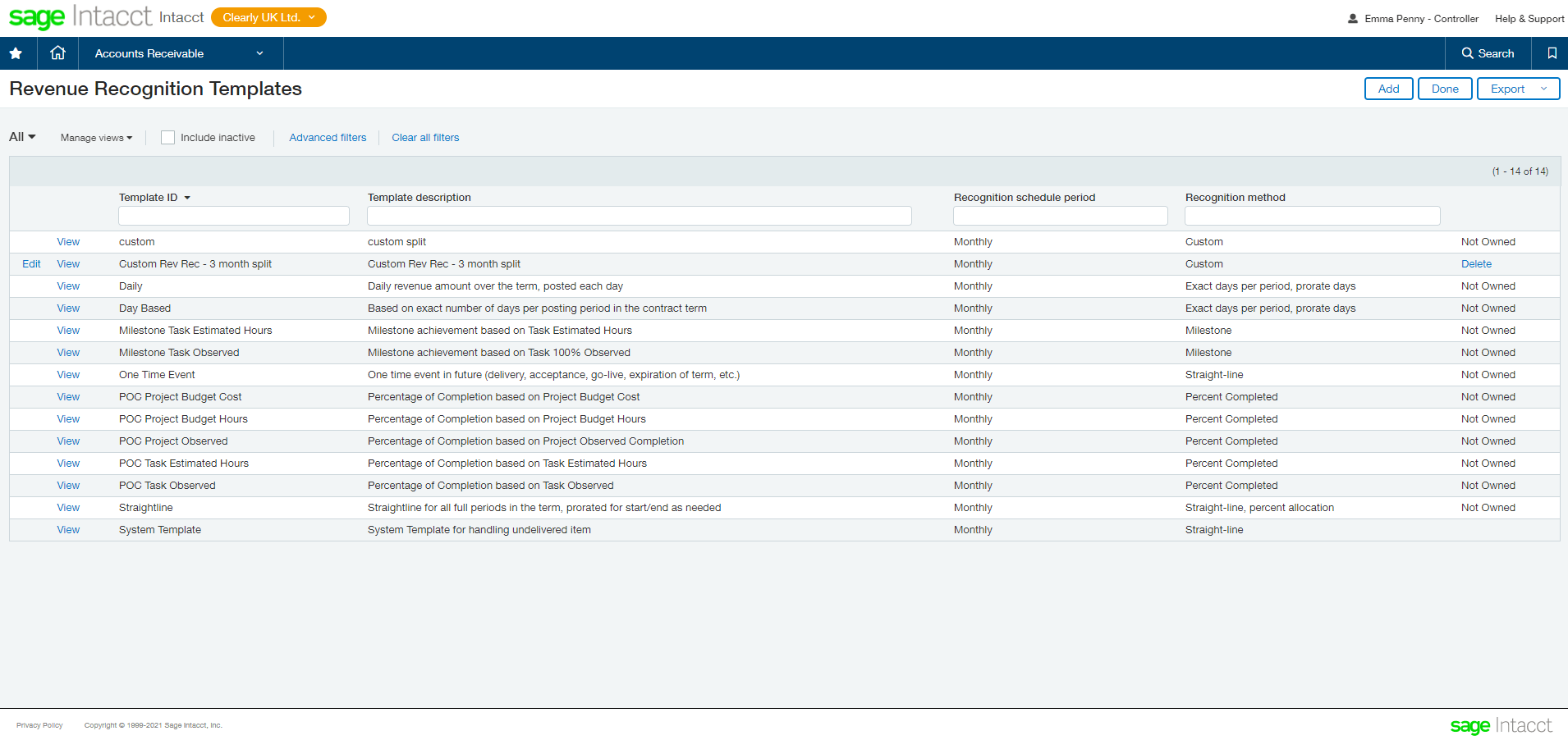
Sage Intacct is a financial management and ERP platform popular with mid-market SaaS companies. It includes a Revenue Recognition module (built on its core GL) specifically for subscription and contract businesses. \
Sage Intacct is often used by CFOs in growing tech or service firms that need robust accounting and ASC 606/IFRS 15 compliance baked into their ERP.
Strengths
- Mature ASC 606 rules engine
- Strong audit and compliance workflows
- A great fit for accounting teams moving off spreadsheets
Limitations
- Not a billing system, requires integration with another tool
- Complex implementation and configuration
- Not designed for dynamic, usage-based models
- Requires continuous admin maintenance
Key revenue recognition features:
Compliance: Sage Intacct natively supports ASC 606 and IFRS 15 via its Revenue Recognition application. The system allows finance teams to configure recognition rules and templates (by contract, line item, etc.) and then auto-applies them as transactions post. It handles common SaaS scenarios (multi-year contracts, subscriptions, licenses and services) and automatically updates deferrals when contracts change.
Pricing models: As part of an ERP, Intacct is highly flexible. You can use Intacct’s “Contracts” module to define recurring revenue schedules and allocate revenue for any mix of products and services. It supports fixed-fee subscriptions, usage/consumption, milestone billing, and even multi-currency. (Advanced modules add project accounting, revenue amortization, etc.) Essentially, it can mirror whatever your contract terms are.
Reporting and audit-readiness: Sage Intacct provides comprehensive financial reporting alongside its RevRec. It includes standard deferred revenue reporting, revenue schedules, and drill-down to source records. It also delivers broad financial statements and dashboards (balance sheet, P&L, A/R aging, etc.) out of the box.
"Revenue scheduling is another strong feature as it lets you automate and manage complex revenue recognition scenarios with ease. The fixed asset module is detailed and thorough, enabling accurate tracking, depreciation, and reporting of assets over their lifecycle."
Read the full review on G2
Pricing: Sage Intacct is licensed per user and per module. Pricing is not public, but industry sources suggest a typical Intacct implementation (GL+RevRec) starts around $12,000/year averages $25,000–$35,000/year for small enterprises. (Add-ons and extra users raise the total.) There are usually implementation fees too, so consider a mid-five-figure upfront investment.
Best for:
- Midsize to larger businesses that already have an ERP/financial system and want integrated revenue compliance.
- Companies in tech, services, or software that require a strong accounting backbone in addition to handling subscriptions.
Evaluation checklist: What to look for in SaaS revenue recognition software
For SaaS companies, especially those scaling fast or experimenting with usage-based pricing, it’s critical to choose a platform that goes beyond basic compliance.
Use this checklist to evaluate whether a tool can truly support your billing model, reporting needs, and month-end close process.
🔒 ASC 606/IFRS 15 compliance
Does the tool fully support the 5-step model and audit requirements?
🧾 Pricing model flexibility
Can it handle subscriptions, usage-based billing, hybrid models, milestones, and multi-element contracts?
📊 Real-time revenue schedules
Are revenue schedules updated instantly when invoices, usage, or contracts change?
🧠 Native billing + RevRec integration
Is revenue tied directly to your billing system, or does it require manual syncs?
📉 Deferred and recognized revenue reports
Are waterfall charts, roll-forwards, and deferral reports included?
🪵 Full audit trail
Can you trace every journal entry back to its contract or invoice?
💼 ERP and GL integration
Does it connect smoothly with QuickBooks, NetSuite, Sage, or your accounting system?
🌍 Multi-entity and multi-currency support
Can it support global teams and consolidate revenue across entities?
🚀 Scalability
Will it support your business as you scale up contracts, product lines, or usage models?
💰 Pricing transparency
Is the cost predictable and aligned with your business stage and transaction volume?
Frequently asked questions: Best revenue recognition software for SaaS companies
For a growing SaaS business, is Maxio or Metronome better suited for automating revenue recognition and compliance?
Maxio offers a robust, SaaS-specific revenue recognition engine with ASC 606 support, ideal for B2B companies with multi-element or recurring billing. It’s great for finance-led teams that want accounting-first compliance.
Metronome, by contrast, is usage-billing–focused. It handles pricing, metering, and invoicing well, but requires external tooling or integrations for revenue recognition compliance.
If you want both billing and revenue recognition in one system, Alguna is the better choice as it unifies usage metering, billing, and ASC 606-compliant revenue recognition from day one.
Do Maxio and Stripe Billing offer revenue recognition features for compliance?
Yes, but with key differences.
- Maxio includes a built-in revenue recognition engine that supports ASC 606/IFRS 15 and handles subscriptions, usage, and service bundles. It’s designed for audit readiness and integration with your GL.
- Stripe Billing, when paired with Stripe Revenue Recognition, can generate GAAP-compliant schedules, but it’s limited to Stripe payments and less flexible for complex contract structures.
Which platform, Maxio or Chargebee, is better suited for B2B SaaS businesses looking for advanced revenue recognition capabilities?
Maxio is generally better suited for B2B SaaS with complex recognition needs. It handles multiple revenue streams, contract modifications, and offers strong SaaS financial reporting.
Chargebee has revenue recognition (via RevRec), but it's more geared toward subscription-first models and may require additional configuration for advanced compliance.
Alguna offers both billing and advanced revenue recognition in one, making it a stronger choice if you're scaling quickly and need flexibility across hybrid pricing models.
Which vendors offer automated invoicing and revenue recognition for usage-based billing models?Top vendors include:
- Alguna: Unified usage metering, billing, and real-time revenue recognition
- Tabs: AI-driven billing and ASC 606 revenue recognition
- Maxio: Supports usage billing and deferred revenue automation
- Stripe: Usage invoicing + basic revenue recognition via Stripe RevRec
Alguna stands out by offering built-in metering, invoice generation, and ASC 606 revenue schedules all in one workflow, making it ideal for usage-heavy SaaS or AI platforms.
What tools ensure accurate metering and revenue recognition from day one?
Tools that deliver accurate metering and real-time RevRec from day one:
- Alguna: Best-in-class for usage, credits, and hybrid billing with revenue schedules that update in real time
- Tabs: Supports usage events and auto-generated revenue schedules
- Stripe: Accurate usage metering; RevRec available but limited to Stripe transactions
What are the leading vendors for multi-entity billing platforms that also automate revenue recognition?
Top choices for multi-entity SaaS billing + RevRec:
- Alguna: Built-in support for multi-entity billing, real-time ASC 606 schedules, and consolidated reporting
- Maxio: Supports intercompany billing and GAAP compliance
- Zuora: Powerful but costly; strong for global enterprises
- Sage Intacct: Strong ERP with multi-entity revenue rules (complex setup)
What are the top SaaS subscription billing platforms for B2B companies needing GAAP-compliant revenue recognition?
The best all-in-one platforms for B2B SaaS include:
- Alguna: Unified CPQ → billing → revenue engine with ASC 606 automation
- Maxio: Strong financial reporting and GAAP-ready schedules
- Chargebee (with RevRec): Good for simpler B2B subscriptions
- Zuora: Enterprise-grade, best for large, complex deployments
Choosing the right SaaS revenue recognition software
Choosing the a SaaS revenue regonition software that makes sense for your company isn’t just about compliance. It’s about enabling faster closes, smarter pricing, and scalable finance ops.
Whether you’re navigating usage-based billing, multi-entity consolidation, or complex hybrid contracts, the right platform should eliminate manual work and grow with you.
If your current tools are duct-taped together or slowing down finance, it might be time to modernize.
Want to eliminate manual rev-rec spreadsheets entirely and get end‑to‑end compliance automation under one roof?
Book your personalized demo today